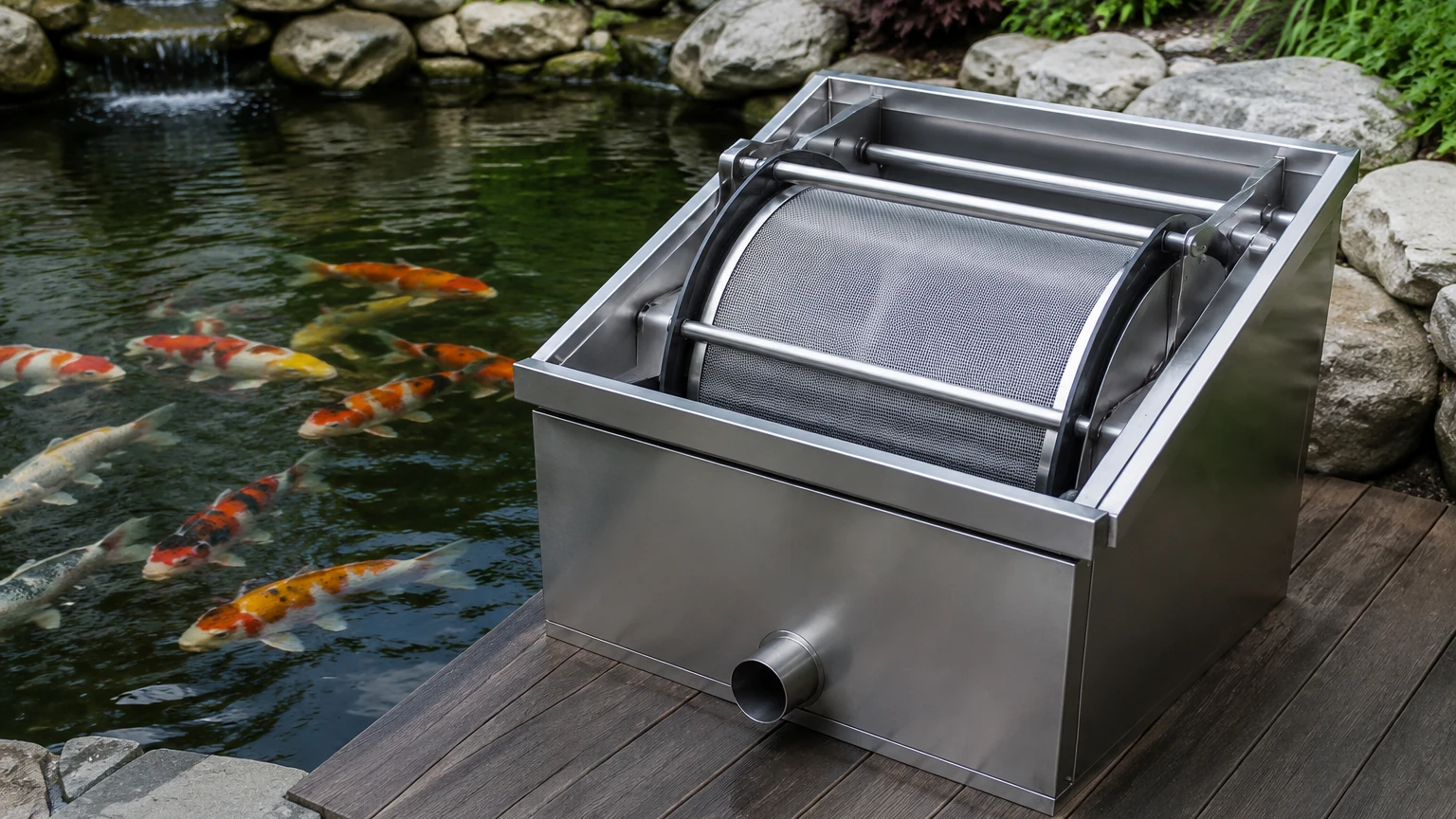
Drum Filter for Koi Pond
In the specialized field of aquatic life support systems, the drum filter for koi pond applications represents the pinnacle of mechanical filtration technology. For engineers and facility managers overseeing large-scale ornamental ponds or commercial aquaculture installations, the transition from traditional vortex or brush filters to automated rotary drum filters (RDF) marks a significant shift toward precision water quality management. The efficiency of these systems is almost entirely dependent on the quality of the filtration media—specifically, the stainless steel wire mesh that serves as the primary barrier against suspended solids.
Understanding the Rotary Drum Filter (RDF) Mechanism
A drum filter for koi pond use operates on a relatively simple yet highly effective mechanical principle. The system consists of a rotating drum covered in a fine micron-rated stainless steel mesh. Source water from the pond enters the interior of the drum. As the water passes through the mesh to the exterior, solid waste particles—including fish excrement, uneaten food, and organic debris—are trapped on the inner surface of the screen.
As these solids accumulate, the mesh begins to clog, causing a slight rise in the water level inside the drum (or a drop in the outer chamber, depending on the sensor configuration). Once a predetermined level is reached, an automated sensor triggers a cleaning cycle. The drum rotates while a high-pressure spray bar located above the drum blasts the debris off the mesh and into a waste tray, which then flushes the contaminants out of the system. This process ensures that organic waste is removed from the water column before it has the opportunity to break down into ammonia and nitrites, significantly reducing the biological load on the subsequent filtration stages.
The Critical Role of Stainless Steel Wire Mesh
The performance of a drum filter for koi pond environments is dictated by the integrity and specification of its filter element. As a manufacturer of precision metal filtration components, Kaifil emphasizes that the choice of wire mesh is not merely a matter of pore size, but of structural engineering.
Industrial-grade stainless steel wire mesh is preferred for these applications due to its high open-area ratio, which allows for maximum flow rates while maintaining strict particle retention. Unlike plastic or nylon meshes, stainless steel provides the dimensional stability required to withstand the repeated high-pressure backwashing cycles without stretching or deforming. This stability is crucial for maintaining a consistent micron rating across the entire surface of the drum.
For those seeking comprehensive technical data on filtration components and manufacturing capabilities, visiting the Main Page provides a broader perspective on how custom metal filters are engineered for demanding industrial environments.
Engineering Specifications: Micron Ratings and Flow Rates
When specifying a drum filter for koi pond projects, engineers must balance filtration fineness with hydraulic throughput. The micron rating of the mesh determines the smallest particle the filter can reliably capture.
1. 40 to 60 Microns: This is the industry standard for high-end koi ponds. At this level, the filter removes the vast majority of visible suspended solids, resulting in exceptional water clarity. However, finer mesh requires more frequent cleaning cycles and higher backwash pressure.
2. 70 to 100 Microns: Often used in larger systems or those with higher flow requirements where absolute clarity is secondary to total volume turnover. This range reduces the frequency of the cleaning mechanism's activation, extending the lifespan of the motor and drive components.
The flow rate (expressed in cubic meters per hour or gallons per hour) is influenced by the total surface area of the drum and the open area of the mesh. A mesh with a thinner wire diameter provides a higher percentage of open area, facilitating better flow but potentially sacrificing some mechanical strength. Engineering the ideal balance requires a deep understanding of the tensile strength of the stainless steel alloy used.
Material Selection: SS304 vs. SS316 in Aquatic Systems
Material science plays a pivotal role in the longevity of a drum filter for koi pond installations. While koi ponds are freshwater environments, they are often chemically complex due to the addition of water treatments, salt (used for therapeutic purposes), and the natural acidity resulting from the nitrification process.
* Stainless Steel 304: This is the most common material for standard freshwater applications. It offers excellent strength and good corrosion resistance at a cost-effective price point. For most residential and commercial koi ponds, SS304 provides a service life of many years if properly maintained.
* Stainless Steel 316: For systems that may utilize higher salt concentrations or are located in coastal areas with salt-laden air, SS316 is the superior choice. The addition of molybdenum enhances its resistance to pitting and crevice corrosion, particularly in chloride-rich environments.
At Kaifil, we focus on the precision weaving of these alloys to ensure that every square inch of the filter screen meets the rigorous demands of continuous industrial operation. The durability of the mesh directly impacts the total cost of ownership by reducing the frequency of screen replacements.
Operational Considerations and Maintenance Cycles
While the primary advantage of a drum filter for koi pond use is automation, the system is not entirely maintenance-free. Technical professionals must consider the following operational factors:
* Backwash Pressure: The spray nozzles must provide enough pressure to dislodge "bio-film"—a slippery layer of bacteria that can grow on the mesh and restrict flow. If the pressure is too low, the mesh will gradually blind, leading to constant cleaning cycles.
* Waste Tray Alignment: Proper alignment of the internal waste trough is essential. If the trough is misaligned, a portion of the flushed waste may fall back into the drum, defeating the purpose of the mechanical separation.
* Seal Integrity: The seals between the rotating drum and the stationary housing must be robust. Any bypass in these seals allows unfiltered water to enter the pond, introducing solids that can clog biological media or UV clarifiers.
From an engineering perspective, the replacement cycle of the mesh elements should be factored into the long-term maintenance plan. High-quality stainless steel mesh can last 3 to 5 years in a well-managed system, but it should be inspected annually for signs of mechanical wear or calcium scale buildup.
Customization for Industrial and Large-Scale Applications
Standard off-the-shelf drum filters may not suffice for public aquaria, large-scale koi breeding facilities, or industrial-scale water features. In these instances, customized filtration components are required. Customization options often include:
* Bespoke Drum Dimensions: Adjusting the length and diameter of the drum to fit specific footprint constraints or to achieve ultra-high flow rates.
* Variable Weave Patterns: Utilizing specific weave types, such as Dutch weave or twill weave, to enhance the structural rigidity of the screen for high-pressure applications.
* Reinforced Support Structures: For drums operating at high RPM or handling heavy debris loads, the underlying support frame for the mesh must be engineered to prevent flexing.
By working with a manufacturer that understands the nuances of stainless steel fabrication, engineers can ensure that the drum filter for koi pond applications performs reliably under 24/7 operating conditions.
Conclusion: Selecting the Right Filtration Partner
The implementation of a drum filter for koi pond systems represents a significant capital investment aimed at achieving superior water quality and reduced manual labor. The success of this investment hinges on the technical specifications of the filtration media and the precision of the drum's construction.
When evaluating suppliers, it is essential to confirm the grade of stainless steel, the accuracy of the micron rating, and the manufacturer's ability to provide replacement components that meet the original engineering tolerances. For those involved in the design and procurement of industrial-grade filtration systems, focusing on the quality of the metal mesh is the most effective way to ensure long-term system performance and aquatic health.