


Drum Screen for Sale
In the landscape of industrial liquid-solid separation, the rotary drum screen remains one of the most efficient and reliable mechanical filtration solutions. For procurement officers and process engineers searching for a drum screen for sale, the decision-making process extends far beyond the initial capital expenditure. Selecting the right filtration system requires a deep understanding of hydraulic capacities, solids loading, and the material science behind the filter media itself.
Industrial drum screens are utilized across a diverse range of sectors, from municipal wastewater treatment and food processing to chemical manufacturing and pulp and paper production. Their primary function is to remove suspended solids from a liquid stream through a continuous, self-cleaning rotating mechanism. However, the performance of these machines is dictated by the precision of the filtration components, such as the stainless steel wire mesh or wedge wire used in the drum’s construction.
Understanding the Mechanics of Industrial Drum Screens
A drum screen operates on a relatively simple yet highly effective principle. The liquid to be filtered enters the drum—either internally or externally—and passes through a rotating cylindrical screen. As the drum turns, the screened solids are captured on the surface of the media and transported to a discharge point, while the filtered liquid (filtrate) passes through the apertures and is collected in a basin or directed to the next stage of the process.
When evaluating a drum screen for sale, engineers must first determine the feed method that best suits their application:
1. Internal Feed Drum Screens: The influent enters the center of the drum. Solids are captured on the interior surface and moved toward the discharge end by internal flights or the tilt of the drum. This design is often preferred for high-flow applications with relatively low solids concentrations.
2. External Feed Drum Screens: The liquid is distributed over the exterior surface of the rotating drum. Solids remain on the outside and are scraped off by a doctor blade or diverted by gravity. These are frequently used in applications with heavy solids loading or sticky materials that require constant mechanical cleaning.
Regardless of the feed type, the efficiency of the separation is entirely dependent on the filter media. This is where technical expertise in stainless steel filtration becomes critical. For comprehensive information on high-performance filtration components, engineers can Review product options and application support to understand how different mesh configurations impact throughput and clarity.
Key Technical Specifications for Procurement
When searching for a drum screen for sale, the technical specification sheet is the most important document for an engineer. A mismatch between the equipment capabilities and the process requirements can lead to frequent blinding (clogging), bypass of solids, or premature mechanical failure. The following parameters are foundational to a successful selection:
Filtration Accuracy and Aperture Size
The aperture size, often measured in microns or millimeters, determines the smallest particle the screen will effectively retain. In industrial filtration, precision is paramount. If the mesh is too coarse, downstream equipment like pumps and fine filters may be damaged. If it is too fine, the screen will blind rapidly, leading to overflow and reduced processing capacity. Manufacturers like Kaifil specialize in providing custom stainless steel wire mesh that ensures consistent aperture sizing across the entire surface of the drum.
Hydraulic Loading and Flow Rates
The flow rate a drum screen can handle is a function of the total surface area of the drum and the percentage of "open area" provided by the filter media. High-precision woven wire mesh typically offers a higher percentage of open area compared to perforated plates, allowing for greater flow rates within a smaller equipment footprint. Engineers must calculate the peak flow, not just the average flow, to ensure the drum screen can handle surges without bypassing.
Material Selection and Corrosion Resistance
Industrial environments are often chemically aggressive. Whether it is the acidity of fruit juice processing or the corrosive nature of industrial wastewater, the choice of alloy is vital. Stainless steel 304 is the standard for many general-purpose applications, but 316L is frequently required for its superior resistance to chlorides and organic acids. In specialized chemical processing, even higher alloys may be necessary to prevent pitting and stress corrosion cracking.
Evaluating Drum Screen for Sale: Mesh vs. Wedge Wire
One of the most common technical dilemmas when sourcing a drum screen for sale is choosing between woven wire mesh and wedge wire (V-wire). Both have distinct advantages depending on the nature of the solids being removed.
Stainless Steel Wire Mesh: This media is ideal for precision filtration where fine particle removal is required. Woven mesh can achieve much finer micron ratings than wedge wire. It is also highly effective for fibrous materials that might otherwise become entangled in rigid slots. However, wire mesh requires a robust support structure—often a perforated metal cylinder or a heavier backing mesh—to withstand the hydraulic pressure and mechanical stresses of rotation.
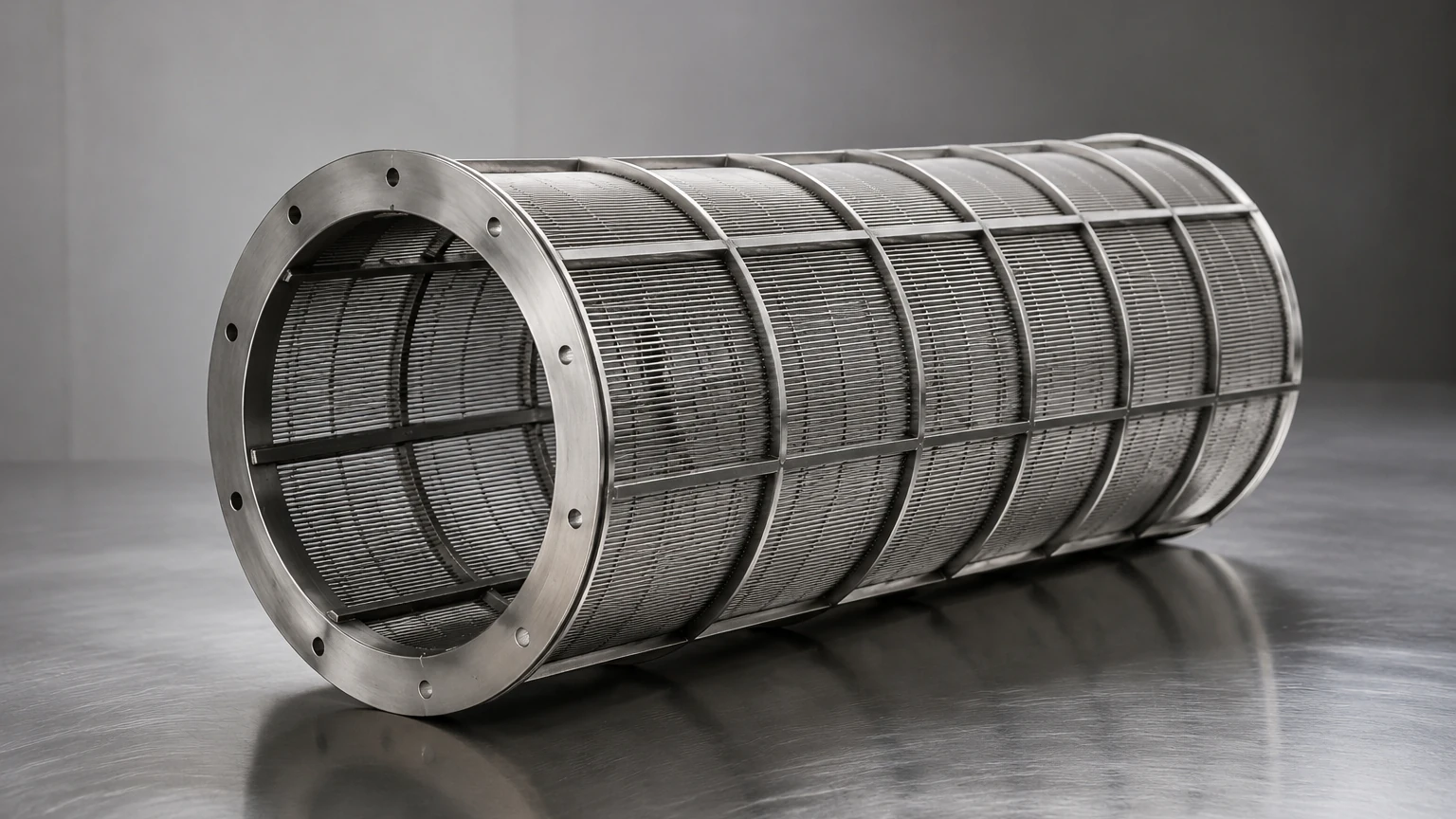
Wedge Wire: Known for its structural strength and non-clogging characteristics, wedge wire is constructed from V-shaped profiles welded to support rods. The V-shape creates a widening gap that allows particles to pass through easily once they have cleared the initial opening, reducing the risk of permanent blinding. While durable, wedge wire is generally limited to coarser filtration (typically 50 microns and above) and has a lower percentage of open area than fine wire mesh.
Kaifil’s expertise lies in the manufacturing of these precision metal filter components, ensuring that whether a client chooses mesh or a hybrid design, the structural integrity and filtration performance meet the rigorous demands of the industrial sector.
Application-Specific Engineering Considerations
A "one-size-fits-all" approach rarely works in industrial filtration. When browsing a drum screen for sale, it is essential to consider the specific nuances of the target industry.
Food and Beverage Processing
In the food industry, hygiene is the top priority. Drum screens must be designed with "clean-in-place" (CIP) capabilities. This means the filter media must be smooth, without crevices where bacteria can harbor. Stainless steel 316L is the standard here, and the mesh must be manufactured to withstand high-temperature washdowns and aggressive cleaning agents without losing its tension or structural alignment.
Chemical and Pharmaceutical Manufacturing
These sectors often deal with volatile or hazardous fluids. Drum screens may need to be enclosed in vapor-tight housings to protect operators and the environment. Furthermore, the filtration media must be chemically compatible with the solvents or reagents in the process. Precision-engineered metal filter cartridges and drum components are essential to maintain the purity of the final product and protect expensive downstream catalysts.
Municipal and Industrial Wastewater
In wastewater applications, the primary challenge is the variability of the influent. From grit and plastics to organic fats and oils, the drum screen must be resilient. Self-cleaning mechanisms, such as high-pressure spray bars and internal brushes, are critical to maintaining continuous operation. The durability of the stainless steel mesh is tested daily by abrasive particles, making the quality of the wire and the precision of the weave a determining factor in the equipment's lifespan.
Customization and OEM Capabilities
For many original equipment manufacturers (OEMs), finding a standard drum screen for sale is only the beginning. Often, the filtration component needs to be customized to fit a unique machine footprint or to meet a specific performance metric. Customization options include:
* Reinforced Structures: Adding support rings or longitudinal ribs to the drum to handle high-viscosity fluids or heavy solids cakes.
* Variable Mesh Configurations: Utilizing different mesh counts on different sections of the drum to achieve multi-stage separation within a single unit.
* Specialized Coatings: Applying surface treatments to the stainless steel to improve release properties for sticky materials.
By working with a specialized manufacturer like Kaifil, engineers can develop bespoke filtration components that integrate seamlessly into their proprietary drum screen designs. This collaborative approach ensures that the final product is optimized for the specific challenges of the end-user's application.
Total Cost of Ownership and Maintenance
The purchase price of a drum screen for sale is only a fraction of the total cost of ownership (TCO). Operational costs, maintenance requirements, and the frequency of component replacement must be factored into the ROI calculation.
1. Energy Consumption: The power required to rotate the drum and operate the backwash pumps. High-efficiency designs with low-friction bearings and optimized spray patterns can significantly reduce utility costs.
2. Wear Parts: The filter media is the primary wear part. In abrasive environments, the mesh will eventually thin and require replacement. Choosing high-quality, precision-manufactured stainless steel from the outset can extend these replacement cycles, reducing downtime and labor costs.
3. Cleaning Efficiency: A screen that is difficult to clean will consume more water and may require manual intervention. Automated cleaning systems that respond to differential pressure (the pressure drop across the screen) ensure that the drum is only cleaned when necessary, saving water and reducing wear on the mesh.
Critical Questions for Manufacturers Before Purchase
Before finalizing the procurement of a drum screen for sale, technical professionals should confirm several key pieces of information with the supplier:
* What is the effective open area? This will determine the actual flow capacity and the risk of blinding.
* Can you provide material certifications? Ensure the stainless steel meets ASTM or ISO standards for the specified alloy (e.g., 304 vs 316L).
* What is the expected lifespan of the filter media under my specific process conditions? A reputable manufacturer should be able to provide guidance based on similar applications.
* What are the customization limits? If your process changes in the future, can the drum be retrofitted with a different mesh size?
By focusing on these technical details, purchasing teams can move beyond simple price comparisons and invest in a filtration solution that provides long-term value and operational stability.
Conclusion
Finding a drum screen for sale is a process that requires a balance of mechanical engineering, fluid dynamics, and material science. Whether you are managing a municipal water project or a complex chemical manufacturing line, the performance of your system hinges on the quality of the filtration media. Stainless steel drum screens offer the durability and precision necessary for modern industrial demands, provided they are specified and manufactured to the highest standards. For those seeking reliable, custom-engineered filtration components, visiting the Main Page of a specialist manufacturer provides the technical foundation needed to make an informed and effective procurement decision.
