


Water Scree
In industrial filtration and water intake systems, the term "water scree" refers to the critical interface where mechanical separation occurs between a fluid medium and suspended solids. Whether managing raw water intake from natural sources or processing industrial wastewater, the efficiency of the screening process determines the longevity of downstream equipment, such as pumps, heat exchangers, and fine filtration membranes. For engineers and procurement specialists, understanding the technical nuances of water screening—ranging from material selection to hydraulic performance—is essential for optimizing system reliability and minimizing the total cost of ownership.
Industrial water screening is not a one-size-fits-all application. It requires a precise balance of mechanical strength, corrosion resistance, and specific filtration accuracy. As a specialized manufacturer, Kaifil provides engineered solutions that address these complex requirements through custom stainless steel components designed for the most demanding environments. Information regarding the full range of capabilities can be found on the Main Page of our technical resource center.
Technical Principles of Industrial Water Screening
The primary function of a water screen is to provide a physical barrier that prevents particles of a specific size from passing through a system. This is achieved through various media, including wedge wire, woven wire mesh, or perforated metal. The selection of the medium depends heavily on the nature of the solids being removed—often referred to in some contexts as the "scree" or debris load.
Mechanical Separation Dynamics
Mechanical separation in water systems relies on the relationship between the aperture size of the screen and the particle size distribution (PSD) of the influent. In high-flow applications, the screen must maintain structural integrity under significant hydraulic pressure. The "open area" of the screen is a critical metric; it represents the percentage of the total screen surface that allows fluid to pass. A higher open area reduces the approach velocity and pressure drop, which in turn minimizes the risk of particle impingement and screen blinding.
Flow Velocity and Head Loss
Engineers must calculate the head loss—the reduction in total head (sum of elevation head, velocity head, and pressure head) of the fluid as it moves through the screen. Excessive head loss can lead to cavitation in downstream pumps or system overflows. By optimizing the geometry of the water scree interface, manufacturers can ensure that flow remains laminar where possible, reducing turbulence and the energy required for fluid transport.
Material Selection for Harsh Environments
The durability of a water screen is fundamentally linked to its material composition. In industrial settings, exposure to corrosive chemicals, varying pH levels, and abrasive particles necessitates the use of high-grade alloys. Stainless steel remains the industry standard due to its versatility and resistance to oxidation.
Grade 304 vs. Grade 316L
* Grade 304 Stainless Steel: This is the most common grade used for general industrial water screening. It offers excellent strength and good corrosion resistance for freshwater applications and mild chemical environments.
* Grade 316L Stainless Steel: For applications involving brackish water, seawater, or aggressive chemical processing, 316L is preferred. The addition of molybdenum enhances resistance to pitting and crevice corrosion, particularly in chloride-rich environments. The "L" denotes low carbon content, which improves weldability and reduces the risk of sensitization at the heat-affected zones during fabrication.
Advanced Alloys and Surface Treatments
In specialized cases, such as highly acidic pharmaceutical processing or high-temperature chemical reactions, even standard stainless steels may require additional treatments. Electropolishing can be applied to the screen surface to remove microscopic peaks, resulting in a smoother finish that resists biofouling and makes the cleaning process more efficient. This is particularly important when the water scree consists of organic matter that tends to adhere to rougher surfaces.
Engineering Criteria for Screen Design
When specifying a water screen, several engineering parameters must be confirmed to ensure the component performs as expected within the larger system architecture.
Slot Size and Filtration Accuracy
The slot size (for wedge wire) or mesh count (for woven wire) determines the filtration rating. This rating can be nominal or absolute. In critical industrial processes, absolute ratings are often required to ensure that 100% of particles above a certain micron size are retained. For coarse water screening, larger apertures are used to protect the system from large debris, while secondary stages utilize finer mesh for precision filtration.
Structural Reinforcement
Water screens are often subjected to differential pressure, especially when the screen becomes partially clogged. To prevent mechanical failure or deformation, the screen must be reinforced with support rods, frames, or perforated backings. The design must account for the maximum possible pressure differential (collapse pressure) the screen might encounter during a worst-case scenario, such as a sudden surge in debris load.
Custom Geometry and OEM Integration
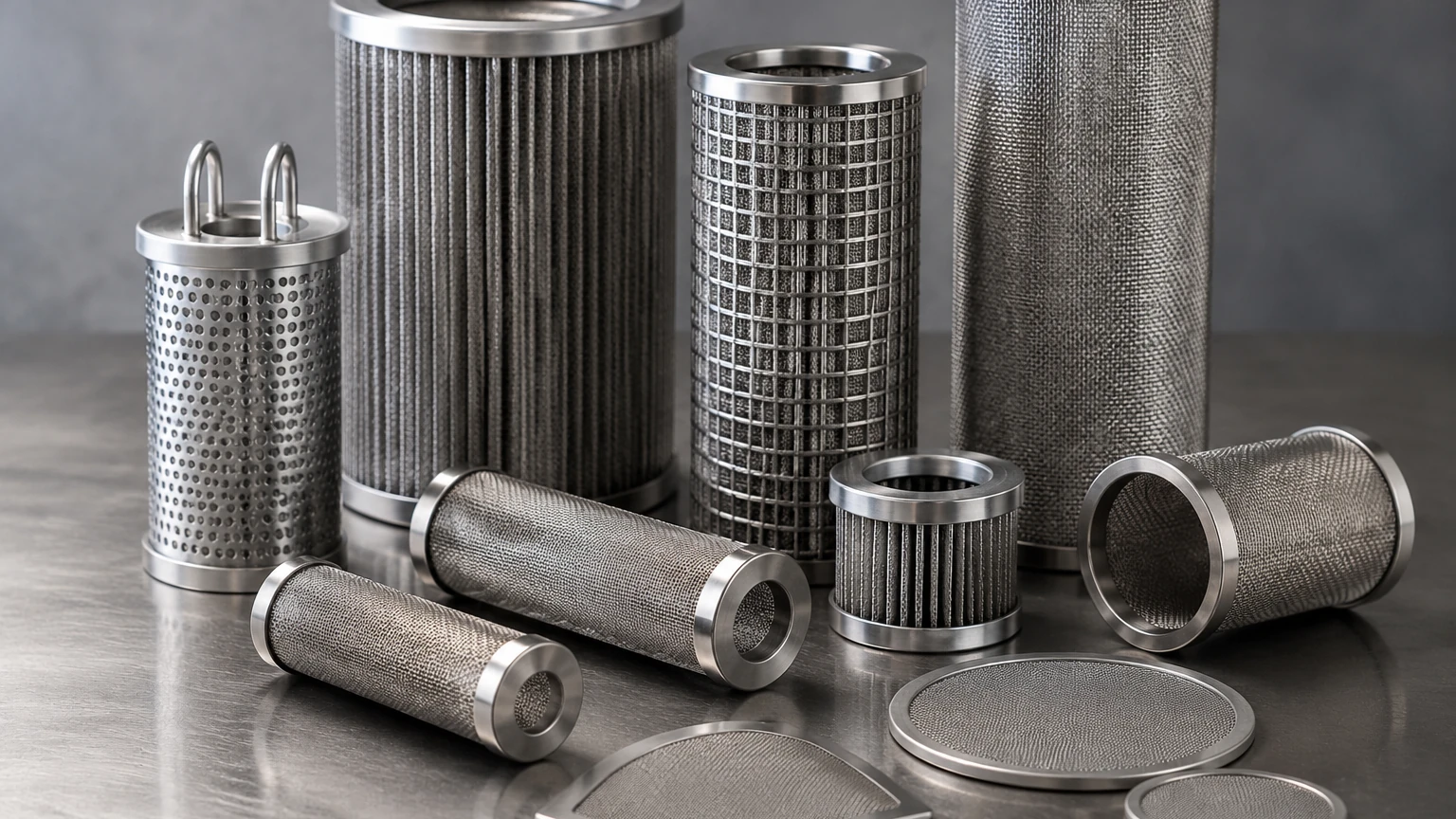
Industrial systems often have unique spatial constraints. Custom-manufactured water screens can be fabricated in various shapes, including cylindrical cartridges, flat panels, or conical strainers. Providing precise CAD specifications during the design phase ensures that the filtration component integrates seamlessly with existing piping and housing units. Kaifil specializes in these customized designs, offering OEM support to match specific application requirements.
Common Risks and Failure Modes in Water Screening
Identifying potential risks before they lead to system downtime is a hallmark of proactive engineering. Several factors can compromise the performance of a water scree system.
1. Blinding and Clogging: This occurs when particles that are slightly larger than the screen openings become wedged in the media, or when sticky, fibrous materials coat the surface. Selecting the right screen profile, such as V-shaped wedge wire, can mitigate this by providing a two-point contact that allows particles to pass through more easily once they clear the initial opening.
2. Corrosion and Erosion: Even stainless steel can succumb to erosion-corrosion if fluid velocities are too high or if the water contains highly abrasive silts. Monitoring the thickness of the screen elements over time is necessary for predicting the replacement cycle.
3. Biofouling: In water intake applications, the growth of algae, zebra mussels, or biofilm can rapidly reduce the open area. Material choices and surface smoothness play a significant role in how quickly these organisms can take hold.
4. Mechanical Fatigue: Constant vibration from pumps or cyclic pressure changes can lead to metal fatigue, particularly at weld points. High-quality manufacturing processes, including TIG welding and stress-relief treatments, are essential for long-term reliability.
Maintenance and Total Cost of Ownership (TCO)
While the initial purchase price of a water screen is a factor, the total cost of ownership is determined by maintenance requirements and the frequency of replacement. A well-engineered stainless steel screen may have a higher upfront cost than plastic or lower-grade metal alternatives, but its durability and cleanability often result in lower long-term expenses.
Cleaning Methodologies
* Backwashing: Reversing the flow of fluid to dislodge accumulated debris from the screen surface. This is common in automated self-cleaning filters.
* Ultrasonic Cleaning: For fine mesh screens used in pharmaceutical or food processing, ultrasonic baths can remove microscopic particles that manual scrubbing cannot reach.
* Chemical Cleaning: Using mild acids or bases to dissolve mineral scaling or organic biofilms. It is vital to ensure the screen material is compatible with the cleaning agents used.
Replacement Cycles
Establishing a predictable replacement cycle involves monitoring the pressure differential across the screen. When the "clean" pressure drop begins to rise even after a cleaning cycle, it indicates that the screen media is reaching the end of its functional life due to permanent fouling or mechanical wear. For more detailed guidance on selecting the right replacement components, engineers can visit the Main Page for technical specifications.
Selection Guide for Procurement and Engineering Teams
Before finalizing a purchase order for water screening components, the following technical data should be verified:
* Fluid Characteristics: Temperature, pH, viscosity, and chemical composition.
* Contaminant Profile: Particle size distribution, concentration (ppm), and the physical nature of the solids (e.g., hard, soft, fibrous).
* Operational Parameters: Normal and maximum flow rates, operating pressure, and maximum allowable pressure drop.
* Interface Requirements: Connection types (flanged, threaded, or slip-fit) and overall dimensional constraints.
* Compliance Standards: Requirements for FDA compliance (for food/beverage), ASME standards, or specific industry certifications.
By focusing on these factual boundaries, engineering teams can ensure that the water scree solutions they implement provide consistent, reliable performance. The integration of high-quality stainless steel filtration components is a strategic investment in the protection of industrial infrastructure and the purity of the final product.
