


Dual Basket Strainers Suppliers
In industrial fluid handling, maintaining continuous flow is often a non-negotiable requirement. Whether in chemical processing, oil and gas, or large-scale water treatment, the ability to remove particulates without halting production is a critical engineering priority. This demand is met by dual basket strainers—also known as duplex strainers. For engineers and procurement teams, identifying the right dual basket strainers suppliers involves more than comparing price points; it requires a deep understanding of material compatibility, pressure management, and the technical capabilities of the manufacturer.
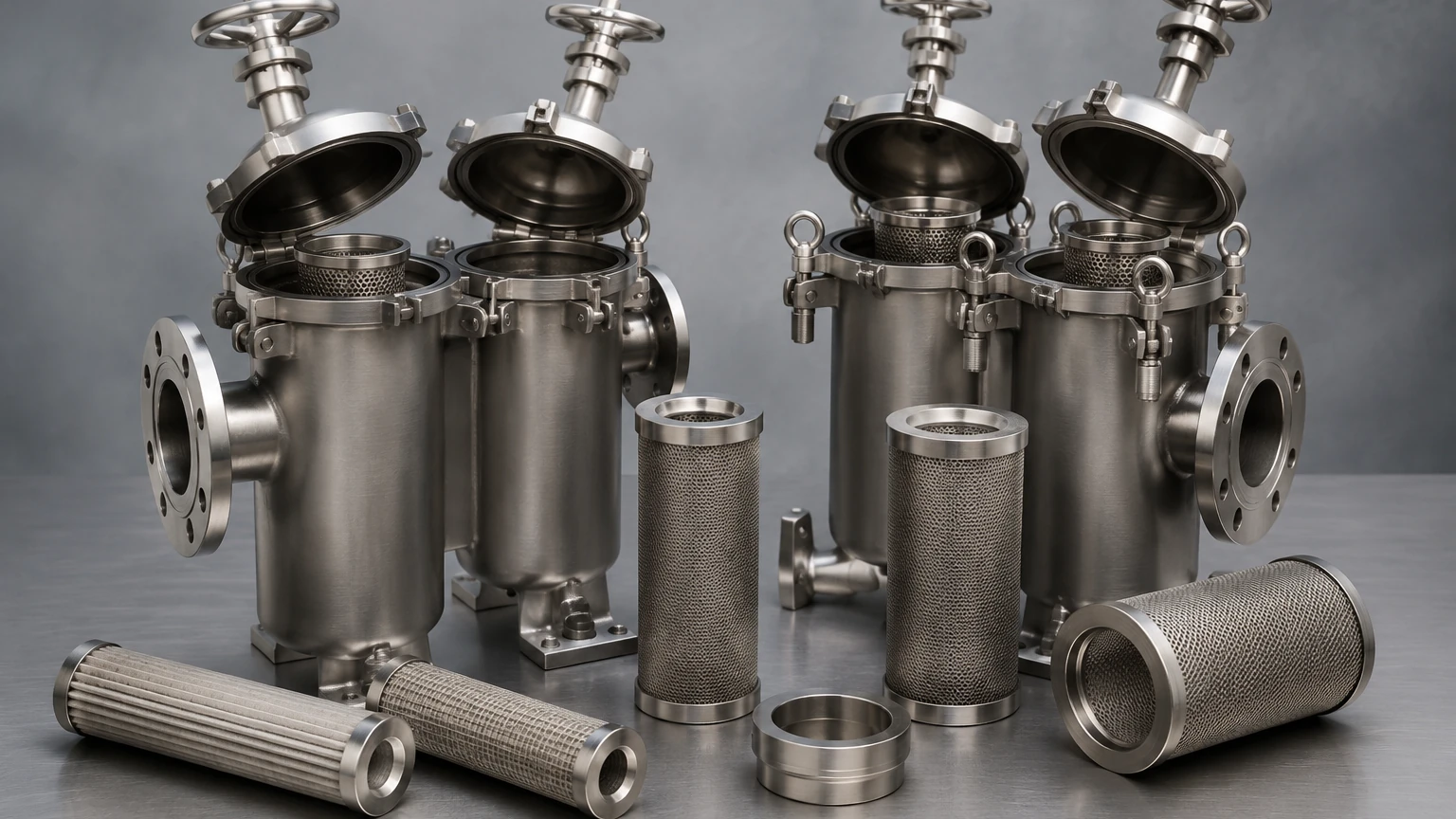
Dual basket strainers are designed with two separate chambers, each containing a filtration element. A diverter valve allows the operator to switch flow from one chamber to the other, enabling the cleaning or replacement of one basket while the process continues uninterrupted through the second. This article explores the technical nuances of these systems and provides a framework for evaluating suppliers to ensure long-term operational efficiency.
The Engineering Logic of Dual Basket Strainers
The primary advantage of a dual basket strainer is its redundancy. In a simplex (single) strainer system, the entire process must be shut down to clean the filter element once the differential pressure reaches a critical limit. In high-stakes industrial environments, such downtime can result in significant financial losses or even damage to downstream equipment like pumps and spray nozzles.
When evaluating dual basket strainers suppliers, it is essential to look at the diverter valve design. The most common types include plug valves and sliding gate valves. A high-quality supplier will provide a valve mechanism that ensures a bubble-tight seal, preventing bypass—where unfiltered fluid leaks into the clean side of the system. Furthermore, the ease of operation is a key factor; the transition between chambers should be smooth and require minimal torque, even under high-pressure conditions.
Material Selection and Industrial Compatibility
Material science is at the heart of effective filtration. Industrial fluids range from benign cooling water to highly corrosive acids and abrasive slurries. Consequently, the housing and the internal mesh must be selected based on the specific chemical and thermal properties of the media.
Stainless Steel vs. Carbon Steel
While carbon steel is often used for non-corrosive oil and water applications, stainless steel (specifically 304 and 316L) is the industry standard for demanding environments. Leading dual basket strainers suppliers, such as Kaifil, specialize in stainless steel solutions because of the material's superior resistance to pitting, crevice corrosion, and high temperatures. 316L stainless steel, with its added molybdenum content, is particularly effective in chloride-rich environments or pharmaceutical applications where hygiene and corrosion resistance are paramount.
Seal and Gasket Materials
Beyond the metal components, the choice of elastomers for seals and O-rings is a common point of failure. Suppliers should offer a range of options, including EPDM, Nitrile (Buna-N), Viton (FKM), and PTFE. The selection depends on the fluid's temperature and chemical composition. For instance, Viton is preferred for high-temperature chemical applications, while EPDM is excellent for water and steam systems.
Performance Metrics: Pressure Drop and Filtration Accuracy
Engineers must prioritize two technical metrics when consulting with dual basket strainers suppliers: the clean pressure drop and the required micron rating.
Understanding Pressure Drop (ΔP)
Every filter introduces a degree of resistance to flow. The "clean pressure drop" refers to the loss in pressure when the basket is new or recently cleaned. If the initial pressure drop is too high, it reduces the overall efficiency of the pump and leaves very little margin for debris accumulation before the system requires switching. Suppliers should provide flow curves (Cv values) that allow engineers to calculate the expected pressure drop based on the fluid’s viscosity and flow rate.
Filtration Accuracy (Micron Rating)
The "mesh" or "perforation" size of the basket determines the size of the particles removed. This can range from coarse 1/2-inch perforations for large debris to fine 20-micron wire mesh for precision protection. It is a common mistake to specify a mesh that is too fine for the application, which leads to rapid clogging and frequent switching between chambers. A knowledgeable supplier will help balance the need for protection with the practicalities of maintenance cycles.
Customization and OEM Capabilities
Standard off-the-shelf strainers often fail to meet the specific spatial or functional requirements of complex industrial skids. This is where the distinction between a distributor and a manufacturer becomes clear. Working directly with manufacturers like Kaifil allows for extensive customization.
Customization options may include:
* Connection Types: Beyond standard ANSI flanges, suppliers can provide NPT threads, socket weld, or sanitary tri-clamp connections.
* Specialized Coatings: For extremely abrasive media, internal linings or specialized surface treatments can extend the life of the housing.
* Instrumentation Ports: Adding differential pressure gauges or electronic sensors allows for automated monitoring of the filter’s status.
* Bespoke Basket Designs: Reinforced baskets for high-pressure surges or pleated mesh designs to increase the effective filtration surface area.
When vetting dual basket strainers suppliers, inquire about their ability to handle OEM (Original Equipment Manufacturer) requests. A supplier with in-house engineering and manufacturing can adapt the physical footprint of the strainer to fit into tight piping configurations without compromising flow capacity.
Evaluating Total Cost of Ownership (TCO)
The purchase price of a dual basket strainer is only one component of its total cost. Maintenance-heavy designs or low-quality components can lead to high operational expenses over time. Engineers should consider the following when calculating TCO:
1. Replacement Part Availability: Are the baskets and seals standard sizes, or are they proprietary? Proprietary parts from unreliable suppliers can lead to long lead times and inflated costs.
2. Ease of Maintenance: Does the design allow for tool-free entry? Quick-opening covers (such as swing bolts) significantly reduce the time required to clean a basket, lowering labor costs.
3. Durability of the Diverter: If the diverter valve fails, the entire unit becomes a simplex strainer, defeating the purpose of the investment. Robust valve construction is essential for longevity.
4. Energy Consumption: A poorly designed strainer with a high pressure drop forces pumps to work harder, increasing energy costs over the life of the equipment.
Critical Questions for Dual Basket Strainers Suppliers
Before finalizing a procurement decision, technical teams should confirm the following details with their chosen supplier:
* What is the maximum allowable working pressure (MAWP) and temperature range for this specific model? Ensure these exceed your system's peak operating conditions.
* Can you provide material test reports (MTRs)? This is vital for industries like pharmaceutical or aerospace where material traceability is a regulatory requirement.
* What is the ratio of the open area of the basket to the cross-sectional area of the pipe? A higher ratio (e.g., 6:1 or 8:1) typically means a lower pressure drop and longer intervals between cleanings.
* Is the unit hydrostatically tested before shipment? Quality suppliers will perform pressure tests to ensure housing integrity and seal performance.
Conclusion
Selecting a dual basket strainer is a strategic decision that affects the reliability of an entire industrial process. By focusing on material integrity, valve reliability, and the manufacturer's ability to provide customized engineering support, procurement teams can ensure they are investing in a solution that minimizes downtime and protects expensive downstream equipment.
As a specialist in stainless steel filtration, Kaifil provides the technical expertise and manufacturing precision required for these demanding applications. Whether you require standard configurations or highly specialized OEM components, our team works closely with global engineers to deliver durable, high-performance filtration solutions. For more information on our full range of stainless steel filters and custom capabilities, please visit our Main Page to review product options and application support.
