


Spun Polypropylene Sediment Filter
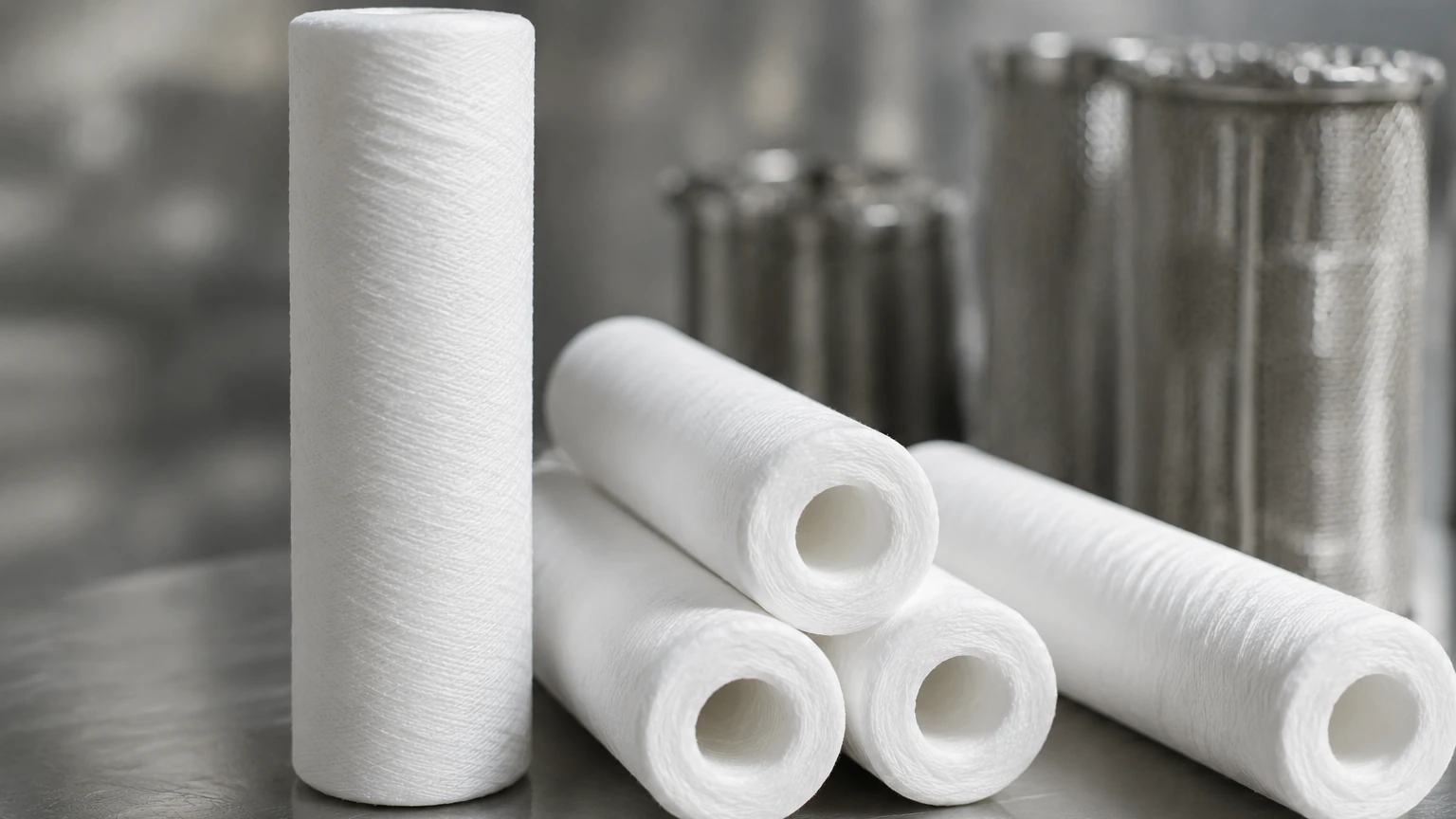
In industrial fluid processing, the removal of suspended solids is a fundamental requirement for protecting downstream equipment, ensuring product purity, and maintaining system efficiency. The spun polypropylene sediment filter is one of the most widely utilized depth filtration solutions across the chemical, pharmaceutical, and water treatment sectors. These filters are engineered through a melt-blown extrusion process that creates a complex, three-dimensional matrix of thermally bonded microfibers.
For engineers and procurement professionals, understanding the technical nuances of these components—ranging from gradient density structures to chemical compatibility—is essential for optimizing filtration performance. While these filters serve as excellent disposable pre-filtration stages, they are often used in conjunction with high-performance metal filtration systems, such as those found on the Main Page of specialized manufacturers like Kaifil, to achieve comprehensive contamination control.
The Engineering Behind Gradient Density Filtration
The performance of a spun polypropylene sediment filter is primarily defined by its manufacturing process. Melt-blown technology involves extruding molten polypropylene resin through high-velocity air streams, which attenuate the polymer into fine fibers. These fibers are then collected on a rotating mandrel to form a cylindrical cartridge.
One of the most critical engineering features of a high-quality spun filter is "gradient density." Unlike surface filters (such as screens or thin membranes) that trap particles on a single plane, a gradient density depth filter is designed with varying pore sizes throughout its cross-section.
1. Outer Layers: The exterior of the cartridge features larger pores and a lower fiber density. This section acts as a pre-filter, capturing larger sediment, sand, and scale.
2. Inner Layers: As the fluid moves toward the center of the cartridge, the fiber density increases and the pore size decreases. This allows for the capture of finer particles that bypassed the outer layers.
This structure prevents "surface blinding," where the outer surface becomes clogged prematurely while the inner volume remains unused. By distributing the particle load throughout the entire depth of the media, the filter achieves a significantly higher dirt-holding capacity and a longer service life compared to standard string-wound or uniform-density filters.
Key Performance Indicators: Micron Rating and Flow Dynamics
When selecting a spun polypropylene sediment filter, technical specifications must be matched to the specific requirements of the industrial application. There are three primary metrics to evaluate:
Micron Rating: Nominal vs. Absolute
Most spun polypropylene filters are classified as "nominal" filters. This means they are rated to trap a specific percentage (typically 85% to 95%) of particles at the stated micron size. In contrast, absolute-rated filters, often found in high-end stainless steel or pleated configurations, are designed to capture 99.9% of particles. For general sediment removal and pre-filtration for Reverse Osmosis (RO) systems, a nominal spun filter is usually sufficient and cost-effective.
Differential Pressure (ΔP)
Differential pressure is the difference in pressure between the upstream and downstream sides of the filter. A clean spun polypropylene filter should exhibit a very low initial ΔP (typically less than 2 PSI at rated flow). As the filter accumulates sediment, the ΔP increases. Engineers generally recommend replacing these filters when the differential pressure reaches 15–25 PSI. Operating beyond this point can lead to "unloading," where the pressure forces trapped contaminants through the compressed media and back into the process stream.
Flow Rate and Flux
Flux refers to the flow rate per unit of filter surface area. To maintain high filtration efficiency, it is important not to exceed the manufacturer’s recommended flow rate. High flux can cause particles to be driven deeper into the media than intended, leading to premature breakthrough. For industrial applications, sizing the housing to accommodate multiple cartridges is often necessary to maintain a low flux and extend the replacement interval.
Chemical Compatibility and Thermal Constraints
Polypropylene is a versatile thermoplastic known for its excellent chemical resistance. However, it has specific physical limitations that must be considered during the engineering phase.
* Chemical Resistance: Spun polypropylene is resistant to a wide range of acids, bases, and many organic solvents. This makes it an ideal choice for chemical processing and industrial wastewater treatment. However, it is susceptible to degradation by strong oxidizing agents and certain aromatic hydrocarbons.
* Thermal Limits: The standard operating temperature for a spun polypropylene sediment filter is typically capped at 60°C to 80°C (140°F to 176°F). Beyond these temperatures, the polypropylene fibers may soften or lose their structural integrity, leading to pore deformation and bypass.
* Purity: High-quality spun filters are manufactured without the use of binders, resins, or lubricants. This ensures that the filter itself does not contribute to extractables or leachables in the fluid, which is a critical requirement in food and beverage and pharmaceutical applications.
For processes involving high temperatures or aggressive chemicals that exceed the limits of polypropylene, engineers often transition to stainless steel filtration components. You can explore these high-durability options on the Kaifil Main Page.
Comparing Spun Polypropylene with Stainless Steel Filtration
In an industrial filtration train, different materials serve different purposes. Understanding when to use a disposable spun polypropylene sediment filter versus a cleanable stainless steel filter is vital for total cost of ownership (TCO) management.
| Feature | Spun Polypropylene Filter | Stainless Steel Filter (Kaifil) |
| :— | :— | :— |
| Filtration Type | Depth (Disposable) | Surface/Depth (Cleanable) |
| Temperature Range | Low to Moderate (<80°C) | High (Up to 500°C+) |
| Durability | Low (Compressible) | High (Rigid) |
| Initial Cost | Low | High |
| Lifecycle Cost | High (Frequent replacement) | Low (Reusable/Backwashable) |
| Micron Precision | Nominal | Absolute and Nominal |
Spun polypropylene filters are best suited for high-volume, low-cost sediment removal where the contaminant load is relatively light or the fluid is non-aggressive. However, in heavy-duty industrial environments—such as hydraulic systems, high-pressure steam filtration, or caustic chemical recovery—stainless steel wire mesh or sintered metal cartridges are the preferred choice. These metal filters can withstand extreme pressure differentials without deforming and can be cleaned and reused multiple times, significantly reducing the waste stream and long-term procurement costs.
Selection Criteria for Industrial Procurement
To ensure the successful integration of a spun polypropylene sediment filter into an industrial system, procurement teams and engineers should confirm the following technical details before purchase:
1. End-Cap Configuration: While many sediment filters are "Double Open End" (DOE), some industrial housings require specific end-cap styles to ensure a bypass-free seal. Common configurations include 222 or 226 O-rings with a fin or flat top. A poor seal at the end-cap is the most common cause of filtration failure.
2. Cartridge Dimensions: Standard industrial lengths include 10, 20, 30, and 40 inches. The outer diameter (OD) is typically 2.5 inches for standard housings or 4.5 inches for "Big Blue" or high-flow housings. Precise measurement is required to ensure compatibility with existing filter vessels.
3. Media Purity Standards: For regulated industries, ensure the filter meets FDA requirements for food contact or USP Class VI plastics testing for pharmaceutical use.
4. Specific Gravity and Viscosity: The flow rate of the fluid is heavily influenced by its viscosity. If the fluid is thicker than water, the flow rate through the spun polypropylene sediment filter will decrease, and the pressure drop will increase. This may require over-sizing the filtration system to compensate.
Best Practices for Installation and Replacement Cycles
Proper maintenance is essential to prevent the spun polypropylene sediment filter from becoming a source of contamination. Because these are depth filters, they cannot be effectively cleaned by backwashing. Once the internal matrix is saturated with particles, the cartridge must be replaced.
* Monitoring ΔP: Install pressure gauges on both the inlet and outlet of the filter housing. This is the only reliable way to determine the state of the filter. Relying on a fixed calendar schedule for replacement often leads to either premature disposal or system bypass.
* Sanitization: In applications where biological growth is a concern (such as water treatment), the filter housing should be sanitized during every cartridge change. Polypropylene is compatible with many chemical sanitizing agents, but it cannot be steam-sterilized like stainless steel filters.
* Handling: Always handle new filter cartridges with clean gloves. Even small amounts of oils or skin cells can introduce contaminants into high-purity systems.
Conclusion
The spun polypropylene sediment filter remains a cornerstone of industrial filtration due to its versatility, cost-effectiveness, and efficient depth-loading characteristics. By leveraging gradient density technology, these filters provide a reliable defense against suspended solids, protecting more expensive downstream components and ensuring process consistency.
However, the limitations of polypropylene regarding temperature, pressure, and reusability mean that it is often just one part of a larger filtration strategy. For demanding applications that require the structural integrity of metal, engineers should look toward customized stainless steel solutions. For more information on precision metal filters and custom industrial filtration engineering, visit the Main Page of Kaifil to explore high-performance alternatives designed for the most challenging environments.
