


Dust Collection System Manufacturers
In industrial environments, air quality and particulate management are fundamental to operational safety, regulatory compliance, and equipment longevity. Dust collection system manufacturers play a critical role in designing the infrastructure that captures airborne contaminants before they can impact worker health or contaminate sensitive production processes. However, for engineers and procurement specialists, selecting the right manufacturer involves more than just purchasing a housing unit; it requires a deep understanding of the filtration technology that sits at the heart of these systems.
Industrial dust collection is a complex engineering challenge that spans various sectors, including chemical processing, food and beverage production, pharmaceuticals, and metalworking. The efficacy of a system is largely determined by the synergy between the mechanical design of the collector and the performance characteristics of the filtration media. As manufacturers innovate to meet stricter environmental standards, the focus has shifted toward high-precision, durable components that can withstand demanding industrial cycles.
The Strategic Importance of Dust Collection System Manufacturers
Dust collection system manufacturers provide the primary defense against combustible dust, hazardous fumes, and fine particulates. These systems are not merely ventilation tools; they are integrated components of the production line. A well-engineered system ensures that a facility meets OSHA and NFPA standards regarding air quality and explosive dust hazards.
When evaluating manufacturers, it is essential to distinguish between those who provide standardized, off-the-shelf units and those who offer engineered solutions tailored to specific particulate characteristics. The nature of the dust—whether it is abrasive, hygroscopic, explosive, or ultra-fine—dictates the necessary configuration of the system. Manufacturers must account for the volume of air (CFM), the dust loading rate, and the required filtration efficiency to ensure the system does not become a bottleneck in the production process.
Core Components: The Role of Precision Metal Filters
While the housing and the fan provide the structure and the force, the filter element is the component that performs the actual separation. In many high-stakes industrial applications, traditional fabric or paper filters are insufficient due to temperature constraints or chemical reactivity. This is where specialized manufacturers of stainless steel filtration solutions become vital partners for dust collection system manufacturers.
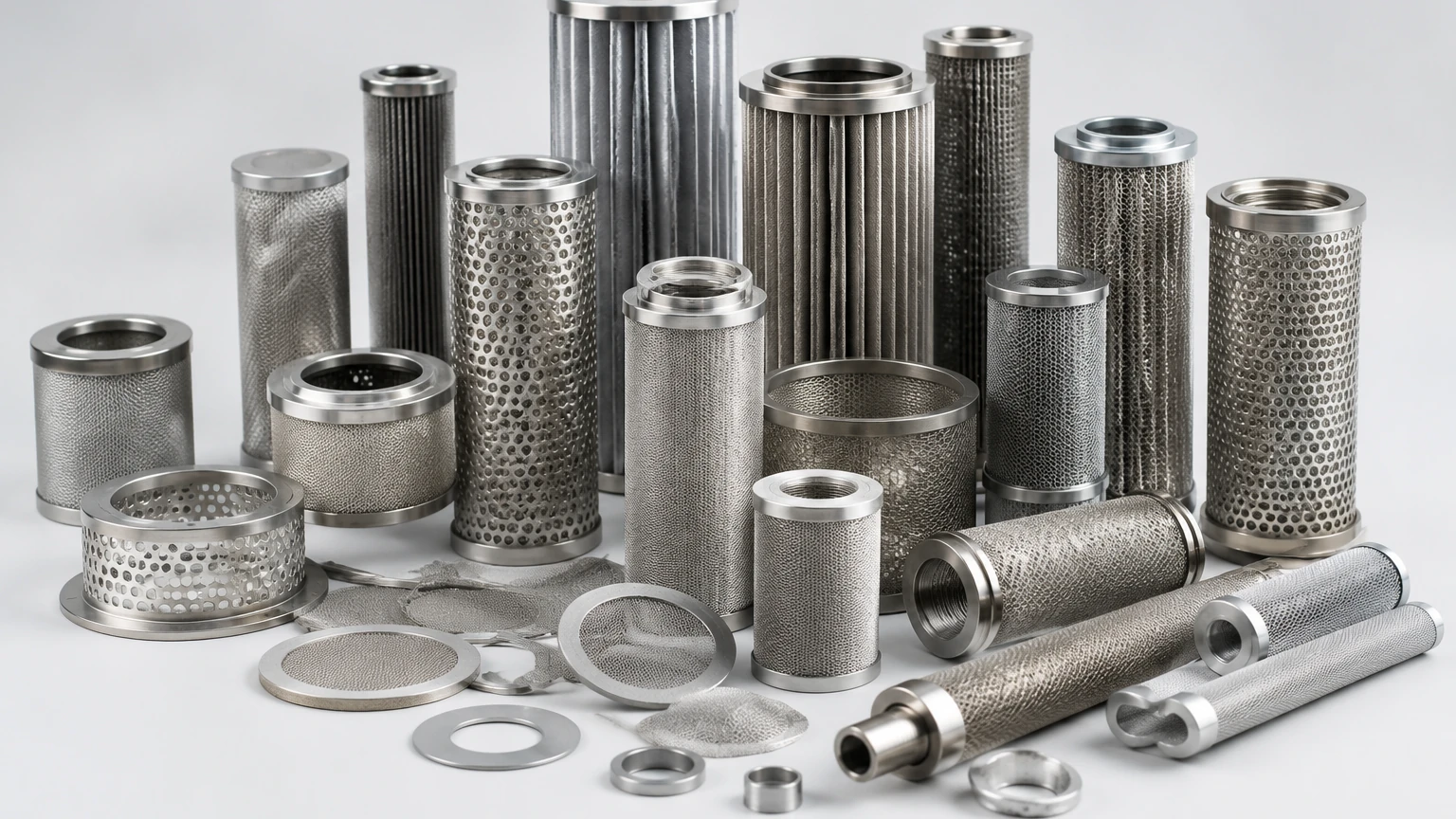
Stainless steel wire mesh filters and filter cartridges offer structural integrity that polymer-based media cannot match. In applications involving high temperatures or corrosive gases—common in chemical processing and metal smelting—metal filters maintain their pore geometry and filtration accuracy. These components are designed to be cleaned and reused, which significantly alters the total cost of ownership compared to disposable media. For engineers looking to optimize their systems, reviewing technical specifications on the Main Page of a specialized component manufacturer can provide insights into how custom metal filters enhance system reliability.
Technical Evaluation Criteria for Industrial Filtration Partners
Selecting a manufacturer requires a rigorous technical audit. Industrial buyers should focus on several key performance indicators to ensure the equipment will perform under real-world conditions:
1. Filtration Efficiency and Micron Rating: Manufacturers must provide documented evidence of the system's ability to capture particles at specific sizes. This is often expressed as a MERV rating or a specific micron efficiency percentage. For high-precision industries like pharmaceuticals, sub-micron filtration is often a requirement.
2. Pressure Drop (Delta P): A critical engineering metric is the initial and operating pressure drop across the filter media. A high pressure drop indicates that the fan must work harder, leading to increased energy consumption and potential system failure. Manufacturers should provide curves showing how pressure drop evolves as the filter cakes.
3. Air-to-Cloth Ratio: This ratio (the volume of air passing through each square foot of filter media) determines the velocity of the air as it moves through the filter. If the velocity is too high, particles may be forced through the media or cause premature wear.
4. Cleaning Mechanisms: How the system handles dust cake removal—whether through pulse-jet cleaning, reverse air, or mechanical shaking—impacts the lifespan of the filter elements. Stainless steel cartridges are particularly well-suited for high-pressure pulse-jet systems due to their rigid construction.
Engineering Parameters: Balancing Airflow and Filtration Efficiency
Engineers must balance the need for high filtration efficiency with the physical realities of airflow and energy use. Dust collection system manufacturers often collaborate with component specialists to design filters that maximize surface area without compromising the structural integrity of the cartridge.
In a pulse-jet system, for instance, the filter must withstand frequent bursts of high-pressure air designed to dislodge the dust cake. If the filter media is too flexible, it can fatigue and tear. If it is too rigid and poorly designed, it may not flex enough to shed the dust effectively. Precision-engineered stainless steel mesh provides a "middle ground" of sorts—it is rigid enough to maintain its shape under vacuum but can be pleated to significantly increase the effective filtration area within a compact footprint.
Furthermore, the "face velocity"—the speed of the air as it hits the filter surface—must be carefully managed. High face velocities can lead to "blinding," where particles become deeply embedded in the media, making them impossible to remove through standard cleaning cycles. Manufacturers who understand these dynamics can provide systems that operate at a steady state for much longer periods.
Material Science in Dust Collection: Beyond Standard Media
Material selection is a primary boundary in industrial filtration. While many dust collection system manufacturers default to polyester or aramid fibers, certain environments demand the properties of stainless steel.
* Corrosion Resistance: In chemical plants where the "dust" may actually be acidic or caustic particulates, 304 or 316L stainless steel is required to prevent the filter from dissolving or oxidizing.
* Temperature Extremes: Standard fabric filters typically fail above 250°F (121°C). Stainless steel components can operate effectively at temperatures exceeding 800°F (426°C), making them essential for kiln exhausts, foundries, and steam filtration.
* Food and Beverage Compliance: In food processing, filters must be non-shedding and capable of withstanding Clean-in-Place (CIP) procedures. Stainless steel wire mesh filters meet these stringent hygiene requirements while providing high-flow capabilities.
By consulting the Main Page of a dedicated metal filter manufacturer, procurement teams can identify which alloy and mesh weave (such as plain, twilled, or dutch weave) best suits their specific environmental challenges.
Addressing Operational Risks and Maintenance Cycles
One of the most common risks in industrial dust collection is the unexpected failure of filter elements, leading to "bypass." Bypass occurs when contaminated air finds a path around the filter media, often due to poor sealing or structural failure of the filter frame. This results in downstream contamination and potential damage to the system's blower.
To mitigate these risks, engineers should confirm the following with their manufacturers:
* Gasket and Seal Integrity: Ensure that the interface between the filter cartridge and the housing uses high-quality, temperature-stable elastomers or metal-to-metal seals.
* Burst Strength: The filter must be rated for the maximum differential pressure the fan can exert. If a system becomes heavily loaded, the filter should not collapse.
* Ease of Replacement: Maintenance cycles are a significant part of the total cost of ownership. Manufacturers should design systems where filters can be accessed and replaced quickly without specialized tools, reducing downtime.
For many facilities, the transition from disposable filters to permanent, cleanable stainless steel elements represents a major shift in maintenance strategy. While the initial investment is higher, the elimination of recurring filter purchases and the reduction in hazardous waste (spent filters) often results in a lower total cost over the life of the system.
Selecting a Partner for Custom Filtration Solutions
The most effective dust collection system manufacturers are those who view themselves as solution providers rather than equipment vendors. This is particularly true when a standard catalog item cannot meet the specific constraints of a facility, such as limited floor space or unique particulate shapes (e.g., long fibers vs. spherical dust).
Customization options often include:
* Bespoke Cartridge Dimensions: Fitting high-efficiency media into existing, older housing units.
* Specialized Coatings or Finishes: Electropolishing stainless steel filters to prevent sticky dust from adhering to the surface.
* Integrated Support Structures: Designing internal cores that can withstand extreme vacuum pressures in heavy-duty industrial vacuums.
When evaluating dust collection system manufacturers, it is prudent to ask about their OEM capabilities. A manufacturer that can produce custom stainless steel components in-house, or works closely with a specialist like Kaifil, offers a level of flexibility that is essential for complex engineering projects. For those seeking to review product options and application support for such specialized components, the Main Page serves as a technical resource for understanding the possibilities of custom metal filtration.
Conclusion: Making an Informed Procurement Decision
Choosing between various dust collection system manufacturers requires a balance of mechanical engineering, material science, and economic analysis. The goal is to implement a system that not only clears the air but does so with the highest possible reliability and the lowest possible maintenance burden.
Engineers should prioritize manufacturers who are transparent about their filtration media's performance and who offer the material options necessary for their specific environment. By focusing on the quality of the filtration components—such as precision-manufactured stainless steel cartridges—industrial operators can ensure their dust collection systems remain an asset to their production efficiency rather than a maintenance liability. Whether the application is in chemical processing, food production, or heavy manufacturing, the right partnership between system designers and component specialists is the key to long-term success.
