Dust Collection Systems Manufacturers
In the industrial landscape, dust collection systems are essential for maintaining air quality, ensuring worker safety, and protecting sensitive machinery from particulate contamination. For engineers and procurement professionals, selecting the right partner among the various dust collection systems manufacturers involves more than just comparing equipment footprints. It requires a deep understanding of filtration mechanics, material science, and the specific demands of the application environment. While many manufacturers provide the primary housing and blower units, the long-term efficiency of these systems is largely determined by the quality and design of the internal filtration components.
The Role of Manufacturers in Industrial Air Quality
Industrial dust collection systems manufacturers typically fall into two categories: those who produce turnkey systems (including housings, fans, and ductwork) and specialized component manufacturers who design the high-performance filter cartridges and mesh elements that perform the actual separation. For complex industrial processes—such as chemical processing, metalworking, or pharmaceutical manufacturing—the standard "off-the-shelf" solutions often fall short.
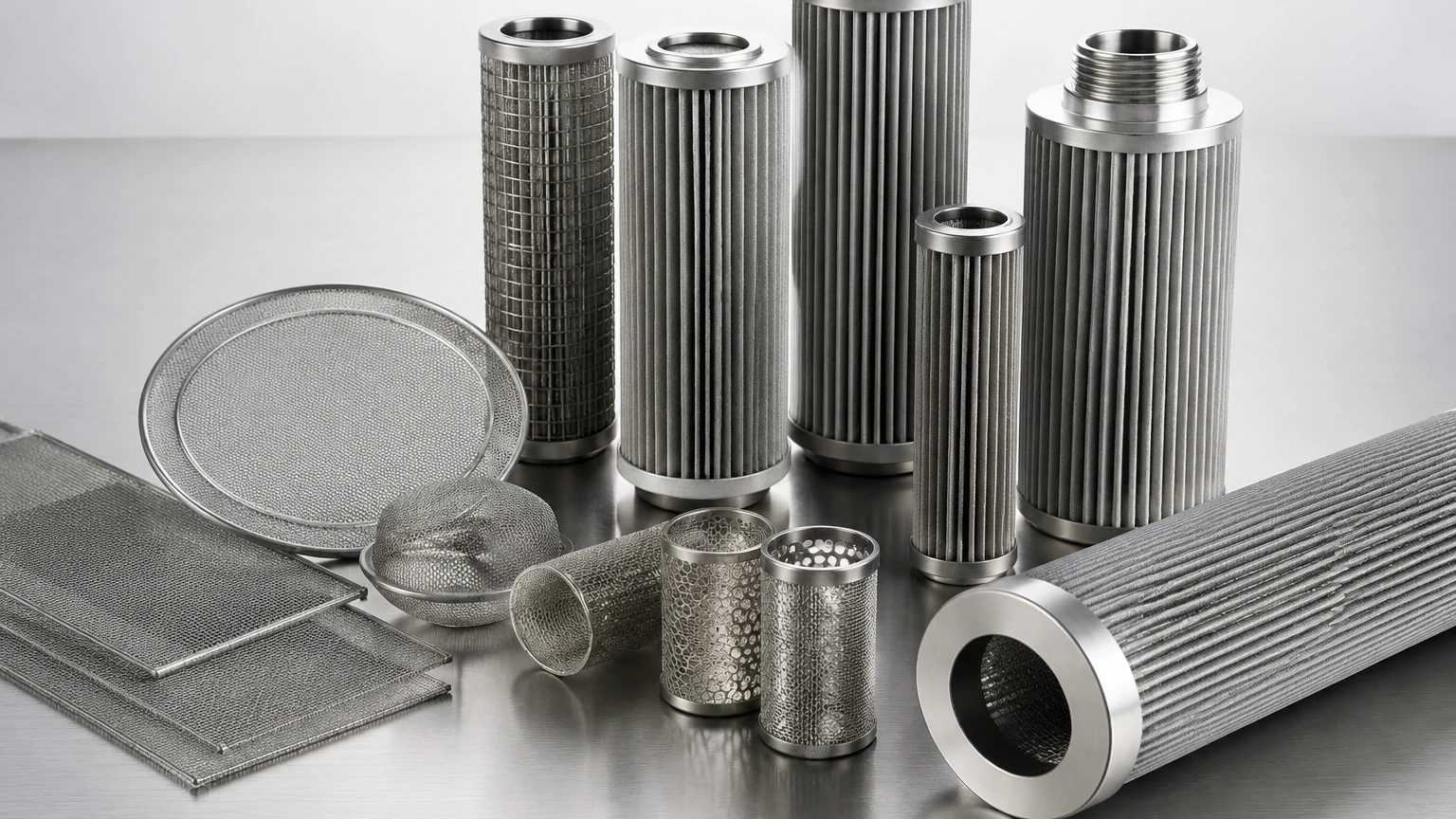
Specialized manufacturers like Kaifil focus on the engineering of the filtration media itself. By utilizing stainless steel wire mesh and precision metal filter components, these manufacturers provide solutions for environments where traditional fabric or paper filters would fail. When evaluating manufacturers, it is critical to determine whether they have the internal engineering capacity to customize the filtration media to meet specific particle size distributions and flow requirements.
Engineering Considerations for High-Performance Filtration
When collaborating with dust collection systems manufacturers, technical professionals must prioritize several engineering parameters to ensure the system operates at peak efficiency. These considerations go beyond simple micron ratings and involve the fluid dynamics of the entire system.
Air-to-Cloth Ratio and Face Velocity
The air-to-cloth ratio (or filtration velocity) is a fundamental metric in dust collection. It represents the volume of air passing through a square foot of filter media per minute. Manufacturers must calculate this carefully; a ratio that is too high can lead to premature filter blinding, increased pressure drop, and shortened service life. Conversely, a ratio that is too low may result in an oversized, unnecessarily expensive system. Precision-engineered stainless steel filters allow for more consistent flow control compared to flexible media, which can deform under high pressure.
Pressure Drop and Energy Consumption
The differential pressure across the filter media is a direct indicator of system health. High-quality manufacturers design their filter elements to minimize initial pressure drop while maintaining high capture efficiency. As dust builds up on the surface (the "dust cake"), the pressure drop increases. Manufacturers who specialize in pleated stainless steel cartridges can often provide a higher surface area within the same footprint, effectively lowering the operating pressure and reducing the energy required by the system’s blowers.
Material Selection for Demanding Applications
One of the most significant differentiators among dust collection systems manufacturers is their expertise in material selection. While many systems use polyester or cellulose media, demanding industrial applications often require the durability of metal.
1. Stainless Steel Wire Mesh: Ideal for high-temperature applications or environments where sparks may be present. Stainless steel 304 and 316L offer excellent corrosion resistance, making them suitable for chemical processing and food-grade environments.
2. Sintered Metal Media: For extremely fine particulate and high-pressure applications, sintered metal provides a rigid structure that can withstand rigorous pulse-jet cleaning cycles without losing structural integrity.
3. Chemical Compatibility: Manufacturers must ensure that the filter media, adhesives, and gaskets are compatible with the gases and particulates being filtered. In pharmaceutical or food processing, the materials must also meet stringent regulatory standards for cleanliness.
For a comprehensive look at the materials and custom options available for industrial filtration, you can visit our Main Page to review technical specifications and application support.
Customization and OEM Capabilities
Many dust collection systems manufacturers offer standard product lines, but the most effective industrial solutions are often customized. OEM (Original Equipment Manufacturer) capabilities are a hallmark of a high-tier filtration partner. Customization can involve several layers of engineering:
* Dimensional Customization: Adapting filter cartridges to fit existing housings or unique spatial constraints within a facility.
* Layered Media Design: Combining different grades of wire mesh to achieve a specific filtration gradient, which can improve depth filtration and extend the time between cleaning cycles.
* Structural Reinforcement: In high-vacuum or high-pressure systems, the filter element must be reinforced with internal cores or external shrouds to prevent collapse or bursting.
By working with a manufacturer that understands these nuances, engineers can optimize their dust collection systems for specific particulate types, whether they are abrasive, hygroscopic, or prone to static accumulation.
Evaluating Manufacturer Quality and Performance
To mitigate risks during the procurement process, it is essential to evaluate dust collection systems manufacturers based on their quality control processes and technical verification methods. A reliable manufacturer should be able to provide detailed data on the following:
Filtration Efficiency and Micron Ratings
Manufacturers should specify whether their micron ratings are absolute or nominal. In critical applications, absolute ratings are necessary to ensure that 99.9% of particles above a certain size are captured. Testing according to international standards (such as ISO or ASTM) provides the necessary verification that the filters will perform as advertised.
Durability and Fatigue Resistance
In systems that utilize pulse-jet cleaning, the filter media is subjected to frequent bursts of compressed air. This mechanical stress can cause fatigue in lower-quality materials. Manufacturers using advanced welding techniques, such as TIG or plasma welding, produce more robust filter elements that can survive thousands of cleaning cycles without cracking or leaking.
Total Cost of Ownership (TCO)
While the initial cost of stainless steel or custom-engineered filters may be higher than disposable alternatives, the TCO is often significantly lower. Manufacturers who focus on durability and cleanability help facilities reduce replacement costs, minimize downtime, and lower waste disposal fees. Engineers should request data on the expected service life and recommended cleaning procedures to calculate the long-term value of the filtration components.
Maintenance and Replacement Cycles
Even the best-engineered systems require a maintenance strategy. Leading dust collection systems manufacturers provide clear guidelines on when to clean or replace filter elements. This is typically based on the stabilized pressure differential. If the pressure drop does not return to a baseline level after a cleaning cycle, it indicates that the media has become deeply embedded with particulate (blinded) or that the material has reached the end of its fatigue life.
Using stainless steel filters allows for various cleaning methods, including ultrasonic cleaning, chemical baths, or high-pressure washing, which are not possible with traditional fabric filters. This capability is a major advantage for industries looking to improve their sustainability profiles by reducing the volume of spent filters sent to landfills.
Conclusion: Selecting the Right Partner
The selection of a manufacturer for dust collection components is a strategic decision that impacts the safety and efficiency of an entire industrial operation. By focusing on technical expertise, material quality, and the ability to provide customized engineering solutions, procurement teams can ensure they are investing in a system that will perform reliably under demanding conditions.
Whether the application involves recovering valuable catalysts in a chemical plant or protecting workers from silica dust in a manufacturing facility, the quality of the filtration media is the most critical factor. Engaging with manufacturers who specialize in precision metal filtration ensures that the technical requirements of the application are met with durability and precision. For more information on custom filtration solutions and engineering support, visit our Main Page to explore our full range of industrial filter products.