


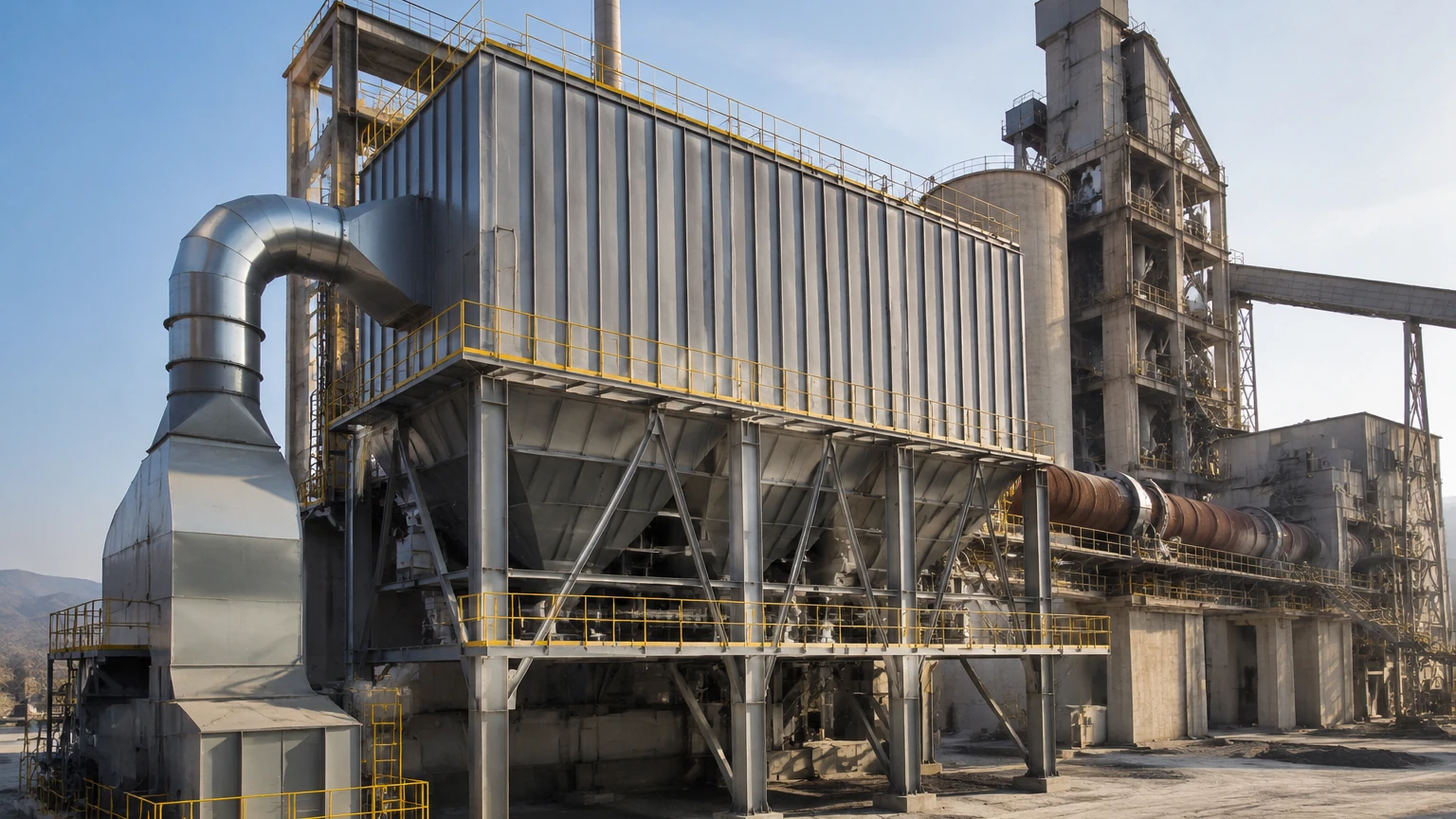
Dust Collector in Cement Plant
In the heavy industrial landscape of cement manufacturing, the dust collector in cement plant operations is not merely an auxiliary component but a critical piece of infrastructure. Cement production is inherently a high-dust process, involving the crushing, grinding, and heating of raw materials such as limestone, clay, and shale, followed by the cooling and grinding of clinker. Without robust filtration systems, these processes would result in significant material loss, severe environmental degradation, and non-compliance with stringent air quality regulations.
For engineers and technical procurement teams, understanding the nuances of filtration technology in this sector is essential. The efficiency of a dust collector directly impacts the total cost of ownership (TCO) of the plant, influencing everything from energy consumption to the frequency of maintenance shutdowns. This article explores the technical requirements, engineering challenges, and selection criteria for industrial filtration components within the cement industry.
The Role of Filtration in Cement Manufacturing
A dust collector in cement plant environments serves three primary functions: environmental protection, material recovery, and equipment preservation.
1. Environmental Compliance: Modern cement plants must adhere to strict particulate matter (PM) emission limits, often requiring filtration efficiencies that capture particles smaller than 2.5 microns (PM2.5).
2. Product Recovery: The dust generated during the grinding of raw meal and finished cement is valuable product. High-efficiency filtration ensures that this material is captured and returned to the production line, directly improving the plant's yield.
3. Equipment Protection: Downstream equipment, such as fans and heat exchangers, can be severely damaged by abrasive cement dust. Effective filtration prevents premature wear and erosion of these critical components.
To achieve these goals, manufacturers often look toward advanced solutions. For those seeking specialized technical support or detailed product specifications, visiting the Main Page of a dedicated filtration manufacturer can provide insights into customized metal filter components that withstand the rigors of these environments.
Types of Dust Collection Systems Used in Cement Plants
While several technologies exist for particulate control, two primary systems dominate the cement industry: Baghouses (Fabric Filters) and Electrostatic Precipitators (ESPs). In recent years, there has been a significant shift toward baghouse technology due to its ability to maintain high efficiency regardless of dust resistivity or gas velocity fluctuations.
Baghouses (Fabric Filters)
Baghouses operate by passing dust-laden gas through a series of filter bags. The dust is collected on the surface of the media, forming a "dust cake" that actually aids in the filtration process. In cement plants, pulse-jet baghouses are the standard. These systems use short bursts of compressed air to dislodge the dust cake, allowing it to fall into a hopper for recovery.
Electrostatic Precipitators (ESPs)
ESPs use electrical energy to charge particles, which are then attracted to collector plates. While ESPs have low pressure drops and can handle very high temperatures, their efficiency is highly dependent on the chemical composition and moisture content of the gas. As emission standards tighten, many plants are retrofitting ESPs with baghouses or hybrid systems to ensure consistent performance.
Engineering Challenges: Temperature, Abrasion, and Chemical Stress
The operating environment for a dust collector in cement plant settings is one of the most demanding in the industrial world. Engineers must account for several variables when designing or specifying filtration components.
Thermal Management
In the kiln and clinker cooler areas, gas temperatures can exceed 400°C (750°F). Even after cooling through heat exchangers or water sprays, the filtration media must often operate continuously at temperatures between 150°C and 260°C. Standard synthetic fibers may degrade under these conditions, leading to the consideration of specialized metal mesh or high-temperature ceramic filters for specific zones.
Abrasive Wear
Cement dust is highly abrasive. High-velocity particles can quickly erode filter media and internal housing components. Engineering the airflow to ensure uniform distribution and low interstitial velocity is critical to extending the life of the filter elements. Furthermore, the use of precision-engineered stainless steel support cages and venturis is necessary to prevent mechanical failure of the bags during pulse-jet cleaning.
Chemical Corrosion
Raw materials and fuels used in cement kilns often contain sulfur, chlorides, and alkalis. When gas temperatures drop below the acid dew point—particularly during start-up or shut-down—acidic condensation can occur. This leads to the corrosion of metal components and the blinding of filter media. Utilizing corrosion-resistant alloys, such as 304 or 316L stainless steel for filter housings and internal components, is a common engineering strategy to mitigate this risk.
Selecting Filter Media for Cement Applications
The choice of filter media is the most significant factor in determining the performance of a dust collector in cement plant operations. The selection process must balance filtration efficiency, pressure drop, and durability.
* Micron Rating and Efficiency: For finished cement grinding, where particles are extremely fine, membrane-coated media (such as PTFE) are often used to provide surface filtration and high release properties.
* Permeability: The media must allow air to pass through with minimal resistance (low pressure drop) while still capturing fine particulates. A high pressure drop increases the load on the main process fan, leading to higher electricity costs.
* Mechanical Strength: In pulse-jet systems, the media is subjected to thousands of cleaning cycles. It must possess high tensile strength and flex fatigue resistance to prevent tearing.
In specific high-stress areas, such as hydraulic systems or specialized chemical additive injectors within the plant, stainless steel wire mesh filters are often preferred over fabric. These metal components offer superior structural integrity and can be cleaned and reused, providing a lower total cost of ownership in demanding sub-processes. For a comprehensive look at these precision components, engineers can refer to the Main Page for technical data on stainless steel filtration solutions.
Optimizing Performance: Pressure Drop and Cleaning Cycles
Operational efficiency in a cement plant is closely tied to the management of the dust collector's differential pressure (DP). A high DP indicates that the filters are loaded with dust or are becoming "blinded," which restricts airflow and can choke the kiln or mill process.
Pulse-Jet Cleaning Optimization
The cleaning system must be tuned to the specific dust characteristics. If the pulse pressure is too high, it can damage the media; if it is too low, the dust cake will not be effectively removed. Modern systems utilize "cleaning on demand," where the pulse cycle is triggered by a specific DP setpoint rather than a simple timer. This reduces compressed air consumption and extends the mechanical life of the filter bags.
Air-to-Cloth Ratio
The air-to-cloth (A/C) ratio, or filtration velocity, is the volume of gas passing through a square foot of filter media per minute. In cement plants, A/C ratios are typically kept low (often between 2.0:1 and 3.5:1) to ensure that fine dust particles do not become deeply embedded in the media fibers, which would lead to irreversible blinding.
Technical Evaluation and Procurement Criteria
When purchasing or upgrading a dust collector in cement plant facilities, technical professionals should evaluate suppliers based on engineering depth rather than just initial capital cost. Key considerations include:
1. Customization Capability: Does the manufacturer provide bespoke designs for filter cages, cartridges, and mesh components that fit existing OEM housings?
2. Material Traceability: In corrosive environments, ensuring that stainless steel components are of the specified grade (e.g., 316L) is vital for long-term reliability.
3. Technical Support: Can the supplier assist in calculating the optimal filtration area or suggest material upgrades for problematic zones in the plant?
4. Total Cost of Ownership: Evaluate the expected lifespan of the filter elements, the energy consumption associated with the pressure drop, and the cost of replacement labor.
Conclusion
The dust collector in cement plant operations is a cornerstone of sustainable and efficient manufacturing. By focusing on high-quality filtration media, robust mechanical design, and optimized cleaning parameters, cement producers can achieve superior environmental performance and material recovery. As the industry moves toward even stricter emission standards and higher thermal efficiencies, the role of precision-engineered filtration components—particularly those made from durable materials like stainless steel—will continue to grow. For more information on high-performance industrial filtration solutions, visit https://www.kaifil.com/ to explore customized options for demanding industrial environments.
