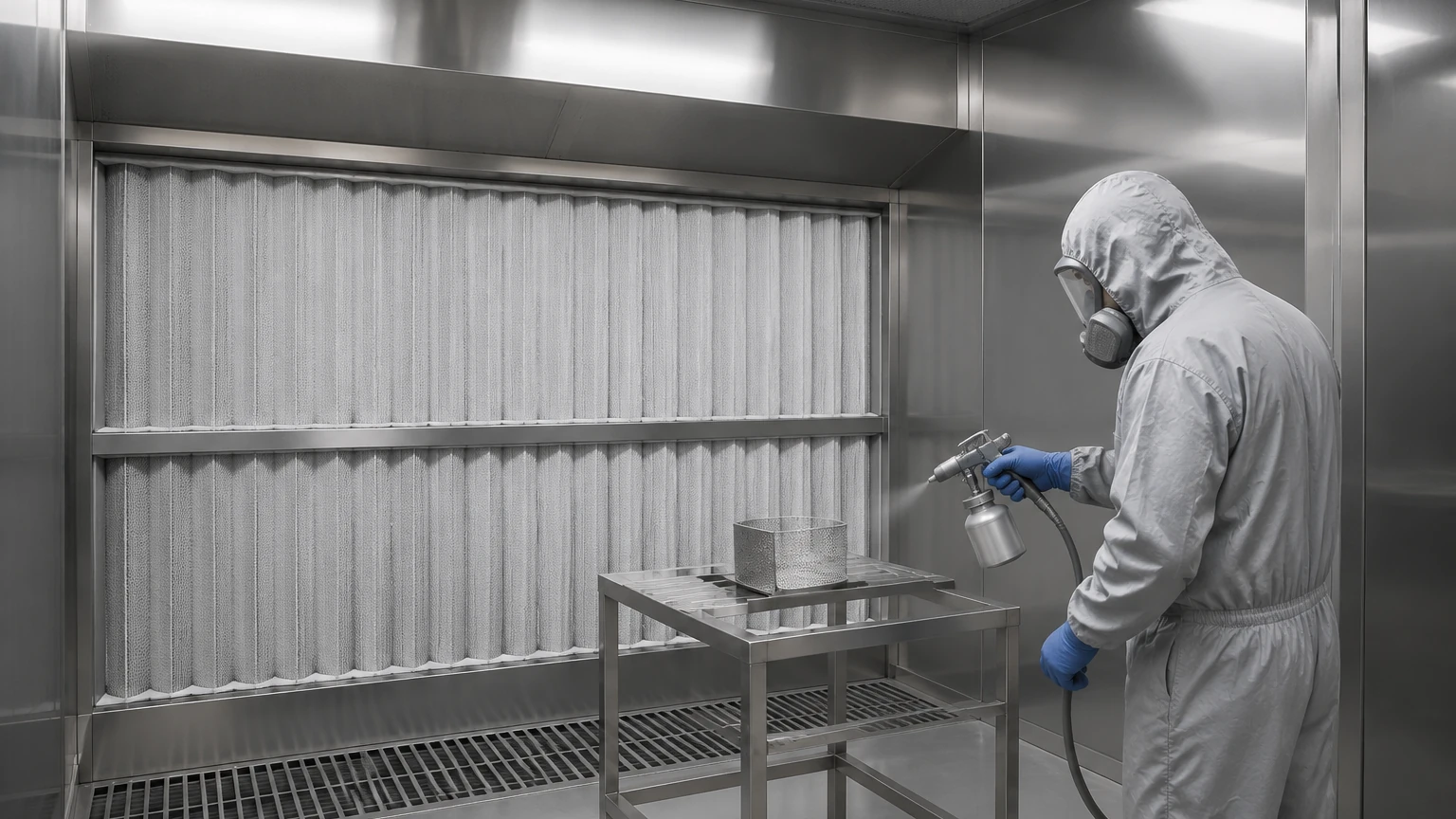
Dust Control Booth
In industrial manufacturing, the management of airborne particulates is a critical factor for both personnel safety and product integrity. A dust control booth serves as a dedicated enclosure designed to capture, contain, and filter dust generated during various processes such as grinding, sanding, powder mixing, and chemical processing. While the structural enclosure provides the physical boundary, the efficiency of any dust control booth is fundamentally determined by its filtration system. For engineers and facility managers, selecting the correct filtration components—specifically stainless steel wire mesh and precision filter cartridges—is essential to ensuring long-term operational reliability and compliance with environmental standards.
The Engineering Principles of a Dust Control Booth
A dust control booth operates on the principle of airflow management. By creating a controlled environment where air is drawn away from the operator and through a series of filters, the system prevents hazardous particulates from migrating into the broader facility. The effectiveness of this process relies on two primary metrics: capture velocity and filtration efficiency.
Capture velocity refers to the speed of air required to pull dust particles into the intake system before they can disperse. Depending on the density and size of the dust, this velocity must be carefully calibrated. Once the air enters the system, the filtration media must be capable of removing the particulates without causing an excessive pressure drop. High-performance filtration components, such as those found on the Main Page of specialized manufacturers like Kaifil, are engineered to balance these competing requirements.
Filtration Media: Wire Mesh vs. Cartridge Systems
When designing or upgrading a dust control booth, engineers must choose between different types of filtration media based on the specific characteristics of the dust produced.
1. Stainless Steel Wire Mesh Filters: These are often used as pre-filters or in applications involving heavy, abrasive particles. The precision of the weave allows for specific micron ratings while maintaining high structural integrity. Stainless steel mesh is particularly valuable in environments involving high temperatures or corrosive chemicals where synthetic media would fail.
2. Sintered Metal Filters: For applications requiring extreme durability and fine filtration, sintered metal components offer a rigid structure that can withstand high-pressure pulses during self-cleaning cycles.
3. Filter Cartridges: Often used as the primary stage of filtration in a dust control booth, cartridges provide a large surface area in a compact footprint. When these cartridges are reinforced with stainless steel support cores or mesh, they offer enhanced stability under high airflow volumes.
Material Selection for Demanding Environments
The choice of material for filtration components within a dust control booth is not merely a matter of cost, but of chemical and thermal compatibility. In many B2B industrial sectors, standard carbon steel or plastic components are insufficient.
* Chemical Processing: In booths used for chemical weighing or mixing, the filters must resist corrosion from acidic or alkaline vapors. Type 316L stainless steel is the industry standard here due to its superior resistance to pitting and stress corrosion cracking.
* Food and Beverage: Filtration in food-grade dust control booths must comply with strict hygiene standards. Stainless steel components are non-leaching, easy to sanitize, and resistant to the aggressive cleaning agents used in wash-down procedures.
* Pharmaceuticals: Precision is paramount in pharmaceutical dust containment. Sintered wire mesh filters provide the exact pore size distribution necessary to capture active pharmaceutical ingredients (APIs) while ensuring no media migration occurs into the product stream.
Optimizing Airflow and Pressure Drop
One of the most common challenges in dust control booth operation is the "pressure drop"—the difference in air pressure between the upstream and downstream sides of the filter. As a filter captures dust, the pores become restricted, increasing the pressure drop and requiring the fan motor to work harder. This not only increases energy consumption but can also reduce the capture velocity at the booth's face, potentially allowing dust to escape.
By utilizing custom-engineered stainless steel filters, manufacturers can optimize the open area of the mesh to ensure maximum airflow with minimal initial resistance. Furthermore, the mechanical strength of stainless steel allows for thinner wire diameters without sacrificing the structural integrity of the filter element, which helps maintain a lower pressure drop over a longer operational life.
Integration of Custom Filtration Solutions
Every industrial process generates dust with unique characteristics—some particles are spherical and free-flowing, while others are fibrous, oily, or explosive. A standard, off-the-shelf dust control booth may not provide the specific filtration nuances required for specialized applications. This is where OEM and customized filtration solutions become vital.
Customization options often include:
* Micron Rating Adjustments: Fine-tuning the mesh size to target specific particle distributions.
* Structural Reinforcement: Adding internal support cores to prevent filter collapse in high-vacuum systems.
* End-Cap Configurations: Designing custom fittings to ensure a leak-proof seal within the booth’s housing.
* Surface Treatments: Applying coatings or finishes to the stainless steel to improve dust cake release during cleaning cycles.
For technical teams looking to integrate these components, reviewing the Main Page of a dedicated manufacturer provides insight into the range of available configurations and material grades.
Safety and Compliance Considerations
Operating a dust control booth involves significant safety responsibilities, particularly regarding combustible dust. Standards such as NFPA 652 (Standard on the Fundamentals of Combustible Dust) require facilities to manage the risks of dust explosions. In these scenarios, the filtration system must be integrated with explosion venting or suppression systems.
Stainless steel filtration components play a role in safety by providing conductive paths for grounding, which helps prevent the buildup of static electricity—a common ignition source in dust collection systems. Additionally, the fire-resistant nature of metal filters provides an added layer of protection compared to flammable polyester or cellulose media.
Maintenance and Total Cost of Ownership
While the initial investment in stainless steel filtration for a dust control booth may be higher than disposable alternatives, the total cost of ownership (TCO) is often significantly lower. Disposable filters require frequent replacement, leading to high consumable costs, labor expenses, and facility downtime.
In contrast, stainless steel wire mesh and sintered filters are cleanable and reusable. Methods such as ultrasonic cleaning, back-pulsing, or chemical baths can restore the filter to near-original performance levels. This longevity is particularly beneficial in continuous 24/7 manufacturing operations where downtime must be minimized. When evaluating a filtration provider, engineers should confirm the recommended cleaning protocols and the expected number of cleaning cycles the media can withstand before structural fatigue occurs.
Key Questions for Procurement and Engineering Teams
Before finalizing the specifications for a dust control booth or its replacement filters, technical professionals should address the following:
1. What is the particle size distribution? Knowing the mean particle size ensures the filter mesh is neither too coarse (allowing bypass) nor too fine (leading to premature clogging).
2. Is the dust corrosive or abrasive? This dictates the choice between different stainless steel alloys and wire diameters.
3. What are the temperature requirements? High-temperature processes require metal-to-metal seals and specific alloy selections to prevent thermal expansion issues.
4. What is the required airflow (CFM)? The filtration surface area must be sufficient to handle the volume without exceeding the recommended face velocity.
Conclusion
A dust control booth is a sophisticated piece of industrial equipment that relies heavily on the quality of its internal filtration components. By prioritizing high-grade materials like stainless steel and seeking customized engineering solutions, B2B buyers can ensure their containment systems are efficient, safe, and cost-effective. For those seeking reliable, high-performance filtration components tailored to specific industrial needs, the Main Page of Kaifil offers a comprehensive starting point for technical evaluation and product selection. Through precise manufacturing and material expertise, it is possible to achieve superior air quality and process stability in even the most demanding industrial environments.