


Fast Fittings That Meet 3-a Sanitary Standards for Food Equipment
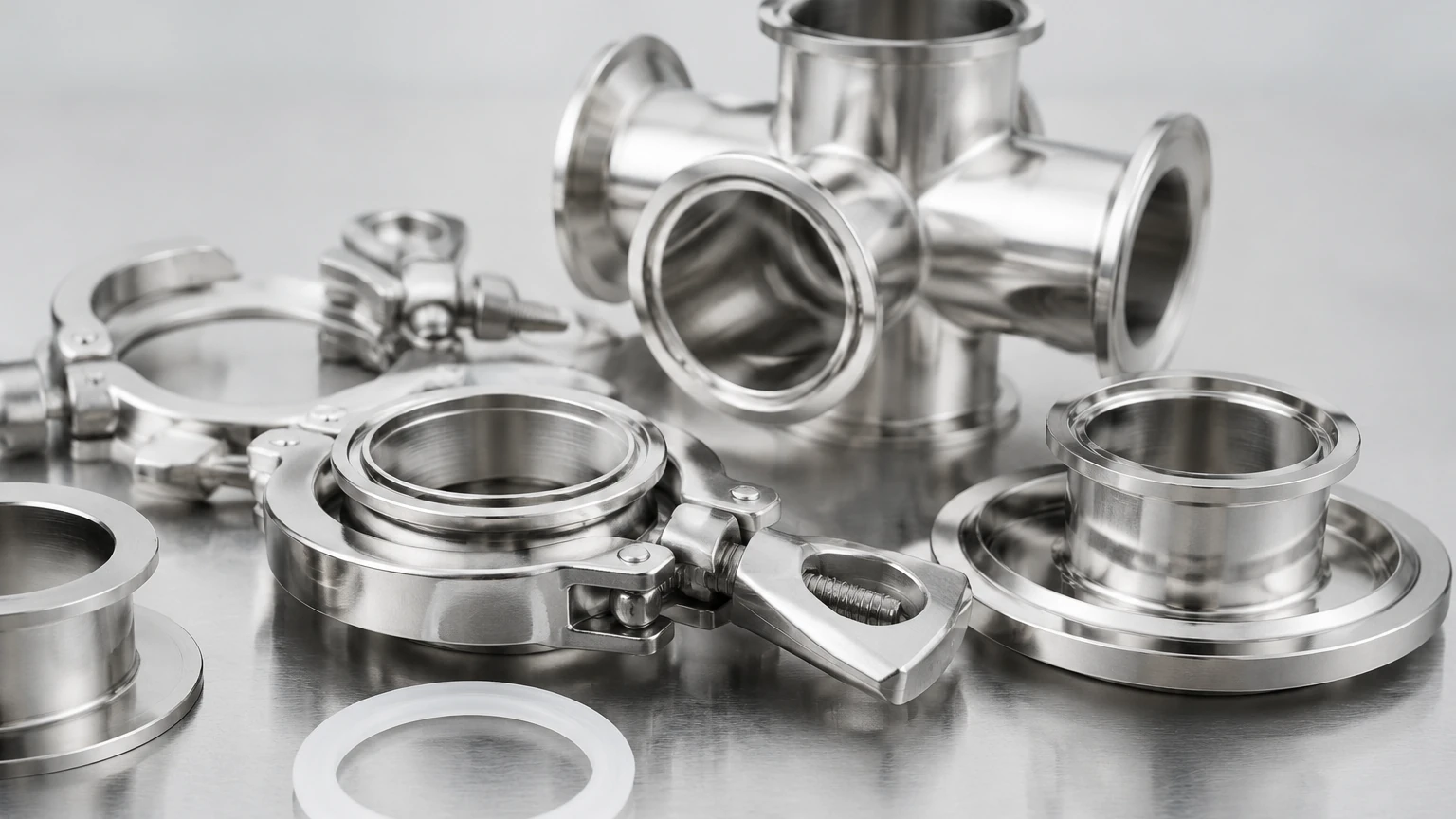
In the food, beverage, and pharmaceutical industries, maintaining a sterile processing environment is not merely a regulatory requirement but a fundamental operational necessity. Central to this objective is the selection of components that prevent bacterial growth and facilitate efficient cleaning. Among these components, fast fittings—commonly referred to as tri-clamp or sanitary clamps—play a critical role. When these fast fittings that meet 3-a sanitary standards for food equipment are integrated into a production line, they ensure that every connection point adheres to the highest levels of hygiene and mechanical integrity.
For engineers and procurement specialists, understanding the technical nuances of 3-A standards is essential for optimizing system performance and ensuring long-term compliance. This guide explores the engineering requirements, material considerations, and application strategies for sanitary fittings in industrial filtration and fluid handling systems.
Understanding 3-A Sanitary Standards for Fast Fittings
3-A Sanitary Standards Inc. is an independent, not-for-profit corporation dedicated to enhancing product safety and public health through hygiene-focused equipment design. For fast fittings used in food equipment, 3-A standards dictate specific design criteria that minimize the risk of contamination.
The Core Principles of 3-A Design
The primary goal of 3-A standards is to ensure that equipment is "cleanable to a microbiological level." This involves several key design principles:
1. Surface Finish: All product-contact surfaces must have a specific smoothness, typically measured as Ra (Roughness Average). For 3-A compliance, a surface finish of 32 micro-inches (0.8 μm) Ra or better is required. This prevents microscopic pits and valleys where bacteria can lodge and multiply.
2. Accessibility for Cleaning: Fittings must be designed for either Clean-in-Place (CIP) or easy disassembly for Clean-out-of-Place (COP). Fast fittings are specifically favored because they allow for rapid manual inspection and cleaning without the need for specialized tools.
3. Self-Draining Geometry: Components must be designed to ensure that no liquid remains trapped in the system after cleaning or processing. This requires specific internal radii and the absence of "dead legs" where stagnant fluid could accumulate.
4. Material Integrity: Only non-toxic, corrosion-resistant materials are permitted. In the context of fast fittings, this almost exclusively refers to high-grade stainless steel and specific food-grade elastomers.
Material Selection for Sanitary Fast Fittings
Material science is at the heart of sanitary fitting performance. Choosing the right alloy and gasket material is critical for resisting the corrosive effects of food acids and harsh cleaning chemicals.
Stainless Steel Grades
Most fast fittings that meet 3-a sanitary standards for food equipment are manufactured from T304 or T316L stainless steel. While T304 is suitable for many general food applications, T316L is often the preferred choice for industrial filtration housings and high-salinity or high-acid environments. The "L" in 316L stands for low carbon, which improves weldability and reduces the risk of sensitization—a form of corrosion that can occur at weld joints.
Elastomer and Gasket Compatibility
The seal is the most vulnerable part of any fast fitting assembly. Gaskets must be 3-A compliant and compatible with both the process fluid and the cleaning cycle. Common materials include:
* EPDM: Excellent for steam and hot water; resistant to many acids and alkalis.
* Silicone: Known for high temperature resistance and flexibility, though less resistant to strong acids.
* FKM (Viton): Offers superior chemical resistance and high-temperature performance, ideal for oils and fatty foods.
* PTFE (Teflon): Nearly chemically inert, though less resilient than elastomers, often used in envelope-style gaskets to combine chemical resistance with sealing flexibility.
Integration with Industrial Filtration Systems
In industrial settings, fast fittings are not standalone components; they are the interface between piping and critical equipment like filter housings. At the Main Page of a professional filtration manufacturer, you will find that the integration of 3-A compliant fittings is standard for food-grade filter cartridges and housings.
Filtration Housing Connections
Stainless steel filter housings used in food processing typically utilize tri-clamp fast fittings for both the inlet/outlet ports and the housing closure. This design allows operators to quickly open the housing for filter element replacement while maintaining a hermetic, sanitary seal during operation. The precision of the fitting ensures that there is no bypass of unfiltered product, which is vital for maintaining product consistency and safety.
Customization and OEM Solutions
Many industrial applications require customized filtration components. When designing custom stainless steel wire mesh filters or cartridges, engineers must ensure that the end caps and connection points match the fast fittings used in the rest of the facility. Manufacturers like Kaifil specialize in providing these customized solutions, ensuring that every weld and surface finish meets the rigorous demands of the food and beverage industry.
Engineering Considerations for Selection and Installation
Selecting the correct fast fittings involves more than just checking for a 3-A symbol. Engineers must evaluate several technical factors to ensure the fitting is fit for purpose.
Pressure and Temperature Ratings
Fast fittings are held together by a clamp, which exerts pressure on the gasket and the ferrules. The pressure rating of a tri-clamp connection depends on the size of the fitting, the type of clamp used (e.g., single-pin vs. high-pressure bolted clamps), and the operating temperature. As temperature increases, the pressure-holding capacity of the gasket and clamp assembly decreases. Engineers must consult pressure-temperature charts to ensure the fittings can handle the maximum surges expected in the system.
Proper Alignment and Torque
A common cause of failure in sanitary systems is improper installation. If the ferrules are not perfectly aligned before the clamp is tightened, the gasket may be pinched or displaced. This creates a crevice where bacteria can grow, negating the benefits of using 3-A compliant hardware. Furthermore, over-tightening can deform the gasket into the flow path (intrusion), while under-tightening can lead to leaks.
Drainage and Orientation
To maintain 3-A compliance, fittings must be installed in an orientation that allows for complete drainage. Horizontal lines should have a slight pitch, and fittings should be positioned so that the gasket seat does not trap liquid. In filtration applications, this often means ensuring the filter housing is mounted vertically with the inlet and outlet ports positioned to allow gravity to assist in the drainage of cleaning fluids.
Maintenance and Total Cost of Ownership
While the initial cost of fast fittings that meet 3-a sanitary standards for food equipment may be higher than industrial-grade threaded fittings, the total cost of ownership (TCO) is significantly lower in food-safe environments.
Cleaning-in-Place (CIP) Efficiency
The smooth internal surfaces and crevice-free design of 3-A fittings reduce the time and volume of chemicals required for CIP cycles. This leads to faster changeovers and reduced downtime. In contrast, non-sanitary fittings often require manual scrubbing, which increases labor costs and the risk of cross-contamination.
Gasket Replacement Cycles
Gaskets are wear items. In high-temperature or high-pressure applications, they can lose their elasticity (compression set) or become brittle. A proactive maintenance schedule should include regular inspection of gaskets within fast fittings. Signs of degradation, such as cracking, discoloration, or permanent deformation, indicate that the gasket should be replaced to prevent leaks and maintain sanitary integrity.
Conclusion: Making Informed Purchasing Decisions
For engineers and purchasing teams, the selection of fast fittings is a critical decision that impacts the safety and efficiency of the entire production line. By focusing on 3-A sanitary standards, material compatibility, and precise engineering integration, facilities can ensure they are using the most reliable components available.
When sourcing filtration solutions, it is essential to work with manufacturers who understand these technical boundaries. Whether you are looking for standard components or custom-engineered filter cartridges, ensuring that all connection points utilize fast fittings that meet 3-a sanitary standards for food equipment is a prerequisite for modern food processing. For more information on high-performance stainless steel filtration and sanitary components, visiting a specialized manufacturer's Main Page can provide the technical resources and product specifications needed to support your next project.
Download Fast Fittings That Meet 3-a Sanitary Standards for Food Equipment as a PDF
