


Filter Bag 100 Micron
In industrial fluid processing, the selection of filtration media is a critical engineering decision that directly impacts product quality, equipment longevity, and operational overhead. Among the various specifications available to process engineers, the filter bag 100 micron rating represents a versatile "medium-coarse" threshold. It is frequently utilized as either a primary filtration stage for high-viscosity fluids or as a critical pre-filtration step to protect downstream fine-filtration components and sensitive machinery.
Understanding the technical nuances of a 100-micron rating—equivalent to 0.1 millimeters or approximately the thickness of a human hair—is essential for optimizing a filtration system. This guide examines the material science, engineering considerations, and application-specific parameters that define the performance of 100-micron filter bags in B2B industrial environments.
Understanding the 100-Micron Filtration Threshold
A 100-micron rating is positioned at the intersection of visible particle removal and high-flow efficiency. In many industrial contexts, particles larger than 100 microns are considered "macro-contaminants" that can cause significant mechanical wear on pumps, clog spray nozzles, or compromise the aesthetic and functional quality of coatings and chemicals.
Nominal vs. Absolute Ratings
Most standard filter bags rated at 100 microns are "nominal." This means the bag is designed to intercept a high percentage (typically 60% to 80%) of particles at that size. In contrast, absolute-rated media, often found in high-precision stainless steel mesh or specialized pleated cartridges, aims for 98% to 99.9% efficiency. When specifying a filter bag 100 micron solution, engineers must determine if the process can tolerate a percentage of "bypass" particles or if a more rigid, absolute-rated metal mesh component from a manufacturer like Kaifil is required to ensure total system integrity.
Surface vs. Depth Filtration
At the 100-micron level, filtration typically occurs via two mechanisms:
1. Surface Filtration: Common in monofilament mesh bags (like Nylon or Stainless Steel). Particles are trapped on the surface of the media. This allows for easy cleaning or replacement and provides a very predictable flow rate.
2. Depth Filtration: Common in needlefelt bags (Polypropylene or Polyester). Particles are trapped throughout the thickness of the material. While felt bags offer higher dirt-holding capacity for varying particle sizes, they may have a more variable pressure drop as the internal structure becomes saturated.
Material Selection for Industrial Environments
The efficacy of a 100-micron filter bag is not determined by its micron rating alone, but by the compatibility of its material with the process fluid. Industrial applications involve diverse chemical compositions, temperatures, and pressures.
Synthetic Polymers: PP and PE
* Polypropylene (PP): This is the most common material for 100-micron felt bags. It offers excellent chemical resistance to most acids and alkalis. However, it is limited by a maximum operating temperature of approximately 90°C (194°F). It is a cost-effective choice for water treatment and general chemical processing.
* Polyester (PE): Polyester felt is preferred when higher temperature resistance is required (up to 150°C or 302°F). It provides good resistance to most oxidizing agents and solvents but is susceptible to hydrolysis in high-moisture, high-temperature alkaline environments.
Nylon Monofilament (NMO)
For precise 100-micron filtration, Nylon monofilament mesh is a standard. Because the mesh is woven with fixed hole sizes, it provides a consistent pore structure. It is non-shedding, making it ideal for applications where fiber migration into the filtrate must be avoided, such as in the automotive paint industry or food processing.
Stainless Steel Wire Mesh
While traditional bags are disposable, many high-demand industrial processes are transitioning to stainless steel wire mesh elements. As a specialist in custom filtration, Kaifil provides 100-micron stainless steel mesh solutions that offer superior mechanical strength and thermal stability (up to 500°C+ depending on the alloy). These components are cleanable and reusable, making them a sustainable alternative to disposable synthetic bags in high-pressure hydraulic or aggressive chemical systems. For more information on durable metal filtration options, you can visit the Main Page to explore technical specifications.
Engineering Considerations: Flow Rate and Pressure Drop
Designing a system around a filter bag 100 micron element requires a detailed analysis of the Clean Pressure Drop ($ΔP$) and the terminal pressure drop.
The Impact of Viscosity
Flow rate is inversely proportional to fluid viscosity. A 100-micron bag will handle water-like fluids with minimal resistance. However, if the fluid is a heavy resin, oil, or syrup, the resistance increases significantly. Engineers must size the filter housing to ensure the initial pressure drop does not exceed 2-3 PSI (0.14-0.21 bar). If the initial $ΔP$ is too high, the effective life of the bag is shortened, leading to frequent downtime for changes.
Housing Compatibility
Filter bags are typically manufactured in standard sizes (Size #1, #2, #3, and #4). A Size #2 bag is the industrial standard, measuring approximately 7 inches in diameter and 32 inches in length. Ensuring a proper seal between the bag collar (plastic or steel ring) and the housing is paramount. A 100-micron bag with a poor seal effectively operates as a 500-micron or larger filter due to bypass around the collar.
Critical Applications for 100-Micron Filtration
Chemical and Petrochemical Processing
In bulk chemical production, 100-micron bags serve as "police filters." They are installed before bottling lines or storage tanks to catch pipe scale, gasket fragments, or undissolved solids. Their role is to ensure the final product meets clarity standards without the high cost of sub-micron filtration where it isn't necessary.
Food and Beverage Industry
In the processing of juices, syrups, and edible oils, 100-micron filtration is used to remove large pulp particles or seeds. Because these bags often come into contact with consumable products, they must be constructed from FDA-compliant materials and manufactured in silicone-free environments to prevent contamination.
Cooling Water and Pre-Filtration
Industrial cooling towers and heat exchangers are sensitive to scale and debris. A 100-micron filter bag acts as an efficient barrier to protect these expensive assets. Similarly, in water treatment plants, 100-micron filtration is the standard pre-treatment for Reverse Osmosis (RO) membranes, removing the bulk of suspended solids that would otherwise cause rapid membrane fouling.
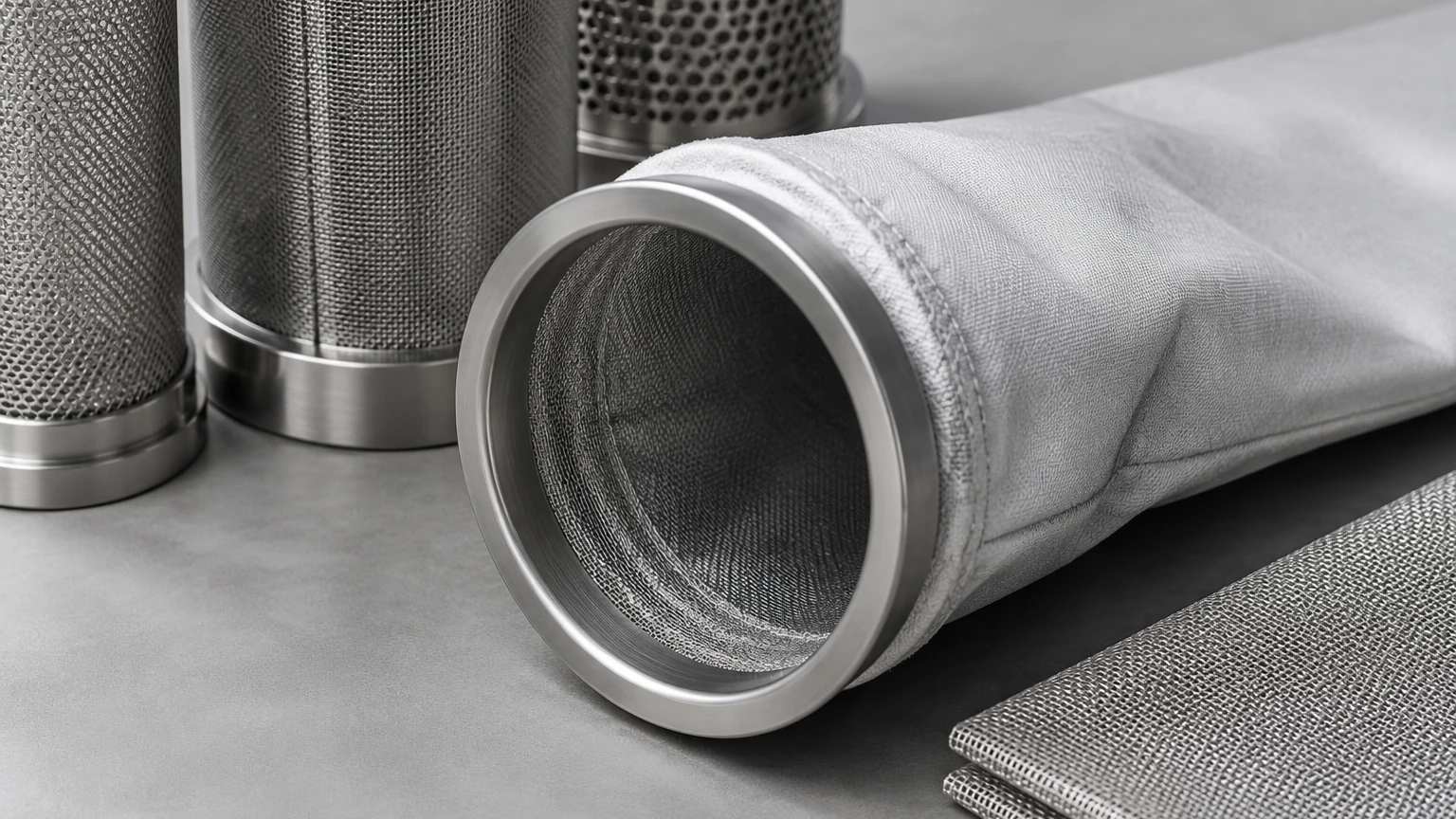
Comparing Disposable Bags vs. Permanent Metal Elements
When evaluating a filter bag 100 micron solution, procurement teams must look beyond the initial purchase price to the Total Cost of Ownership (TCO).
The Case for Disposable Bags
* Low Initial Capital: Synthetic bags are inexpensive and easy to store.
* Simple Maintenance: When the bag is full, it is simply removed and discarded.
* Flexibility: It is easy to switch micron ratings (e.g., from 100 to 50 microns) by simply changing the bag.
The Case for Stainless Steel (Kaifil Solutions)
In many B2B scenarios, the cost of waste disposal and the risk of bag breakage make disposable options less attractive. Stainless steel 100-micron filters, such as those manufactured by Kaifil, offer:
* Durability: They can withstand high differential pressures that would cause a synthetic bag to burst.
* Cleanability: Using backwashing or ultrasonic cleaning, these elements can be used for years, reducing the environmental footprint and long-term consumable costs.
* Precision: Metal mesh maintains its pore size under pressure, whereas synthetic fibers can shift or stretch, leading to inconsistent filtration.
Maintenance, Replacement Cycles, and Troubleshooting
To maintain system efficiency, a rigorous maintenance schedule must be established based on differential pressure monitoring.
1. Monitoring: Differential pressure gauges should be installed across the filter housing.
2. Replacement Trigger: For most 100-micron bags, a change-out is recommended when the pressure drop reaches 15-20 PSI. Operating beyond this point risks "blow-through," where particles are forced through the media, or mechanical failure of the bag.
3. Troubleshooting Premature Blinding: If a 100-micron bag clogs too quickly, it may be due to an unexpected surge in fine contaminants. In such cases, installing a coarser pre-filter (e.g., 200-300 microns) or increasing the total filtration surface area (by using a multi-bag housing) can extend the service life.
Conclusion: Selecting the Right 100-Micron Solution
Selecting a filter bag 100 micron component involves more than choosing a pore size. Engineers must weigh the chemical compatibility of the media, the thermal demands of the process, and the economic balance between disposable and permanent filtration elements.
For applications requiring high reliability, custom dimensions, or extreme environment resistance, moving from standard synthetic bags to precision-engineered stainless steel filtration components is often the most cost-effective long-term strategy. By partnering with an experienced manufacturer like Kaifil, industrial operators can develop customized filtration solutions that ensure consistent performance and optimized process flow. Whether you are filtering cooling water, processing aggressive chemicals, or protecting downstream equipment, the 100-micron stage remains a cornerstone of effective industrial fluid management.
