


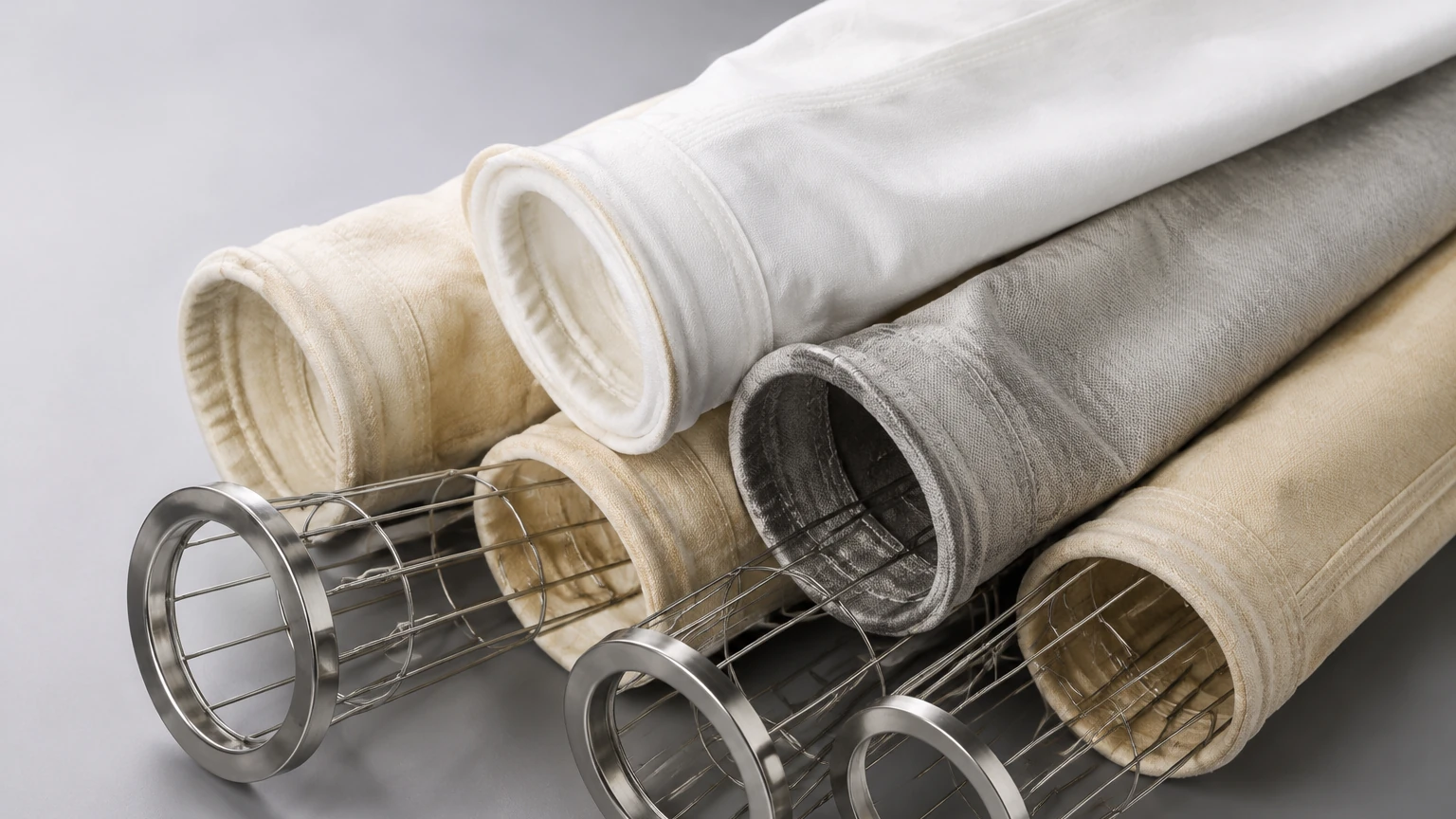
Filter Bag for Dust Collector
In industrial air pollution control, the filter bag for dust collector systems serves as the primary barrier between contaminated process air and the clean environment. Selecting the correct filter media and bag configuration is a critical engineering decision that impacts emission compliance, energy consumption, and the operational lifespan of the entire dust collection unit. For engineers and maintenance managers, understanding the technical nuances of bag construction, material compatibility, and filtration mechanics is essential for optimizing system performance.
Industrial dust collectors, often referred to as baghouses, utilize a series of fabric or specialized metal mesh bags to capture particulate matter. As air passes through the filter media, dust particles are trapped on the surface or within the depth of the material, while clean air is discharged. Over time, a "dust cake" builds up, which actually enhances filtration efficiency but increases differential pressure, necessitating a cleaning cycle. Choosing the right filter bag requires a balance between filtration efficiency, airflow capacity, and the physical constraints of the operating environment.
Material Selection and Engineering Properties
The selection of filter media is the most significant factor in the success of a dust collection system. Engineers must evaluate the chemical, thermal, and mechanical properties of various materials to ensure they can withstand the specific conditions of the application.
Synthetic Fiber Media
Most standard industrial applications utilize synthetic fibers. Polyester is the most common choice due to its balance of cost and performance in dry conditions with temperatures up to 275°F (135°C). However, in environments involving high moisture or chemical exposure, other materials are required. Polypropylene is preferred for low-temperature applications where chemical resistance to acids and alkalis is paramount. For high-temperature flue gas filtration, materials like Nomex (Aramid) or Ryton (PPS) are utilized for their ability to maintain structural integrity at temperatures exceeding 375°F (190°C).
Specialized and Metallic Media
In extreme environments where synthetic fibers fail—such as those involving highly abrasive particles, extreme temperatures, or corrosive chemicals—specialized solutions are necessary. This is where precision manufacturing becomes vital. While many bags are fabric-based, certain industrial processes require stainless steel mesh or sintered metal components to support the filtration process or act as the primary filter in high-pressure environments. For organizations seeking specialized filtration components and custom engineering support, visiting the Main Page of a professional manufacturer like Kaifil provides insights into how stainless steel and precision metal solutions can be integrated into industrial systems.
Surface Treatments and Coatings
To enhance performance, filter bags often receive surface treatments. Singeing removes loose fibers to prevent dust from sticking, while glazing creates a smooth surface for better dust cake release. For fine particulate or sticky dust, an ePTFE (expanded Polytetrafluoroethylene) membrane can be laminated to the base fabric. This membrane allows for surface filtration rather than depth filtration, significantly reducing the pressure drop and improving the ease of cleaning.
Air-to-Cloth Ratio and Filtration Velocity
A fundamental engineering metric in dust collector design is the air-to-cloth (A/C) ratio, also known as the filtration velocity. This ratio represents the volume of air (in Cubic Feet per Minute, CFM) passing through one square foot of filter media.
Calculating the Ratio
The formula is straightforward: `A/C Ratio = Total Airflow (CFM) / Total Filter Area (sq. ft)`. However, determining the *optimal* ratio is complex. A ratio that is too high (excessive velocity) forces dust particles deep into the media, leading to "blinding," where the bag can no longer be cleaned. This results in high differential pressure and premature bag failure. Conversely, a ratio that is too low means the system is oversized, leading to unnecessary capital expenditure and footprint.
Factors Influencing A/C Ratio
1. Dust Type: Fine, light, or abrasive dust requires a lower A/C ratio to prevent penetration and wear.
2. Cleaning Method: Pulse-jet systems typically operate at higher A/C ratios (3:1 to 6:1) compared to shaker or reverse-air systems (1.5:1 to 2.5:1).
3. Temperature: High temperatures expand air volume, requiring careful calculation of the actual CFM at operating temperature rather than standard conditions.
Cleaning Mechanisms and Structural Integrity
The method used to clean the filter bag for dust collector units dictates the bag's design and the stresses it must endure. There are three primary cleaning configurations used in industrial settings.
Pulse-Jet Cleaning
In pulse-jet systems, dust is collected on the *outside* of the bag. A cage made of galvanized or stainless steel is inserted into the bag to prevent it from collapsing under the external pressure of the airflow. During cleaning, a high-pressure burst of compressed air is sent down the center of the bag, causing it to expand rapidly and shatter the dust cake. Bags for these systems must have high tensile strength and be precisely fitted to the cage to prevent mechanical wear caused by the constant expansion and contraction.
Shaker Systems
Shaker collectors collect dust on the *inside* of the bag. The bags are suspended from a motorized shaking mechanism at the top and fixed to a cell plate at the bottom. To clean the bags, the airflow is stopped, and the mechanism shakes the top of the bags to dislodge the dust. These bags require reinforced caps and bottoms to handle the mechanical stress of the shaking motion.
Reverse-Air Systems
Similar to shaker systems, reverse-air collectors collect dust on the inside. However, instead of mechanical shaking, a fan blows clean air in the opposite direction, causing the bag to partially collapse and the dust cake to fall into the hopper. These bags often feature anti-collapse rings sewn into the fabric to prevent total closure, which would trap the dust inside.
Managing Differential Pressure and Energy Efficiency
Differential pressure (DP) is the difference in pressure between the dirty side and the clean side of the filter bags. It is the most critical indicator of the health of a dust collection system. A steady DP indicates a stable dust cake and efficient cleaning. A rapidly rising DP suggests that the bags are blinding or that the cleaning system is failing.
Impact on Energy Consumption
The fan in a dust collection system must work harder to pull air through bags with high differential pressure. For every inch of water gauge (WG) increase in DP, the energy consumption of the fan increases significantly. By selecting a filter bag for dust collector use that offers low resistance—such as those with high-quality membranes or optimized weave patterns—facilities can realize substantial energy savings over the life of the filter set.
Monitoring and Maintenance
Engineers should implement automated DP monitoring. If the DP exceeds the design limit (typically 4-6 inches WG for pulse-jet systems), it is time to investigate the cleaning cycle or the state of the media. Regular inspections of the "clean air side" for dust streaks can identify leaking or torn bags before they cause a total system failure or environmental violation.
Customization and Precision Manufacturing
Not all industrial environments are standard. In sectors like chemical processing, pharmaceuticals, and food production, the filtration requirements go beyond standard fabric bags. Customization is often required to address specific challenges such as static dissipation, FDA compliance for food contact, or extreme chemical resistance.
The Role of Precision Components
The performance of a filter bag is only as good as the hardware supporting it. For pulse-jet systems, the quality of the filter cage is paramount. A poorly manufactured cage with burrs or misaligned wires will cause abrasive wear, leading to holes in the bag. Manufacturers like Kaifil emphasize the importance of precision metal components in the filtration chain. Whether it is the wire mesh used in high-heat applications or the structural supports for complex filter cartridges, engineering-led manufacturing ensures that every component meets the necessary tolerances for industrial reliability.
For technical professionals evaluating their current filtration setup or designing a new system, consulting with a manufacturer that understands the intersection of material science and mechanical engineering is vital. Detailed product specifications and application support can be found on the Kaifil Main Page, which serves as a resource for custom filtration solutions.
Common Risks and Evaluation Criteria
When purchasing a filter bag for dust collector systems, procurement teams and engineers must look beyond the initial price. The total cost of ownership (TCO) is influenced by several risk factors:
1. Dimensional Inaccuracy: Bags that are too loose or too tight for the cell plate or cage will fail prematurely. Precision in manufacturing is non-negotiable.
2. Chemical Degradation: Hydrolysis (breakdown by moisture) and acid/alkali attack are common causes of bag failure in chemical plants. Media must be matched to the specific gas chemistry.
3. Thermal Spikes: Even brief excursions above the rated temperature of the media can cause the fibers to shrink or melt, leading to a permanent loss of permeability.
4. Abrasive Wear: If the inlet design allows heavy dust particles to strike the bags directly, the media will wear out quickly. Internal baffles or specialized wear-resistant bottoms on the bags can mitigate this.
Before finalizing a purchase, engineers should confirm the exact gas composition, the maximum and continuous operating temperatures, and the specific particulate characteristics (e.g., oily, abrasive, fine, or agglomerative). This data allows the manufacturer to recommend a media and construction style that maximizes the interval between replacements.
Conclusion
The filter bag for dust collector units is a sophisticated engineering component that requires careful selection based on the physical and chemical demands of the industrial process. By focusing on material properties, air-to-cloth ratios, and precision construction, facilities can ensure high filtration efficiency, lower energy costs, and long-term compliance with environmental standards. As industrial processes become more demanding, the integration of high-quality filter media and precision-engineered supports—such as those offered by Kaifil—becomes the foundation of a reliable and cost-effective dust collection strategy.
