


Filter Candles
In industrial liquid and gas separation, the efficiency of a filtration system is often dictated by the geometry and material integrity of its internal components. Filter candles represent a specialized class of cylindrical filter elements designed for high-performance applications where surface area, structural rigidity, and cleanability are paramount. Unlike disposable cartridges, industrial filter candles—particularly those manufactured from stainless steel—are engineered for longevity and integration into automated, self-cleaning systems.
For engineers and procurement specialists, selecting the appropriate filter candles involves a deep understanding of fluid dynamics, material compatibility, and the mechanical stresses of the operating environment. This guide examines the technical specifications, design considerations, and operational advantages of stainless steel filter candles in modern industrial processes.
The Role of Filter Candles in Industrial Systems
Filter candles are primarily utilized in "candle filters," which are pressure vessels containing multiple vertical filter elements. These systems are favored in industries such as chemical processing, pharmaceuticals, and food and beverage because they allow for high-volume filtration within a relatively small footprint. The cylindrical shape of the candle provides a high surface-to-volume ratio, which is essential for handling high flow rates and high solids loading.
One of the defining characteristics of filter candles is their ability to support the formation of a "filter cake." In many processes, the initial layer of trapped particles acts as the actual filtering medium, providing finer separation than the mesh itself. The structural design of the candle must be robust enough to support this cake without deforming under increasing differential pressure. Furthermore, these elements are often designed for backwashing or back-pulsing, where the flow is reversed to dislodge the cake and clean the filter media in situ, minimizing downtime and labor costs.
Material Selection and Structural Integrity
The performance of filter candles in demanding environments is largely determined by the materials used in their construction. Stainless steel is the industry standard due to its exceptional mechanical strength and resistance to corrosion and extreme temperatures.
Grade 304 vs. 316L
While Grade 304 stainless steel is suitable for general industrial use and offers good corrosion resistance, Grade 316L is typically specified for more aggressive environments. The addition of molybdenum in 316L enhances resistance to pitting and crevice corrosion, particularly in chloride-rich environments or acidic chemical processing. For high-purity applications, such as pharmaceutical manufacturing or food processing, 316L is often mandatory to ensure no metallic contamination occurs.
Mechanical Reinforcement
Industrial filter candles are subject to significant pressure differentials ($\Delta P$). To prevent collapse or bursting, the filter media is typically supported by an internal perforated core or an external cage. In high-pressure hydraulic or polymer filtration, the core must be engineered to withstand the maximum system pressure in the event of a total blockage. The integration of the filter media with the end fittings is also a critical failure point; high-quality candles utilize TIG (Tungsten Inert Gas) or plasma welding to ensure a seamless, leak-proof bond that can withstand thermal expansion and mechanical vibration.
Filtration Media: Mesh Types and Performance
The "skin" of the filter candle—the layer responsible for particle retention—can be constructed from various types of stainless steel media. Each type offers distinct advantages depending on the required micron rating and the nature of the fluid.
1. Sintered Wire Mesh: This medium consists of multiple layers of woven wire mesh that are bonded together through a heat-treatment process called sintering. This creates a porous, rigid structure that combines the high porosity of thin mesh with the mechanical strength of thick plates. Sintered mesh filter candles are ideal for high-pressure applications and offer very precise, absolute micron ratings.
2. Woven Wire Cloth: Available in various weaves (plain, twilled, or Dutch weave), woven wire cloth is the most common media for filter candles. Dutch weaves, in particular, provide a tortuous path for particles, allowing for fine filtration while maintaining high flow capacity.
3. Wedge Wire: For applications involving heavy solids or high-viscosity liquids, wedge wire (V-wire) construction is often used. The V-shaped profile of the wire reduces the risk of clogging and makes the candle exceptionally easy to clean during backwashing.
4. Sintered Metal Fiber: For ultra-fine filtration, sintered metal fibers (non-woven) provide a high-porosity depth media. This allows for higher dirt-holding capacity and lower initial pressure drops compared to traditional mesh.
Operational Dynamics: Flow, Pressure, and Backwashing
Understanding the operational lifecycle of filter candles is essential for optimizing system performance. Most systems operate on an "outside-in" flow pattern, where the filtrate passes through the exterior of the candle into the hollow center. As particles accumulate on the surface, the differential pressure across the element increases.
The Backwashing Process
In automated systems, once a pre-set differential pressure is reached, the system triggers a backwash cycle. A burst of clean fluid or compressed gas is sent through the center of the candle in the reverse direction. This sudden reversal causes the filter cake to crack and fall away from the candle surface into the bottom of the vessel. The efficiency of this process depends on the smoothness of the filter media surface and the structural integrity of the candle; if the media is too flexible, the backwash pressure may cause fatigue and eventual failure.
Flow Rate and Velocity
Engineers must calculate the "flux rate"—the volume of fluid passing through a unit area of the filter media. Exceeding the recommended flux rate can lead to premature clogging, particle breakthrough, or mechanical damage to the filter candles. By increasing the number of candles or the length of each candle, the total effective filtration area (EFA) is increased, lowering the flux rate and extending the intervals between cleaning cycles.
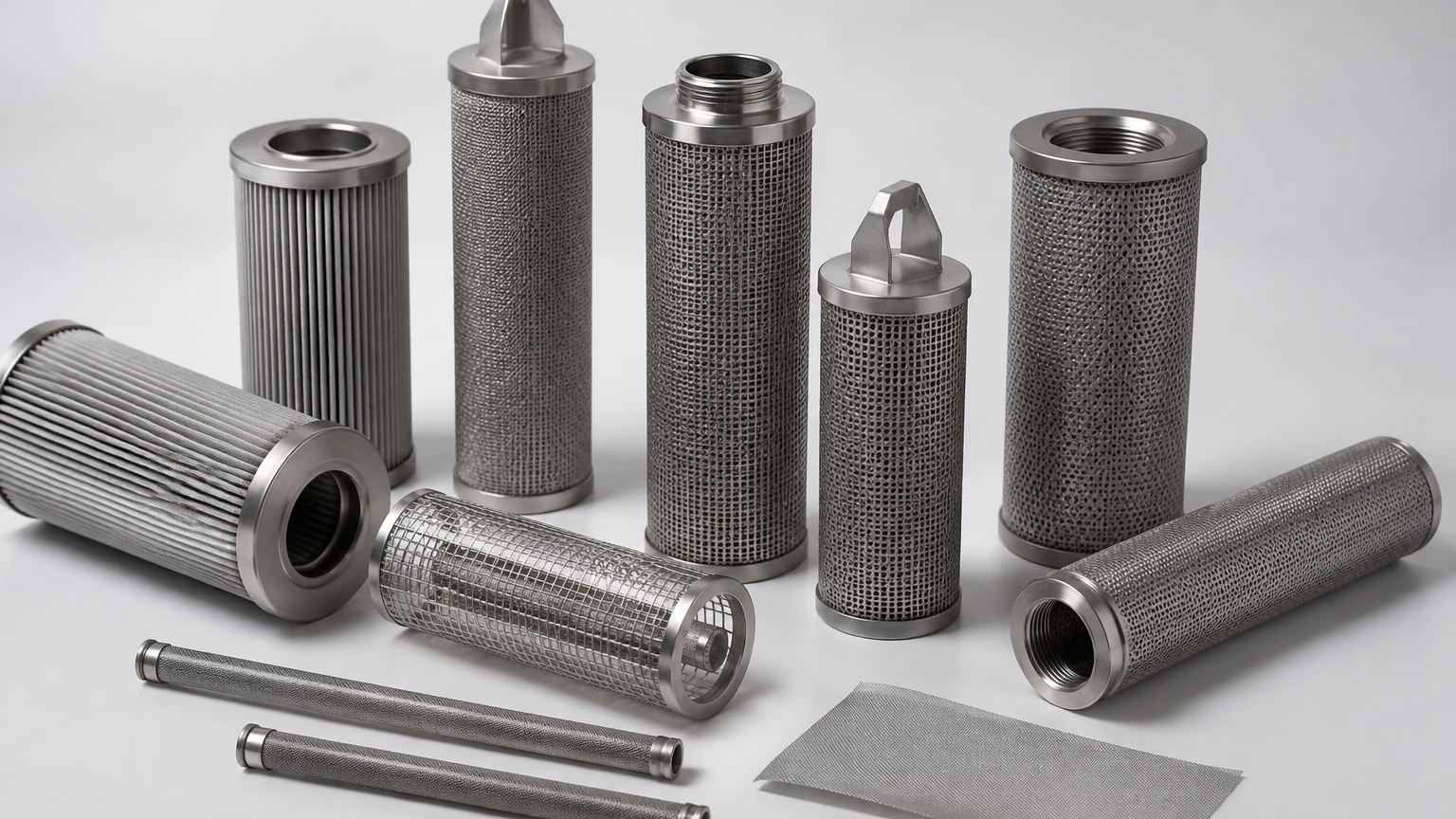
Customization for Specific Industrial Environments
No two industrial processes are identical, which is why customization is a core component of effective filtration. When sourcing filter candles, technical professionals should consider several customization parameters:
* End Fitting Configurations: Depending on the housing design, candles may require Double Open End (DOE), Single Open End (SOE) with a threaded connection (e.g., NPT, BSP, or M20 threads), or specialized bayonet mounts. Secure sealing is vital to prevent bypass, often requiring high-temperature O-rings or gaskets made from Viton, PTFE, or EPDM.
* Length and Diameter: Standard diameters often range from 25mm to 100mm, with lengths reaching up to 1500mm or more. Custom lengths allow for the optimization of existing vessel space.
* Surface Treatments: In some applications, such as polymer filtration or sticky chemical processing, the stainless steel surface may be electropolished or coated to reduce adhesion and improve the efficiency of the cleaning cycle.
For those looking to explore specific configurations or technical data sheets, visiting the Main Page of a specialized manufacturer like Kaifil provides access to comprehensive product specifications and engineering support.
Maintenance Strategies and Total Cost of Ownership
While the initial cost of stainless steel filter candles is higher than disposable alternatives, the total cost of ownership (TCO) is significantly lower in the long term due to their durability and reusability. However, realizing these savings requires a disciplined maintenance strategy.
Cleaning Methods
When backwashing is no longer sufficient to restore the original differential pressure, the candles must be removed for deep cleaning. Common methods include:
* Ultrasonic Cleaning: High-frequency sound waves create cavitation bubbles that dislodge deeply embedded particles from the mesh pores.
* Chemical Cleaning: Soaking the candles in specialized solvents, acids, or caustic solutions to dissolve organic or inorganic scaling. It is crucial to ensure the cleaning agents are compatible with the specific grade of stainless steel.
* Burn-off/Pyrolysis: For candles used in plastic or resin filtration, heating the elements in a controlled vacuum oven can carbonize the contaminants, which are then removed through ultrasonic cleaning.
Performance Monitoring
Regularly recording the "clean" differential pressure after each maintenance cycle is a best practice. A gradual increase in the baseline pressure indicates that the media is becoming permanently fouled or blinded, signaling that the filter candles are approaching the end of their functional lifespan and need replacement.
Conclusion: Making Informed Purchasing Decisions
Selecting the right filter candles is a balance of material science, mechanical engineering, and economic reality. By focusing on high-quality stainless steel construction, precise micron ratings, and robust structural designs, industrial operators can ensure process stability and product purity.
When evaluating suppliers, engineers should confirm the manufacturer’s ability to provide customized end fittings, verify the integrity of welded joints, and offer guidance on the optimal media type for the specific viscosity and temperature of the process fluid. Reliable filtration is not just about removing particles; it is about maintaining system uptime and protecting downstream equipment. For more information on custom filtration solutions and technical specifications, professionals are encouraged to review the resources available on the Main Page of the Kaifil website, where engineering expertise meets advanced manufacturing capabilities.
