


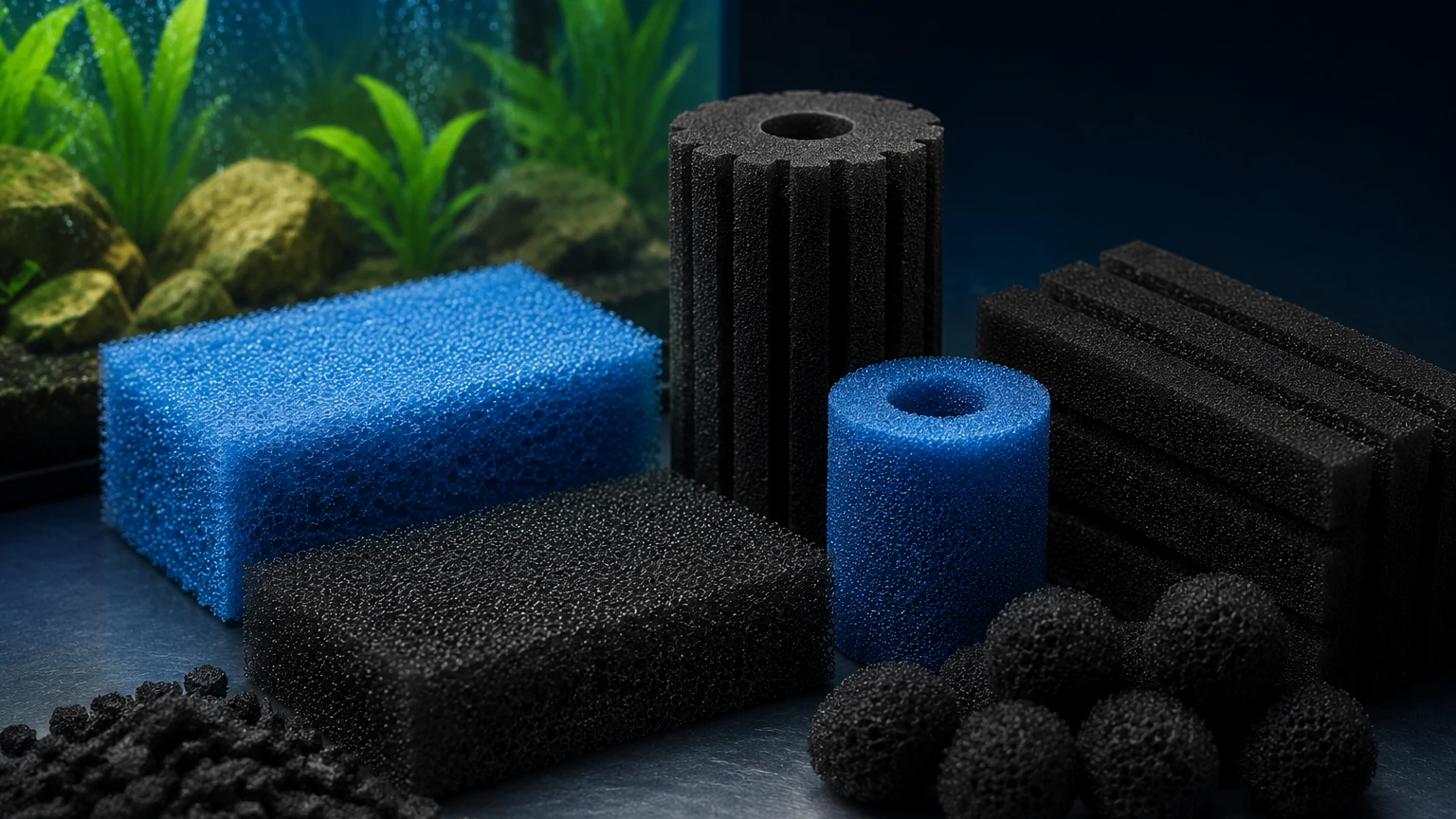
Filter Foam Aquarium Filter Sponge
In both commercial aquaculture and industrial water treatment, the selection of filtration media is a critical engineering decision that directly impacts water quality, system energy consumption, and the health of the aquatic environment. Among the most common materials used for mechanical and biological filtration is the filter foam aquarium filter sponge. While often perceived as a simple consumable, the technical specifications of these foams—ranging from pore density to chemical composition—require careful evaluation to ensure they meet the rigorous demands of large-scale operations.
For engineers and procurement teams, understanding the intersection between open-cell foam technology and high-performance filtration is essential. This guide examines the technical parameters of filter foam, its role in multi-stage filtration systems, and the transition points where more durable materials, such as stainless steel mesh, become necessary for industrial-grade reliability.
Technical Specifications: Understanding PPI and Pore Structure
The primary metric used to categorize a filter foam aquarium filter sponge is PPI, or Pores Per Inch. This value defines the density of the foam and determines two critical performance factors: filtration efficiency (the size of particles captured) and flow resistance (pressure drop).
Coarse Foam (10–20 PPI)
Coarse foams are typically utilized as the first stage of mechanical filtration. Their large, open-cell structure allows for high flow rates with minimal pressure drop. In industrial pre-filtration, these sponges are effective at capturing large debris, such as plant matter or unconsumed feed, preventing the premature clogging of finer downstream media. Because the pores are large, they are less prone to rapid blinding, extending the maintenance interval.
Medium Foam (20–30 PPI)
Medium-density foams provide a balance between mechanical capture and biological surface area. They trap smaller suspended solids while maintaining a steady flow. In many recirculating aquaculture systems (RAS), this grade is the standard for general-purpose filtration.
Fine Foam (30–45+ PPI)
Fine foams are designed for water polishing. They can capture microscopic particles, resulting in high water clarity. However, from an engineering perspective, fine foams present a higher risk of clogging. As the pores fill with detritus, the resistance to flow increases significantly, which can strain pumps and reduce the overall turnover rate of the system. In high-demand industrial environments, these are often replaced by precision stainless steel cartridges that offer similar filtration fineness with much higher structural integrity.
The Dual Role: Mechanical and Biological Filtration
A filter foam aquarium filter sponge is unique because it serves two distinct functions simultaneously. Understanding this duality is key to managing the nitrogen cycle in any aquatic system.
Mechanical Capture
As water passes through the reticulated structure of the foam, solid waste is physically trapped within the matrix. The efficiency of this process depends on the velocity of the water and the tortuosity of the path through the foam. Unlike surface filtration (like a flat screen), foam provides depth filtration, allowing it to hold a higher volume of solids before reaching a critical pressure drop.
Biological Substrate
The internal surface area of an open-cell sponge is vast. This surface area provides a substrate for nitrifying bacteria (such as *Nitrosomonas* and *Nitrobacter*) to colonize. These bacteria are responsible for converting toxic ammonia into nitrite and then into relatively harmless nitrate. For engineers designing bio-reactors or large-scale sumps, calculating the total available surface area of the foam is necessary to ensure the biological load of the system can be supported.
Material Science: Polyurethane vs. Specialized Polymers
Not all foams are created equal. The majority of filter foam aquarium filter sponge products are made from reticulated polyurethane. The "reticulation" process involves removing the cell windows of the foam, leaving only the skeletal strands. This creates a 100% open-cell structure that allows water to flow through the entire volume of the material.
When specifying foam for industrial applications, the following chemical properties must be considered:
* Hydrolytic Stability: In constant underwater use, some foams can degrade over time through a process called hydrolysis. Industrial-grade foams are often ether-based rather than ester-based to provide superior resistance to water breakdown.
* Chemical Inertness: The foam must not leach plasticizers, flame retardants, or UV stabilizers into the water, as these can be toxic to sensitive aquatic species or interfere with chemical processing.
* Compression Set: High-quality foams maintain their shape even under the pressure of high-flow pumps. Low-quality sponges may compress over time, reducing the pore size and leading to unpredictable flow rates.
Engineering Considerations for System Integration
When integrating a filter foam aquarium filter sponge into a professional filtration array, several engineering factors must be addressed to optimize performance and minimize the total cost of ownership.
Flow Velocity and Bypass
If the water velocity is too high, particles may be forced through the foam rather than being trapped. Conversely, if the foam creates too much resistance, water will seek the path of least resistance, leading to "bypass" where unfiltered water flows around the edges of the sponge. Precision-cut foam inserts that fit tightly within a housing are required to prevent this.
Pressure Drop Monitoring
In industrial setups, monitoring the pressure differential across the filter media is standard practice. As the sponge loads with waste, the pressure on the inlet side rises. Establishing a clear threshold for when the foam must be cleaned or replaced is vital for maintaining pump efficiency and preventing system failure.
Scalability and Modular Design
For large-scale operations, using a single massive sponge is often impractical for maintenance. Instead, engineers often specify modular blocks or layers of foam. This allows for "staggered cleaning," where only a portion of the foam is cleaned at one time, preserving the biological colony and ensuring continuous filtration.
Maintenance, Lifespan, and Replacement Cycles
The maintenance of a filter foam aquarium filter sponge involves a delicate balance. Cleaning the foam too aggressively can kill the beneficial bacteria, while infrequent cleaning leads to anaerobic zones and reduced flow.
In a B2B context, the labor cost associated with cleaning foam must be weighed against the cost of replacement. While foam is relatively inexpensive, it is a consumable material. Over many cleaning cycles, the reticulated strands begin to lose their elasticity and the pores become permanently clogged with mineral deposits or stubborn organic matter. At this point, the foam must be replaced to restore system performance.
For applications where downtime is costly or where the filtration environment is particularly harsh (such as high temperatures or exposure to cleaning chemicals), many facilities transition from foam to permanent metal filtration solutions. You can Review product options and application support on our Main Page to see how stainless steel alternatives can provide a more robust, long-term solution for industrial filtration needs.
When to Upgrade: From Foam to Stainless Steel
While the filter foam aquarium filter sponge is an excellent tool for many applications, it has physical limitations. There are specific scenarios where an engineer should consider moving from polymer-based foams to stainless steel wire mesh or sintered metal filters:
1. High Pressure and Flow: Polymer foams can deform or collapse under extreme pressure. Stainless steel components maintain their structural integrity, ensuring consistent filtration accuracy.
2. Chemical Resistance: In industrial water treatment involving aggressive pH levels or solvents, polyurethane may dissolve or leach contaminants. Stainless steel (304 or 316L) offers superior chemical compatibility.
3. Sterilization Requirements: In pharmaceutical or food-grade aquatic applications, filtration media may need to be sterilized via autoclaving or steam-in-place (SIP) processes. Foam cannot survive these temperatures, whereas metal filters are designed for them.
4. Precision Filtration: While foam is rated by PPI, stainless steel mesh is rated by absolute micron sizes. When a process requires a guaranteed capture rate of specific particle sizes, precision metal mesh is the superior choice.
Conclusion
The filter foam aquarium filter sponge remains a versatile and cost-effective solution for mechanical and biological filtration in various aquatic and industrial settings. By understanding the technical nuances of PPI, material stability, and system integration, purchasing teams can select the right media to balance performance and cost.
However, as system requirements become more demanding, the limitations of foam often lead engineers toward more durable, high-precision alternatives. Whether you are optimizing a large-scale aquaculture facility or a complex industrial water circuit, selecting the right filtration partner is essential. For more information on custom filtration engineering and high-performance metal components, visit our Main Page to explore our full range of solutions.
