


Filter Housing Manufacturers
In industrial filtration, the filter housing serves as the critical pressure vessel that contains and supports the filter element. For engineers and procurement professionals, selecting the right filter housing manufacturers is a decision that impacts not only the efficiency of the filtration process but also the safety and longevity of the entire fluid handling system. While the filter media—such as stainless steel wire mesh or sintered metal—performs the actual separation, the housing provides the structural integrity, flow distribution, and sealing interface necessary for the media to function correctly.
Choosing a manufacturer requires a deep dive into engineering standards, material compatibility, and manufacturing precision. This guide examines the technical considerations essential for evaluating manufacturers and ensuring that the housing and filter elements work in perfect synchronization.
The Critical Role of the Filter Housing in Industrial Systems
A filter housing is more than a simple container; it is a precision-engineered component designed to manage fluid dynamics under specific pressure and temperature conditions. Filter housing manufacturers must account for the mechanical stresses of the application while providing a user-friendly interface for element replacement and maintenance.
The primary functions of the housing include:
1. Pressure Containment: Ensuring the system can withstand operating pressures, including surges and water hammer effects.
2. Sealing Integrity: Preventing bypass, where unfiltered fluid escapes around the filter element, which is critical in high-purity applications.
3. Flow Management: Directing fluid through the filter media with minimal turbulence and pressure drop.
4. Support for Filter Elements: Providing a stable seat for cartridges or mesh screens to prevent deformation under high differential pressure.
When evaluating manufacturers, it is vital to understand their capabilities in producing housings that accommodate various filter types, including single-bag, multi-bag, and high-flow cartridge configurations. For specialized applications, reviewing comprehensive product options and application support on a manufacturer's Main Page can provide insights into how specific elements integrate with housing designs.
Key Evaluation Criteria for Selecting Filter Housing Manufacturers
When vetting potential suppliers, technical specifications should take precedence over marketing claims. The following criteria are essential for industrial-grade filtration solutions:
Material Selection and Traceability
Industrial environments often involve corrosive fluids or high temperatures. Manufacturers should offer a range of materials, primarily 304 and 316L stainless steel, but also exotic alloys like Hastelloy or Monel for extreme conditions. It is crucial to confirm that the manufacturer provides Material Test Reports (MTRs) to verify the chemical composition and mechanical properties of the steel used.
Manufacturing Standards and Certifications
For pressurized systems, compliance with international standards is non-negotiable. Look for manufacturers who adhere to the ASME (American Society of Mechanical Engineers) Boiler and Pressure Vessel Code or the European Pressure Equipment Directive (PED). These certifications ensure that the housing has been designed, fabricated, and tested to withstand its rated pressure safely.
Surface Finish and Hygienic Design
In the pharmaceutical and food and beverage industries, the internal surface finish of the housing is critical. Manufacturers should be capable of providing mechanical polishing or electropolishing to reach specific Ra (Roughness Average) values. A smooth surface prevents bacterial growth and facilitates effective Cleaning-in-Place (CIP) or Sterilization-in-Place (SIP) processes.
Engineering Considerations for Housing Design
An effective filtration system is the result of careful engineering. When communicating with filter housing manufacturers, engineers must provide detailed operating parameters to ensure the housing is fit for purpose.
Pressure Drop ($ΔP$) and Flow Rates
The housing itself contributes to the total pressure drop of the system. Manufacturers should provide flow curves that show the pressure loss across the empty housing at various flow rates. A well-designed housing minimizes turbulence at the inlet and outlet, which helps maintain a lower overall $ΔP$ and extends the life of the filter element.
Connection Types and Versatility
Standard connections include NPT threads, flanged (ANSI or DIN), and sanitary tri-clamp fittings. The choice of connection depends on the system's pressure requirements and the need for frequent disassembly. Manufacturers who offer customized connection orientations can help save space in tight skid designs or existing piping layouts.
Closure Mechanisms
The method used to open and close the housing impacts maintenance downtime. Common options include:
* Bolt and Nut: Economical and robust for high-pressure applications but slower to service.
* Swing Bolts: Faster than standard bolts, often used in multi-bag or multi-cartridge housings.
* V-Band Clamps: Suitable for lower-pressure applications where quick access is required.
* Quick-Opening Covers: Hydraulic or spring-assisted covers for large, heavy housings.
Understanding the Interface Between Housing and Filter Elements
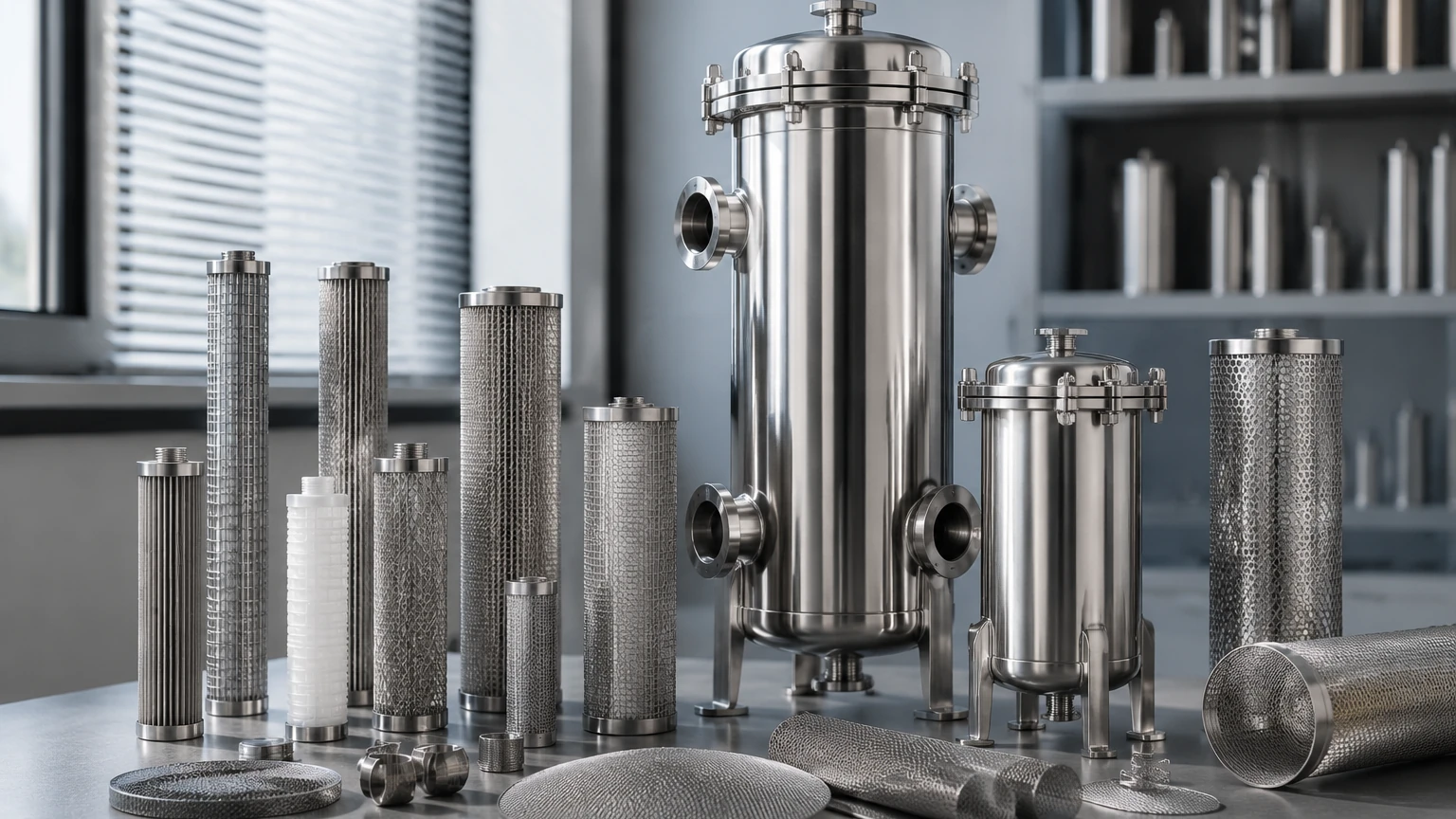
The performance of a filtration system is heavily dependent on the seal between the filter element and the housing. If this interface is compromised, fluid will take the path of least resistance, bypassing the filter media entirely. Filter housing manufacturers must design the internal seats—often referred to as the "cup" or "mandrel"—to match the specific end-cap configuration of the filter cartridge.
Common sealing interfaces include:
* 222 O-ring: Features two O-rings and a flat end, providing a secure seal for critical applications.
* 226 O-ring: Includes a locking tab (bayonet) to ensure the element remains seated even under backpressure.
* Double Open End (DOE): Relies on gaskets at both ends, requiring a compression nut or spring in the housing to maintain the seal.
When sourcing stainless steel filter cartridges or wire mesh elements, it is essential to verify that the housing manufacturer’s tolerances align with the element’s dimensions. Precision in the machining of the housing’s sealing surfaces is what separates high-quality manufacturers from low-cost alternatives.
Common Risks in Procurement and Mitigation Strategies
Procuring industrial filter housings involves risks that can lead to system failure or increased operational costs. Identifying these risks early allows for better decision-making.
Bypass and Poor Sealing
As mentioned, bypass is the most common failure mode. This often results from poor machining of the housing seat or the use of low-quality O-rings that swell or degrade when exposed to the process fluid. To mitigate this, request seal compatibility charts and ensure the manufacturer performs a fit-test with the intended filter elements.
Corrosion and Material Fatigue
In cyclic pressure applications, welds can become points of failure. Inadequate heat treatment or poor welding techniques can lead to stress corrosion cracking. Procurement teams should inquire about the manufacturer’s welding procedures (WPS) and whether they perform non-destructive testing (NDT) such as X-ray or dye penetrant inspection on critical welds.
Lead Time and Spare Parts Availability
Custom-engineered housings can have long lead times. Furthermore, if a manufacturer uses proprietary closure seals or gaskets, the end-user may face difficulties sourcing replacements. It is advisable to choose manufacturers who use standard O-ring sizes or provide a comprehensive spare parts kit with the initial purchase.
Customization and OEM Capabilities
Many industrial applications require more than a "catalog" solution. Filter housing manufacturers with strong OEM (Original Equipment Manufacturer) capabilities can provide significant value by tailoring designs to specific needs. This might include:
* Multi-Stage Housings: Combining pre-filtration and final filtration within a single vessel to save space.
* Jacketed Housings: Allowing for steam or coolant circulation to maintain fluid temperature during filtration.
* Duplex Systems: Two housings connected by a diverter valve, allowing for continuous operation while one filter is being serviced.
Customization also extends to the internal components. For example, if an application requires high-strength stainless steel mesh filters, the housing manufacturer must ensure the internal support structure can handle the weight and the differential pressure associated with heavy-duty metal media.
Technical Documentation and Compliance
In a B2B engineering context, the hardware is only part of the deliverable; the documentation is equally important. A reputable manufacturer should provide a complete technical data package, including:
1. General Arrangement (GA) Drawings: Showing all dimensions, connection sizes, and weights.
2. Hydrostatic Test Certificates: Proof that the housing was tested at 1.3x or 1.5x its design pressure without leakage or deformation.
3. Certificate of Conformance (CoC): Stating that the product meets the purchase order specifications.
4. Operations and Maintenance (O&M) Manuals: Detailed instructions on installation, element replacement, and safety precautions.
For industries like pharmaceuticals or biotechnology, additional documentation such as USP Class VI plastics certification for seals and BSE/TSE statements may be required.
Conclusion: Making an Informed Selection
Selecting from the vast array of filter housing manufacturers requires a balance of technical scrutiny and an understanding of long-term operational costs. A low initial purchase price can quickly be offset by high maintenance costs, frequent seal failures, or system downtime. By focusing on material quality, engineering standards, and the precision of the element-to-housing interface, engineers can ensure a reliable filtration process.
Whether you are designing a new system or upgrading an existing one, the synergy between the housing and the filter element is the foundation of performance. Working with manufacturers who understand this relationship—and who can provide the necessary technical support and documentation—is the most effective way to achieve efficient and durable industrial filtration.
