


Filter Panel
In industrial filtration, the filter panel serves as a critical component for separating solids from liquids or gases across a wide range of demanding applications. Unlike standard disposable filters, industrial-grade metal filter panels are engineered for durability, precision, and the ability to withstand harsh operating conditions, including high temperatures, corrosive chemicals, and significant mechanical stress. For engineers and procurement specialists, understanding the technical nuances of filter panel design—from material selection to structural reinforcement—is essential for optimizing process efficiency and reducing long-term operational costs.
As a specialized manufacturer, Kaifil provides high-performance stainless steel filtration solutions designed to meet the rigorous standards of global industries. By focusing on precision engineering and customizable configurations, these filtration components ensure reliable performance in sectors such as chemical processing, food and beverage production, and pharmaceutical manufacturing. For more information on specific configurations, you can visit the Main Page to explore our full range of industrial filtration capabilities.
Understanding the Structural Composition of Industrial Filter Panels
A filter panel is typically defined by its multi-layered construction, which combines a filtration medium with a rigid support frame. The choice of structure depends heavily on the required micron rating and the physical environment of the application.
Filtration Media Varieties
The core of any filter panel is the mesh or perforated metal used for separation. Stainless steel wire mesh is the most common choice due to its versatility.
1. Plain Weave Mesh: Best for simple, low-pressure applications where high flow rates are prioritized over extreme precision.
2. Dutch Weave Mesh: Utilizes a higher density of wires in one direction, creating a tortuous path that allows for finer filtration and greater mechanical strength.
3. Sintered Wire Mesh: For the most demanding environments, multiple layers of wire mesh are diffusion-bonded (sintered) together. This process creates a monolithic structure that offers exceptional pore stability and high resistance to pressure surges.
Frame and Support Systems
To maintain the integrity of the mesh under flow pressure, the filter panel is housed in a robust frame. Frames are typically constructed from U-channels or flat bars made of the same alloy as the mesh to prevent galvanic corrosion. In larger panels, internal support grids or perforated metal backings are added to prevent the mesh from bowing or rupturing during high-differential pressure events.
Material Selection and Chemical Compatibility
The longevity of a filter panel is directly tied to its metallurgical properties. In industrial settings, selecting the wrong alloy can lead to premature failure via pitting, stress corrosion cracking, or general oxidation.
* 304 Stainless Steel: The standard choice for general industrial applications. It offers good corrosion resistance and is cost-effective for water treatment or non-acidic chemical processes.
* 316L Stainless Steel: Contains molybdenum, which significantly enhances resistance to chlorides and organic acids. This is the preferred material for marine environments, pharmaceutical manufacturing, and food processing where sanitation and chemical resistance are paramount.
* Specialty Alloys: For extreme conditions involving high-concentration acids or temperatures exceeding 800°C, alloys such as Inconel, Monel, or Hastelloy may be utilized in the filter panel construction.
Engineers must also consider the gasket or sealing material used at the perimeter of the panel. Common options include EPDM, Viton, or PTFE, each selected based on the temperature and chemical profile of the process fluid.
Performance Metrics: Efficiency, Pressure Drop, and Flow Dynamics
When evaluating a filter panel, three primary technical metrics must be analyzed: filtration accuracy, permeability, and dirt-holding capacity.
Filtration Accuracy (Micron Rating)
Industrial panels are categorized by their ability to retain particles of a specific size. This is expressed as either a nominal or absolute micron rating. An absolute rating implies that 99.9% of particles at that size will be captured, which is critical for high-purity processes in the pharmaceutical industry.
Clean Pressure Drop
The initial pressure drop across a clean filter panel determines the pump power required to maintain flow. A well-designed panel maximizes the "open area" of the mesh to ensure high permeability. If the pressure drop is too high from the outset, the system will reach its terminal pressure (the point where the filter must be cleaned or replaced) much faster, leading to increased downtime.
Dirt-Holding Capacity
This refers to the volume of contaminants the panel can retain before the pressure drop exceeds the system's limits. Pleated filter panels are often used to increase the surface area within the same footprint, effectively doubling or tripling the dirt-holding capacity compared to flat panels.
Industrial Applications and Operating Environments
The versatility of the stainless steel filter panel makes it a staple in various specialized sectors. Each industry places unique demands on the component's design.
Chemical and Petrochemical Processing
In these environments, panels are often used for catalyst recovery or the filtration of aggressive solvents. The ability to withstand high temperatures and maintain structural integrity under varying pH levels is the primary requirement here.
Food and Beverage Industry
Hygiene is the priority. Filter panels used in food production must be easy to clean (CIP – Clean In Place) and free of "dead zones" where bacteria could proliferate. Stainless steel is the material of choice because it does not leach contaminants and can withstand rigorous steam sterilization cycles.
Hydraulic and Lube Oil Systems
Filter panels are frequently used in large hydraulic reservoirs to protect sensitive pumps and valves from particulate contamination. These panels must handle high-viscosity fluids and potential pressure spikes without deforming.
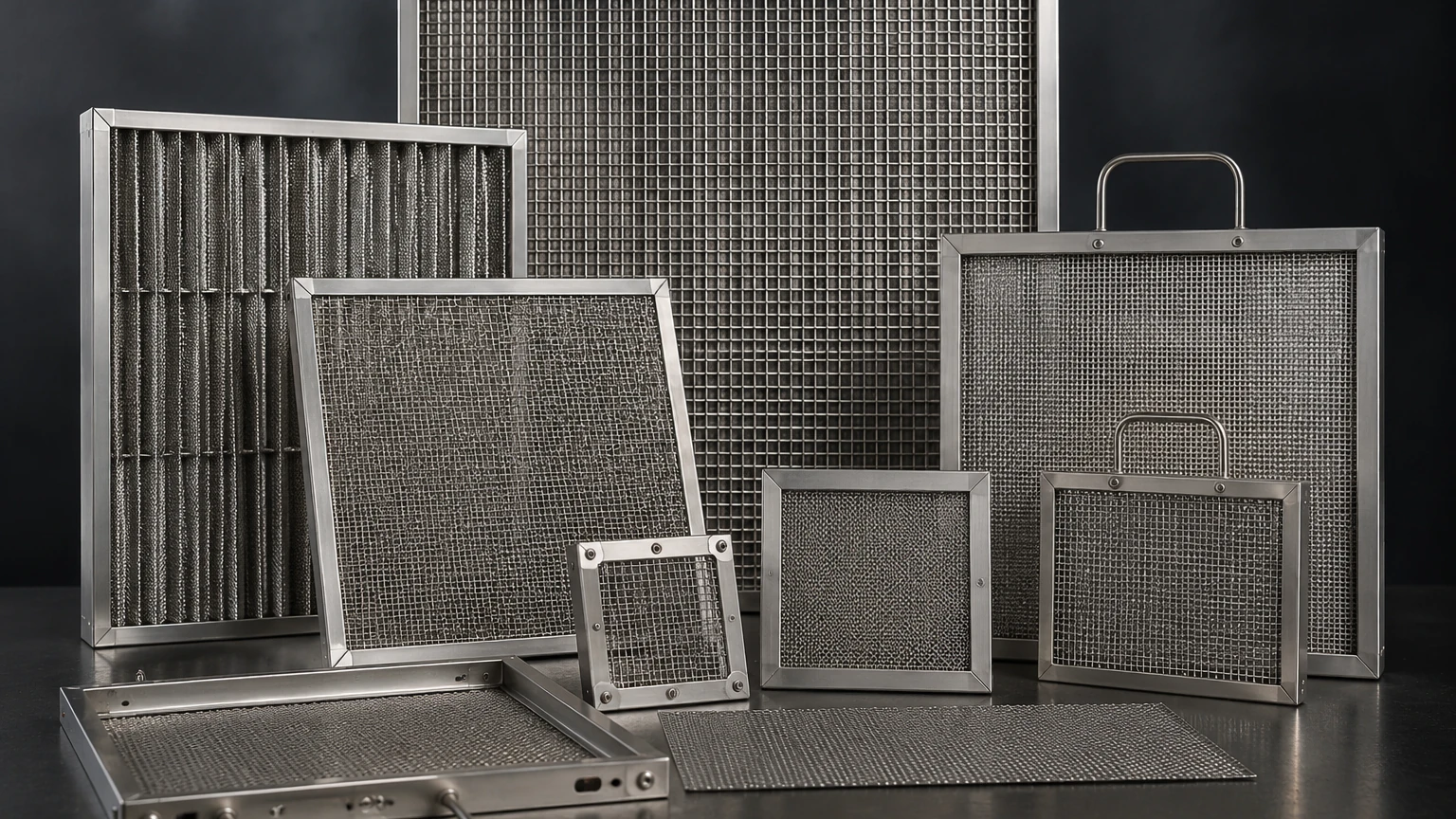
Customization and Engineering Specifications for OEM Projects
Off-the-shelf solutions rarely meet the specific needs of complex industrial machinery. Customization is often required to ensure the filter panel integrates perfectly with existing housing and flow requirements.
Key customization options include:
* Dimensional Accuracy: Precise laser-cutting of frames to ensure a leak-proof fit within the filter housing.
* Multi-Stage Filtration: Combining different mesh counts within a single panel to provide graduated filtration (capturing large debris on the outer layer and fine particles on the inner layer).
* Reinforcement Features: Adding handles, lift lugs, or specialized mounting brackets to facilitate easier installation and removal during maintenance.
* Surface Treatments: Electropolishing can be applied to the stainless steel to improve corrosion resistance and surface smoothness, which is particularly beneficial for pharmaceutical applications.
By working with a manufacturer that understands these variables, engineers can develop a filter panel that is optimized for their specific flow rates and contaminant profiles.
Maintenance Protocols and Service Life Optimization
One of the greatest advantages of a stainless steel filter panel over synthetic alternatives is its cleanability. Proper maintenance can extend the service life of a metal panel for several years, significantly reducing the total cost of ownership.
Cleaning Methods
1. Backwashing: Reversing the flow of fluid through the panel to dislodge particles trapped on the surface of the mesh.
2. Ultrasonic Cleaning: Using high-frequency sound waves in a cleaning solvent to remove fine particles embedded deep within the mesh pores. This is highly effective for Dutch weave or sintered media.
3. Chemical Cleaning: Soaking the panel in specialized acids or alkalis to dissolve organic or mineral scaling. It is vital to ensure the cleaning agent is compatible with the stainless steel grade.
Inspection for Damage
Regular inspection is necessary to check for "blinding" (permanent clogging of pores) or mechanical damage such as wire displacement or frame warping. If a panel shows signs of fatigue, it should be replaced to prevent bypass—where unfiltered fluid escapes around the damaged area.
Procurement and Technical Evaluation Checklist
Before finalizing a purchase order for a filter panel, technical teams should confirm the following details with their supplier to ensure the component is fit for purpose:
* Operating Temperature: What is the maximum and minimum temperature the panel will encounter, including during cleaning cycles?
* Flow Direction: Is the flow moving from the inside-out or outside-in? This affects where the reinforcement should be placed.
* Contaminant Type: Are the particles hard, soft, fibrous, or abrasive? This influences the choice of weave and wire diameter.
* Pressure Requirements: What is the maximum operating pressure and the maximum allowable differential pressure before cleaning?
* Regulatory Compliance: Does the application require FDA-compliant materials or specific industry certifications (e.g., ISO 9001)?
Conclusion
The industrial filter panel is more than just a simple screen; it is a precision-engineered tool designed to protect expensive machinery and ensure product purity. By selecting the appropriate materials, mesh structures, and reinforcement methods, industrial operators can achieve a balance between high filtration efficiency and low maintenance costs.
Whether you are designing a new system or looking to optimize an existing process, choosing a high-quality stainless steel solution is a long-term investment in operational reliability. For comprehensive technical support and to view a wide array of custom filtration components, visit the Main Page to connect with our engineering team and explore our manufacturing capabilities.
