


Type a Pool Filter Cartridge
In the realm of industrial and recreational water treatment, the type a pool filter cartridge represents one of the most widely utilized standards for localized filtration systems. While frequently associated with residential pool maintenance, the engineering principles governing these cartridges—ranging from surface area optimization to particulate retention efficiency—are fundamental to broader industrial filtration logic. For procurement managers and system engineers, understanding the technical nuances of the Type A specification is essential for ensuring system longevity, pump efficiency, and water clarity.
As a specialist in custom stainless steel filtration, Kaifil approaches the Type A standard through the lens of durability and precision engineering. Whether a system requires standard synthetic media or a high-performance metal mesh upgrade for industrial applications, the selection process must be guided by empirical data and operational requirements. You can explore our full range of industrial filtration capabilities on our Main Page.
Understanding the Engineering Principles of Type A Filtration
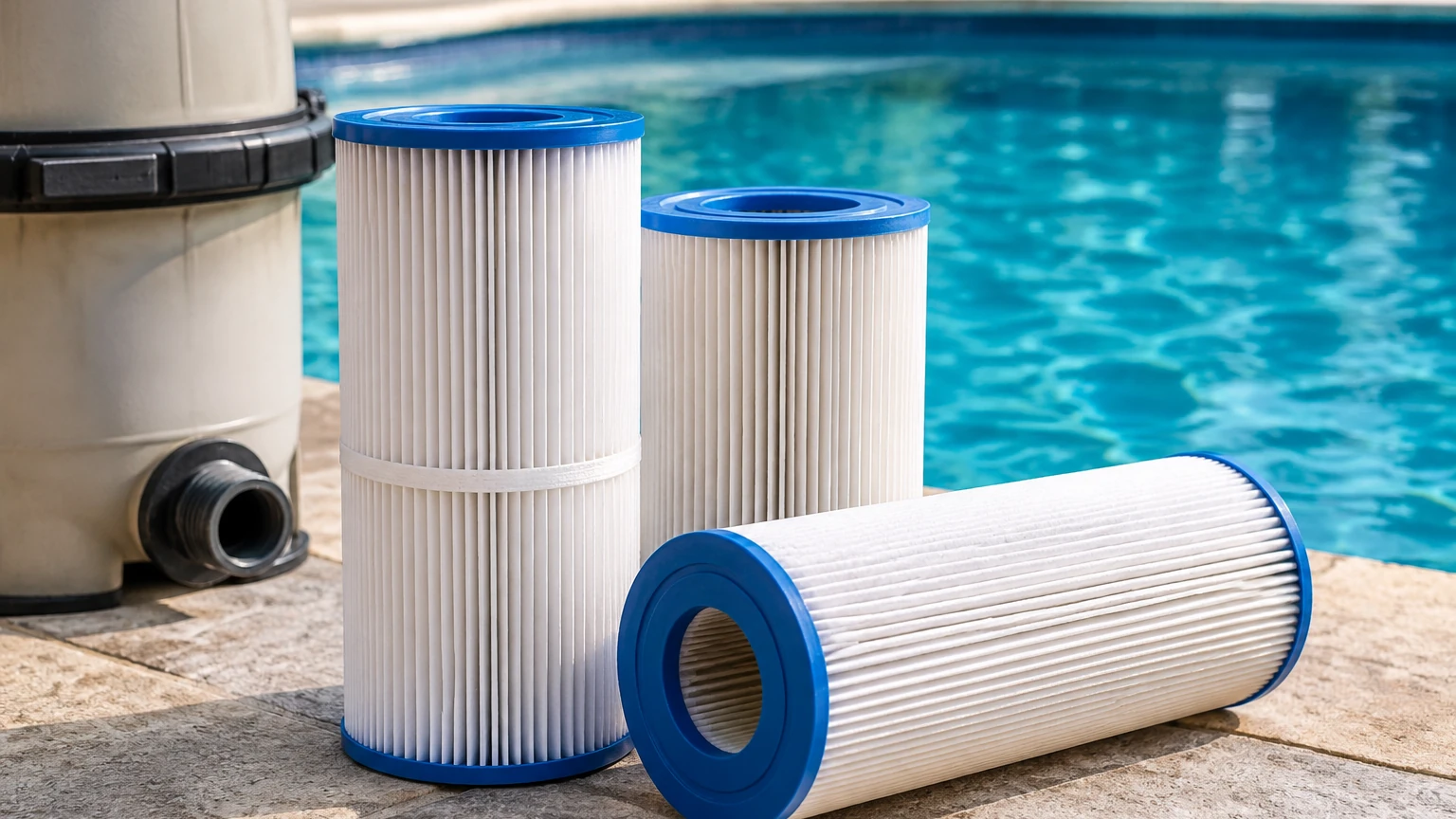
The primary function of a type a pool filter cartridge is the mechanical separation of suspended solids from a liquid stream. This is achieved through surface filtration, where the media—typically a pleated non-woven fabric—traps debris as the fluid passes radially from the outside of the cartridge toward the hollow center core.
The "Type A" designation refers to a specific dimensional envelope and fitting style. From an engineering perspective, the efficiency of this cartridge is a product of its pleat density and the permeability of the media. Pleating is a critical design feature because it significantly increases the effective filtration area (EFA) without increasing the physical footprint of the filter housing. A higher EFA results in lower flux (flow per unit area), which reduces the velocity of particles hitting the media, thereby improving retention and extending the time between cleaning cycles.
Technical Specifications and Dimensional Standards
For engineers integrating these components into larger systems, dimensional accuracy is paramount to prevent "bypass"—a condition where unfiltered liquid escapes around the ends of the cartridge. The standard specifications for a type a pool filter cartridge typically include:
* Height: Approximately 8 inches (203 mm).
* Outer Diameter (OD): Approximately 4.25 inches (107 mm).
* Inner Diameter (ID): Approximately 2 inches (50 mm).
* Media Type: Pleated polyester or Dacron (standard) or stainless steel wire mesh (industrial upgrade).
* End Cap Material: Semi-rigid PVC or thermally bonded polyurethane.
When evaluating a Type A cartridge, the structural integrity of the center core is a vital consideration. In high-pressure or high-viscosity applications, the core must resist collapse. Standard consumer-grade cartridges often use lightweight plastic cores, whereas industrial-grade versions may utilize reinforced polypropylene or stainless steel perforated tubes to withstand higher differential pressures (ΔP).
Material Selection: From Synthetic Fibers to Industrial Stainless Steel
The choice of media material dictates the cartridge’s chemical compatibility and thermal resistance. Most standard type a pool filter cartridge units utilize non-woven polyester. This material is favored for its cost-effectiveness and resistance to common pool chemicals like chlorine and bromine. However, in industrial contexts where the fluid may contain hydrocarbons, high temperatures, or extreme pH levels, synthetic media may degrade.
Kaifil specializes in bridging the gap between standard designs and industrial-grade performance. By utilizing stainless steel wire mesh (304 or 316L), the Type A form factor can be adapted for demanding environments. Stainless steel media offers several advantages:
1. Thermal Stability: Unlike polyester, which softens at elevated temperatures, stainless steel maintains its structural properties.
2. Cleanability: Metal mesh filters can be backwashed or ultrasonically cleaned, making them permanent assets rather than consumables.
3. Chemical Inertness: Stainless steel is resistant to a wide array of industrial solvents and corrosive agents that would compromise synthetic fibers.
Performance Evaluation: Flow Rates and Micron Ratings
Filtration accuracy is measured in microns (µm). A standard type a pool filter cartridge typically offers a nominal filtration rating between 20 and 40 microns. In engineering terms, a "nominal" rating means the filter will retain a majority of particles at that size, but not 100%. If an application requires absolute filtration, where 99.9% of particles at a specific size must be removed, the media density and pleat configuration must be significantly tighter.
Flow rate is another critical metric. For a Type A cartridge, the recommended flow rate usually falls between 500 and 1,000 gallons per hour (GPH), depending on the pump's head pressure and the cleanliness of the filter. As the filter accumulates debris, the differential pressure increases. Engineers must monitor this ΔP; once it reaches a certain threshold (typically 8-10 PSI over the clean starting pressure), the cartridge must be cleaned or replaced to prevent pump strain and reduced turnover rates.
Maintenance and Lifecycle Management for Industrial Applications
The total cost of ownership (TCO) for a filtration system is heavily influenced by the maintenance cycle of the cartridges. For a type a pool filter cartridge, maintenance involves regular rinsing to remove surface-loaded contaminants. However, over time, fine particulates become embedded deep within the media fibers—a phenomenon known as depth loading.
In B2B and industrial environments, the replacement cycle is a key variable in operational budgets. While disposable polyester cartridges have a lower initial purchase price, the labor costs associated with frequent replacements and the environmental impact of waste can be significant. This is why many facilities are transitioning to high-durability metal filters. A stainless steel Type A equivalent can be cleaned repeatedly, providing a consistent pressure drop and predictable performance over several years, whereas synthetic cartridges may need replacement every few weeks in high-load scenarios.
Customization and OEM Solutions for Specialized Filtration
Standardization is helpful for procurement, but many industrial systems require modifications to the Type A blueprint. Customization options often include:
* Bespoke Micron Ratings: Engineering the mesh to trap specific particle sizes, such as 5µm for fine polishing or 100µm for pre-filtration.
* Reinforced End Caps: Using machined metal end caps with O-ring seals to ensure a zero-bypass fit in high-vibration machinery.
* Gasket Compatibility: Selecting EPDM, Viton, or Silicone gaskets based on the chemical profile of the fluid being filtered.
At Kaifil, we provide OEM services that allow companies to take the familiar type a pool filter cartridge dimensions and optimize them for specialized equipment. This ensures that the filtration component is not a bottleneck in the system but a contributor to overall mechanical efficiency.
Procurement Considerations: Selecting the Right Filtration Partner
When purchasing filtration components in bulk or for critical infrastructure, engineers and purchasing teams should confirm several factors before finalizing a supplier:
1. Material Certification: Ensure the stainless steel or synthetic media meets the required ASTM or ISO standards for the specific industry (e.g., food-grade or pharmaceutical-grade).
2. Testing Protocols: Verify that the cartridges have been tested for burst pressure and filtration efficiency (Beta ratios).
3. Lead Times and Scalability: For OEM projects, the ability of the manufacturer to scale production from prototypes to high-volume runs is essential.
4. Technical Support: A reliable partner should provide guidance on fluid dynamics and media selection rather than just selling a part number.
By focusing on these technical boundaries, organizations can move beyond the "commodity" view of the type a pool filter cartridge and treat it as a precision-engineered component of their fluid management system. Whether you are maintaining a large-scale aquatic facility or integrating filtration into an industrial process, the quality of the cartridge directly impacts the health of the entire system.
For more information on high-performance filtration components and custom manufacturing capabilities, please visit our Main Page. Our team of experts is available to assist with material selection, technical specifications, and the development of tailored filtration solutions that meet the rigorous demands of modern industry.
