


Filter Sponge Manufacturer
In the landscape of industrial filtration, selecting a specialized filter sponge manufacturer is a critical decision for engineers and procurement teams. Reticulated foam, commonly referred to as filter sponge, serves as a versatile depth filtration medium across a wide array of applications, from HVAC systems and automotive air intakes to aquatic life support and industrial machinery. Unlike standard foams, industrial filter sponges are engineered with a specific open-cell structure that allows for controlled fluid flow and particle entrapment.
For technical professionals, understanding the material science, manufacturing processes, and performance metrics of these components is essential. While polymer sponges are ubiquitous, they often serve as the first stage in a complex filtration sequence that may eventually require the durability of stainless steel components. For a comprehensive overview of high-performance filtration solutions, engineers often consult the Main Page of specialized manufacturers like Kaifil to compare media types and performance characteristics.
The Role of Reticulated Foam in Industrial Systems
A filter sponge manufacturer produces reticulated polyurethane foam by removing the cell membranes (windows) of a standard foam block, leaving only the skeletal structure. This process, known as reticulation, creates a three-dimensional dodecahedron structure that provides a high surface area-to-volume ratio. This morphology is ideal for depth filtration, where particles are trapped throughout the thickness of the medium rather than just on the surface.
In industrial settings, these sponges are categorized by their chemical base: polyether or polyester. Polyether-based sponges are preferred for applications involving moisture, such as water treatment or outdoor environments, due to their superior hydrolytic stability. Conversely, polyester-based sponges offer higher mechanical strength and better resistance to hydrocarbons, making them the standard choice for oil filtration and air intake systems in automotive and industrial engines.
Material Selection: Polyether, Polyester, and Metal Alternatives
When engaging with a filter sponge manufacturer, the first engineering consideration is the chemical compatibility of the polymer with the process fluid.
1. Polyester Polyurethane: These foams exhibit high tensile strength and tear resistance. They are highly resistant to petroleum products, alcohols, and many solvents. However, they are susceptible to hydrolysis (breakdown by water) and should not be used in high-humidity or aqueous environments for extended periods.
2. Polyether Polyurethane: These are specifically formulated to resist microbial growth and water-induced degradation. They are the primary choice for pond filtration, wastewater treatment, and medical applications where moisture is constant. Their mechanical strength is generally lower than polyester, but their longevity in wet conditions is significantly higher.
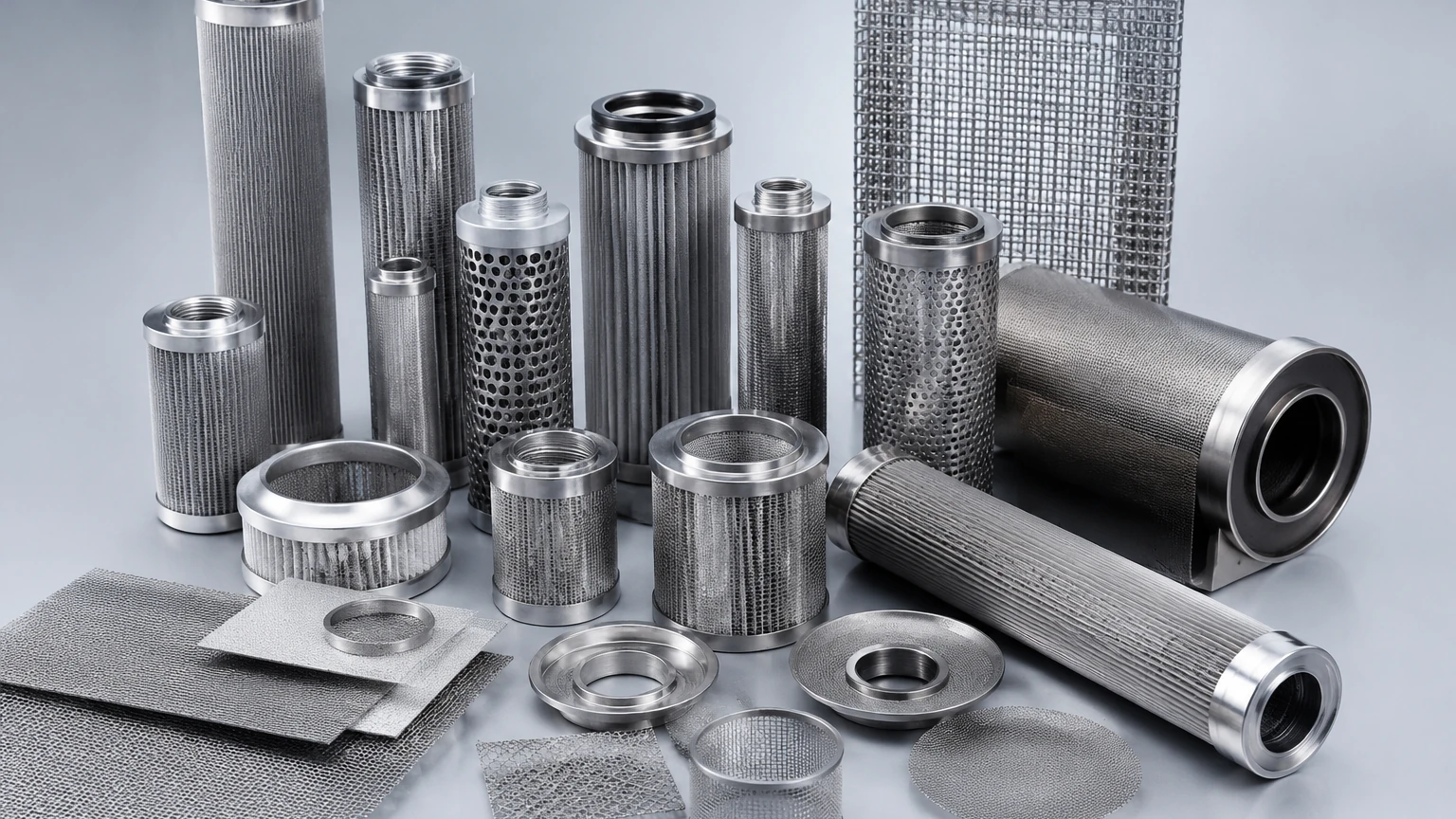
3. Metal and Ceramic Foams: In high-temperature or highly corrosive environments where polymer sponges fail, engineers must look toward specialized metal foam or stainless steel mesh solutions. These materials provide the same reticulated structure but with the thermal and chemical resilience of metal. Manufacturers like Kaifil provide these precision metal components for demanding industrial sectors where polymer degradation would lead to system failure.
Critical Technical Specifications: PPI and Porosity
The primary metric used by a filter sponge manufacturer to define a product is PPI, or Pores Per Inch. This value typically ranges from 10 PPI (very coarse) to 100 PPI (very fine).
* 10 to 30 PPI: These sponges are used for pre-filtration, capturing large debris while maintaining a very low pressure drop. They are common in heavy machinery air intakes and as biological media in large-scale water treatment.
* 45 to 60 PPI: This range offers a balance between filtration efficiency and flow rate. It is often used in consumer electronics, small engines, and general HVAC applications.
* 80 to 100 PPI: High-density sponges used for fine dust filtration and liquid polishing. While they offer high efficiency, they also result in a higher pressure drop across the system, requiring more powerful pumps or fans.
Beyond PPI, engineers must also consider the "void volume" or porosity. Most industrial filter sponges have a void volume of 95% to 98%. This high porosity allows for high dust-holding capacity, which extends the service life of the filter before a replacement or cleaning cycle is required.
The Manufacturing Process: From Reticulation to Precision Fabrication
A professional filter sponge manufacturer utilizes two primary methods for reticulation: thermal and chemical.
Thermal Reticulation (Zapping)
In the thermal process, a foam block is placed in a vacuum chamber filled with an explosive gas mixture (usually hydrogen and oxygen). When ignited, a controlled flash flame travels through the foam, melting the thin cell membranes without damaging the thicker skeletal strands. This results in a clean, open-cell structure with no residual debris.
Chemical Reticulation (Etching)
Chemical reticulation involves submerging the foam in a caustic solution (such as sodium hydroxide) that dissolves the cell membranes. While effective, this process requires careful neutralization and washing to ensure no chemical residue remains, which could contaminate the filtered fluid.
Once reticulated, the foam is fabricated into its final shape. B2B manufacturers offer various secondary operations, including:
* Die-Cutting: For high-volume production of simple shapes.
* CNC Contouring: For complex 3D geometries required in custom housings.
* Laminating: Bonding the sponge to other media, such as non-woven fabrics or activated carbon layers, to create multi-stage filters.
* Impregnation: Adding flame retardants, anti-microbial agents, or carbon coatings to enhance the sponge's functional properties.
Evaluating a Filter Sponge Manufacturer’s Capabilities
When sourcing for industrial projects, the evaluation of a filter sponge manufacturer must go beyond unit price. Engineers should confirm the following technical capabilities:
* Consistency of PPI: Variations in pore size within a single batch can lead to bypass or premature clogging. A reliable manufacturer uses automated optical inspection to ensure PPI uniformity.
* Compression Set Resistance: This measures the foam's ability to return to its original thickness after being compressed. In applications where the sponge is used as a seal or gasket, a low compression set is vital.
* Certification and Compliance: For regulated industries, manufacturers must provide documentation for REACH, RoHS, and UL 94 (flame retardancy). In food and beverage or medical applications, FDA-compliant materials are mandatory.
* Customization and Prototyping: Industrial systems often require non-standard dimensions. A manufacturer that offers rapid prototyping and custom tooling can significantly reduce the time-to-market for new equipment designs.
Comparison: Reticulated Foam vs. Stainless Steel Filtration
While filter sponges are cost-effective and efficient for many applications, they have inherent limitations. In many B2B industrial scenarios, engineers must decide between the disposable nature of polymer sponges and the permanent nature of stainless steel filters.
| Feature | Reticulated Polymer Sponge | Stainless Steel Wire Mesh / Foam |
| :— | :— | :— |
| Temperature Limit | Typically < 120°C | Up to 800°C+ |
| Chemical Resistance | Limited by polymer type | Excellent (304, 316L, Inconel) |
| Durability | Disposable/Limited cleaning | Fully cleanable and reusable |
| Initial Cost | Low | High |
| Total Cost of Ownership | High (due to replacements) | Low (long service life) |
| Pressure Resistance | Low (may collapse) | High (structural integrity) |
For many high-pressure hydraulic systems or steam filtration applications, a filter sponge manufacturer might not be able to meet the structural requirements. In these cases, moving to a metal-based solution is necessary. Detailed engineering data on these high-durability alternatives can be found on the Kaifil Main Page, which highlights the transition from temporary media to permanent industrial filtration components.
Procurement Risks and Total Cost of Ownership
One of the most common risks when dealing with a filter sponge manufacturer is the "hidden cost" of low-quality foam. Lower-grade sponges may suffer from "shedding," where small fragments of the polymer break off and enter the downstream flow, potentially damaging sensitive components like valves or sensors. This is particularly dangerous in oxygen-rich environments or high-purity chemical processing.
Furthermore, the total cost of ownership (TCO) for filter sponges includes the labor cost of frequent replacements and the environmental cost of disposing of used, often contaminated, media. In contrast, precision-engineered metal filters, while more expensive upfront, can be cleaned via ultrasonic baths or backwashing, offering a lower TCO over the life of the machine.
Engineers should also confirm lead times and supply chain stability. Because reticulated foam production is energy-intensive and involves specific chemical precursors, disruptions in the polymer industry can lead to significant delays. Establishing a relationship with a manufacturer that maintains a robust inventory of raw blocks can mitigate these risks.
Conclusion: Making an Informed Selection
Selecting the right filter sponge manufacturer requires a deep dive into the specific needs of the application. Whether the priority is the hydrolytic stability of a polyether sponge for water treatment or the hydrocarbon resistance of a polyester sponge for industrial machinery, the technical specifications must be verified against the operating environment.
By evaluating PPI, material base, and manufacturing precision, procurement teams can ensure they receive a component that meets the performance expectations of their system. For applications where polymer sponges reach their physical limits, transitioning to custom stainless steel filtration solutions remains the most reliable path for long-term industrial efficiency. To explore the full spectrum of high-performance metal filtration options that complement or replace foam media, professionals are encouraged to review the technical resources available on the Main Page of the Kaifil website.
