


コアレッサ
In the complex landscape of industrial fluid processing, the separation of immiscible liquids or the removal of entrained moisture from gases is a critical requirement for maintaining product purity and protecting downstream equipment. The technology designed to facilitate this separation is known as the coalescer, or コアレッサ. Unlike standard mechanical filters that remove solid particulates based on size exclusion, a コアレッサ utilizes specialized media to merge small droplets into larger ones, allowing for efficient separation based on density differences.
For engineers and procurement professionals in industries ranging from petrochemicals to pharmaceutical manufacturing, selecting the right separation technology is paramount. This article explores the technical principles, material considerations, and engineering parameters essential for implementing effective coalescing solutions in demanding industrial environments.
Introduction to Coalescence Technology in Modern Industry
A コアレッサ is a specialized device used to separate emulsions—mixtures of two or more liquids that are normally immiscible—or to remove liquid aerosols from gas streams. The primary objective is to break the emulsion by forcing the dispersed phase (the droplets) to collide and merge. Once these droplets reach a sufficient size, they can be easily separated from the continuous phase via gravity or centrifugal force.
In industrial applications, the presence of water in fuel, oil in water, or liquid mist in natural gas can lead to catastrophic equipment failure, corrosion, and reduced process efficiency. For example, in turbine operations, water in lubricating oil can lead to bearing failure. In the chemical industry, the inability to separate solvents can result in contaminated end-products and increased waste. Therefore, the コアレッサ serves as a critical safeguard in maintaining the integrity of industrial systems.
The Fundamentals of Liquid-Liquid and Gas-Liquid Separation
To understand how a コアレッサ functions, one must examine the physics of droplet behavior within a flow stream. The process generally occurs in three distinct stages: interception, coalescence, and separation.
1. Interception and Attachment
As the fluid passes through the coalescing media, the dispersed droplets come into contact with the fibers or mesh. This contact is governed by several mechanisms, including Brownian motion for very small droplets, inertial impaction for larger droplets, and direct interception. The surface properties of the media—specifically its affinity for the dispersed phase—play a vital role here. A media that is "wetted" by the droplets will more easily capture them.
2. Coalescence (Droplet Growth)
Once captured, the droplets migrate along the fibers of the media. As more droplets are intercepted, they collide with one another and merge (coalesce) into larger globules. This growth is the core function of the コアレッサ. The engineering of the media must provide enough surface area to facilitate these collisions while maintaining a structure that allows the growing droplets to move toward the discharge side of the element.
3. Gravity Separation
Once the droplets have grown to a size where their buoyancy or weight significantly differs from the continuous phase, they are released from the media. In a liquid-liquid コアレッサ, the heavier phase (often water) will sink to the bottom of the vessel, while the lighter phase (often oil or fuel) rises to the top. In gas-liquid applications, the coalesced liquid drops fall out of the gas stream into a collection sump.
Why Material Selection Defines コアレッサ Efficiency
The choice of media material is perhaps the most critical decision in the design of a コアレッサ. While traditional materials like fiberglass or cellulose are common, high-performance industrial applications increasingly require the durability and precision of stainless steel and other specialized alloys.
Stainless Steel Wire Mesh
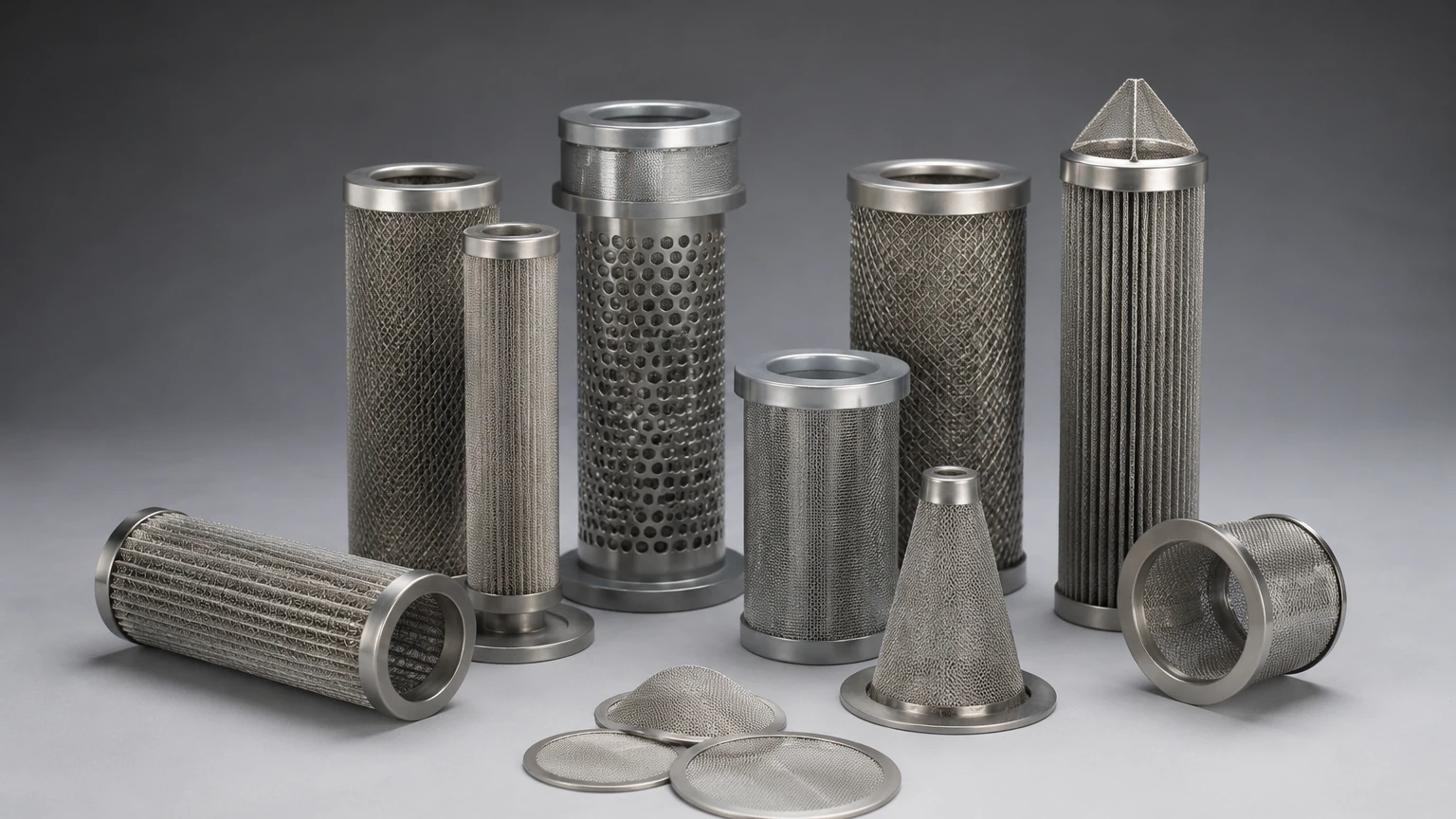
Stainless steel is often the material of choice for industrial filtration because of its exceptional mechanical strength and resistance to chemical degradation. In a コアレッサ, stainless steel wire mesh can be engineered with specific weave patterns and wire diameters to optimize the surface area available for droplet attachment. Unlike synthetic fibers, stainless steel does not swell or degrade when exposed to aggressive solvents or high temperatures.
Surface Energy and Wetting Characteristics
For a コアレッサ to operate efficiently, the media must have the correct surface energy. If the goal is to remove water from oil, the media should ideally be hydrophilic (water-attracting) or have a specific surface treatment that encourages water droplets to spread and merge. Conversely, if the goal is to remove oil from water, oleophilic properties are required. Stainless steel components can be chemically treated or mechanically textured to achieve the desired wetting characteristics for specific industrial fluids.
Durability in Harsh Environments
In sectors like oil and gas or chemical processing, filters are often subjected to high pressures and fluctuating temperatures. Synthetic media may collapse or shed fibers under these conditions, leading to downstream contamination. A stainless steel コアレッサ provides a rigid structure that maintains its pore geometry and separation efficiency even under significant differential pressure. This reliability is a core focus for manufacturers like Kaifil, who specialize in robust metal filtration solutions.
Engineering Considerations: Flow Dynamics and Pressure Drop
Designing an effective filtration system requires a balance between separation efficiency and operational costs. Engineers must consider several variables when specifying a コアレッサ system.
Flux and Velocity
The velocity of the fluid as it passes through the media (flux) is a critical parameter. If the velocity is too high, the shear forces may break apart the coalescing droplets before they can grow large enough to separate. This is known as the "critical velocity." Conversely, if the velocity is too low, the system becomes unnecessarily large and expensive. Proper sizing ensures that the fluid remains in contact with the media long enough for coalescence to occur without exceeding the critical velocity.
Viscosity and Temperature
The viscosity of the continuous phase significantly impacts the rate at which droplets can move and merge. Higher viscosity fluids resist droplet movement, often requiring larger coalescer units or higher operating temperatures to reduce viscosity. Understanding the temperature-viscosity relationship of the process fluid is essential for accurate performance prediction.
Pressure Drop (Delta P)
As fluid flows through the dense media of a コアレッサ, a pressure drop occurs. While some pressure drop is necessary to facilitate contact, excessive resistance increases energy consumption and can signal that the media is fouled with solid particulates. In many industrial designs, a pre-filter is installed upstream of the コアレッサ to remove solids, ensuring that the coalescing media can focus solely on liquid separation, thereby extending its service life.
Industrial Applications: From Petrochemicals to Food Processing
The versatility of the コアレッサ makes it indispensable across various sectors. Each application presents unique challenges regarding fluid chemistry and separation requirements.
* Oil and Gas: In the upstream sector, coalescers are used to separate produced water from crude oil. In the downstream sector, they protect refinery equipment by removing moisture from hydrocarbon streams and ensuring that finished products like diesel and jet fuel meet stringent dryness standards.
* Chemical Processing: Many chemical reactions involve the use of catalysts or solvents that must be recovered. A コアレッサ allows for the efficient separation of these phases, reducing raw material costs and improving the purity of the final chemical product.
* Power Generation: Steam turbines rely on high-purity lubricating oil. Moisture ingress can lead to oil oxidation and component wear. A dedicated oil-water コアレッサ ensures the oil remains within specified moisture limits, extending the life of the turbine and the lubricant.
* Food and Beverage: In the processing of edible oils or the recovery of flavors, liquid-liquid separation is a common requirement. Here, the use of food-grade stainless steel filtration components is mandatory to prevent contamination and ensure compliance with health regulations.
Maintenance, Cleaning, and the Total Cost of Ownership
When evaluating a コアレッサ, B2B buyers must look beyond the initial purchase price and consider the total cost of ownership (TCO). This includes the cost of replacement elements, downtime for maintenance, and the energy costs associated with pressure drop.
Cleanability of Metal Media
One of the primary advantages of stainless steel coalescing elements is their cleanability. Unlike disposable fiberglass cartridges, metal mesh elements can often be cleaned using ultrasonic baths, chemical cleaning, or back-pulsing. This capability significantly reduces the waste generated by the facility and lowers long-term procurement costs. For a detailed look at durable filtration options and technical specifications, visiting a manufacturer's Main Page can provide insights into the various configurations available.
Monitoring Performance
To ensure the longevity of the system, operators should monitor the differential pressure across the コアレッサ and the quality of the effluent. A sudden drop in separation efficiency without a corresponding increase in pressure may indicate "channeling," where the fluid has found a path of least resistance through damaged media. Regular inspections and adherence to recommended flow rates are essential for maintaining peak performance.
Selection and Customization for Demanding Applications
No two industrial processes are identical, and a "one-size-fits-all" approach to filtration often leads to sub-optimal results. Customization is frequently required to address specific challenges such as high surfactant concentrations, which can stabilize emulsions and make them difficult to break.
When working with a manufacturer like Kaifil, engineers can specify the exact dimensions, micron ratings, and material grades required for their specific application. Custom-engineered コアレッサ units can be designed to fit into existing housing, or entirely new systems can be developed to meet the footprint and performance requirements of a new facility. Key factors to confirm with a supplier include:
* Chemical Compatibility: Ensuring all seals and media materials are compatible with the process fluid.
* Filtration Rating: Defining the minimum droplet size that must be captured.
* Certification Requirements: Adherence to ASME, PED, or other regional pressure vessel and filtration standards.
Conclusion: Selecting the Right Filtration Partner
The implementation of コアレッサ technology is a strategic investment in process reliability and product quality. By understanding the underlying principles of droplet coalescence and the importance of material engineering, technical teams can select systems that offer both high efficiency and low operational costs. Stainless steel filtration components, known for their durability and precision, remain the gold standard for challenging industrial environments.
As industries move toward more sustainable and efficient processing methods, the role of advanced separation technology will only continue to grow. Whether you are managing a refinery, a pharmaceutical plant, or a high-pressure hydraulic system, the right コアレッサ solution provides the necessary protection for your most critical assets. For those seeking reliable, high-performance filtration components tailored to specific industrial needs, exploring the resources on the Main Page is an excellent starting point for technical evaluation and procurement planning.
