


Filtering Flasks
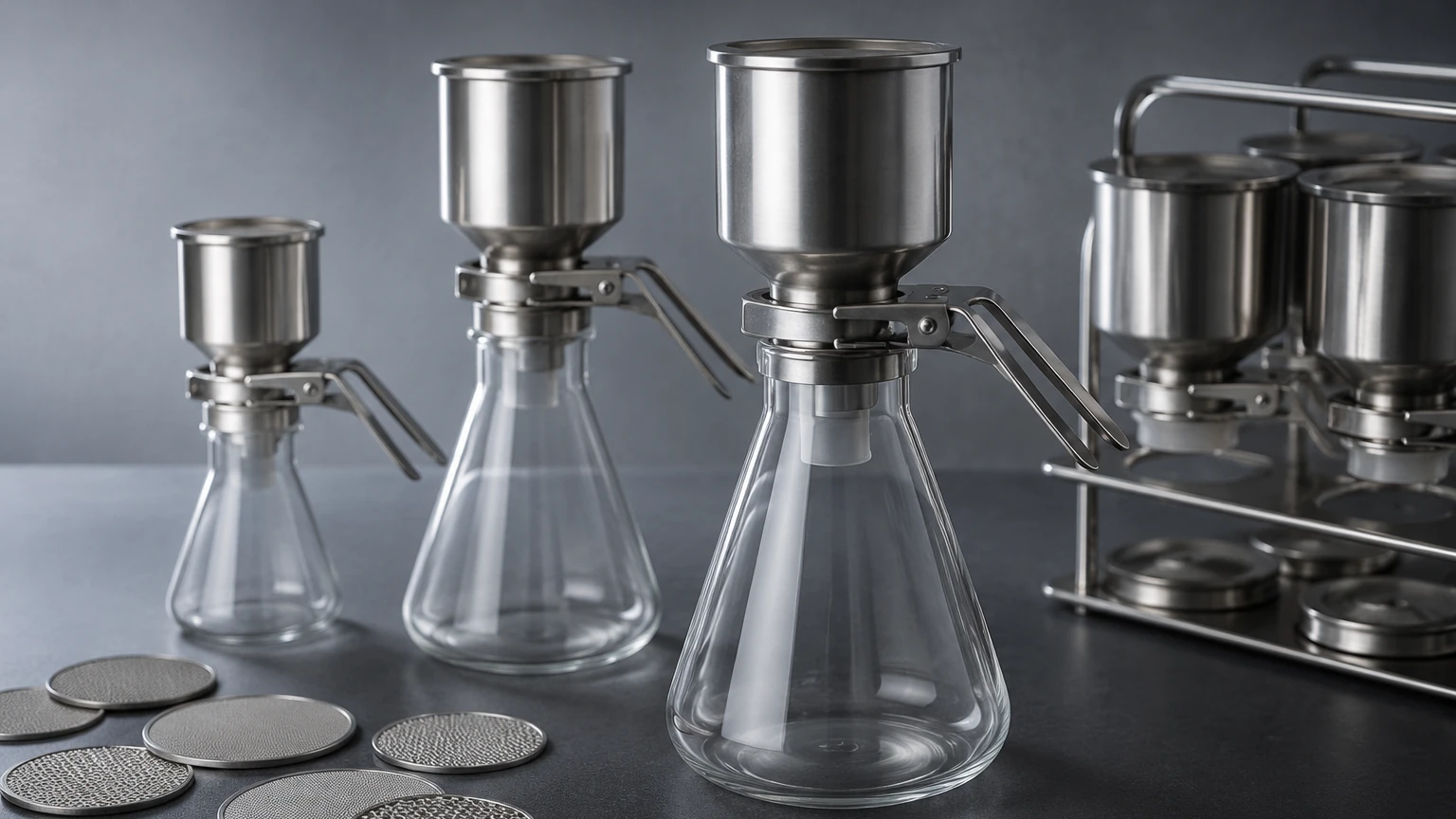
In the landscape of industrial filtration and laboratory-scale process development, the filtering flask—often referred to as a Büchner flask or vacuum flask—serves as a fundamental tool for solid-liquid separation. While frequently associated with laboratory environments, its role in industrial R&D, pilot plant testing, and small-batch chemical processing is critical. For engineers and procurement specialists, understanding the technical nuances of filtering flasks is essential for ensuring safety, efficiency, and the accurate scaling of filtration processes to industrial levels.
Filtering flasks are designed to withstand significant pressure differentials, a requirement that distinguishes them from standard Erlenmeyer flasks. This article explores the engineering principles, material considerations, and selection criteria for filtering flasks, while also examining how these components integrate with advanced filtration media like stainless steel wire mesh to achieve precise results.
Understanding the Role of Filtering Flasks in Industrial R&D
The primary function of a filtering flask is to act as a receiver for filtrate during vacuum-assisted filtration. Unlike gravity filtration, which relies solely on the weight of the liquid to pass through a medium, vacuum filtration utilizes a pressure differential created by a vacuum pump or aspirator. This process significantly accelerates the filtration rate, making it indispensable for handling high-viscosity liquids or large volumes of crystalline precipitates.
In an industrial context, filtering flasks are often the first step in a "scale-up" workflow. Before investing in large-scale stainless steel filter cartridges or multi-stage filtration systems, engineers use these flasks to determine the optimal micron rating, flow rate, and cake-loading capacity of a specific slurry. By analyzing the behavior of the fluid within the flask, technical teams can make informed decisions regarding the eventual design of full-scale industrial filtration solutions.
Structural Integrity and Material Science: Glass vs. Metal
The most defining characteristic of a filtering flask is its heavy-walled construction. Because the interior of the flask is subjected to a vacuum while the exterior remains at atmospheric pressure, the vessel must possess high mechanical strength to prevent implosion.
Borosilicate Glass
Most laboratory filtering flasks are manufactured from Borosilicate 3.3 glass. This material is chosen for its low coefficient of thermal expansion and excellent chemical resistance. In B2B applications involving corrosive chemicals or high-temperature solvents, borosilicate glass provides the necessary inertness to prevent contamination of the filtrate. However, engineers must be aware of the limitations of glass, particularly its vulnerability to mechanical shock and the risk of "star cracks" which can lead to catastrophic failure under vacuum.
Industrial Stainless Steel Alternatives
For pilot plants and demanding industrial environments where glass is a safety hazard, stainless steel filtering vessels are often employed. These units offer superior durability and can be integrated directly into pressurized systems. While glass allows for visual monitoring of the filtrate level and clarity, stainless steel versions are preferred in the pharmaceutical and food and beverage sectors where "no-glass" policies are strictly enforced. These metal vessels often utilize precision-engineered fittings to ensure a leak-proof seal during high-vacuum operations.
Selecting the Right Filter Media for Vacuum Applications
A filtering flask is only as effective as the media used in conjunction with it. Traditionally, paper filters were the standard, but modern industrial applications frequently require more robust materials. This is where the integration of stainless steel filtration components becomes vital.
Stainless Steel Wire Mesh Discs
For applications involving high temperatures or aggressive solvents that would degrade paper or polymer membranes, stainless steel wire mesh discs are the preferred choice. These discs can be custom-fabricated to fit the funnel (usually a Büchner or Hirsch funnel) that sits atop the filtering flask. The use of stainless steel mesh allows for:
* Precise Micron Ratings: Ensuring consistent particle retention.
* Reusability: Unlike disposable paper, metal mesh can be cleaned and reused, reducing the total cost of ownership.
* Structural Support: In high-vacuum scenarios, the mesh provides a rigid surface that prevents the filter medium from rupturing or deforming.
Sintered Metal Filters
In more specialized cases, sintered metal discs are used. These are created by fusing layers of wire mesh or metal powders under heat and pressure, resulting in a highly porous but incredibly strong filter medium. When used with a filtering flask, sintered metal provides exceptional depth filtration capabilities, which is crucial for capturing fine catalysts or precious metal residues in chemical processing.
Safety Protocols and Risk Mitigation in Vacuum Filtration
Safety is a paramount concern when operating vacuum systems. The energy stored in a vacuum-evacuated flask is substantial, and an implosion can propel glass shards at high velocities. To mitigate these risks, several engineering best practices should be followed:
1. Visual Inspection: Before every use, the flask must be inspected for scratches, chips, or cracks. Even a minor surface flaw can act as a stress concentrator, leading to failure under vacuum.
2. Plastic Coating: Many industrial-grade glass flasks are now available with a plastic (often PVC or PU) safety coating. This coating does not prevent implosion but serves to contain the glass fragments if a failure occurs.
3. Vacuum Regulation: Using a vacuum regulator ensures that the pressure differential does not exceed the flask’s rated capacity. Sudden surges in vacuum can cause structural fatigue over time.
4. Proper Sealing: Using high-quality silicone or rubber stoppers and ensuring the side-arm hose is securely attached prevents air leaks that could compromise the filtration efficiency or lead to pump cavitation.
Transitioning from Laboratory Flasks to Industrial Filtration Solutions
While filtering flasks are excellent for batch testing and small-scale production, they represent only the beginning of the filtration lifecycle. As production volumes increase, the manual process of vacuum filtration becomes a bottleneck. Engineers must then look toward automated, continuous, or large-scale batch filtration systems.
This transition involves moving from the simple flask geometry to more complex architectures, such as:
* Stainless Steel Filter Cartridges: Designed for high-flow industrial housings, these provide much larger surface areas than a flat filter disc used in a flask.
* Multi-Stage Filtration Systems: Utilizing different grades of wire mesh to progressively remove contaminants.
* Self-Cleaning Filters: Reducing downtime in continuous processing lines.
For companies looking to scale their operations, reviewing the full range of industrial filtration components is a necessary step. You can Review product options and application support on the Kaifil Main Page to understand how custom-engineered stainless steel solutions can replace or augment laboratory-scale setups.
Maintenance and Cleaning for Precision Filtration Components
To maintain the accuracy of filtration data and the longevity of the equipment, a strict maintenance regimen is required. In the case of filtering flasks, this involves thorough cleaning to prevent cross-contamination between batches. In industrial settings, this often includes Clean-in-Place (CIP) or Sterilization-in-Place (SIP) protocols.
When using stainless steel mesh filters with the flask, cleaning becomes more technical. Ultrasonic cleaning is frequently recommended to remove fine particles trapped within the wire weave. For chemical processing applications, passivating the stainless steel components ensures that the protective oxide layer remains intact, preventing corrosion and ensuring that the filter does not leach metal ions into the filtrate.
Technical Evaluation Criteria for Procurement
When purchasing filtering flasks and associated filtration hardware for B2B applications, procurement teams should confirm the following technical specifications:
* Maximum Vacuum Rating: Ensure the flask is rated for the specific vacuum levels (in mbar or torr) produced by the facility's vacuum pumps.
* Chemical Compatibility: Verify that the flask material and the gaskets/stoppers are compatible with the solvents and solutes being processed.
* Thermal Shock Resistance: If the process involves hot filtration, the borosilicate glass must be rated for the specific temperature delta.
* Compliance Standards: In the pharmaceutical and food industries, ensure the components meet FDA or USP Class VI standards for contact materials.
By focusing on these factual engineering requirements, organizations can ensure that their filtration processes remain safe, reliable, and scalable. Whether you are conducting initial feasibility studies with a filtering flask or designing a high-capacity chemical processing line, selecting the right materials and filtration media is the cornerstone of operational success. For more information on custom metal filtration components and industrial-grade solutions, visit the Kaifil Main Page.
