


Filtering Seawater
Filtering seawater presents a unique set of engineering challenges that differ significantly from freshwater treatment. The combination of high salinity, diverse biological activity, and varying concentrations of suspended solids requires a robust approach to filtration system design. For industrial operators, engineers, and purchasing teams, selecting the right filtration components is not merely a matter of particulate removal; it is an exercise in material science, fluid dynamics, and long-term operational reliability.
In applications ranging from desalination and offshore oil and gas to marine cooling systems and aquaculture, the efficiency of the filtration process directly impacts the lifespan of downstream equipment. High-performance stainless steel filtration solutions have become the industry standard for these demanding environments due to their durability and ability to withstand the harsh conditions inherent in maritime and coastal operations.
Technical Challenges in Seawater Filtration
When filtering seawater, engineers must account for three primary categories of interference: physical debris, chemical corrosion, and biological fouling. Each of these factors influences the selection of filter media and the overall configuration of the filtration system.
Physical Suspended Solids
Seawater contains a wide spectrum of suspended solids, including sand, silt, clay, and shells. The concentration of these materials can fluctuate based on weather events, tides, and proximity to the shore. Effective filtration must be able to handle these varying loads without frequent clogging or mechanical failure. In many industrial setups, a multi-stage approach is used, starting with coarse screens to remove large debris, followed by fine wire mesh filters or sintered metal cartridges for precision removal.
Chemical Corrosion and Salinity
The high chloride content in seawater is notoriously aggressive toward many metals. Standard stainless steels, such as Grade 304, are often insufficient for long-term immersion or high-pressure seawater applications because they are susceptible to pitting and crevice corrosion. Engineering specifications for seawater filtration usually mandate high-alloy materials like 316L stainless steel, 904L, or Duplex and Super Duplex steels. These materials offer the necessary Pitting Resistance Equivalent Number (PREN) to maintain structural integrity in saline environments.
Biological Fouling
Seawater is a living medium. It contains algae, bacteria, larvae, and larger organisms like barnacles and mussels. If not properly managed, these organisms can colonize the surface of the filter media, creating a biofilm that increases pressure drop and reduces flow rates. This biological fouling requires filtration solutions that can either be easily cleaned through backwashing or are designed with surface characteristics that discourage organic attachment.
Material Selection and Engineering Standards
The choice of material is perhaps the most critical decision when designing a system for filtering seawater. The goal is to balance mechanical strength with corrosion resistance to ensure a low total cost of ownership.
1. 316L Stainless Steel: This is the baseline for many marine filtration components. The low carbon content helps prevent sensitization during welding, while the addition of molybdenum enhances resistance to chloride-induced pitting. It is widely used for wire mesh filters and filter cartridges in less aggressive or well-maintained seawater systems.
2. Duplex Stainless Steel (e.g., 2205): For higher pressure applications or environments with higher temperatures, Duplex steels provide nearly double the yield strength of austenitic stainless steels and superior resistance to stress corrosion cracking.
3. Super Duplex Stainless Steel (e.g., 2507): In extremely demanding offshore applications, Super Duplex is preferred for its exceptional resistance to localized corrosion, making it suitable for deep-sea filtration where maintenance access is limited.
When evaluating products on the Main Page of a professional manufacturer, engineers should verify that the material certifications meet the specific salinity and temperature profiles of their application site.
Filtration Media and Component Structures
Industrial seawater filtration relies on several types of metal filter structures, each offering distinct advantages depending on the required micron rating and flow conditions.
Stainless Steel Wire Mesh Filters
Wire mesh is a versatile medium that can be woven into various patterns, such as plain weave, twilled weave, or Dutch weave. For seawater, Dutch weave patterns are often preferred because they provide a tortuous path for particles while maintaining high mechanical strength. These filters are surface-loading, meaning particles are trapped on the exterior of the mesh, making them ideal for automated backwashing systems.
Sintered Metal Filter Cartridges
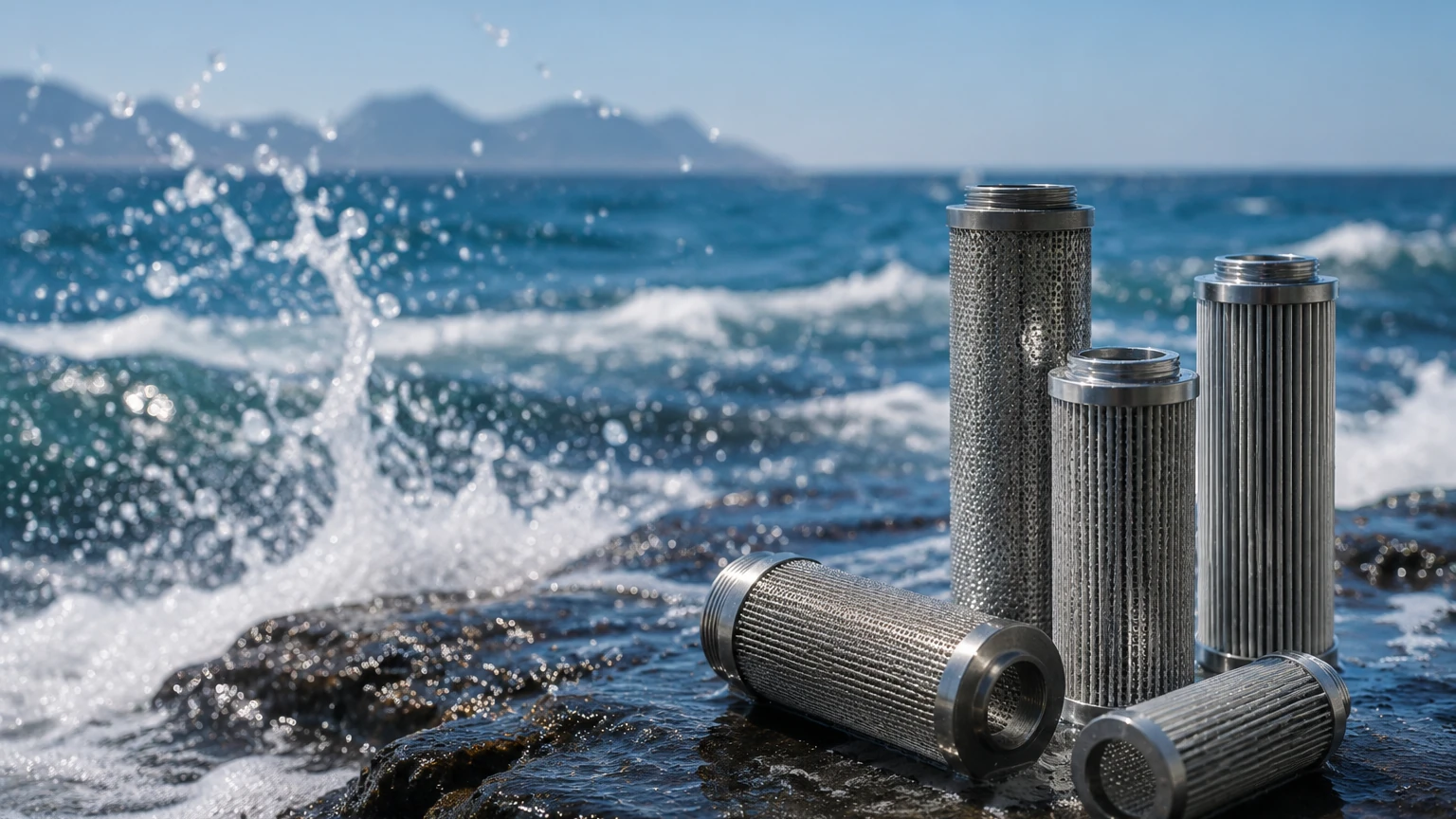
Sintering involves bonding multiple layers of wire mesh or metal fibers using heat and pressure without the use of binders. This process creates a porous, high-strength structure that can withstand high differential pressures. Sintered cartridges are excellent for fine filtration in seawater desalination pretreatment, where protecting reverse osmosis (RO) membranes from microscopic particulates is essential.
Wedge Wire Screens
Wedge wire is constructed by wrapping a V-shaped profile wire around longitudinal support rods. This design is inherently non-clogging because the V-shaped opening widens inwardly, allowing particles that pass the surface to move freely through the screen. Wedge wire is frequently used in seawater intake systems to protect pumps and downstream piping from large organic matter and debris.
Engineering Considerations for System Integration
Designing a system for filtering seawater requires more than just picking a filter; it requires a holistic view of the fluid system. Engineers must consider several operational parameters to ensure the filtration solution performs as expected.
Flow Velocity and Pressure Drop (ΔP)
High flow velocities in seawater systems can accelerate erosion-corrosion, especially if the water contains abrasive sand. Conversely, low velocities may encourage biological settling. The filtration component must be sized to maintain an optimal velocity while keeping the initial pressure drop low. A high initial ΔP reduces the available operating range before a cleaning cycle is required, increasing energy consumption and maintenance frequency.
Micron Rating: Nominal vs. Absolute
In seawater filtration, the distinction between nominal and absolute micron ratings is vital. For critical applications like RO membrane protection, an absolute-rated filter is necessary to ensure that 99.9% of particles above a specific size are removed. For general cooling water or intake protection, a nominal rating may be sufficient and more cost-effective.
Customization and OEM Requirements
Many industrial seawater systems have unique spatial constraints or specific connection requirements. Customization options—such as bespoke flange sizes, reinforced internal cores for high-pressure surges, or specialized coatings—allow engineers to integrate filtration seamlessly into existing infrastructure. Working with a manufacturer that provides OEM services ensures that the filtration component is tailored to the exact hydraulic conditions of the project.
Maintenance, Cleaning, and Replacement Cycles
The longevity of a filter in a seawater environment is determined by its cleaning regime. Unlike disposable plastic filters, stainless steel filtration components are designed to be cleaned and reused, which significantly reduces waste and long-term costs.
* Backwashing: This is the most common cleaning method for wire mesh and wedge wire filters. By reversing the flow, accumulated debris is flushed from the surface of the media. The effectiveness of backwashing depends on the filter's surface smoothness and the pressure of the backwash fluid.
* Chemical Cleaning (CIP): In cases of severe biological fouling or scale buildup, Clean-In-Place (CIP) procedures using mild acids or biocides may be necessary. The filter material must be chemically compatible with these cleaning agents.
* Ultrasonic Cleaning: For sintered metal cartridges that have trapped fine particulates deep within the pores, ultrasonic cleaning in a professional facility can restore the filter to near-original permeability.
Replacement cycles for high-quality stainless steel filters in seawater applications can span several years, provided the material was correctly specified for the environment and the cleaning protocols are followed. This durability is a key factor in the total cost of ownership (TCO) analysis for industrial plants.
Applications of Seawater Filtration
Desalination Pretreatment
In Reverse Osmosis (RO) desalination, the membranes are extremely sensitive to fouling. Multi-stage filtration, often involving fine stainless steel mesh or sintered cartridges, is used to remove suspended solids and microorganisms before the water reaches the high-pressure pumps and membranes. This extends membrane life and ensures consistent water quality.
Offshore Oil and Gas
Seawater is often injected into oil reservoirs to maintain pressure (water flooding). This water must be filtered to a high degree to prevent plugging the pores of the reservoir rock. Additionally, seawater is used for cooling on offshore platforms, where robust filtration prevents the clogging of heat exchangers.
Marine Cooling Systems
Ships and coastal power plants use seawater to cool engines and turbines. Filtration systems protect these critical cooling loops from debris and marine life that could cause overheating and mechanical failure. Given the vibration and movement in marine environments, the mechanical robustness of metal filters is a significant advantage over synthetic alternatives.
Aquaculture
In land-based aquaculture systems, seawater must be filtered to remove waste products and pathogens while maintaining a healthy environment for aquatic life. Precision filtration helps in managing the water quality and protecting sensitive UV sterilization or ozone treatment systems that often follow the filtration stage.
Conclusion
Filtering seawater is an essential process for modern industrial and marine operations. The harsh nature of the marine environment demands filtration solutions that are engineered for high performance, corrosion resistance, and mechanical durability. By selecting the appropriate stainless steel alloys and filter structures—such as wire mesh, sintered cartridges, or wedge wire—engineers can ensure efficient particulate removal and protect expensive downstream equipment.
For technical teams looking to optimize their seawater filtration processes, understanding the interplay between material science and hydraulic design is the first step. Reliable filtration not only improves operational efficiency but also contributes to the sustainability of industrial water systems by reducing the need for disposable components and minimizing energy loss due to fouling. To explore a comprehensive range of custom filtration components and engineering support, professionals can visit the Main Page of Kaifil to review product options and application support tailored to the rigors of seawater environments.
