


Filtration Flask
In the landscape of industrial research, chemical processing, and quality control, the filtration flask—commonly referred to as a Büchner flask, vacuum flask, or side-arm flask—serves as a fundamental tool for liquid-solid separation. While often associated with laboratory environments, its role in industrial engineering is critical for process validation, pilot-scale testing, and the development of full-scale filtration systems. For engineers and procurement specialists, understanding the technical nuances of filtration flask selection is the first step in bridging the gap between benchtop experimentation and high-volume industrial production.
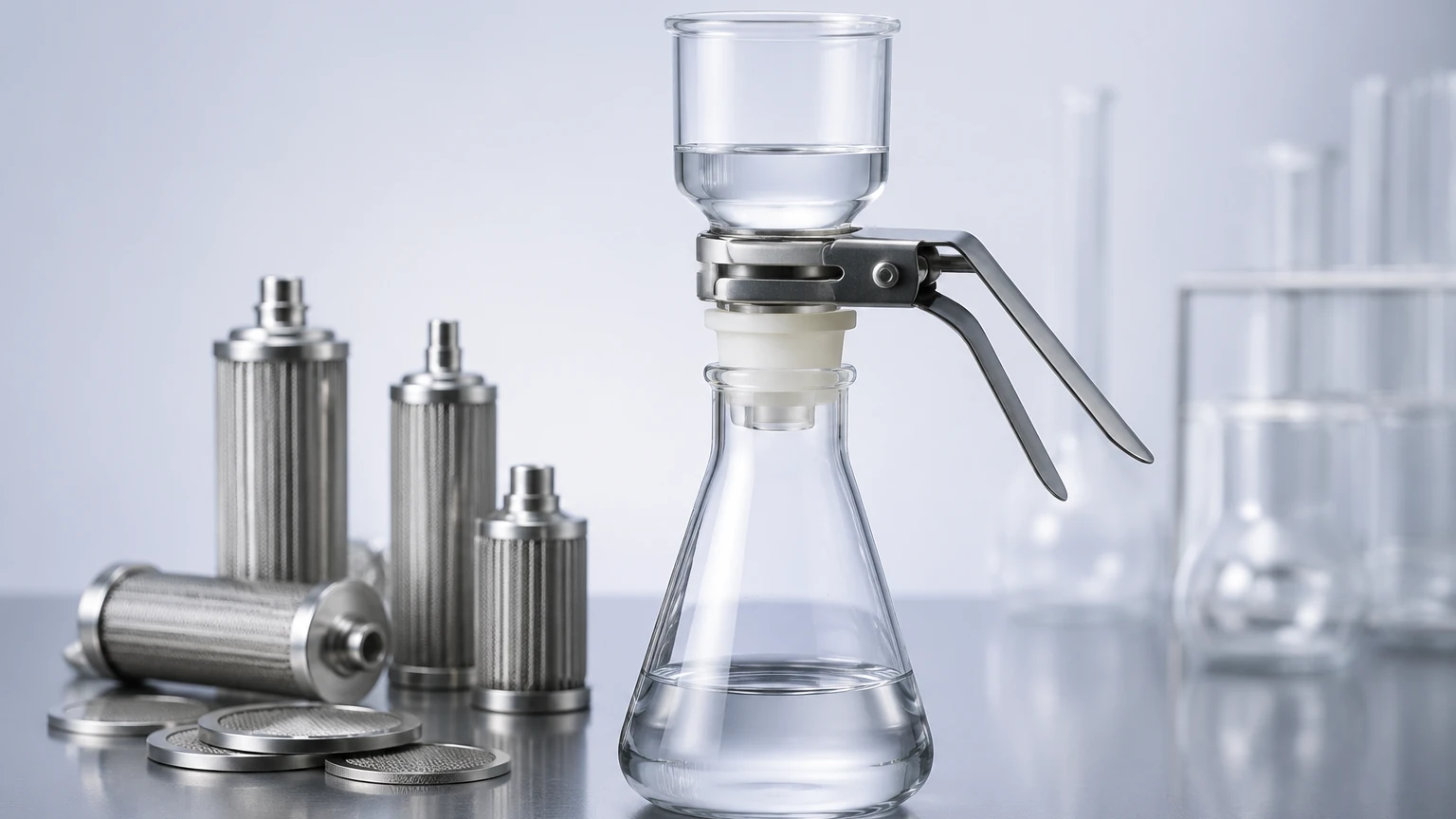
A filtration flask is distinguished from a standard Erlenmeyer flask by its significantly thicker walls and a short glass or plastic tube (a hose barb) protruding from the neck. This design is engineered specifically to withstand the atmospheric pressure differential created during vacuum-assisted filtration. By utilizing a vacuum source to draw liquid through a filter medium, the filtration flask enables faster and more efficient separation than gravity-fed methods, making it indispensable for handling viscous fluids or high-solids concentrations.
The Role of the Filtration Flask in Industrial Process Development
Before an industrial filtration system is commissioned, engineers must determine the specific characteristics of the slurry or fluid in question. The filtration flask is the primary instrument used to perform these preliminary assessments. It allows technical teams to calculate the "specific cake resistance" and the flow rate per unit area, which are essential metrics for sizing industrial equipment like stainless steel filter cartridges or wire mesh assemblies.
In industrial R&D, the filtration flask is used to:
1. Evaluate Filter Media Compatibility: Engineers can test different types of membranes, papers, or fine wire meshes to see which provides the required filtrate clarity without premature clogging.
2. Determine Optimal Pressure Differentials: By varying the vacuum strength applied to the flask, teams can identify the point of diminishing returns where increased pressure leads to cake compression rather than increased flow.
3. Produce Small Batch Samples: For pharmaceutical or specialty chemical applications, the flask provides a sterile, controlled environment for producing high-purity samples for further analysis.
For those transitioning from these initial tests to robust industrial infrastructure, reviewing the comprehensive options on the Main Page of a professional manufacturer is essential to ensure the scaled-up equipment matches the performance observed at the flask level.
Engineering Specifications: Wall Thickness and Pressure Resistance
The most critical engineering feature of a filtration flask is its mechanical strength. Unlike standard glassware, a filtration flask must resist implosion. When a vacuum pump is attached to the side arm, the internal pressure drops significantly below the ambient atmospheric pressure. This creates a compressive force on the exterior of the flask.
High-quality industrial-grade flasks are manufactured from borosilicate glass 3.3, known for its low coefficient of thermal expansion and high resistance to mechanical stress. The wall thickness is typically two to three times that of a standard Erlenmeyer flask of the same volume. Engineers must verify that the flask is rated for the specific vacuum levels intended for the process. Most heavy-wall borosilicate flasks can safely handle a vacuum down to approximately 10 to 20 mbar, but this limit decreases as the size of the flask increases due to the larger surface area subject to atmospheric pressure.
Material Compatibility and Chemical Resistance
In B2B industrial applications, the chemical nature of the filtrate dictates the material requirements of the filtration assembly. Borosilicate glass is the industry standard due to its near-universal chemical resistance. It is highly resistant to water, neutral and acid solutions, concentrated acids and their mixtures, as well as to chlorine, bromine, iodine, and organic substances.
However, there are specific engineering boundaries to consider:
* Hydrofluoric Acid and Strong Alkalis: These substances can etch glass over time, weakening the structural integrity of the flask and increasing the risk of implosion under vacuum.
* Thermal Shock: While borosilicate glass has excellent thermal properties, rapid temperature changes (exceeding 100°C ΔT) can induce internal stresses. In processes involving hot filtrates, pre-heating the flask or using a jacketed version may be necessary.
* Plastic Alternatives: In some food and beverage or pharmaceutical environments where glass breakage is a high-risk factor, heavy-wall polypropylene (PP) flasks are used. While these offer better impact resistance, they lack the transparency and extreme chemical inertness of glass and may deform under high vacuum if the temperature is elevated.
Integration with Vacuum Systems and Ancillary Components
A filtration flask does not operate in isolation; it is part of a larger vacuum assembly. The integration of the flask into the industrial workflow requires careful selection of ancillary components to ensure airtight seals and system safety.
The Side Arm and Tubing
The side arm (tubulation) is designed to connect to vacuum hosing. Engineers should ensure the outer diameter (OD) of the side arm matches the inner diameter (ID) of the vacuum tubing. A common failure point is the use of thin-walled tubing that collapses under vacuum, restricting flow. Reinforced PVC or heavy-wall silicone tubing is recommended for industrial applications.
Stoppers and Funnel Adapters
The neck of the filtration flask must be sealed with a rubber or silicone stopper. For industrial precision, many engineers prefer Gaskets or "Büchner rings," which provide a more reliable seal between the Büchner funnel and the flask neck. Ensuring a perfect seal is vital; even a minor air leak can significantly reduce the effective vacuum and lead to inconsistent data during process testing.
Vacuum Protection
When using a filtration flask in a B2B environment, protecting the vacuum source is paramount. If the flask overfills or if the filtrate is volatile, liquid or vapors can be drawn into the vacuum pump, leading to corrosion or mechanical failure. The installation of a secondary trap (often another filtration flask or a specialized cold trap) between the primary flask and the pump is a standard engineering best practice.
Safety Standards and Operational Risks in Vacuum Filtration
Safety is a primary concern when dealing with pressurized or vacuum systems. The main risk associated with a filtration flask is an implosion. Unlike an explosion, which forces material outward, an implosion causes the glass to collapse inward, often followed by a secondary outward spray of glass shards and chemicals due to the rebound effect.
To mitigate these risks, industrial protocols should include:
* Visual Inspection: Before every use, the flask must be inspected for "star cracks," deep scratches, or chips. Even a microscopic flaw can act as a stress concentrator, leading to catastrophic failure under vacuum.
* Vacuum Shielding: In high-pressure industrial labs, flasks are often wrapped in plastic mesh or placed behind a polycarbonate safety shield. This contains any glass fragments in the event of a failure.
* Avoidance of Flat-Bottomed Stress: While most filtration flasks have slightly concave bottoms to distribute pressure, they should never be heated on a hot plate while under vacuum, as the combined thermal and mechanical stress is highly unpredictable.
Scaling Up: From Benchtop Flasks to Industrial Stainless Steel Filtration
The ultimate goal of using a filtration flask in an industrial context is to refine a process that will eventually be handled by large-scale machinery. Once the filtration characteristics are established—such as the required micron rating and the volume of solids to be captured—the transition to permanent stainless steel solutions begins.
Stainless steel filtration systems, such as those detailed on the Main Page, replace the fragile glass flask with durable, high-pressure housings and precision-engineered filter elements. The transition involves moving from batch-wise flask filtration to continuous or semi-continuous flow systems.
Key considerations during this scale-up include:
* Durability: Unlike glass, stainless steel components (typically 304 or 316L) can withstand high-pressure differentials (positive and negative) without the risk of shattering.
* Cleanability: Industrial stainless steel filters are often designed for CIP (Clean-In-Place) or SIP (Steam-In-Place) cycles, which are impossible with standard laboratory filtration flasks.
* Customization: While filtration flasks come in standard sizes, industrial filters can be customized in terms of flange types, housing dimensions, and internal support structures to fit specific factory footprints.
Maintenance and Lifecycle Management for Laboratory Glassware
To maintain the accuracy of process testing, filtration flasks must be managed as precision instruments. Proper cleaning is essential to prevent cross-contamination between batches. In industrial settings, this often involves ultrasonic cleaning or the use of specialized detergents that remove stubborn residues without scratching the glass surface.
Replacement cycles for filtration flasks are typically determined by the frequency of use and the severity of the chemical environment. A flask used with abrasive slurries or corrosive acids will have a shorter safe lifespan than one used for simple water filtration. Engineering departments should maintain a log of glassware usage and implement a mandatory retirement age for flasks subjected to high-vacuum cycles to prevent fatigue-related failures.
Conclusion
The filtration flask remains a cornerstone of industrial filtration engineering. By providing a controlled environment for vacuum-assisted separation, it allows technical teams to gather the data necessary for designing efficient, large-scale systems. Whether it is selecting the right borosilicate grade, ensuring vacuum pump protection, or planning the eventual transition to stainless steel industrial filters, understanding the technical boundaries of the filtration flask is essential for any successful industrial process. For those ready to move beyond the laboratory and implement robust, high-performance filtration at scale, exploring the specialized hardware on the Main Page is the logical next step in the engineering journey.
