


Filtration Foam
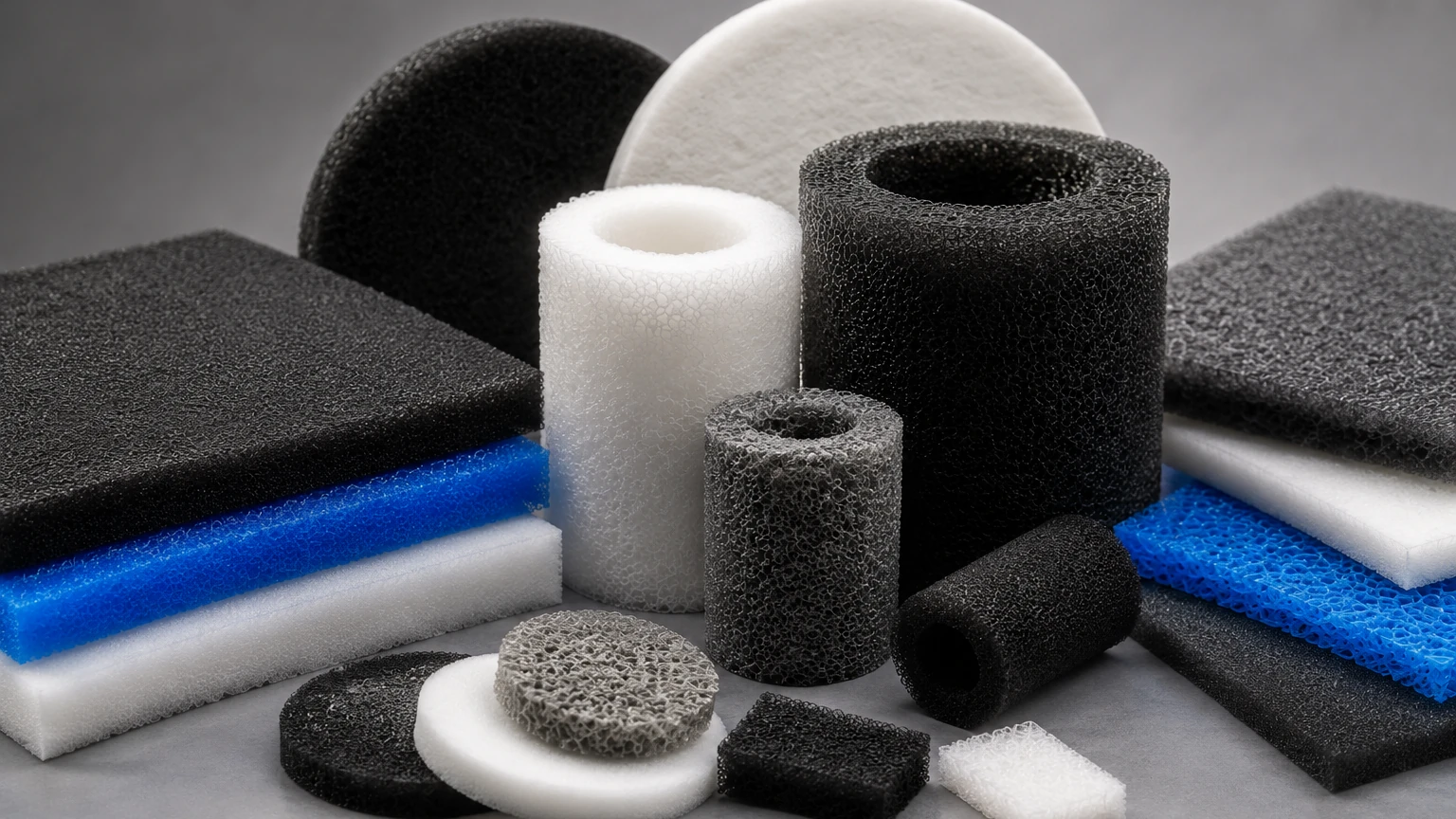
In the landscape of industrial separation technology, filtration foam—specifically reticulated open-cell foam—serves as a versatile medium for managing fluid dynamics and particle retention. Unlike standard sponges or closed-cell foams used for insulation, filtration foam is engineered through a process called reticulation, which removes the cell membranes (windows) to leave only a skeletal dodecahedron structure. This creates a highly porous, three-dimensional matrix that allows gases and liquids to pass through with minimal resistance while trapping contaminants throughout the depth of the material.
For engineers and procurement specialists, selecting the correct filtration foam requires a technical understanding of pore geometry, material compatibility, and the specific demands of the operating environment. While Kaifil specializes in high-precision stainless steel filtration solutions, understanding how foam media integrates into or competes with metal mesh systems is essential for optimizing industrial filtration cycles.
The Engineering of Reticulated Foam Structures
The performance of filtration foam is fundamentally tied to its manufacturing process. Most industrial foams are produced from polyurethane (either polyether or polyester base) or specialized metals and ceramics. The critical step is "zapping" or thermal reticulation, where a controlled combustion of explosive gases melts away the thin membranes between the cells.
This results in a 100% open-cell structure. The absence of membranes ensures that the fluid path is not blocked, leading to a high void volume—often exceeding 95%. From an engineering perspective, this high porosity is the primary advantage of filtration foam, as it provides a massive internal surface area for particle impingement without the immediate surface blinding common in thin-film or paper media.
In liquid applications, the "tortuous path" created by the foam’s skeletal strands forces the fluid to change direction constantly. This mechanical action increases the probability of particles coming into contact with the foam strands, where they are trapped by van der Waals forces or physical entanglement. This mechanism, known as depth filtration, allows the foam to hold a significant volume of contaminants before a critical pressure drop occurs.
Key Technical Specifications: PPI and Porosity
The primary metric used to define filtration foam is PPI, or Pores Per Inch. This value determines the density of the skeletal structure and, consequently, the filtration efficiency and flow resistance. Standard industrial grades typically range from 10 PPI (very coarse) to 110 PPI (very fine).
* 10 to 30 PPI: These foams feature large, visible pores. They are primarily used for pre-filtration in HVAC systems, large debris removal in water treatment, and as "scrubbers" in industrial air intake systems. They offer the lowest pressure drop and the highest flow rates.
* 45 to 75 PPI: This mid-range is common in specialized equipment, such as small engine air filters and medical devices. They provide a balance between particle retention and breathability.
* 80 to 110 PPI: Fine-pore foams are utilized for high-efficiency air filtration, acoustic dampening, and specialized liquid applications where fine particulate must be captured. However, these grades are more susceptible to rapid clogging if the influent has a high solids loading.
When evaluating these specifications, engineers must also consider the "strand thickness." Thicker strands provide greater mechanical strength and resistance to compression under high flow velocities, but they also reduce the total void volume. For high-pressure applications, the structural integrity of the foam matrix is a critical failure point that must be validated during the design phase.
Material Variants: Polymer vs. Metal Filtration Foam
While polyurethane is the most common material for filtration foam due to its cost-effectiveness and flexibility, industrial environments often demand more robust solutions.
Polyether vs. Polyester Foam
Polyether-based foams are generally preferred for aqueous environments because they are highly resistant to hydrolysis (breakdown by water). They are the standard choice for water treatment and outdoor applications. Polyester-based foams, conversely, offer superior resistance to hydrocarbons, oils, and many solvents, making them the preferred choice for automotive and chemical processing applications. However, polyester foams will degrade if exposed to high humidity or constant water contact over time.
Metal Filtration Foam
In high-temperature or chemically aggressive environments where polymers fail, metal filtration foam (often made of nickel, copper, or stainless steel) becomes necessary. Metal foams offer the same reticulated structure but with the thermal stability and mechanical rigidity of metal. These are often used in catalyst supports, high-temperature gas filtration, and heat exchangers. For organizations seeking the highest levels of durability and precision, visiting the Main Page of a specialized manufacturer like Kaifil provides insights into how metal-based filtration components can be customized for these extreme conditions.
Industrial Applications and Performance Expectations
Filtration foam is rarely a standalone solution in heavy industrial processes; rather, it is a critical component of a multi-stage filtration strategy.
1. HVAC and Air Handling: In large-scale industrial ventilation, foam serves as a washable pre-filter. It captures large dust particles and prevents the premature loading of more expensive HEPA or secondary bag filters.
2. Acoustic and Thermal Management: Due to its open-cell nature, filtration foam is an excellent medium for sound attenuation. It is frequently used in compressor housings and blower intakes to reduce noise while maintaining airflow.
3. Water Treatment and Aquaculture: Foam blocks are used for biological filtration, providing a high surface area for beneficial bacteria to colonize, as well as mechanical filtration for removing suspended solids.
4. Hydraulic and Lubrication Systems: In some reservoir breathers, foam prevents environmental contaminants from entering the oil supply while allowing the system to "breathe" during thermal expansion and contraction.
Performance expectations should be calibrated based on the fluid's face velocity. As velocity increases, the efficiency of depth filtration typically decreases because particles have more kinetic energy to bypass the foam strands. Engineers should aim for a laminar flow profile across the foam surface to maximize the retention of fine particulates.
Comparative Analysis: Foam Media vs. Stainless Steel Wire Mesh
A common decision point for technical teams is whether to utilize a depth medium like filtration foam or a surface medium like stainless steel wire mesh. Both have distinct advantages depending on the application goals.
Filtration Foam Advantages:
* Depth Loading: Can hold a larger volume of contaminants before needing service.
* Cost: Generally lower initial material cost for polymer-based foams.
* Versatility: Easily cut and shaped to fit complex housings without specialized tooling.
Stainless Steel Wire Mesh Advantages:
* Precision: Wire mesh, such as the solutions provided by Kaifil, offers absolute micron ratings. A 50-micron mesh will consistently block particles larger than 50 microns, whereas foam provides a "nominal" rating where some larger particles may still pass through the tortuous path.
* Cleanability: Stainless steel components can be backwashed, ultrasonically cleaned, or chemically sanitized and reused indefinitely. Most filtration foams, while washable to an extent, eventually lose their structural integrity and must be replaced.
* Chemical and Thermal Resistance: Stainless steel can withstand temperatures and corrosive agents that would liquefy or dissolve polymer foams.
In many high-end industrial systems, these two media are used in tandem: a coarse filtration foam acts as a pre-filter to remove bulk debris, followed by a precision stainless steel cartridge to ensure the final fluid purity meets strict technical standards.
Selection Criteria for Industrial Procurement
When sourcing filtration foam, procurement teams should confirm several key parameters with their suppliers to avoid operational downtime:
* Chemical Compatibility: Will the foam be exposed to UV light, ozone, strong acids, or petroleum-based lubricants?
* Temperature Range: What is the maximum continuous operating temperature? Standard polyurethane foams typically fail above 200°F (93°C).
* Compression Set: If the foam is used as a seal or gasket within a filter housing, how well does it return to its original shape after being compressed?
* Outgassing: In cleanroom or aerospace applications, ensure the foam does not release volatile organic compounds (VOCs) that could contaminate sensitive equipment.
* Fire Retardancy: Many industrial codes require foams to meet specific flammability standards, such as UL 94 HF-1.
By verifying these factors, engineers can ensure that the selected foam does not become a point of failure within the broader filtration system.
Maintenance, Cleaning, and Replacement Protocols
The total cost of ownership (TCO) for filtration foam is largely determined by its maintenance cycle. Unlike disposable paper filters, many industrial foams are designed to be cleaned.
Cleaning Methods:
For air filtration, foam can often be vacuumed or rinsed with water and a mild detergent. For oil-saturated foams, a degreasing agent may be required. It is vital to ensure the foam is completely dry before re-installation to prevent the growth of mold or bacteria, especially in HVAC applications.
Replacement Indicators:
Foam should be replaced if it shows signs of "pilling," crumbling, or permanent deformation. In liquid systems, a persistent increase in differential pressure that cannot be resolved by cleaning indicates that fine particulates have become permanently embedded in the foam matrix.
For critical industrial processes where downtime is costly, transitioning to permanent metal filtration components may be a more sustainable long-term strategy. To explore high-performance alternatives to traditional foam media, engineers can Review product options and application support to find stainless steel solutions that offer better durability and lower long-term maintenance requirements.
Conclusion
Filtration foam remains a foundational technology in the industrial sector due to its unique ability to provide depth filtration and high flow rates at a relatively low cost. Whether used for air intake, water treatment, or acoustic management, the success of the application depends on matching the PPI and material chemistry to the specific operational demands. However, as requirements for precision and durability increase, the integration of metal-based filtration components becomes essential. Understanding the strengths and limitations of foam media allows technical professionals to design more efficient, reliable, and cost-effective filtration systems.
