


Filtration in Oil and Gas Industry
In the demanding environments of the energy sector, the integrity of equipment and the purity of process fluids are paramount. Effective filtration in oil and gas industry operations is not merely a maintenance requirement but a critical engineering necessity that impacts the entire production chain. From the initial extraction at the wellhead to the final stages of refining and distribution, contaminants such as sand, scale, rust, and chemical byproducts pose significant risks to infrastructure and product quality.
Industrial filtration solutions, particularly those utilizing high-grade stainless steel and precision-engineered wire mesh, are designed to withstand the extreme pressures, temperatures, and corrosive conditions characteristic of this sector. By implementing robust filtration strategies, operators can prevent equipment failure, reduce downtime, and ensure compliance with increasingly stringent environmental and safety regulations.
Challenges and Requirements for Filtration in Oil and Gas Industry
The oil and gas sector presents some of the most hostile operating conditions for filtration components. Understanding these challenges is the first step in selecting the appropriate technology for a specific application.
High Pressure and Temperature Extremes
Upstream operations often involve high-pressure reservoirs and high-temperature environments. Standard filtration media, such as polymers or cellulose, may lose structural integrity or degrade chemically under these conditions. Stainless steel filter cartridges and wire mesh components are preferred because they maintain their mechanical properties and filtration accuracy even when subjected to extreme thermal cycles and high differential pressures.
Corrosive Environments
The presence of hydrogen sulfide (H2S), carbon dioxide (CO2), and high salinity in produced water creates a highly corrosive environment. Filtration systems must be constructed from corrosion-resistant alloys (CRAs) like 316L stainless steel, Duplex, or Super Duplex to prevent premature failure. Choosing the correct material is vital for ensuring the longevity of the filter element and the safety of the surrounding system.
Diverse Contaminant Profiles
Contaminants in this industry are rarely uniform. They can range from coarse sand and gravel in upstream drilling fluids to microscopic particulates and aerosols in downstream gas processing. Effective filtration in oil and gas industry applications requires multi-stage systems that can handle high solids loading while providing fine polishing to meet technical specifications.
Primary Applications of High-Performance Filtration Systems
Filtration is integrated into nearly every stage of the oil and gas lifecycle. Each application demands specific performance characteristics from the filter media.
Upstream: Completion and Workover Fluids
During the completion of a well, fluids are used to clean the wellbore and prepare it for production. If these fluids contain particulates, they can damage the formation or clog downhole equipment. Precision wire mesh filters are used to ensure that completion fluids meet the required clarity standards, protecting the reservoir's permeability.
Midstream: Gas Processing and Transportation
Natural gas must be dehydrated and treated to remove contaminants before it enters the pipeline. Filtration systems are used to remove liquid aerosols (coalescing) and solid particles that could cause erosion in compressors or foul heat exchangers. High-efficiency stainless steel cartridges are often employed here to ensure consistent gas quality over long operational periods.
Downstream: Refinery Process Streams
In refineries, filtration is essential for protecting expensive catalysts and ensuring the purity of final products like gasoline, diesel, and jet fuel. Stainless steel filters are used in hydrotreating, catalytic cracking, and amine sweetening processes. These filters must handle high flow rates and be capable of being cleaned or replaced without disrupting continuous refinery operations.
Engineering Considerations for Filter Selection and Design
When engineers specify filtration solutions for the oil and gas industry, several technical parameters must be evaluated to ensure the chosen system is fit for purpose.
Filtration Accuracy and Micron Rating
The micron rating defines the size of particles the filter is intended to remove. In oil and gas applications, it is important to distinguish between nominal and absolute ratings. An absolute rating ensures that 99.9% of particles above a certain size are captured, which is critical for protecting sensitive downstream components like high-pressure pumps and fuel injectors.
Flow Rate and Differential Pressure
The filter must be sized to handle the maximum expected flow rate without creating an excessive pressure drop (ΔP). A high initial differential pressure limits the dirt-holding capacity and shortens the service life of the filter. Engineers must balance the filtration fineness with the available surface area to optimize the flow-to-pressure ratio.
Structural Integrity and Collapse Pressure
In high-pressure applications, the filter element must resist collapsing under the force of the fluid flow, especially as the filter becomes loaded with contaminants. Reinforced stainless steel cores and outer shrouds are often integrated into the design of filter cartridges to provide the necessary structural support for demanding industrial environments.
Material Selection: Stainless Steel vs. Alternative Media
While disposable filters made of glass fiber or polypropylene are common in some industries, the oil and gas sector heavily relies on metallic filtration media for several technical reasons.
* Durability: Stainless steel filters can withstand mechanical shocks and vibrations that would rupture synthetic media.
* Cleanability: Unlike disposable filters, stainless steel wire mesh and sintered metal elements can often be cleaned via backwashing or ultrasonic treatment, extending their service life and reducing the total cost of ownership.
* Chemical Compatibility: Stainless steel is inert to a wide range of hydrocarbons and chemicals used in oilfield operations, preventing media migration or chemical breakdown that could contaminate the process stream.
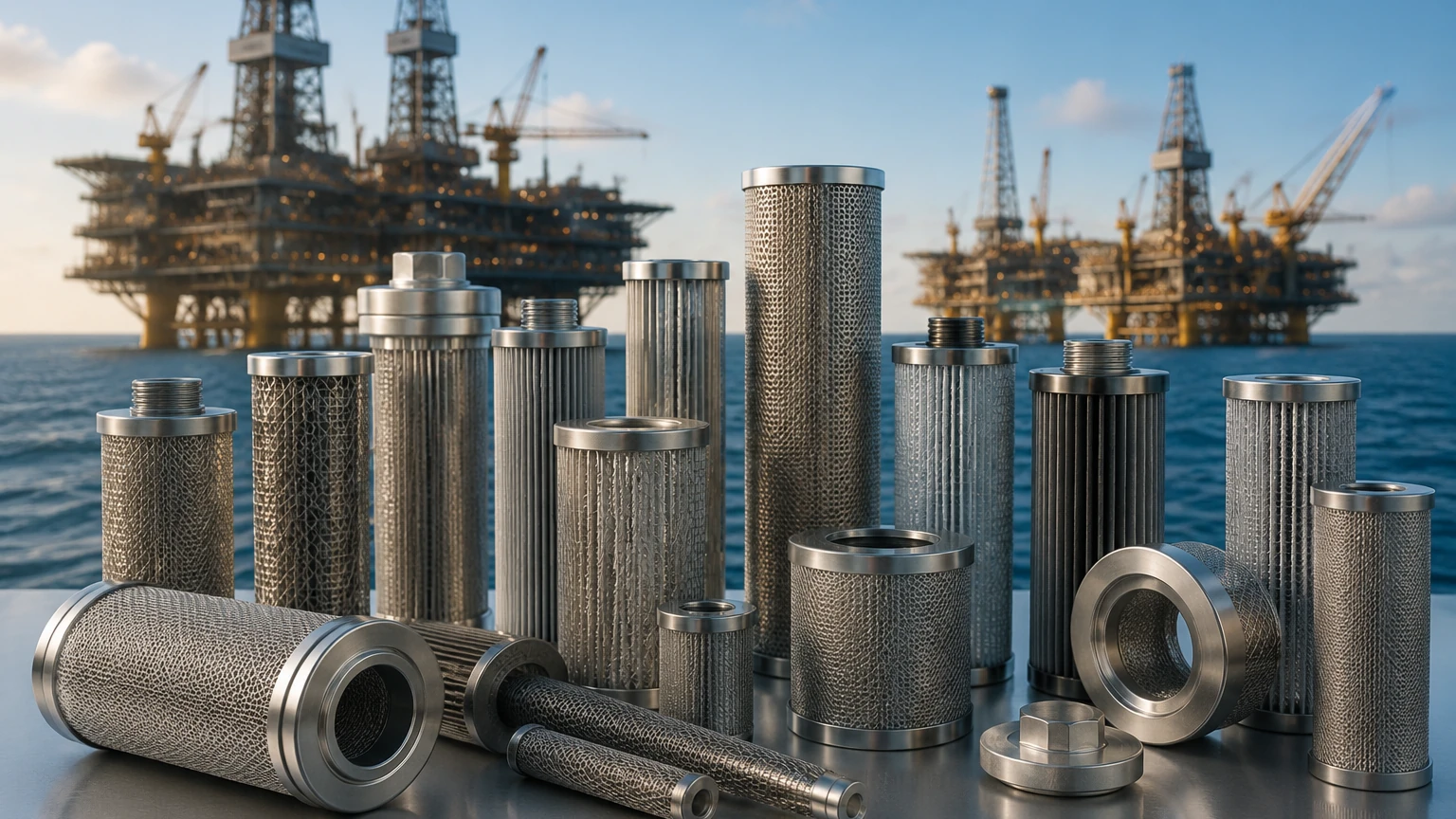
For most critical applications, 316L stainless steel is the standard due to its excellent balance of cost and corrosion resistance. However, for highly acidic or saline environments, specialized alloys may be required to prevent pitting and stress corrosion cracking.
Optimizing Operational Life and Maintenance Cycles
The goal of any filtration strategy is to maximize the time between maintenance intervals while ensuring consistent performance. In the oil and gas industry, unplanned downtime can cost thousands of dollars per hour.
Monitoring Differential Pressure
Continuous monitoring of the pressure drop across the filter is the most reliable way to determine when a filter needs cleaning or replacement. Automated systems can trigger a backwash cycle or alert operators when the ΔP reaches a predetermined threshold, preventing filter bypass or structural failure.
Cleaning Protocols
For permanent stainless steel filters, establishing a proper cleaning protocol is essential. Depending on the contaminant, this may involve chemical soaking to dissolve organic buildup or high-pressure backpulsing to dislodge inorganic solids. Proper cleaning restores the permeability of the mesh and ensures the filter returns to its baseline performance.
Predictive Maintenance
By analyzing the rate of pressure increase over time, operators can predict when a filter will reach its capacity. This allows for maintenance to be scheduled during planned shutdowns, minimizing the impact on production schedules.
The Strategic Value of Customized Filtration Solutions
Off-the-shelf filtration products often fail to meet the specific nuances of a particular oil or gas field. Customization allows for the optimization of filter geometry, material selection, and filtration layers to match the unique contaminant profile and flow conditions of a site.
Customized stainless steel filter cartridges and precision metal components provide the reliability needed for long-term operation. By working with a manufacturer that understands the complexities of industrial filtration, engineering teams can develop solutions that are specifically tailored to their application's requirements, from micron rating to housing compatibility.
For more information on high-performance filtration components and custom manufacturing capabilities, please visit our Main Page.
Conclusion
Filtration in oil and gas industry operations is a critical line of defense for both equipment and product integrity. The transition toward high-durability, stainless steel filtration media reflects the industry's need for solutions that can perform under extreme pressure and corrosive conditions. By focusing on precise engineering, material science, and customized designs, operators can achieve efficient filtration that supports the safety and productivity of their industrial processes. Whether it is protecting a refinery's catalyst or ensuring the clarity of completion fluids, the right filtration technology is an investment in the long-term viability of energy infrastructure.
