


Well Water Screen
In industrial and municipal water extraction, the well water screen serves as the critical interface between the aquifer and the pumping system. Its primary function is to permit the entry of water into the well while excluding sand, silt, and formation materials that could damage downstream equipment or compromise the structural integrity of the well itself. For engineers and facility managers, selecting the correct well water screen is not merely a matter of procurement but a fundamental engineering decision that dictates the efficiency, longevity, and total cost of ownership (TCO) of the water supply system.
As a specialized manufacturer of stainless steel filtration solutions, Kaifil understands that industrial filtration requirements vary significantly based on the geological formation and the intended application. Whether for chemical processing, food and beverage production, or large-scale water treatment, the performance of a well water screen is defined by its material composition, structural design, and hydraulic efficiency.
The Fundamental Role of Well Water Screens in Industrial Systems
A well water screen is more than a perforated pipe; it is a precision-engineered filtration component designed to manage fluid dynamics at the point of intake. In high-capacity industrial wells, the screen must perform several roles simultaneously:
1. Sand Control: By preventing the entry of abrasive particles, the screen protects the submersible pump’s impellers and seals from premature wear.
2. Structural Support: The screen must withstand the lateral pressures exerted by the surrounding soil and gravel pack, preventing the borehole from collapsing.
3. Hydraulic Efficiency: A well-designed screen minimizes the "drawdown" (the difference between the static and pumping water levels) by providing a high percentage of open area, which reduces entrance velocity and energy consumption.
When these factors are optimized, the well operates with minimal maintenance and maximum yield. Conversely, a poorly selected screen can lead to sand pumping, reduced flow rates, and eventual well failure due to encrustation or corrosion.
Engineering Classifications: Types of Well Water Screens
Choosing the right screen type depends on the specific demands of the aquifer. There are several common designs used in industrial applications, each with distinct performance characteristics.
Continuous Slot (Wedge Wire) Screens
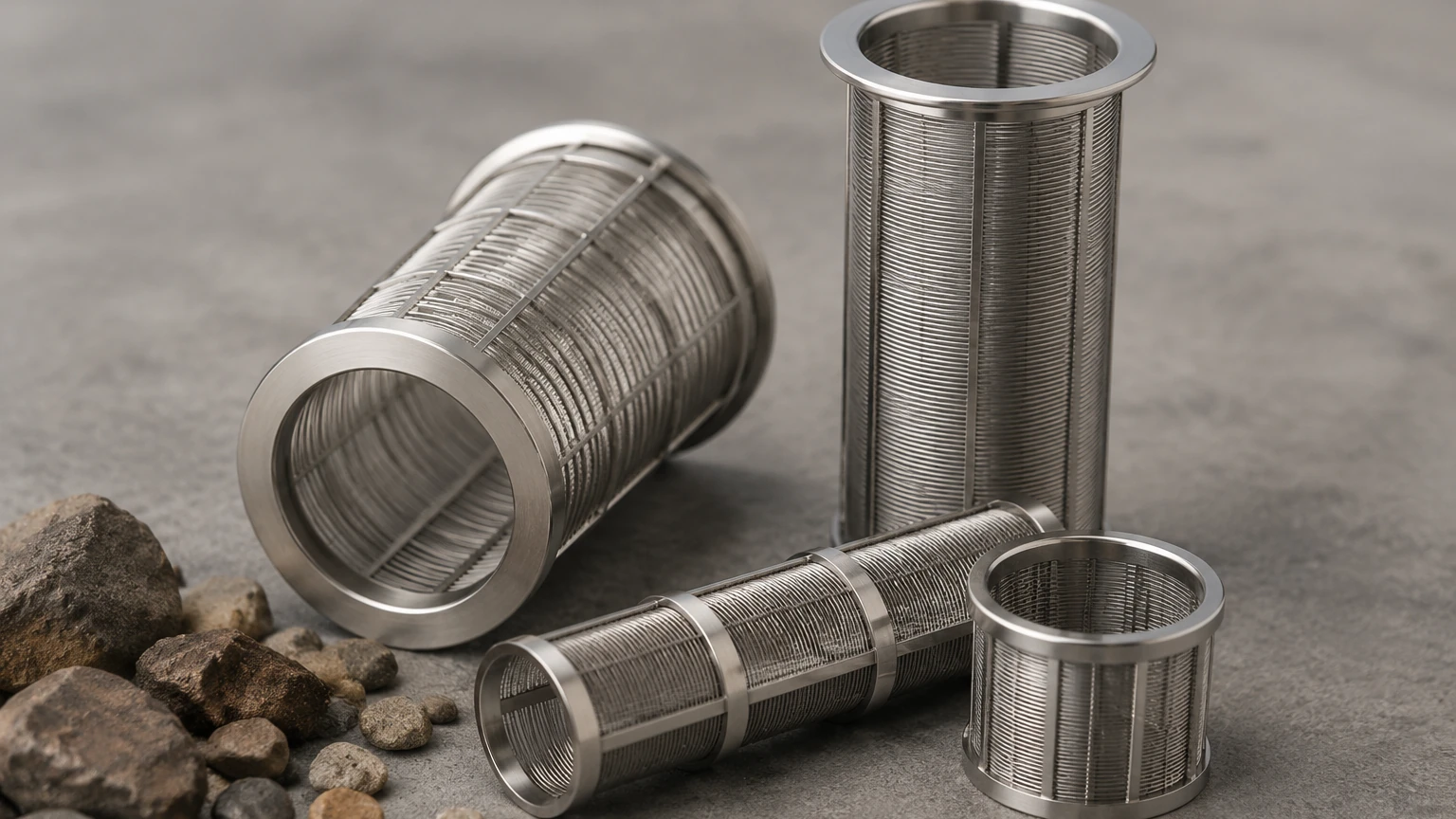
Widely considered the industry standard for high-performance industrial wells, wedge wire screens are manufactured by wrapping a V-shaped wire around a circular array of internal support rods. Each intersection is fusion-welded to ensure maximum strength.
* Advantages: The V-shaped profile creates a slot that widens inwardly, making it virtually non-clogging. This design offers the highest open area per linear foot, which significantly lowers entrance velocities. Low entrance velocities are critical because they reduce the rate of mineral precipitation (encrustation) and minimize the potential for sand migration.
* Applications: Ideal for fine-sand aquifers and high-yield industrial wells where efficiency is paramount.
Pipe-Based Screens
These consist of a perforated base pipe (usually stainless steel or high-strength alloy) over which a wedge wire screen jacket is fitted. The base pipe provides the structural load-bearing capacity, while the outer jacket provides the filtration.
* Advantages: Exceptional collapse strength, making them suitable for very deep wells where geological pressures are extreme.
* Applications: Deep-well water extraction and oil/gas industry water source wells.
Bridge Slot Screens
Bridge slot screens feature openings that look like small bridges or louvers. The slots are punched into a flat sheet which is then rolled into a cylinder and welded.
* Advantages: High mechanical strength and relatively low cost compared to wedge wire. They are effective in coarser formations where extremely fine filtration is not required.
* Applications: Agricultural irrigation and secondary industrial water sources.
Material Selection: The Case for Stainless Steel
In industrial filtration, the chemical environment of the groundwater is as important as the physical size of the sand. Corrosive water can destroy a carbon steel screen in a matter of years, leading to the total loss of the well. Kaifil specializes in stainless steel components because they offer the most reliable performance in demanding environments.
Type 304 Stainless Steel
Grade 304 is the most common choice for standard industrial water wells. It provides excellent resistance to general corrosion and is robust enough for most freshwater applications. It is cost-effective while offering a significantly longer lifespan than galvanized or carbon steel.
Type 316L Stainless Steel
For environments with high chloride content (brackish water) or where aggressive chemical cleaning (acidizing) is required to remove encrustation, 316L is the preferred material. The addition of molybdenum enhances resistance to pitting and crevice corrosion. Using 316L ensures that the well water screen remains structurally sound even when subjected to harsh rehabilitation treatments.
Key Engineering Considerations for Selection
When specifying a well water screen for a project, engineers must evaluate several technical parameters to ensure the component is fit for purpose.
1. Slot Size and Sieve Analysis
The slot size is the most critical dimension. It should be determined based on a sieve analysis of the formation samples or the filter pack material. In a "naturally developed" well, the slot size is typically chosen to retain 30% to 50% of the formation material. In a "filter-packed" well, the slot size is designed to retain 90% or more of the artificial gravel pack. Accurate slot sizing prevents sand ingress while allowing the development of a stable natural filter around the screen.
2. Percentage of Open Area
Open area refers to the total area of the slots relative to the surface area of the screen. A higher open area is always preferable because it reduces the velocity of the water as it enters the screen. The target entrance velocity for industrial wells is generally less than 0.1 feet per second (0.03 meters per second). Exceeding this velocity increases friction losses and accelerates the deposition of minerals like calcium carbonate and iron, which eventually plug the screen.
3. Collapse Strength and Tensile Strength
The screen must be able to withstand the hydrostatic and lithostatic pressures at the depth of installation. This is especially important during well development (surging and backwashing), where pressure differentials can fluctuate rapidly. Engineers must calculate the required collapse resistance based on the depth of the well and the density of the surrounding materials.
Installation and Maintenance Cycles
The lifecycle of a well water screen is heavily influenced by how it is installed and maintained. Proper well development—the process of removing fine particles from the area immediately surrounding the screen—is essential to establish high hydraulic conductivity.
Over time, even the best-designed screens may experience a decline in performance due to:
* Encrustation: Mineral deposits (carbonates, sulfates) or bacterial biofilms (iron bacteria) can block the slots.
* Corrosion: Even stainless steel can suffer from localized corrosion if the water chemistry changes or if dissimilar metals are used in the well string.
Regular monitoring of the well's "specific capacity" (flow rate divided by drawdown) allows operators to identify when a screen needs cleaning. Mechanical methods (brushing, surging) or chemical treatments (acidizing) can often restore performance if the screen is made of high-quality stainless steel that can withstand the cleaning process.
Customization and OEM Capabilities
In many industrial contexts, off-the-shelf solutions are insufficient. Customization allows for the optimization of filtration accuracy and structural dimensions to meet the unique constraints of a specific site. Kaifil provides comprehensive OEM services, manufacturing stainless steel filter cartridges and precision metal components tailored to specific engineering drawings.
For projects requiring specialized diameters, unique slot configurations, or specific end-fittings (such as NPT threads, weld rings, or flanges), custom fabrication ensures that the well water screen integrates seamlessly with the rest of the casing and pumping system. This level of precision is vital for maintaining the integrity of the filtration system in high-pressure or high-temperature industrial processes.
Total Cost Considerations
While the initial purchase price of a high-quality stainless steel wedge wire screen is higher than that of a plastic or carbon steel alternative, the total cost of ownership is significantly lower. The primary costs associated with a well are not the materials, but the drilling, energy for pumping, and the potential loss of production if the well fails.
A high-efficiency screen reduces energy costs by minimizing drawdown and extends the life of the pump by eliminating sand. In an industrial setting where water is a critical utility, the reliability provided by a precision-engineered screen is an essential safeguard against operational downtime.
Conclusion
The selection of a well water screen is a technical decision that impacts every aspect of a well's performance. By focusing on high-quality materials like 304 and 316L stainless steel, optimizing slot geometry for the specific geological formation, and ensuring high open area for hydraulic efficiency, engineers can secure a dependable water supply for decades.
At Kaifil, we combine manufacturing expertise with deep engineering knowledge to support the most demanding industrial filtration applications. For more information on our custom stainless steel filtration solutions and to view our full range of technical capabilities, please visit our Main Page.
When planning your next water extraction project, confirming the sieve analysis results and chemical water profile with your component manufacturer is a critical step toward ensuring long-term system success. Choosing a partner with a commitment to durability and precise filtration performance allows your team to focus on core operations while maintaining a reliable and efficient water source.
