


Filtration of Hydraulic Oil
In modern industrial environments, hydraulic systems serve as the powerhouse for heavy machinery, precision manufacturing, and critical infrastructure. The performance and longevity of these systems are inextricably linked to the cleanliness of the fluid they use. Effective filtration of hydraulic oil is not merely a maintenance task; it is a fundamental engineering requirement to prevent component failure, reduce downtime, and optimize the total cost of ownership. As systems become more complex and operate at higher pressures with tighter tolerances, the role of high-quality filtration components, such as those found on our Main Page, becomes increasingly vital.
The Critical Role of Fluid Cleanliness in Hydraulic Systems
Hydraulic fluid performs multiple roles: it transmits power, lubricates moving parts, transfers heat, and seals clearances between components. However, the very nature of hydraulic operation makes these systems susceptible to contamination. Even microscopic particles, often invisible to the naked eye, can cause significant damage to sensitive components like servo valves, piston pumps, and high-pressure cylinders.
Contamination is widely recognized as the leading cause of hydraulic system failure, accounting for up to 80% of all issues. When the filtration of hydraulic oil is inadequate, the system experiences accelerated wear. This wear often manifests as "silt-sized" particles (typically 1 to 5 microns) that enter the clearances between moving parts, leading to abrasive wear and internal leakage. Over time, this degrades the efficiency of the system, requiring more energy to perform the same amount of work and eventually leading to catastrophic component breakdown.
Types and Sources of Contamination in Hydraulic Oil
To implement an effective filtration strategy, engineers must understand the nature of the contaminants they are targeting. Contamination generally falls into three categories: particulate, water, and chemical degradation.
Particulate Contamination
Particulate matter is the most common threat. It can be further classified by its origin:
- Built-in Contamination: Residual debris from the manufacturing process, such as metal shavings, welding slag, or casting sand.
- Ingressed Contamination: Particles that enter the system from the external environment through breathers, cylinder rod seals, or during fluid replenishment.
- Generated Contamination: Wear debris produced internally as components interact. This includes metal flakes from pumps or rubber particles from seal degradation.
Water Contamination
Water in hydraulic oil can lead to oxidation, additive depletion, and reduced lubricating film strength. In some cases, it can cause the formation of acids that corrode metal surfaces. Effective filtration systems must often account for water removal, particularly in environments with high humidity or temperature fluctuations.
Chemical Degradation
Over time, hydraulic oil can oxidize or break down due to thermal stress. This results in the formation of sludge and varnish, which can clog fine filter meshes and cause valves to stick. While mechanical filtration primarily targets particulates, maintaining oil chemistry is a parallel necessity for system health.
Selecting the Right Media for Filtration of Hydraulic Oil
The choice of filter media is a critical engineering decision that depends on the operating environment, fluid type, and required cleanliness level. While disposable cellulose or synthetic fiber elements are common, stainless steel wire mesh and sintered metal components offer distinct advantages for demanding industrial applications.
Stainless Steel Wire Mesh Filters
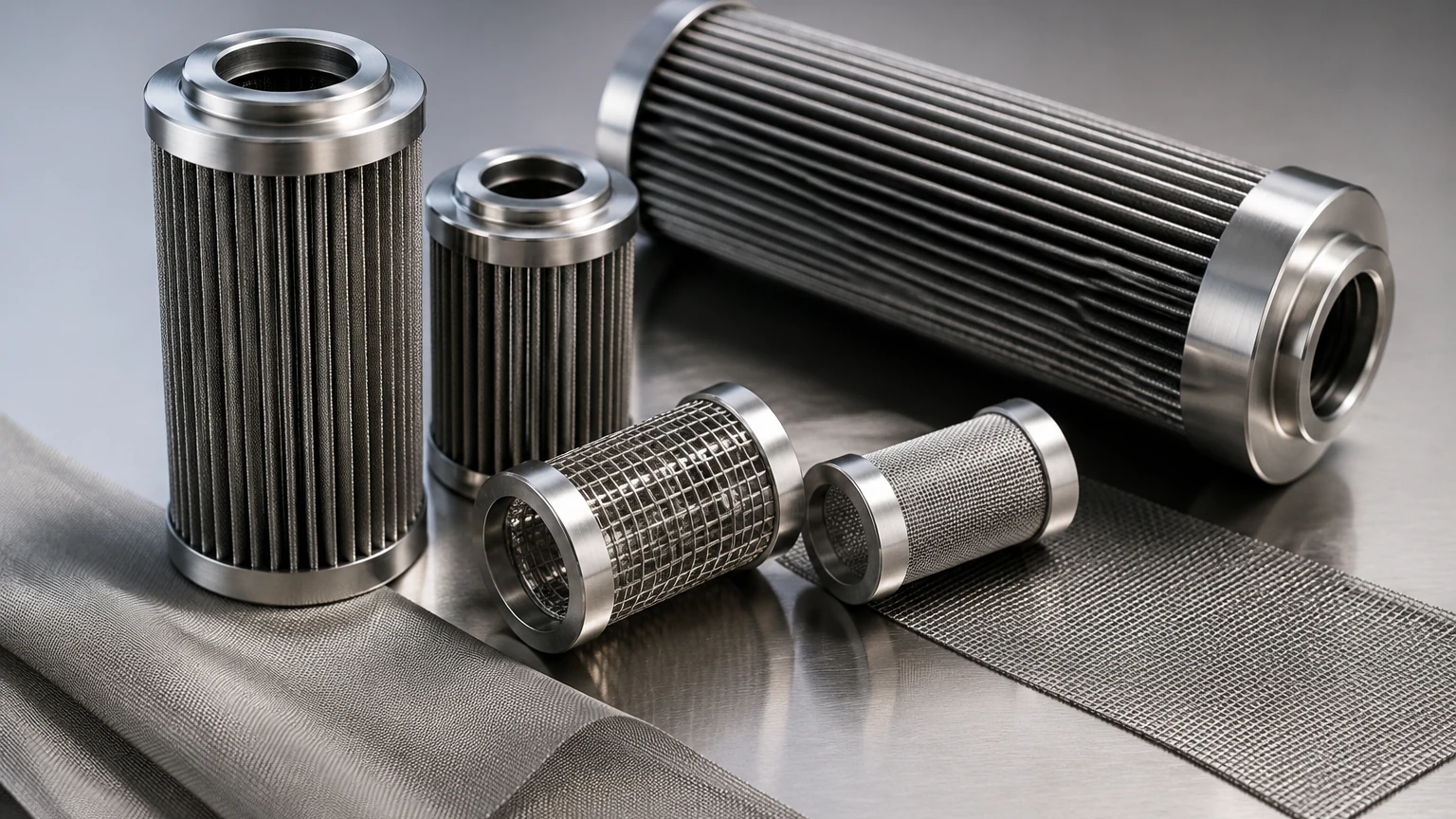
Stainless steel mesh is an ideal choice for filtration of hydraulic oil in environments where durability and chemical compatibility are paramount. Unlike fiber-based media, stainless steel does not shed fibers into the fluid stream, ensuring that the filter itself does not become a source of contamination.
Key advantages of stainless steel media include:
- High Pressure Resistance: Metal filters can withstand significant differential pressures without collapsing, which is essential in high-pressure hydraulic circuits.
- Temperature Stability: Stainless steel maintains its structural integrity at temperatures that would degrade synthetic or paper media.
- Cleanability and Reuse: Many stainless steel filter cartridges can be cleaned (via ultrasonic baths or backflushing) and reused, offering a lower long-term cost and reduced environmental impact compared to disposable elements.
- Precise Pore Size: Advanced manufacturing allows for highly accurate aperture sizes, providing consistent filtration performance across the entire surface of the media.
Technical Evaluation Criteria: Beta Ratios and Pressure Drop
When specifying components for the filtration of hydraulic oil, engineers rely on standardized metrics to evaluate performance. Two of the most important are the Beta Ratio and the pressure drop (ΔP).
Understanding the Beta Ratio (β)
The Beta Ratio, derived from the Multi-Pass Test (ISO 16889), indicates the filtration efficiency for a specific particle size. It is calculated by dividing the number of particles of a certain size upstream of the filter by the number of particles of that same size downstream. For example, a Beta ratio of 200 at 10 microns (β10 = 200) means that for every 200 particles of 10 microns entering the filter, only one passes through. This represents a 99.5% efficiency. For critical hydraulic systems, "absolute" filtration (typically defined as a Beta ratio of 75 or higher) is often required.
Pressure Drop (ΔP) and Flow Rate
Every filter introduces a restriction to the flow of oil, resulting in a pressure drop. It is essential to size the filter so that the initial clean pressure drop is low, typically around 2-5 psi. A high initial ΔP reduces the available power for the system and can cause the filter’s bypass valve to open prematurely, allowing unfiltered oil to circulate. Factors influencing ΔP include the oil's viscosity (which changes with temperature), the flow rate, and the effective filtration area of the media.
Strategic Placement of Filters within the Hydraulic Circuit
A comprehensive filtration strategy involves placing filters at various points in the hydraulic circuit to protect different components. No single filter can address all contamination issues.
Suction Filters (Strainers)
Located on the pump intake line, these are usually coarse mesh strainers designed to protect the pump from large debris. They must be sized carefully to prevent pump cavitation, which occurs if the suction line is too restricted.
Pressure Filters
These are installed downstream of the pump and are designed to withstand the full system pressure. They protect sensitive downstream components like servo and proportional valves. Because they handle high-pressure spikes, these filters often utilize robust stainless steel housings and reinforced metal filter elements.
Return Line Filters
As the oil returns to the reservoir, it passes through a return line filter. This captures wear debris generated by the cylinders and motors before it can settle in the tank. This is often the most cost-effective location for high-efficiency filtration.
Off-line (Kidney Loop) Filtration
An off-line system operates independently of the main hydraulic circuit. It continuously draws oil from the reservoir, passes it through a high-efficiency filter (and often a cooler), and returns it to the tank. This allows for constant filtration of hydraulic oil even when the main system is not under load, and it is an excellent way to achieve very low ISO cleanliness codes.
Maintenance, Monitoring, and Total Cost of Ownership
Effective filtration is not a "set and forget" solution. It requires ongoing monitoring and a proactive maintenance schedule.
Differential Pressure Monitoring
Most industrial filter housings are equipped with differential pressure indicators (mechanical or electronic). These devices signal when the filter element has captured enough debris to reach its dirt-holding capacity. Replacing or cleaning the element at the right time—neither too early (wasting resources) nor too late (risking bypass)—is key to maintaining system health.
Oil Analysis
Regular oil analysis is the "blood test" of a hydraulic system. By measuring the particle count (ISO 4406), water content, and additive levels, engineers can determine if the current filtration strategy is effective or if a change in filter micron rating or media type is necessary.
Total Cost of Ownership (TCO)
When evaluating filtration components, purchasing teams should look beyond the initial purchase price. A cheaper, low-quality filter may have a lower dirt-holding capacity, leading to more frequent replacements and higher labor costs. Conversely, a high-quality stainless steel filter may have a higher upfront cost but offers durability, cleanability, and superior protection that extends the life of expensive pumps and valves, ultimately resulting in a lower TCO.
Engineering Custom Filtration Solutions with Kaifil
Every industrial application has unique challenges, from the highly corrosive environments of chemical processing to the stringent hygiene requirements of the food and beverage industry. Standard off-the-shelf filters may not always meet the specific flow, pressure, or material requirements of a specialized hydraulic system.
Kaifil specializes in the design and manufacture of custom stainless steel filtration solutions. Our engineering team works closely with clients to develop filter cartridges and precision metal components tailored to specific hydraulic applications. By selecting the appropriate wire mesh weave, support structure, and end-cap configuration, we ensure that our filters provide reliable performance in the most demanding environments.
Whether you are designing a new hydraulic circuit or looking to optimize an existing system, selecting the right partner for filtration components is essential. We invite you to explore the technical capabilities and product ranges available on our Main Page to see how our expertise in metal filtration can support your operational goals.
Conclusion
The filtration of hydraulic oil is a pillar of industrial reliability. By understanding the nature of contaminants, selecting high-performance media like stainless steel, and strategically placing filters within the circuit, engineers can significantly enhance system performance. Investing in precision-engineered filtration components is a proactive step toward eliminating the root causes of hydraulic failure and ensuring long-term mechanical efficiency.
