


Sediment Filter Cartridge
In industrial fluid processing, the removal of suspended solids is a critical first step in protecting downstream equipment, ensuring product purity, and maintaining process efficiency. A sediment filter cartridge serves as the primary mechanical barrier against particulates such as sand, scale, rust, and other debris. While many commercial applications rely on disposable polymer-based filters, industrial environments often demand the robustness and precision of stainless steel filtration solutions.
For engineers and procurement specialists, selecting the correct sediment filter cartridge requires a deep understanding of fluid dynamics, material compatibility, and the specific physical characteristics of the contaminants being targeted. As a specialized manufacturer, Kaifil provides high-performance stainless steel filtration components designed to withstand the rigors of chemical processing, food and beverage production, and hydraulic systems. Detailed technical specifications and custom manufacturing options can be explored on the Main Page of our technical resource center.
The Fundamental Role of Sediment Filtration in Industrial Processes
Sediment filtration is defined by the mechanical separation of solid particles from a liquid or gas stream. Unlike chemical filtration, which relies on adsorption or ion exchange, a sediment filter cartridge functions through physical straining. In an industrial context, sediment is not merely "dirt"; it encompasses any non-dissolved solid that can cause abrasion, clogging, or contamination.
In hydraulic systems, for instance, even microscopic metallic particles can cause catastrophic wear on precision valves and pumps. In food and beverage production, sediment removal is essential for clarity and safety, ensuring that no manufacturing byproducts or raw material residues reach the final consumer. The primary goal of the sediment filter is to provide a consistent effluent quality while minimizing the pressure drop across the system.
Comparing Surface and Depth Filtration in Metal Cartridges
When specifying a sediment filter cartridge, engineers must choose between surface filtration and depth filtration mechanisms. Each has distinct advantages depending on the particle size distribution and the nature of the fluid.
Surface Filtration
Surface filtration occurs when particles are trapped on the upstream side of the filter media. Stainless steel wire mesh is the most common medium for surface filtration. These filters offer a precise pore size, making them ideal for applications requiring a sharp "cut-off" point for particle size. Because the filtration happens on a single plane, these cartridges are often easier to clean through backwashing or ultrasonic methods.
Depth Filtration
Depth filtration involves a thick media—often sintered metal fibers or multi-layered mesh—where particles are trapped throughout the tortuous path of the material. This allows for a higher dirt-holding capacity, as the filter can capture particles of varying sizes within its internal structure. For industrial sediment filter cartridge applications involving deformable particles or a wide range of contaminant sizes, depth media provides a longer service life between cleaning cycles.
Material Science: Why Stainless Steel is Essential for Industrial Sediment Filters
While polypropylene or pleated paper cartridges are common in light-duty applications, they often fail in industrial settings due to temperature extremes, chemical volatility, or high differential pressures. Stainless steel (primarily AISI 304 and 316L) is the material of choice for several reasons:
1. Thermal Stability: Stainless steel cartridges can operate in environments exceeding 300°C (572°F), where polymers would melt or lose structural integrity.
2. Chemical Resistance: 316L stainless steel, with its molybdenum content, provides superior resistance to pitting and corrosion in the presence of chlorides or acidic cleaning agents.
3. Mechanical Strength: Industrial processes often experience pressure spikes. A stainless steel sediment filter cartridge can withstand high collapse pressures that would rupture a standard disposable filter.
4. Sustainability and Reusability: Unlike disposable options that contribute to industrial waste, metal cartridges are cleanable and reusable, offering a lower total cost of ownership over the life of the equipment.
Technical Specifications: Micron Ratings and Flow Dynamics
Understanding the technical rating of a sediment filter cartridge is vital for ensuring process integrity. Two primary metrics define the performance of these components: micron rating and differential pressure.
Nominal vs. Absolute Micron Ratings
A nominal rating indicates the filter's ability to trap a major percentage (usually 60% to 90%) of particles of a given size. An absolute rating, however, implies that 99.9% of particles at that size or larger will be retained. For critical applications, such as pharmaceutical pre-filtration or fine chemical processing, absolute-rated stainless steel mesh is required to guarantee the removal of specific contaminants.
Pressure Drop ($ΔP$) and Flow Rate
Every filter introduces resistance to the fluid stream. The initial pressure drop (clean $ΔP$) must be calculated to ensure the pump system can maintain the required flow rate. As the sediment filter cartridge accumulates debris, the $ΔP$ increases. Engineers must specify the maximum allowable differential pressure before the cartridge requires cleaning or replacement to prevent system bypass or structural failure of the filter media.
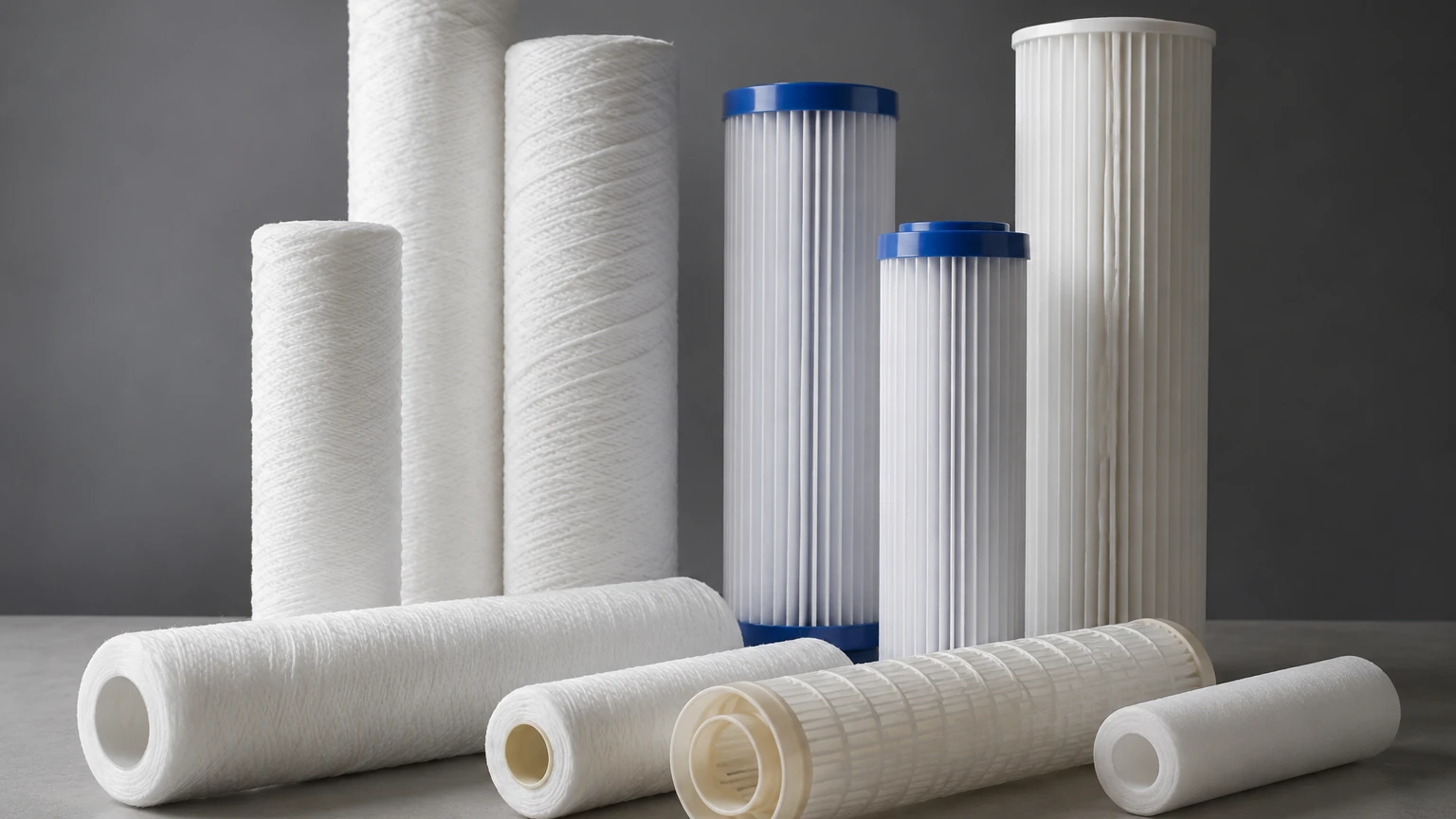
Customization and Structural Design for OEM Integration
No two industrial processes are identical, which is why customization is a core component of effective filtration. A standard sediment filter cartridge may not fit the unique housing or flow requirements of a proprietary system. Key areas of customization include:
* End Cap Configurations: Options include Double Open End (DOE), Single Open End (SOE) with various O-ring configurations (such as 222 or 226 styles), and threaded connections (NPT/BSP).
* Pleating vs. Cylindrical: Pleating the stainless steel mesh significantly increases the surface area within the same footprint, allowing for higher flow rates and extended intervals between maintenance.
* Reinforcement Cores: For high-viscosity fluids or high-pressure applications, internal perforated cores or external cages are added to prevent the media from collapsing or bursting.
By visiting the Main Page, technical teams can review the range of custom engineering services available for developing application-specific filtration components.
Maintenance and Longevity: The Economics of Cleanable Cartridges
One of the most significant advantages of a stainless steel sediment filter cartridge is its ability to be restored to near-original performance levels through professional cleaning. In many B2B environments, the cost of downtime outweighs the cost of the filter itself. Therefore, a cleanable solution is an investment in process continuity.
Cleaning Methods
* Backwashing: Reversing the flow of the fluid to dislodge particles from the surface of the mesh.
* Ultrasonic Cleaning: Using high-frequency sound waves in a solvent bath to remove fine particulates trapped deep within sintered media.
* Chemical Cleaning: Utilizing specific acids or alkalis to dissolve organic or mineral scale that has accumulated on the stainless steel surface.
When properly maintained, a high-quality metal sediment filter cartridge can last for years, whereas a disposable alternative might require replacement every few weeks. This longevity significantly reduces the long-term operational expenditure (OPEX) of the filtration system.
Selection Criteria for Engineering and Procurement Teams
Before finalizing a purchase or design specification for a sediment filter cartridge, several variables must be confirmed to ensure the product is fit for purpose:
1. Fluid Characteristics: What is the viscosity, temperature, and pH of the liquid? High-viscosity fluids require larger surface areas to maintain flow.
2. Contaminant Profile: Are the particles hard and abrasive or soft and deformable? This determines whether a surface mesh or depth media is more appropriate.
3. Flow Requirements: What is the minimum and maximum flow rate (GPM or m³/h)?
4. Regulatory Compliance: Does the application require FDA-compliant materials for food contact or specific certifications for the pharmaceutical industry?
5. Housing Compatibility: Does the cartridge length and diameter match existing filter housings, or is a custom adapter required?
Conclusion
The selection of a sediment filter cartridge is a technical decision that impacts the reliability and efficiency of the entire industrial process. By opting for stainless steel solutions, manufacturers can achieve superior durability, chemical resistance, and long-term cost savings. Whether the requirement is for a standard wire mesh cartridge or a highly customized sintered metal component, understanding the engineering fundamentals of filtration is the key to optimized performance.
For engineers seeking reliable OEM support and high-precision manufacturing, Kaifil offers the expertise necessary to develop filtration solutions for the most demanding environments. Explore our full range of capabilities and product specifications at the Main Page.
