


Foam Aquarium Filters
In the realm of aquatic life support systems, the selection of filtration media is a critical engineering decision that impacts water chemistry, biological stability, and operational overhead. Foam aquarium filters, often referred to as sponge filters, represent one of the most fundamental methods of achieving both mechanical and biological filtration. While common in hobbyist settings, the underlying principles of porous media filtration are highly relevant to industrial-scale aquaculture, pharmaceutical water processing, and specialized liquid-solid separation tasks. For engineers and procurement teams, understanding the technical specifications of foam media—and where it reaches its performance limits—is essential for optimizing system design.
This guide examines the mechanics of foam filtration, evaluates its suitability for industrial applications, and explores high-performance alternatives such as stainless steel mesh and sintered metal components for demanding environments.
Understanding Foam Filtration Mechanics in Aquatic Systems
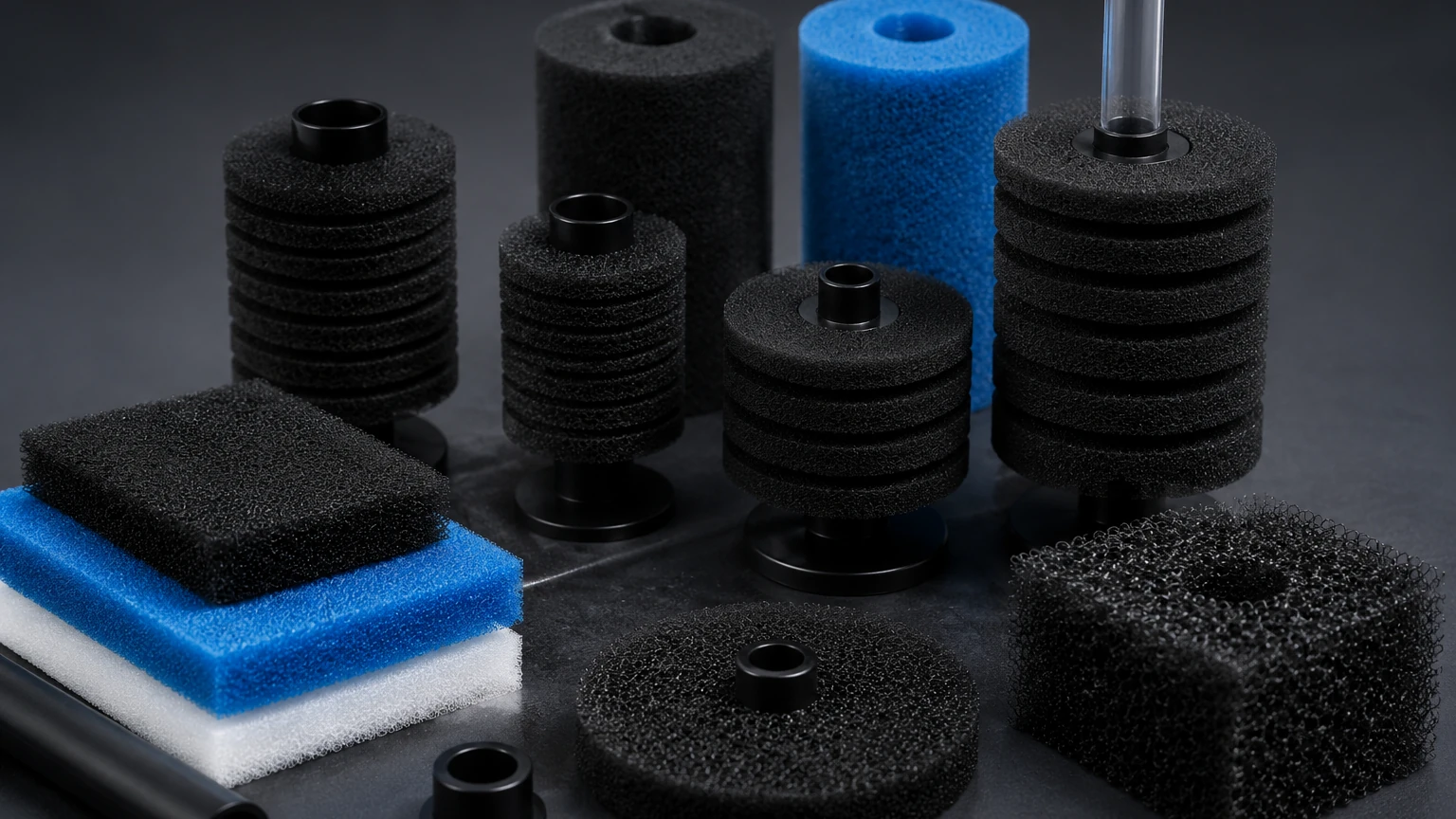
Foam aquarium filters operate on a dual-function principle. Structurally, they consist of open-cell polyurethane or polyether foam, characterized by a specific Pore Per Inch (PPI) rating. This rating determines the filter's mechanical straining capability and its available surface area for biological colonization.
Mechanical Straining
As water is drawn through the foam matrix, suspended solids and particulate matter are trapped within the convoluted pathways of the open cells. The efficiency of this process depends on the flow velocity and the pore size. In a B2B context, such as large-scale hatcheries or public aquarium displays, the mechanical load can be significant, requiring precise calculation of the foam's depth and density to prevent premature clogging.
Biological Filtration
The primary value of foam media in aquatic environments is its high internal surface area. This surface area serves as a substrate for nitrifying bacteria (*Nitrosomonas* and *Nitrobacter*), which convert toxic ammonia into nitrite and then into relatively harmless nitrate. For industrial systems, the "bio-load" capacity of a filter is a key metric. Foam media with a higher PPI (e.g., 30-45 PPI) provides more surface area but increases hydraulic resistance, necessitating a balance between biological efficiency and pump energy consumption.
Engineering Limitations of Standard Foam Media
While foam aquarium filters are cost-effective for small-scale applications, they present several challenges when integrated into industrial or high-pressure systems. Engineers must consider the following limitations during the specification phase:
1. Material Degradation: Over time, synthetic foams are susceptible to hydrolysis and UV degradation. In industrial settings where ozone or chemical disinfectants are used, standard foam can become brittle, leading to the release of microplastics or foam fragments into the filtrate stream.
2. Structural Integrity: Foam is a compressible medium. Under high differential pressure ($ΔP$), the pore structure can collapse, significantly reducing flow rates and bypass efficiency. This makes foam unsuitable for high-pressure hydraulic or pressurized canister systems without rigid internal support.
3. Cleaning and Sterilization: Maintaining the hygiene of foam media is labor-intensive. Unlike metal filtration components, foam cannot be easily backwashed at high pressure or subjected to high-temperature sterilization (autoclaving) without losing its structural properties. In pharmaceutical or food-grade applications, this lack of cleanability poses a significant bio-contamination risk.
4. Inconsistent Pore Geometry: The manufacturing process for polyurethane foam often results in a range of pore sizes rather than a precise absolute rating. For applications requiring a strict 10-micron or 20-micron cutoff, foam media is generally considered a nominal filtration solution at best.
Industrial Alternatives: Sintered Metal and Stainless Steel Mesh
For applications where the limitations of foam aquarium filters are unacceptable, industrial designers often pivot to stainless steel filtration solutions. Manufacturers like Kaifil specialize in providing custom metal filtration components that offer the biological benefits of high surface area without the structural weaknesses of polymer foams.
Stainless Steel Wire Mesh
Stainless steel wire mesh provides a precise, predictable filtration area. In large-scale aquatic systems, multi-layer mesh screens can be used as pre-filters to remove heavy organic loads before water enters biological stages. Unlike foam, stainless steel mesh is resistant to corrosion and can be manufactured in specific alloys like 316L to withstand saline environments common in marine aquaculture.
Sintered Metal Filters
Sintered metal components are created by fusing metal powders or multiple layers of wire mesh under high heat and pressure. The result is a rigid, porous structure that mimics the high surface area of foam but with immense structural strength. These components are ideal for air diffusion (aeration) in large tanks or for fine particulate removal in closed-loop systems. They offer absolute filtration ratings and can be cleaned using ultrasonic baths or chemical solvents, ensuring a much longer service life than disposable foam.
To explore the full range of professional filtration components designed for industrial durability, you can visit the Main Page of our product catalog.
Performance Comparison: Porosity, Flow Rate, and Longevity
When evaluating foam aquarium filters against industrial metal alternatives, engineers must look at the quantitative data regarding throughput and maintenance cycles.
| Feature | Polyurethane Foam | Stainless Steel Mesh | Sintered Metal |
| :— | :— | :— | :— |
| Filtration Type | Nominal | Absolute/Nominal | Absolute |
| Chemical Resistance | Low to Moderate | High (304/316L) | Very High |
| Temperature Limit | < 80°C | > 400°C | > 600°C |
| Structural Rigidity | Low (Compressible) | High | Very High |
| Cleaning Method | Manual Rinsing | Backwash/Chemical | Ultrasonic/Burn-off |
| Service Life | 6-12 Months | 5-10 Years | 10+ Years |
In a commercial hatchery, for instance, the total cost of ownership (TCO) for foam filters often exceeds that of stainless steel when labor costs for manual cleaning and the price of frequent replacements are factored in. Furthermore, the risk of a system failure due to a collapsed foam filter can lead to catastrophic livestock loss, making the reliability of metal components a preferred choice for risk-averse engineering teams.
Integration and Customization for Large-Scale Projects
One of the primary advantages of working with a professional manufacturer is the ability to customize filtration components to fit specific vessel geometries. While foam aquarium filters are typically sold in standardized blocks or cylinders, industrial metal filters can be engineered as custom cartridges, pleated elements, or flat panels.
Custom Pleated Elements
To maximize surface area in a compact footprint—similar to the goal of high-PPI foam—engineers often use pleated stainless steel mesh. Pleating increases the available filtration area by 3 to 10 times compared to a standard cylindrical element. This allows for lower face velocities and longer intervals between cleaning cycles, which is critical for 24/7 industrial operations.
Material Selection for Aquatic Environments
In aquatic applications, the presence of chlorides (especially in saltwater) necessitates the use of high-grade alloys. While foam is naturally inert to salt, its housing and connection points often are not. Custom-fabricated 316L stainless steel filters provide the necessary corrosion resistance to ensure that no heavy metals or toxins leach into the water, protecting sensitive aquatic species.
Total Cost of Ownership and Maintenance Cycles
For procurement departments, the initial purchase price of a foam filter is deceptively low. However, a B2B evaluation must account for the following factors:
* Replacement Frequency: Foam media loses its elasticity and pore structure over time, requiring replacement every few months to maintain flow. Metal filters are permanent assets that only require periodic cleaning.
* System Downtime: Replacing or manually cleaning foam filters often requires shutting down portions of the filtration loop. Industrial-grade stainless steel systems are frequently designed with duplex configurations or automated backwashing, allowing for continuous operation.
* Energy Efficiency: As foam clogs, the differential pressure increases, forcing pumps to work harder. The predictable and cleanable nature of metal mesh ensures that the system operates within its optimal energy curve for a longer duration.
* Waste Management: Large-scale use of foam filters generates significant non-recyclable waste. Transitioning to permanent metal filtration aligns with corporate sustainability goals and reduces the environmental footprint of the facility.
Conclusion: Selecting the Right Media for the Application
Foam aquarium filters remain a viable and effective solution for low-pressure, small-scale biological filtration where cost is the primary driver and manual maintenance is feasible. However, as the scale of the application grows—whether in industrial aquaculture, public water features, or specialized fluid processing—the limitations of polymer foam become apparent.
Engineers should prioritize filtration solutions that offer mechanical precision, structural integrity, and ease of sterilization. By integrating custom stainless steel components, facilities can achieve higher filtration accuracy and significantly lower long-term operational costs. For those seeking to upgrade from standard foam media to robust industrial solutions, consulting with a manufacturer experienced in precision metal filtration is the most effective path forward. Detailed technical specifications and engineering support for these transitions can be found by reviewing the resources on our Main Page.
