


Filtre Fritté
In the landscape of industrial separation technology, the *filtre fritté*, or sintered filter, represents a pinnacle of durability and precision. Unlike traditional disposable filters made from polymers or cellulose, sintered metal filters are engineered to withstand extreme temperatures, high pressures, and corrosive environments. For engineers and procurement specialists, selecting the right filtration media is not merely about particle removal; it is about ensuring process continuity, reducing maintenance downtime, and achieving a low total cost of ownership (TCO).
Kaifil specializes in the design and manufacture of high-performance stainless steel filtration solutions. By understanding the technical nuances of the *filtre fritté*, industrial professionals can better optimize their systems for longevity and efficiency. This guide explores the engineering principles, material science, and application-specific considerations essential for professional filter selection.
The Engineering Principles of Sintered Filtration
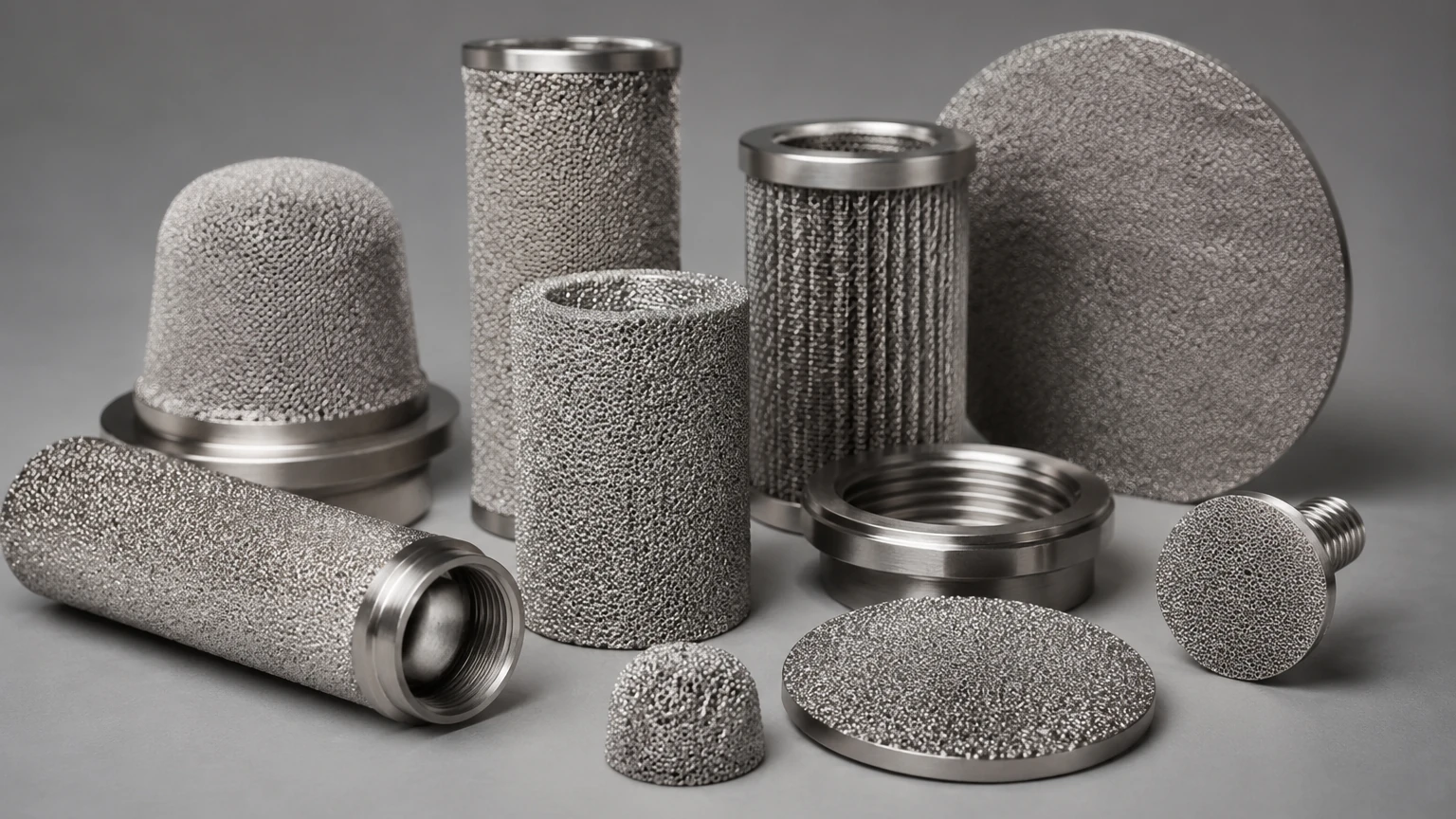
The term *filtre fritté* refers to a porous metal component created through the sintering process. Sintering is a metallurgical technique where metal powders or layers of wire mesh are subjected to high heat—just below their melting point—within a controlled-atmosphere furnace. This thermal energy causes the metal particles or wires to bond at their contact points through molecular diffusion.
The Sintering Process
1. Material Preparation: High-purity metal powders or precision-woven wire meshes are selected based on the required micron rating and mechanical strength.
2. Compaction/Layering: For powder-based filters, the metal is pressed into a mold. For mesh-based filters, multiple layers of wire cloth are stacked in a specific orientation to achieve the desired flow characteristics.
3. Thermal Diffusion: The green part is placed in a vacuum or inert gas furnace. As the temperature rises, the atoms migrate across the boundaries of the particles, fusing them into a solid, rigid structure.
4. Calibration and Finishing: The resulting media is then machined, welded, or pleated into final configurations such as cartridges, discs, or tubes.
The result is a porous medium with a highly stable pore structure that does not shift under pressure, a common failure point in soft-media filters.
Material Selection and Chemical Compatibility
The performance of a *filtre fritté* is heavily dependent on its metallurgical composition. At Kaifil, the primary material used is stainless steel, though other alloys are available for specialized applications.
* 316L Stainless Steel: The industry standard for most industrial applications. The "L" stands for low carbon, which improves weldability and resistance to intergranular corrosion. It offers excellent resistance to organic acids and many industrial chemicals.
* 304 Stainless Steel: Suitable for less aggressive environments, providing a cost-effective solution for food and beverage applications where high corrosion resistance is not the primary concern.
* Nickel-Based Alloys (Hastelloy, Inconel): Used in extreme chemical processing where standard stainless steel would succumb to pitting or stress-corrosion cracking.
* Titanium: Preferred for lightweight applications or where specific chemical resistance (such as to seawater or wet chlorine) is required.
For engineers, the selection process must begin with a thorough analysis of the fluid chemistry, operating temperature, and potential for oxidation. You can Review product options and application support on the Kaifil website to determine which material grade aligns with your specific chemical compatibility requirements.
Performance Characteristics: Why Specify Sintered Media?
When comparing a *filtre fritté* to alternative filtration methods, several technical advantages become apparent. These characteristics are critical for demanding industrial environments where failure is not an option.
High Mechanical Strength
Sintered filters are self-supporting structures. They do not require internal cores or external cages to maintain their shape under high differential pressure (ΔP). This structural integrity prevents media migration—the shedding of filter fibers into the downstream flow—which is a major risk in pharmaceutical and food processing.
Thermal Stability
While polymer filters may melt or degrade at temperatures above 100°C, a stainless steel *filtre fritté* can operate effectively at temperatures exceeding 450°C in oxidizing environments and up to 600°C in reducing or inert atmospheres. This makes them indispensable for steam filtration and hot gas cleaning.
Precise Micron Ratings and Porosity
The sintering process allows for tight control over pore size distribution. Filters can be manufactured with absolute ratings from 0.5 microns to 200 microns. High porosity (often between 30% and 50%) ensures that the filter maintains a high flow rate with minimal pressure drop, optimizing pump efficiency.
Critical Application Sectors for Filtre Fritté
Sintered filtration solutions are utilized across diverse industries where reliability and purity are paramount. Each sector presents unique challenges that the *filtre fritté* is uniquely qualified to address.
Chemical and Petrochemical Processing
In chemical manufacturing, filters must handle aggressive solvents and catalysts. Sintered metal cartridges are frequently used for catalyst recovery, where the filter must capture expensive catalyst particles from a high-temperature reaction stream without degrading. Their ability to be cleaned and reused makes them more economical than hazardous waste disposal of single-use filters.
Pharmaceutical and Biotechnology
Purity is the primary driver in pharmaceutical production. Sintered filters are used for gas sparging, solvent filtration, and steam sterilization. Because they are made of 316L stainless steel, they can withstand Clean-in-Place (CIP) and Sterilize-in-Place (SIP) protocols, ensuring that the production line remains sterile and free of contaminants.
Food and Beverage Industry
From carbonating beverages to filtering frying oils, the *filtre fritté* provides a hygienic solution. The smooth surface finish of sintered metal prevents the buildup of organic matter, and the absence of adhesives or binders ensures that no chemicals leach into the food product. They are commonly used for steam filtration to ensure that the steam used in direct contact with food is "culinary grade."
Hydraulics and Aerospace
In high-pressure hydraulic systems, even microscopic particles can cause catastrophic component failure. Sintered wire mesh filters provide the necessary fatigue resistance to handle pressure surges while maintaining a constant filtration efficiency, protecting sensitive valves and actuators.
Technical Selection Guide: Engineering Parameters
To ensure the successful integration of a *filtre fritté* into an industrial system, engineers should confirm several key parameters before procurement.
1. Fluid Characteristics
Understanding the viscosity and density of the fluid is essential for calculating the expected pressure drop. High-viscosity fluids require larger surface areas or coarser pore sizes to maintain flow. Additionally, the presence of abrasive solids may necessitate a harder alloy or a specific mesh structure to prevent erosion.
2. Particle Loading and Size Distribution
Is the goal to remove a specific size of contaminant (absolute filtration) or to reduce the overall sediment load (nominal filtration)? Engineers must evaluate the particle size distribution (PSD) of the influent to select a micron rating that balances filtration efficiency with the length of the filtration cycle.
3. Differential Pressure (ΔP) Limits
Every filter has a maximum allowable differential pressure before it must be cleaned or replaced. For a *filtre fritté*, the clean ΔP should ideally be kept low (e.g., <0.1 bar) to provide maximum headroom for contaminant loading. Understanding the system's pump curve is vital to ensure that the filter does not prematurely throttle the process.
4. Cleaning and Regeneration Methods
One of the greatest advantages of the *filtre fritté* is its cleanability. Depending on the contaminant, filters can be regenerated using:
* Backwashing: Reversing the flow to dislodge surface cake.
* Ultrasonic Cleaning: Using high-frequency sound waves in a solvent bath to remove deep-seated particles.
* Chemical Cleaning: Using acids, alkalis, or surfactants to dissolve organic or inorganic scaling.
* Thermal Burn-off: For removing organic polymers or carbonaceous deposits.
Longevity and Total Cost of Ownership (TCO)
While the initial purchase price of a *filtre fritté* is higher than that of a disposable cartridge, the Total Cost of Ownership is often significantly lower. This is due to several factors:
* Reduced Disposal Costs: Disposable filters often require specialized hazardous waste handling if used with chemicals. Sintered filters eliminate this recurring cost.
* Lower Labor Costs: Because sintered filters can be cleaned in place (CIP), there is less need for manual intervention and filter housing disassembly.
* Process Uptime: The durability of metal media reduces the risk of sudden filter failure, which can lead to expensive batch losses or downstream equipment damage.
* Sustainability: Reusable filters align with corporate sustainability goals by reducing the volume of industrial waste generated.
Custom Engineering and OEM Integration
No two industrial processes are identical, which is why customization is a core component of Kaifil’s service. A *filtre fritté* can be tailored in terms of geometry, filtration layers, and end-cap fittings to match existing infrastructure.
For OEM manufacturers, integrating a custom-designed sintered filter into a piece of equipment—such as a vacuum pump, a flow meter, or a medical device—provides a value-added feature of reliability. Kaifil works closely with engineering teams to develop prototypes and scale production for specific industrial needs, ensuring that the filtration component is optimized for the intended flow dynamics and environmental stresses.
Engineers looking to optimize their filtration systems should focus on the exact technical requirements of their application. By prioritizing material integrity and precise pore control, the *filtre fritté* becomes a critical asset in maintaining process efficiency. For more detailed technical specifications and to explore the full range of stainless steel filtration components, visit the Kaifil Main Page to connect with our engineering team.
Conclusion
The *filtre fritté* is more than just a component; it is an engineered solution for the most challenging industrial environments. Whether it is the high-temperature requirements of a petrochemical refinery or the stringent purity standards of a pharmaceutical laboratory, sintered metal filtration provides the mechanical strength, thermal stability, and chemical resistance necessary for modern manufacturing. By understanding the manufacturing process, material options, and selection criteria, technical professionals can make informed decisions that enhance the reliability and cost-effectiveness of their operations. Kaifil remains committed to providing the high-quality, customized stainless steel filters that drive these industries forward.
