


Porous Metal Disc
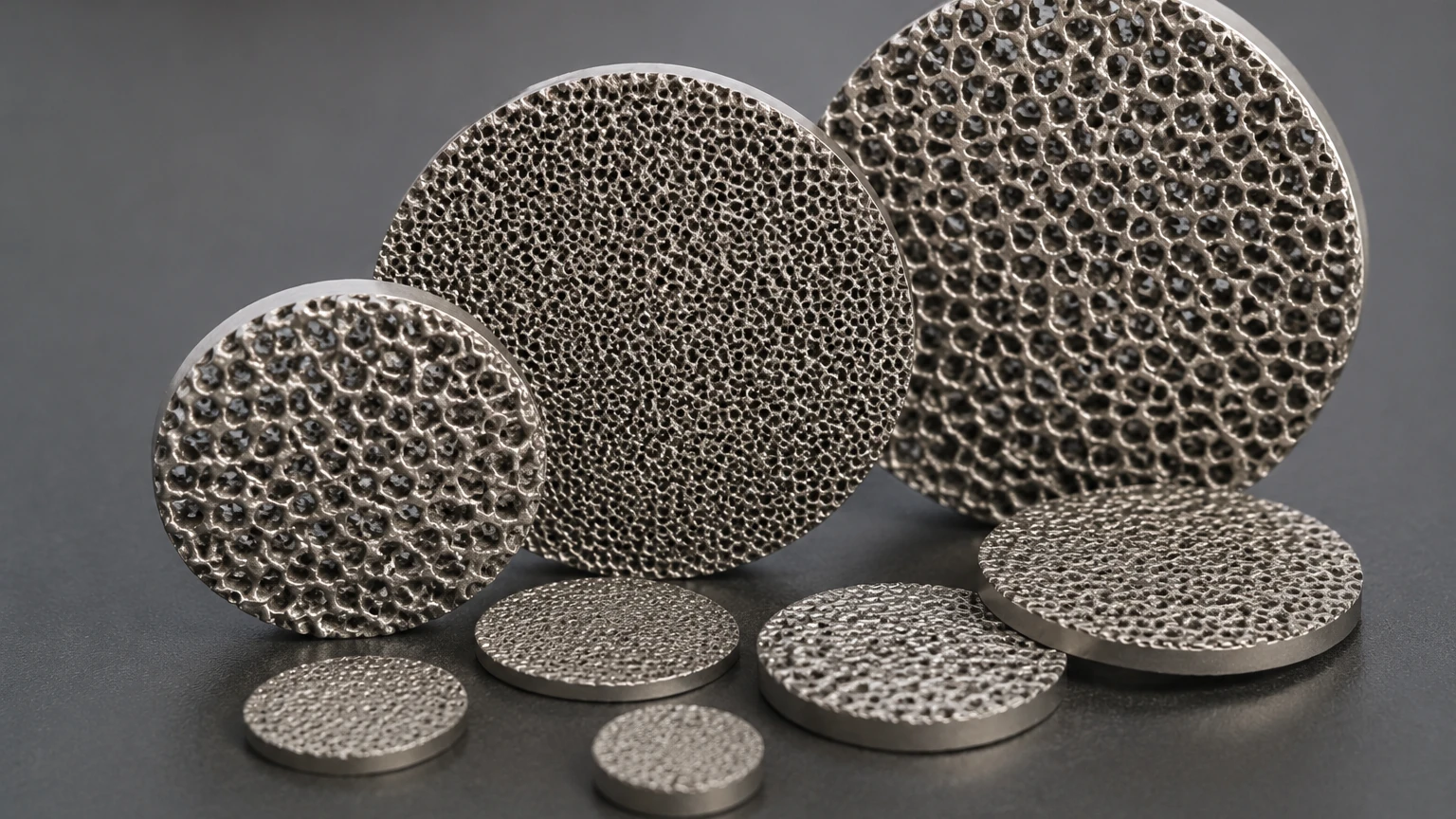
In the landscape of industrial filtration and flow control, the porous metal disc represents a critical component engineered for high-performance environments. Unlike traditional fabric or polymer-based filters, these discs are fabricated through a process known as powder metallurgy, specifically sintering. This results in a rigid, self-supporting structure capable of withstanding extreme temperatures, high pressures, and corrosive chemical environments. For engineers and procurement teams, understanding the technical nuances of these components is essential for optimizing system longevity and process efficiency.
At Kaifil, the focus remains on delivering precision-engineered stainless steel filtration solutions. As a professional manufacturer, we recognize that the selection of a porous metal disc is not merely a commodity purchase but a technical decision that impacts the entire fluid or gas handling system. This guide provides an in-depth analysis of the manufacturing, application, and selection criteria for these essential industrial components.
Manufacturing Processes and Material Science
The performance of a porous metal disc is fundamentally determined by its manufacturing process. The primary method used is sintering, where metal powders—typically 316L stainless steel, though bronze, nickel, and Hastelloy are also used—are compressed into a specific shape and then heated in a controlled-atmosphere furnace. The temperature is kept below the melting point of the metal, allowing the particles to bond at their contact points. This creates a network of interconnected pores while maintaining the mechanical integrity of the metal.
Material Selection
316L stainless steel is the industry standard for most porous metal discs due to its excellent corrosion resistance and mechanical strength. For highly acidic or alkaline environments, specialized alloys like Hastelloy C-276 or Monel may be required. The choice of material dictates the disc’s resistance to oxidation and its compatibility with the process fluid.
Pore Size Control
The filtration rating of a disc is controlled by the size and shape of the metal powder particles used. Finer powders result in smaller pore sizes and higher filtration accuracy, whereas coarser powders provide higher permeability and lower pressure drops. Typical pore sizes range from 0.2 microns to 100 microns, allowing for precise customization based on the specific particulate matter that needs to be captured.
Key Engineering Specifications and Performance Metrics
When evaluating a porous metal disc for an industrial application, engineers must look beyond simple dimensions. Several performance metrics define the suitability of the disc for a given task.
Porosity and Permeability
Porosity refers to the percentage of void space within the disc, while permeability measures the ability of a fluid to pass through that void space. High porosity generally leads to higher flow rates but may compromise the mechanical strength of the disc. Engineers must balance these factors to ensure the disc can handle the required flow without deforming under pressure.
Filtration Efficiency: Absolute vs. Nominal
It is vital to distinguish between nominal and absolute filtration ratings. A nominal rating indicates the disc can trap a large percentage of particles of a certain size, whereas an absolute rating guarantees that no particles larger than the specified size will pass through. In critical applications like pharmaceutical processing or semiconductor manufacturing, absolute-rated discs are often mandatory.
Mechanical Strength and Differential Pressure
One of the primary advantages of a porous metal disc is its ability to withstand high differential pressures (ΔP). Unlike pleated paper or mesh filters that might collapse, a sintered disc maintains its structural integrity. This allows for high-pressure filtration and makes the discs suitable for backwashing or pulse-jet cleaning cycles.
Industrial Applications and Use Cases
The versatility of the porous metal disc allows it to be utilized across a wide spectrum of industries. Its role often extends beyond simple filtration into gas diffusion and flow regulation.
Chemical and Petrochemical Processing
In the chemical industry, these discs are used to filter catalysts from process streams, protect sensitive instrumentation from particulate damage, and provide flame arrestor capabilities. Their resistance to thermal shock makes them ideal for high-temperature gas filtration where polymer filters would fail.
Pharmaceutical and Biotechnology
For sterile applications, the ability to clean and sterilize components is paramount. Porous metal discs made from 316L stainless steel can be cleaned using Steam-In-Place (SIP) or Clean-In-Place (CIP) protocols. They are frequently used in sparging applications, where gas is introduced into a liquid to create fine bubbles for aeration or carbonation.
Aerospace and Defense
In hydraulic systems and fuel lines, the reliability of the filter is a safety-critical factor. The high strength-to-weight ratio of sintered metal discs, combined with their ability to operate in extreme cold or heat, makes them a staple in aerospace engineering.
Food and Beverage Production
From carbonating beverages to filtering steam used in food processing, these discs provide a hygienic and durable solution. They ensure that no metallic fragments or contaminants enter the product stream, adhering to strict food safety standards.
Selection Criteria for Engineers and Purchasing Teams
Selecting the right porous metal disc requires a comprehensive understanding of the operating environment. Before finalizing a specification, the following factors must be confirmed:
1. Fluid Characteristics: Is the fluid a liquid or a gas? What is its viscosity? Are there corrosive elements present that require specialized alloys?
2. Operating Temperature: What is the continuous operating temperature and the maximum peak temperature? Sintered stainless steel can typically operate up to 450°C (842°F) in oxidizing atmospheres and higher in reducing environments.
3. Flow Rate and Pressure Drop: What is the desired flow rate, and what is the maximum allowable pressure drop across the disc? This will determine the required surface area and porosity.
4. Contaminant Loading: What type of particulate is being removed? Is it hard, abrasive material or soft, deformable particles? This influences the cleaning frequency and the choice of pore structure.
5. Installation and Housing: How will the disc be integrated into the system? Options include press-fitting, welding into a housing, or using mechanical seals. Precision in outer diameter (OD) and thickness tolerances is crucial for a leak-free installation.
To explore the full range of available configurations and technical support, professionals are encouraged to Review product options and application support on our Main Page.
Customization and OEM Capabilities
Standard off-the-shelf components rarely meet the exacting demands of specialized industrial equipment. This is where Kaifil’s expertise in custom manufacturing becomes a strategic advantage. Customization of a porous metal disc can involve several parameters:
* Geometry: While circular discs are common, we can manufacture square, rectangular, or custom-contoured shapes to fit specific equipment housings.
* Edge Treatments: To facilitate easier handling and installation, discs can be provided with solid metal rims or reinforced edges. This is particularly useful for discs that will be frequently removed for cleaning.
* Multi-Layer Structures: In some cases, a single layer of porous metal may not provide the necessary balance of filtration and strength. We can sinter multiple layers of different porosities together to create a composite disc with a fine filtration layer supported by a coarse, high-strength substrate.
* Surface Finishes: Depending on the application, surfaces can be treated to be hydrophobic or hydrophilic, or polished to meet specific roughness (Ra) requirements.
By working closely with an OEM partner like Kaifil, engineers can ensure that the filtration component is designed concurrently with the rest of the system, leading to better performance and lower long-term costs.
Maintenance, Cleaning, and Service Life
The total cost of ownership (TCO) for a porous metal disc is often lower than that of disposable filters because the metal discs are cleanable and reusable. However, a proper maintenance schedule is required to maximize service life.
Cleaning Methods
* Ultrasonic Cleaning: This is the most effective method for removing fine particles trapped deep within the pore structure. The high-frequency sound waves create cavitation bubbles that dislodge contaminants.
* Chemical Cleaning: Soaking the discs in solvents, caustic solutions, or acids can dissolve organic or inorganic deposits. It is essential to ensure the cleaning agent is compatible with the disc material.
* Backwashing and Backpulsing: In automated systems, reversing the flow of the fluid can push contaminants off the surface of the disc. This is highly effective for surface-loading filtration.
* Thermal Cleaning: For organic contaminants, controlled heating in an oven can burn off the residue, leaving the metal structure intact.
When to Replace
While these discs are durable, they are not infinite. Gradual erosion, chemical degradation, or permanent clogging (where particles become wedged so deeply they cannot be removed) will eventually necessitate replacement. Monitoring the steady-state pressure drop is the best way to determine when a disc has reached the end of its functional life. If the pressure drop remains high even after a thorough cleaning, the disc's internal geometry has likely been compromised.
Conclusion
The porous metal disc is a sophisticated engineering solution that provides reliability where other materials fail. From the precision of the sintering process to the strategic selection of alloys, every aspect of these components is designed for industrial endurance. By focusing on the technical requirements of porosity, mechanical strength, and chemical compatibility, engineers can implement filtration systems that are both efficient and cost-effective.
Kaifil remains committed to supporting global industries with high-performance, customized stainless steel filtration components. Whether you are designing a new system or optimizing an existing process, our engineering team is available to provide the technical guidance necessary for successful implementation. For more information on our manufacturing capabilities and to view our full product catalog, please visit our Main Page.
