


Filtro Autopulente Acqua
In industrial water management, maintaining continuous flow and consistent filtration quality is a primary engineering challenge. The implementation of a self-cleaning water filter, or "filtro autopulente acqua," represents a critical shift from manual maintenance to automated process control. These systems are designed to remove suspended solids, debris, and particulates from water streams without requiring the system to be shut down for cleaning. For engineers and facility managers, understanding the technical nuances of these systems is essential for optimizing operational efficiency and protecting downstream equipment.
Industrial filtration demands more than just basic particle removal; it requires reliability under varying pressure conditions and chemical environments. Whether used in cooling towers, process water loops, or pre-filtration for reverse osmosis systems, the selection of a self-cleaning filter must be based on rigorous technical criteria. This guide explores the engineering principles, material considerations, and selection methods necessary for integrating high-performance filtration solutions into industrial infrastructures.
Understanding the Mechanics of Self-Cleaning Water Filters
The core advantage of a filtro autopulente acqua is its ability to perform a cleaning cycle while remaining online. This is typically achieved through one of two primary mechanisms: suction scanning or mechanical scraping, both of which are triggered by specific operational parameters.
Differential Pressure Triggering
As contaminants accumulate on the internal surface of the filter element (usually a stainless steel wire mesh or wedge wire screen), the open area of the filter decreases. This restriction causes a pressure drop between the inlet and the outlet. Sensors monitor this differential pressure (DP). Once a pre-set threshold—typically between 0.5 and 1.0 bar—is reached, the control system initiates the self-cleaning cycle. This ensures that the filter only cleans when necessary, minimizing water waste and mechanical wear.
Backwashing and Suction Scanning
In suction scanning systems, a scanner with nozzles moves across the inner surface of the filter screen. A flush valve opens to the atmosphere, creating a high-velocity suction effect at the nozzles. This vacuum pulls the accumulated debris off the screen and out through the flush valve. Because the nozzle area is small relative to the total screen area, only a fraction of the flow is used for cleaning, allowing the main process flow to continue uninterrupted.
Mechanical Scraping
For fluids with higher viscosity or sticky contaminants, mechanical scraping is often preferred. A blade or brush moves across the surface of the filter element, physically dislodging particles that then settle into a collection chamber at the bottom of the housing. This chamber is periodically purged. This method is highly effective in applications where traditional backwashing might not provide sufficient force to clear the filter media.
Key Technical Specifications for Industrial Selection
When evaluating a filtro autopulente acqua for an industrial site, engineers must look beyond the basic flow rate. Several technical factors dictate the long-term success of the installation.
Filtration Grade and Micron Rating
The micron rating defines the size of the smallest particle the filter is intended to capture. In industrial water treatment, ratings can range from 10 microns to over 3,000 microns. Selecting the correct rating involves a balance: a finer mesh provides cleaner water but increases the frequency of cleaning cycles and potential pressure drops. It is common practice to analyze the particle size distribution (PSD) of the source water before finalizing the micron specification.
Flow Rate and Flux Velocity
The flow rate (measured in m³/h or GPM) must be matched to the filter's capacity. However, the flux velocity—the speed at which the water passes through the filter media—is equally important. High flux velocities can force deformable particles through the mesh or cause premature wear on the filter element. A conservative design approach ensures that the filter can handle peak flow conditions without exceeding the maximum allowable velocity for the specific mesh type.
Operating Pressure and Temperature
Standard industrial filters are often rated for 10 to 16 bar, but high-pressure applications may require reinforced housings and specialized seals. Similarly, temperature affects the choice of gaskets and the structural integrity of the filter element. In chemical processing or high-temperature water loops, utilizing 316L stainless steel and EPDM or Viton seals is standard practice to ensure durability.
Material Integrity: The Role of Stainless Steel in Filtration
In the context of industrial filtration, the materials of construction are non-negotiable. Stainless steel is the industry standard for self-cleaning filters due to its corrosion resistance, mechanical strength, and ability to withstand high-pressure differentials. For more information on specialized material options and engineering support, you can visit the Main Page of professional manufacturers like Kaifil.
304 vs. 316L Stainless Steel
- Grade 304: Suitable for general industrial water applications, providing excellent strength and basic corrosion resistance.
- Grade 316L: Contains molybdenum, which provides superior resistance to chlorides and pitting. This is essential for seawater applications, brackish water, or chemical process streams where 304 would fail prematurely.
Filter Element Construction
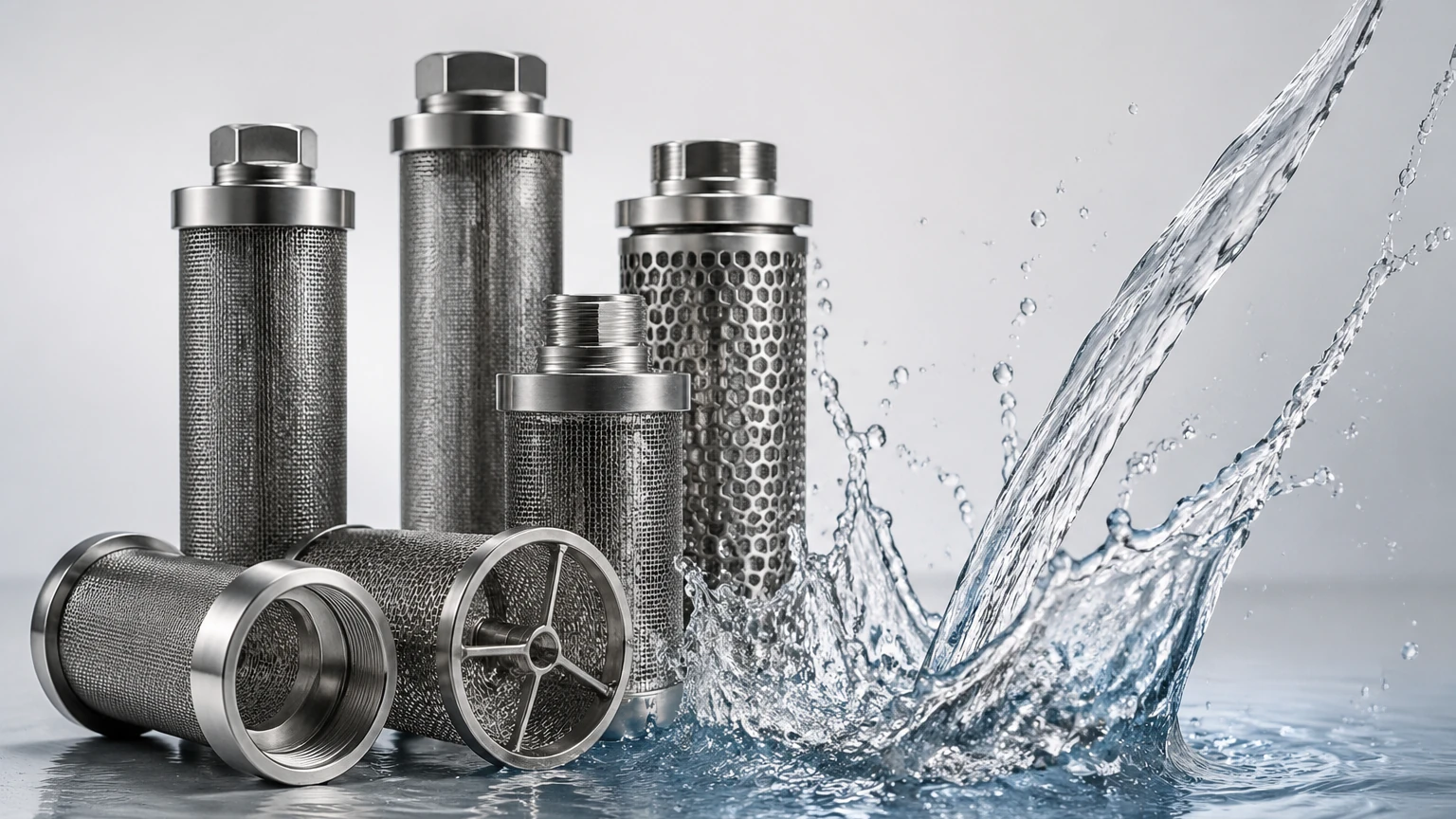
The design of the filter element itself—whether it is a multi-layered sintered mesh or a wedge wire screen—impacts the cleaning efficiency. Sintered mesh offers high porosity and precise filtration, while wedge wire is renowned for its "V-shaped" profile that minimizes clogging and facilitates easier debris removal during the backwash cycle. For custom industrial requirements, OEM manufacturers can tailor the screen geometry to match specific debris types, such as fibrous materials or abrasive sand.
Operational Benefits and Maintenance Considerations
While the primary goal of a filtro autopulente acqua is to automate the cleaning process, it is not a "fit and forget" system. Proper maintenance and monitoring are required to ensure the total cost of ownership (TCO) remains low.
Reduction in Labor and Downtime
Traditional bag or cartridge filters require manual intervention, leading to process downtime and labor costs. A self-cleaning system eliminates these variables. In a high-volume manufacturing plant, the ROI for an automated filter is often realized within the first 12 to 18 months through labor savings and reduced consumable waste.
Waste Water Management
Every self-cleaning cycle involves a "flush" where a small amount of water is used to carry away debris. Engineering teams must account for this waste stream. Modern systems are designed to be extremely efficient, often using less than 1% of the total flow for cleaning. However, in water-scarce regions or high-cost treatment areas, minimizing this flush volume through precise DP settings is a priority.
Routine Inspections
Even with automation, periodic inspections are necessary. This includes checking the integrity of the seals, ensuring the motor or piston driving the cleaning mechanism is lubricated, and verifying that the control panel is accurately reading differential pressure. A blocked flush line or a worn scanner nozzle can significantly degrade performance, leading to "short-cycling" where the filter cleans too frequently.
Selecting the Right Filtration Solution for Your Application
To ensure the successful integration of a filtro autopulente acqua, procurement and engineering teams should confirm several data points with their supplier before purchase:
1. Water Source Analysis: Is the water sourced from a river, well, or recycled process loop? The type of organic or inorganic load determines the cleaning mechanism.
2. Compatibility Requirements: Does the filter housing need to meet specific codes (e.g., ASME Section VIII, CE/PED)?
3. Customization Needs: Are there footprint constraints that require a vertical or horizontal orientation? Can the flange connections be customized to match existing piping?
4. Control Integration: Does the filter controller need to communicate with a central PLC via Modbus, Profibus, or simple dry contacts?
By addressing these factors, industrial operators can select a filtration system that not only protects their equipment but also contributes to a more sustainable and cost-effective water management strategy. Professional manufacturers like Kaifil provide the engineering expertise needed to transition from standard catalog items to customized filtration components that meet the rigorous demands of the chemical, pharmaceutical, and food and beverage industries.
In conclusion, the filtro autopulente acqua is a vital component in the modern industrial toolkit. By leveraging advanced stainless steel construction and automated cleaning cycles, these systems provide a reliable barrier against particulate contamination, ensuring that industrial processes remain fluid, efficient, and uninterrupted. For those seeking to optimize their filtration infrastructure, focusing on material quality and precise engineering specifications is the most effective path toward long-term operational success.
