


Sintering Plates
In the landscape of industrial filtration and fluidization, sintering plates represent a pinnacle of engineering, combining the mechanical strength of solid metal with the precise permeability of advanced filter media. These components are essential in environments where traditional fabric or polymer filters fail due to extreme temperatures, high pressures, or corrosive chemical interactions. For engineers and procurement specialists, understanding the technical nuances of sintering plates is critical for optimizing system longevity and filtration efficiency.
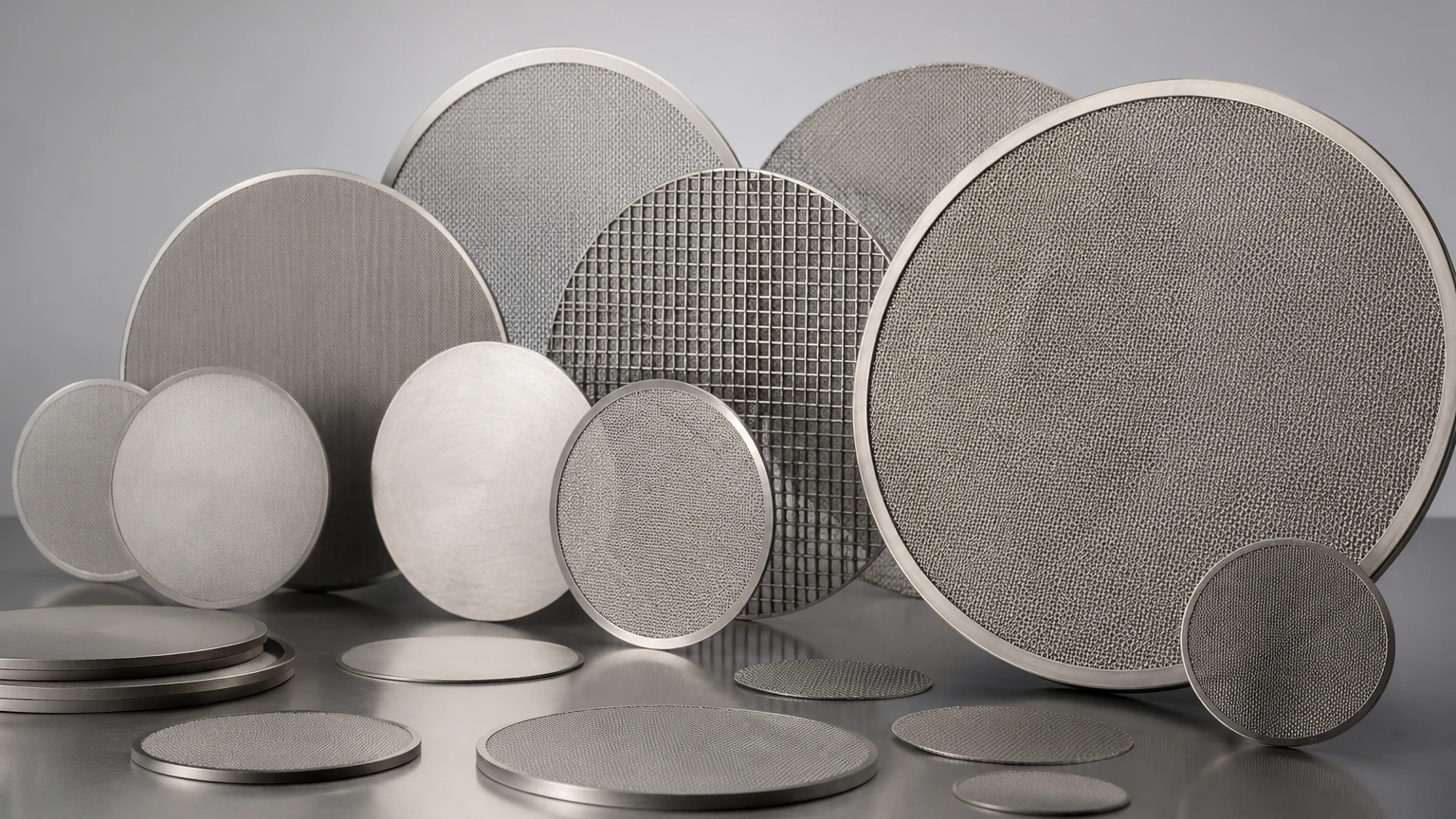
At its core, a sintering plate is a porous metal structure produced through a process of diffusion bonding. By subjecting multiple layers of metal wire mesh or metal fibers to controlled heat and pressure in a vacuum furnace, the contact points of the metal strands fuse without the need for binders or filler metals. This results in a monolithic structure that retains the precise pore geometry of the original mesh while gaining the structural integrity of a solid plate.
The Science of Diffusion Bonding in Sintering Plates
The manufacturing of sintering plates relies on the principle of solid-state diffusion. Unlike welding, which melts the base material, sintering occurs at temperatures just below the melting point of the alloy. Under high vacuum or a reducing atmosphere, atoms migrate across the boundaries of the metal wires. This molecular-level fusion creates high-strength joints that are as resistant to heat and corrosion as the parent metal itself.
For industrial applications, the most common material used is Stainless Steel 316L. This low-carbon alloy is preferred because the sintering process involves prolonged exposure to high temperatures, which could otherwise lead to carbide precipitation in standard 304 or 316 stainless steel. Carbide precipitation weakens the grain boundaries and increases susceptibility to intergranular corrosion. By utilizing 316L, manufacturers ensure that the finished sintering plates maintain their chemical resistance even after the thermal stress of the bonding process.
Beyond stainless steel, specialized applications may require sintering plates made from Hastelloy, Monel, or Inconel. These nickel-based alloys are selected for their exceptional performance in highly acidic or alkaline environments, or for processes operating at temperatures exceeding 600°C.
Structural Variations: Multi-layer Mesh vs. Metal Fiber Felt
Sintering plates are generally categorized by the type of media used in their construction. Each structure offers distinct advantages depending on the required filtration accuracy and flow rates.
Multi-layer Sintered Wire Mesh
The most common configuration is the 5-layer sintered mesh plate. This structure typically consists of a fine filtration layer, two protection layers, and two support layers.
1. Filtration Layer: This is the innermost layer that determines the micron rating (ranging from 1 to 200 microns). It is usually a plain or twilled Dutch weave mesh.
2. Protection Layers: These layers of coarser mesh protect the delicate filtration layer from mechanical damage during handling and operation.
3. Support Layers: Heavy-duty square mesh layers provide the overall mechanical strength and rigidity, allowing the plate to withstand high differential pressures without deformation.
Sintered Metal Fiber Felt
For applications requiring higher porosity and dirt-holding capacity, sintering plates can be manufactured from non-woven stainless steel fibers. These fibers are randomly laid and then sintered to create a three-depth filtration medium. Sintered fiber plates offer up to 80% porosity, which significantly reduces the initial pressure drop and extends the time between cleaning cycles compared to wire mesh plates.
Critical Engineering Parameters for Selection
When specifying sintering plates for a new system or as replacement components, engineers must evaluate several performance metrics to ensure the product meets the application's demands. For a detailed look at specific technical specifications and available configurations, you can visit the Main Page of our product catalog.
1. Filtration Accuracy and Pore Size Distribution
Filtration accuracy is defined by the absolute micron rating. In sintering plates, the pore size distribution is remarkably uniform due to the fixed geometry of the wire mesh. Engineers should confirm whether the application requires a nominal rating (capturing a percentage of particles) or an absolute rating (capturing all particles above a certain size). The "bubble point test" is the standard method used to verify the integrity and maximum pore size of these plates.
2. Permeability and Pressure Drop
Permeability refers to the ability of a fluid to pass through the porous medium. It is governed by Darcy’s Law, where the pressure drop (ΔP) is proportional to the fluid viscosity, flow velocity, and the thickness of the plate. Because sintering plates are rigid, they do not compress under pressure, ensuring that the permeability remains constant throughout the filtration cycle.
3. Mechanical Strength and Differential Pressure
One of the primary reasons for choosing sintering plates over other media is their ability to withstand high differential pressures. In many industrial processes, filters must survive "pressure shocks" or high-viscosity fluids. A well-designed 5-layer plate can often withstand differential pressures in excess of 2 MPa without structural failure.
Industrial Applications and Environmental Compatibility
Sintering plates are utilized across a broad spectrum of industries where reliability is non-negotiable. Their versatility allows them to function as filter elements, fluidization beds, and acoustic dampeners.
Chemical and Petrochemical Processing
In chemical reactors, sintering plates serve as catalyst recovery filters and gas distributors. Their resistance to high-temperature oxidation and aggressive solvents makes them ideal for processing polymers, resins, and specialty chemicals. The ability to maintain precise flow control is essential for fluidizing powders in HDPE or LDPE production.
Pharmaceutical and Food & Beverage
Hygiene and cleanability are paramount in these sectors. Sintering plates made from 316L stainless steel are biologically inert and do not shed fibers into the process stream. They are used for steam filtration, decarbonization of liquids, and in sterile air venting. The smooth surface of the sintered mesh facilitates effective Clean-in-Place (CIP) procedures.
Hydraulic and Aerospace Systems
High-pressure hydraulic systems require filtration that can handle turbulent flow and high-frequency vibrations. Sintering plates are often integrated into manifold blocks or used as flame arrestors in aerospace fuel systems, where their heat dissipation properties and structural stability provide a critical safety margin.
Maintenance, Cleaning, and Longevity
Unlike disposable filter cartridges, sintering plates are designed for long-term reuse. The total cost of ownership (TCO) is often lower for sintered products because they can be cleaned and returned to service multiple times. However, the cleaning method must be matched to the type of contaminant.
* Backwashing: For surface-loaded contaminants, a reverse flow of clean liquid or gas can dislodge particles from the mesh.
* Ultrasonic Cleaning: High-frequency sound waves create cavitation bubbles that penetrate deep into the pores, removing fine particles that backwashing might miss.
* Chemical Cleaning: Soaking the plates in specific solvents, acids, or alkalis can dissolve organic or inorganic scaling. It is vital to ensure the cleaning agent is compatible with the plate's alloy.
* Thermal Cleaning (Burn-off): In cases where the plate is clogged with polymers or organic resins, vacuum pyrolysis or controlled oxidation can be used to burn off the contaminants without reaching the sintering temperature of the metal.
Engineers should establish a regular maintenance schedule based on the monitored pressure drop. If the "clean" pressure drop begins to rise after several cleaning cycles, it may indicate permanent pore blinding, signaling that the plate is approaching the end of its functional life.
Customization and OEM Capabilities
Every industrial process has unique constraints regarding space, flow rate, and connection types. Standard off-the-shelf sintering plates rarely meet the exact needs of specialized machinery. This is where custom manufacturing becomes essential.
Customization options for sintering plates include:
* Varying Thickness and Layering: Adding extra support layers for extreme pressure or reducing layers for high-flow gas applications.
* Shape and Geometry: Sintering plates can be laser-cut into discs, squares, or complex polygons. They can also be rolled and welded into cylindrical cartridges or conical shapes.
* Integrated Fittings: Plates can be manufactured with welded flanges, threaded connectors, or reinforced edges to ensure a leak-proof seal within the housing.
At Kaifil, we specialize in translating these technical requirements into high-performance filtration components. By working closely with engineering teams from the design phase, we ensure that the material selection, micron rating, and structural design are perfectly aligned with the intended application. Our commitment to quality and precision manufacturing allows us to provide reliable OEM solutions for the most demanding industrial environments. For more information on our capabilities and to review our full range of filtration products, please visit our Main Page.
