


Filtro Per Acqua Autopulente
In industrial water treatment and process fluid management, maintaining continuous flow while ensuring high-purity filtration is a significant engineering challenge. The implementation of a filtro per acqua autopulente (self-cleaning water filter) addresses the inherent limitations of static filtration systems, which require frequent manual intervention and process downtime for cleaning or cartridge replacement. For engineers and facility managers, selecting the correct self-cleaning technology is not merely a matter of purchasing equipment but an exercise in optimizing hydraulic efficiency, reducing labor costs, and protecting downstream assets such as heat exchangers, spray nozzles, and membrane systems.
Industrial self-cleaning filters utilize various mechanical and hydraulic mechanisms to remove accumulated debris from the filter element without interrupting the main flow. This capability is essential in high-volume applications where water quality fluctuates or where the cost of a process shutdown is prohibitive. By understanding the technical nuances of these systems—from mesh selection to automation triggers—technical professionals can specify solutions that offer long-term reliability and a lower total cost of ownership.
Engineering Principles of Self-Cleaning Filtration
The core function of a filtro per acqua autopulente is to maintain a consistent pressure differential across the filtration medium. As solids accumulate on the inner surface of the filter element, the resistance to flow increases, leading to a rise in the pressure drop (ΔP). Once a pre-set threshold is reached—typically between 0.3 and 0.5 bar—the self-cleaning cycle is initiated.
There are several primary mechanisms used to achieve this cleaning action:
1. Backwashing (Reverse Flow): A portion of the filtered fluid is diverted back through the filter element in the opposite direction. This reverse flow dislodges particles trapped in the mesh and flushes them out through a dedicated drain valve.
2. Suction Scanning: This method uses a rotating or reciprocating scanner equipped with suction nozzles. The nozzles move across the surface of the filter screen, creating a high-velocity localized vacuum that pulls debris off the mesh. This is highly efficient as it uses a minimal amount of water for the cleaning cycle.
3. Mechanical Brushing: In applications involving sticky or fibrous contaminants, internal brushes or scrapers physically remove the buildup from the screen. This is often used in wastewater or cooling water applications where organic matter may adhere more stubbornly to the stainless steel surfaces.
For many industrial applications, the Main Page of a specialized manufacturer provides technical specifications for the various screen types and cleaning configurations available to suit specific fluid characteristics.
The Role of Stainless Steel in Filter Durability
The performance of a filtro per acqua autopulente is largely dependent on the quality and construction of the filter element. In industrial environments, stainless steel is the preferred material due to its mechanical strength, corrosion resistance, and ability to withstand high pressure differentials.
Kaifil specializes in custom stainless steel filtration solutions, utilizing materials such as 304, 316L, and 904L. The choice of alloy depends on the chemical composition of the water being treated. For example, 316L is standard for its superior resistance to pitting in chloride-rich environments, while 904L may be specified for highly corrosive chemical processing or seawater applications.
Beyond the material grade, the structure of the filter element is critical. Common configurations include:
* Woven Wire Mesh: Provides high porosity and precise filtration ratings. It is often sintered or multi-layered to increase mechanical stability under the stress of backwashing cycles.
* Wedge Wire (Profile Wire): Known for its non-clogging characteristics and exceptional strength. The V-shaped profile of the wire ensures that only two-point contact is made with particles, making them easier to flush away during the cleaning phase.
* Perforated Plate: Often used as a support structure for finer meshes or as a primary coarse filter for large debris removal.
Key Evaluation Criteria for Industrial Selection
When specifying a filtro per acqua autopulente, engineers must evaluate several technical parameters to ensure the system meets the application requirements without over-engineering the solution.
Filtration Accuracy (Micron Rating)
Defining the required micron rating is the first step. A filter that is too fine will trigger excessive cleaning cycles, leading to increased water waste and wear on mechanical components. Conversely, a filter that is too coarse will fail to protect downstream equipment. Industrial self-cleaning filters typically range from 10 microns to 3,000 microns.
Flow Rate and Velocity
The system must be sized to handle the peak flow rate of the process. High velocities through the filter mesh can cause particles to become deeply embedded, making the self-cleaning mechanism less effective. Sizing should account for the "effective filtration area," which is the total surface area minus the area blocked by the support structure.
Minimum Operating Pressure
Most suction-scanning and backwashing filters require a minimum line pressure (often around 2 to 2.5 bar) to drive the cleaning mechanism effectively. If the system pressure is too low, an auxiliary pump or a different cleaning technology, such as motorized brushing, may be required.
Automation and Control
Modern systems are equipped with PLC-based controllers that allow for cleaning cycles to be triggered by pressure differential, timed intervals, or manual override. Integrating these controls into the facility’s central SCADA system allows for remote monitoring of filter health and performance trends.
Applications Across Industrial Sectors
The versatility of the filtro per acqua autopulente makes it a staple in various sectors where water quality is critical to process integrity.
Chemical and Petrochemical Processing
In these environments, filters are used to protect heat exchangers from scaling and debris found in cooling water loops. They are also used for the primary filtration of process water to ensure that contaminants do not interfere with chemical reactions or clog sensitive instrumentation.
Food and Beverage Industry
Water used for cleaning-in-place (CIP) systems, bottle washing, or as an ingredient must be free of suspended solids. Stainless steel self-cleaning filters are ideal here because they can be designed to meet hygienic standards, allowing for easy sterilization and resistance to aggressive cleaning agents.
Power Generation and Cooling Towers
Cooling towers are essentially large air scrubbers that collect dust, biological growth, and minerals from the atmosphere. A self-cleaning filter in the side-stream or full-flow configuration prevents these solids from settling in the cooling tower basin or fouling the condenser tubes, thereby maintaining high heat transfer efficiency.
Wastewater Treatment and Reuse
As industrial facilities move toward "Zero Liquid Discharge" (ZLD) goals, the reuse of treated wastewater becomes essential. Self-cleaning filters serve as a critical pre-filtration step for ultrafiltration (UF) or reverse osmosis (RO) membranes, removing larger particles that would otherwise cause rapid membrane fouling.
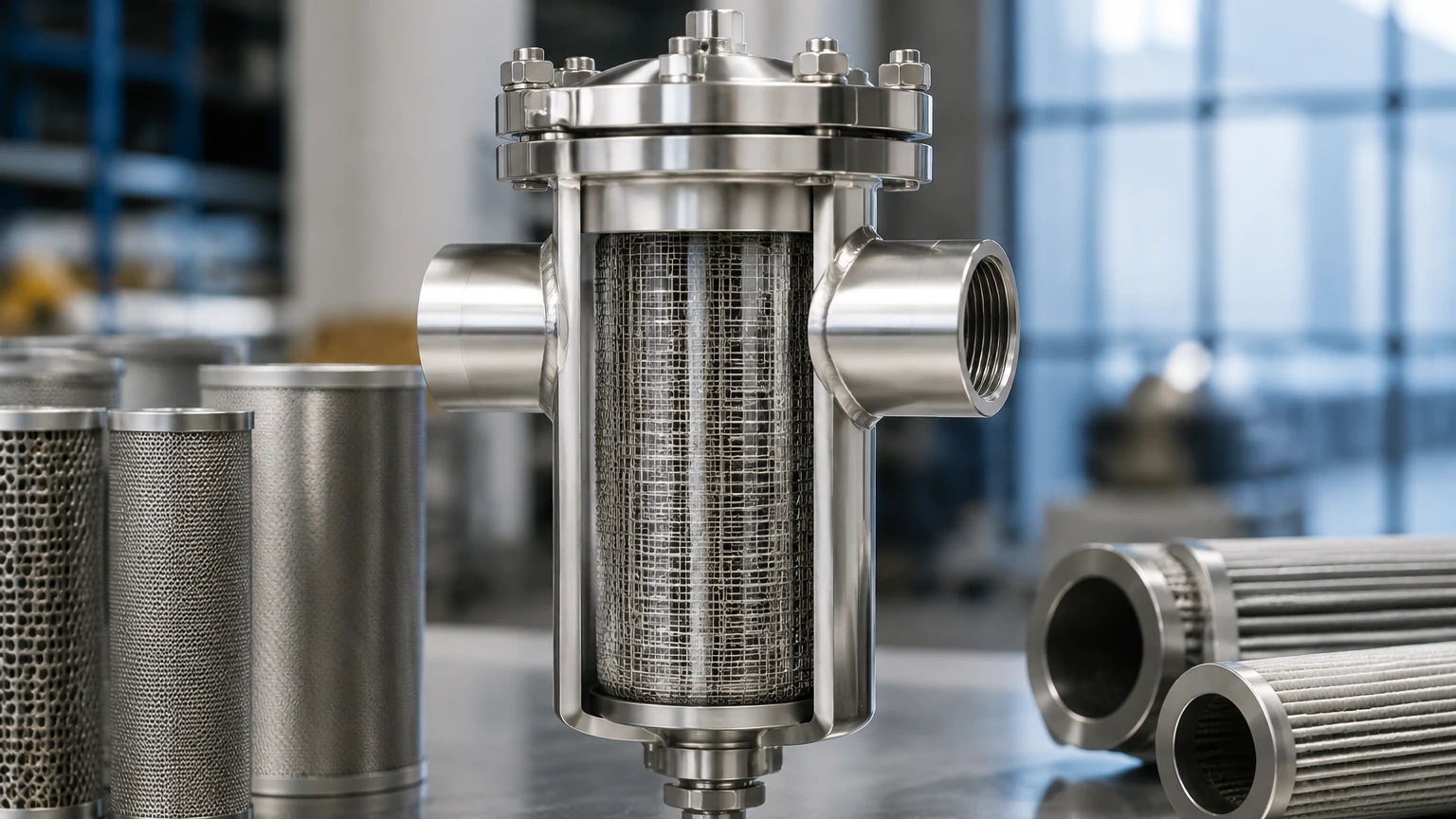
Customization and OEM Considerations
One of the primary advantages of working with a dedicated manufacturer like Kaifil is the ability to customize the filtro per acqua autopulente to fit existing infrastructure. Standard off-the-shelf units may not always align with specific piping layouts, space constraints, or unique fluid viscosities.
Customization options often include:
* Inlet/Outlet Orientation: Configuring the housing to match horizontal or vertical piping runs to minimize installation costs.
* Specialized Coatings: For highly abrasive fluids, internal components can be coated or hardened to extend service life.
* Bespoke Mesh Designs: Engineering a multi-layered sintered mesh that provides the exact balance of flow capacity and particle retention required for a specific process.
Engineers should consult the Main Page to explore how custom metal filter components can be integrated into larger filtration assemblies to meet stringent OEM requirements.
Total Cost of Ownership (TCO) and Maintenance
While the initial investment in a filtro per acqua autopulente is higher than that of a manual strainer or a bag filter system, the long-term economic benefits are substantial. The TCO analysis should include:
1. Labor Savings: Eliminating the need for technicians to manually open housings and clean elements reduces labor hours and exposure to potentially hazardous fluids.
2. Consumable Costs: Unlike cartridge or bag filters, which require regular replacement and disposal, the stainless steel elements in a self-cleaning filter are designed to last for years.
3. Process Continuity: By avoiding shutdowns for filter maintenance, facilities can maintain higher production rates and avoid the costs associated with restarting complex processes.
4. Water Conservation: Modern suction-scanning filters use less than 1% of the total flow for the cleaning cycle, making them more environmentally sustainable than traditional backwash systems.
Maintenance for these systems is typically limited to annual inspections of seals, gaskets, and moving parts. Because the system is self-cleaning, the internal mesh remains in optimal condition, provided the system was sized correctly for the solid loading of the influent water.
Conclusion: Selecting the Right Filtration Partner
Successfully implementing a filtro per acqua autopulente requires a deep understanding of both hydraulic engineering and material science. For technical professionals, the goal is to find a solution that balances filtration precision with operational robustness. By focusing on high-quality stainless steel construction and proven mechanical cleaning technologies, industrial facilities can ensure reliable water quality for their most critical processes.
When evaluating potential solutions, it is essential to partner with a manufacturer that offers not just a product, but engineering support. From initial material selection to the final design of customized filtration components, a collaborative approach ensures that the filter performs as expected in the most demanding industrial environments. For further technical details and to review available filtration options, visiting the Main Page of a specialist in stainless steel filtration is a recommended next step for any procurement or engineering team.
