


Fish Tank Filter Foam
In the field of aquatic life support systems and industrial water treatment, filtration is a multi-disciplinary engineering challenge. While often discussed in the context of hobbyist aquaria, the application of fish tank filter foam involves complex principles of fluid dynamics, material science, and microbiology. For engineers and technical procurement teams, understanding the technical specifications of filtration media is essential for optimizing system longevity and water clarity.
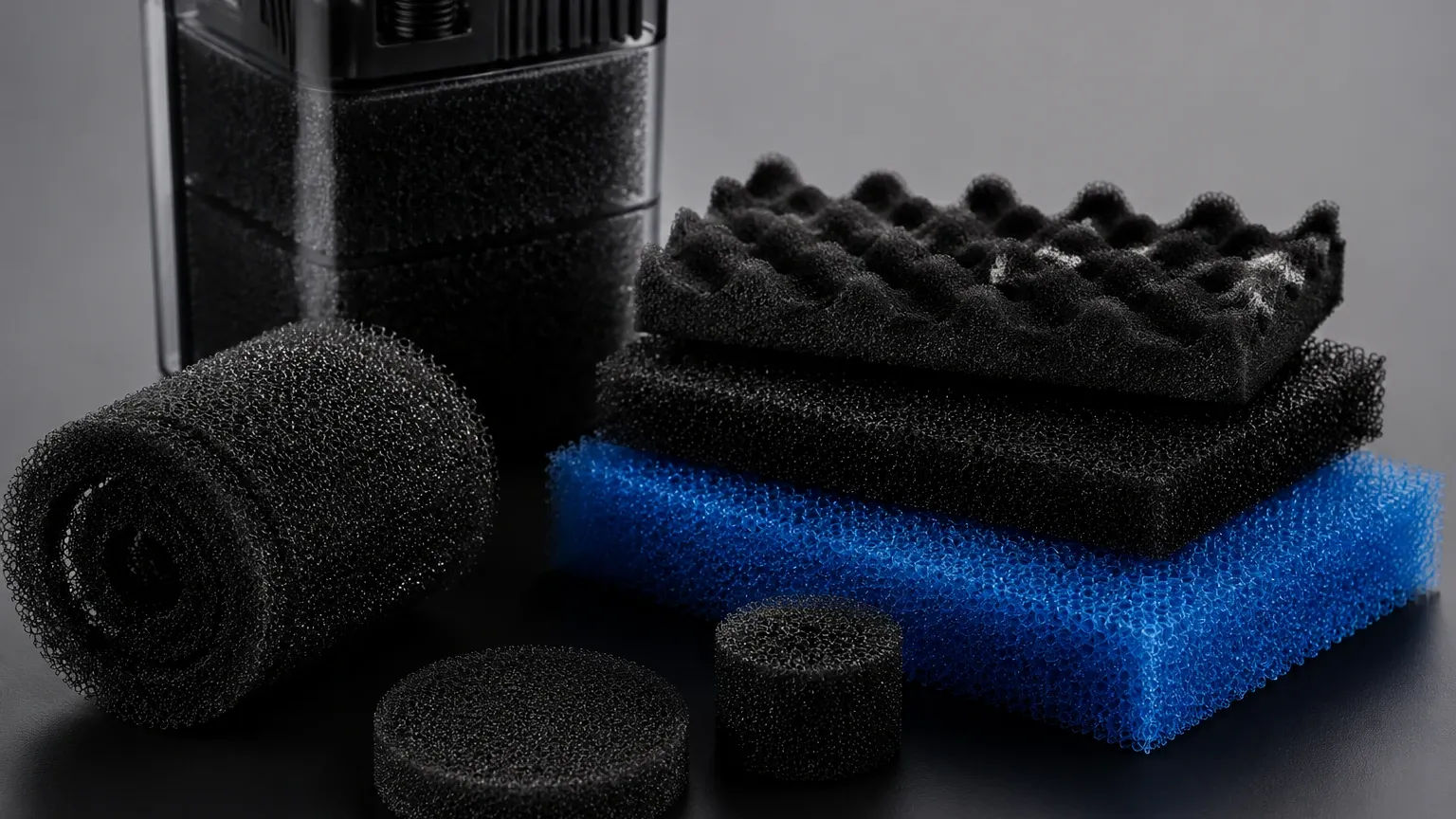
Filter foam, specifically reticulated polyurethane foam, serves as a primary mechanical and biological filtration medium. In large-scale aquatic systems, such as public aquariums, aquaculture facilities, and specialized industrial water loops, foam is frequently integrated with more robust components like stainless steel wire mesh filters to create a comprehensive filtration strategy. This article examines the engineering characteristics of fish tank filter foam, its performance metrics, and its role within professional filtration architectures.
The Material Science of Reticulated Foam
Fish tank filter foam is not a generic sponge material. In industrial and professional applications, it is typically a reticulated polyurethane foam. Reticulation is a manufacturing process—often involving a controlled thermal explosion or chemical etching—that removes the thin cell membranes within the foam structure. This leaves only the dodecahedral skeletal structure (the "struts"), creating an open-cell material with high porosity.
Pores Per Inch (PPI) and Porosity
The most critical technical specification for filter foam is its PPI (Pores Per Inch) rating. This metric determines the mechanical straining capability and the available surface area for biological colonization:
* 10–20 PPI (Coarse): These foams have large pores and are used for primary mechanical filtration. They trap large particulate matter (detritus, plant fragments) while maintaining a low pressure drop. They are less prone to clogging and are often used as the first stage in a multi-stage system.
* 30–45 PPI (Medium): This range provides a balance between mechanical straining and biological surface area. It can trap smaller particles but requires more frequent maintenance than coarse foam.
* Over 50 PPI (Fine): Fine foams act as "polishing" media, removing minute suspended solids to improve water transparency. However, they possess high hydraulic resistance and can clog rapidly if not preceded by coarser stages.
From an engineering perspective, the choice of PPI must be balanced against the pump's head pressure and the desired flow rate. A higher PPI increases the filtration efficiency for small particles but significantly increases the Delta P (pressure drop) across the filter element.
Mechanical Filtration Principles
Mechanical filtration using fish tank filter foam operates primarily through three mechanisms: straining, impingement, and sedimentation.
1. Straining: Particles larger than the pore size are physically blocked by the foam struts.
2. Impingement: As water twists through the complex internal paths of the reticulated foam, suspended particles collide with the struts and become trapped by surface tension or biofilm adhesion.
3. Sedimentation: Within the micro-environments of the foam, water velocity decreases locally, allowing heavier particles to settle out of the flow and remain within the foam matrix.
In professional systems, mechanical filtration is the first line of defense. If organic solids are not removed efficiently, they decompose, increasing the nitrogenous load on the biological system. For demanding industrial applications, engineers often pair foam with custom stainless steel filter cartridges. These metal components provide a rigid, high-strength pre-filtration stage that can be backwashed, protecting the foam media from heavy loading and extending the service interval of the entire system.
Biological Filtration and Surface Area Engineering
Beyond mechanical straining, fish tank filter foam serves as a substrate for nitrifying bacteria (primarily *Nitrosomonas* and *Nitrobacter*). These bacteria are responsible for the nitrogen cycle, converting toxic ammonia into nitrite and then into relatively harmless nitrate.
Specific Surface Area (SSA)
The effectiveness of biological filtration is directly proportional to the Specific Surface Area (SSA) available for biofilm development. Reticulated foam provides an immense internal surface area relative to its external volume.
* Biofilm Management: While a high SSA is desirable, engineers must account for the thickness of the biofilm. As bacteria multiply, they form a gelatinous matrix that can eventually bridge the gaps between foam struts. In high-load systems, a foam that is too fine (high PPI) may suffer from "bioclogging," where the biological growth itself restricts water flow, leading to anaerobic pockets and system failure.
* Oxygen Transfer: Nitrification is an aerobic process. The filtration system must ensure that oxygen-rich water reaches the deep interior of the foam. This is why maintaining a consistent flow rate and preventing bypass is critical in professional filter design.
Engineering Considerations: Flow Rate and Bypass
A common failure point in filtration systems is "bypass." This occurs when water takes the path of least resistance, flowing around the filter media rather than through it.
Gasket and Housing Integrity
In industrial water treatment, filter foam must be precisely fitted to its housing. Any gap between the foam and the vessel wall allows unfiltered water to recirculate. This is where the integration of precision metal components becomes vital. Using a stainless steel support frame or a custom-machined filter housing ensures that the foam is held under slight compression, eliminating bypass and ensuring 100% of the influent passes through the media.
Flux and Velocity
Flux, or the volume of water passing through a unit area of foam per unit of time (typically measured in GPM/ft² or m³/h/m²), must be carefully calculated. If the velocity is too high, particles trapped by impingement may be sheared off and pushed back into the effluent. Conversely, if the velocity is too low, the system may not achieve the necessary turnover rate to maintain water quality. Engineers must size the foam cross-section to maintain a laminar flow profile within the media whenever possible.
Maintenance and Total Cost of Ownership (TCO)
While fish tank filter foam is a consumable material, its lifespan and performance are dictated by maintenance protocols. In a B2B or industrial context, the Total Cost of Ownership (TCO) includes not just the material cost of the foam, but the labor required for cleaning and the energy costs associated with pump head loss.
* Cleaning Cycles: Foam should be cleaned using system water to preserve the nitrifying bacteria. Over time, the polyurethane material will undergo hydrolytic degradation, especially in systems with high ozone levels or extreme pH.
* Replacement Indicators: Foam should be replaced when it loses its "rebound" or elasticity. A compressed or deformed foam indicates that the skeletal struts are failing, which leads to permanent loss of porosity and increased bypass.
To optimize TCO, many facilities utilize a hybrid approach. By visiting the Main Page of a professional filtration manufacturer, engineers can source durable stainless steel wire mesh pre-filters. These metal filters can be cleaned indefinitely and remove the bulk of the solids, allowing the foam to function primarily as a biological stage, which significantly reduces the frequency of foam replacement and system downtime.
Comparing Foam to Industrial Metal Media
While fish tank filter foam is excellent for biological filtration and fine mechanical straining, it has limitations compared to industrial metal media, such as those produced by Kaifil.
| Feature | Reticulated Foam | Stainless Steel Wire Mesh |
| :— | :— | :— |
| Durability | Low (consumable) | High (permanent/semi-permanent) |
| Chemical Resistance | Moderate | Excellent |
| Temperature Range | Limited | High |
| Cleaning Method | Manual rinsing | Backwashing/Ultrasonic/Chemical |
| Structural Strength | Low (requires support) | High (self-supporting) |
| Filtration Precision | Nominal | Absolute/Nominal |
In many high-performance applications, the two materials are complementary. For example, in a pharmaceutical water loop or a high-end aquaculture system, a stainless steel filter cartridge might provide the 50-micron absolute filtration needed to protect sensitive downstream components, while a secondary foam stage provides the biological buffering required for the ecosystem.
Customization and OEM Solutions
For manufacturers of filtration equipment, sourcing the right media is only half the battle. The integration of that media into a functional, saleable product requires engineering expertise. Customization options for filtration systems include:
* Custom Geometric Profiles: Cutting foam or metal mesh to fit proprietary filter canisters.
* Layered Media Composites: Combining different PPI foams or combining foam with stainless steel mesh to create a gradient-density filter.
* Reinforced Structures: Adding internal skeletons to foam elements to prevent collapse under high-pressure conditions.
Kaifil specializes in these types of customized industrial filtration solutions. By providing precision-engineered stainless steel components, they help OEMs and industrial users build more reliable systems. Whether you are designing a new aquatic life support system or optimizing an existing industrial process, selecting the right combination of mechanical and biological media is paramount.
Conclusion
Fish tank filter foam remains a cornerstone of aquatic filtration due to its versatility and high surface area. However, its successful implementation in professional and industrial environments requires a deep understanding of PPI, flow dynamics, and material limitations. By treating foam as an engineered component rather than a simple sponge, and by integrating it with high-quality stainless steel filtration elements, technical professionals can achieve superior water quality and system efficiency.
For those seeking to enhance their filtration infrastructure with professional-grade components, it is advisable to Review product options and application support to find the right balance of durability and performance. Understanding the synergy between flexible media like foam and rigid media like stainless steel is the key to advanced fluid management.
