


Cartridge Filter for Dust Collector
In industrial environments, air quality management is not merely a regulatory requirement but a critical component of operational efficiency and equipment longevity. The cartridge filter for dust collector systems represents a significant evolution in filtration technology, offering a higher surface area-to-volume ratio compared to traditional baghouse systems. For engineers and procurement specialists, selecting the appropriate cartridge requires a deep understanding of material science, fluid dynamics, and the specific physical properties of the particulate matter being handled.
Industrial dust collection serves multiple purposes: protecting personnel from hazardous inhalants, preventing combustible dust explosions, recovering valuable product fines, and ensuring that exhaust air meets environmental standards. As manufacturing processes become more specialized, the demand for high-performance filtration components—particularly those constructed from durable materials like stainless steel—has increased. This guide examines the engineering principles, material considerations, and performance metrics essential for optimizing dust collection via cartridge-based systems.
The Evolution and Anatomy of Cartridge Filtration
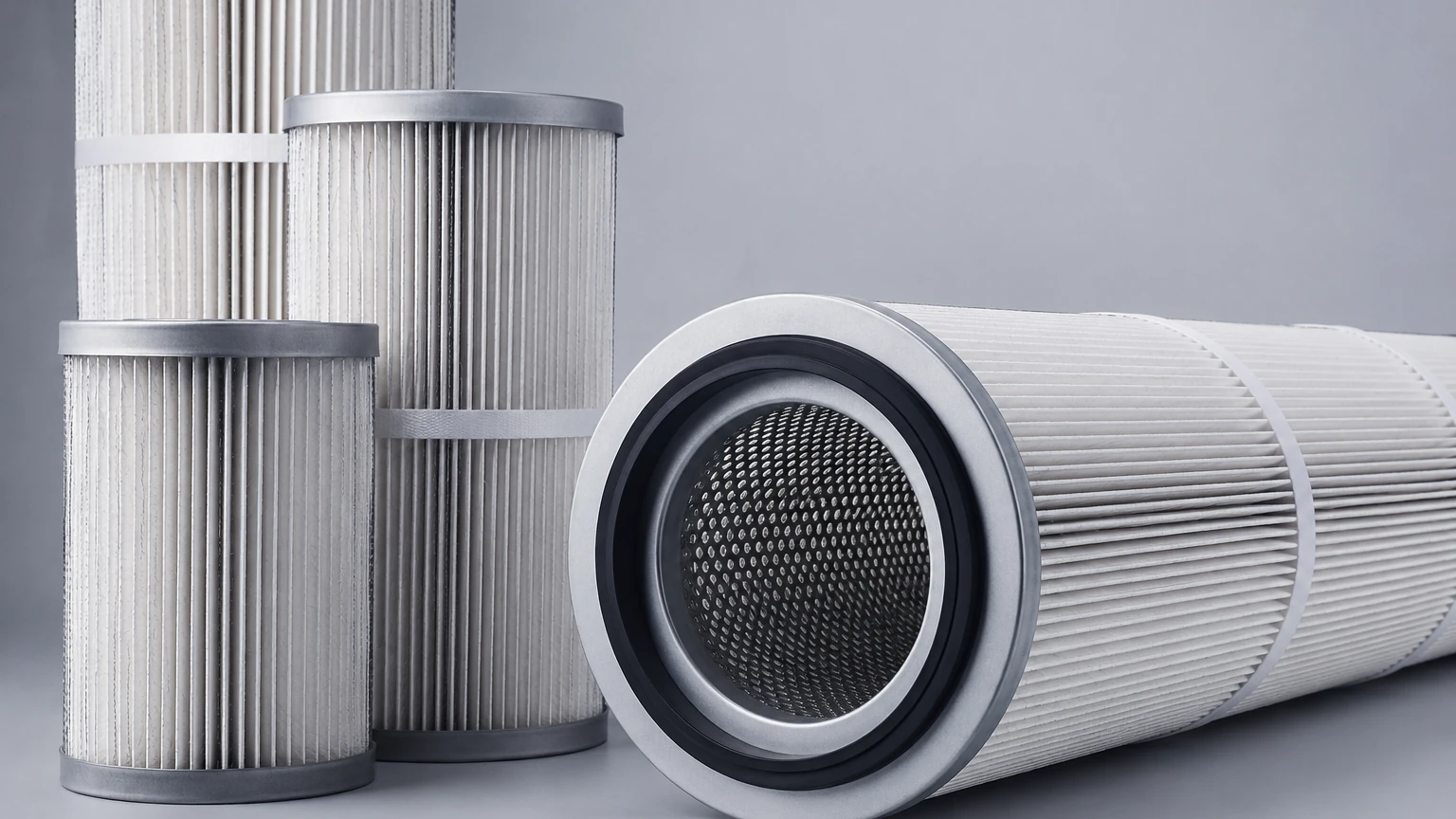
The transition from large-scale baghouses to compact cartridge collectors was driven by the need for higher filtration efficiency in smaller footprints. A standard cartridge filter for dust collector applications typically features a pleated design. This pleating significantly increases the available filtration surface area without increasing the external dimensions of the filter unit.
The structural integrity of these filters relies on several key components:
1. Filter Media: The primary barrier that captures dust. This can range from cellulose and synthetic blends to advanced stainless steel wire mesh for extreme environments.
2. Inner and Outer Support Cages: Usually made of perforated metal or expanded steel, these provide the mechanical strength to withstand high differential pressures and the stresses of pulse-jet cleaning.
3. End Caps: These seal the media and provide the interface for mounting. In demanding chemical or high-temperature applications, stainless steel end caps are preferred over molded plastic or galvanized steel.
4. Gaskets and Seals: Critical for preventing bypass, these must be compatible with the process temperature and chemical composition of the air stream.
By maximizing the surface area, cartridge filters allow for lower "can velocities" (the speed of the air moving through the collector housing), which reduces the risk of dust re-entrainment and extends the life of the media.
Engineering Considerations for Filter Media Selection
Selecting the right media for a cartridge filter for dust collector use is perhaps the most critical decision in the engineering process. The choice depends on particle size distribution, moisture content, temperature, and the chemical nature of the dust.
Synthetic and Cellulose Media
For standard ambient-temperature applications, cellulose (paper) or spunbond polyester is common. Cellulose is cost-effective but sensitive to moisture and chemicals. Spunbond polyester offers better durability and can be treated with PTFE (Polytetrafluoroethylene) membranes to improve dust cake release and achieve higher filtration efficiencies, often reaching MERV 15 or 16 ratings.
Stainless Steel Wire Mesh and Sintered Components
In specialized industrial sectors such as chemical processing, pharmaceuticals, and high-temperature metalworking, synthetic media often fails. This is where Kaifil’s expertise in stainless steel filtration becomes essential. Stainless steel wire mesh and sintered metal filters offer several advantages:
* Thermal Stability: While most synthetic filters are limited to temperatures below 250°F (121°C), stainless steel components can operate in environments exceeding 500°F (260°C).
* Chemical Resistance: In the presence of acidic or alkaline gases, stainless steel prevents the structural degradation that would cause synthetic media to brittle and tear.
* Mechanical Durability: Metal filters can withstand aggressive abrasive dust that would quickly erode softer materials.
For those seeking high-performance components for demanding environments, you can Review product options and application support on our Main Page to understand how customized metal filtration solutions integrate into existing dust collection frameworks.
Optimizing the Air-to-Cloth Ratio
The air-to-cloth (A/C) ratio, also known as the filtration velocity, is the volume of air passing through one square foot of filter media per minute (expressed in CFM/ft² or m/min). This metric is the primary determinant of a dust collector's success.
A common mistake in system design is specifying an A/C ratio that is too high. While this allows for a smaller, less expensive collector, it leads to several operational failures:
* High Pressure Drop: Excessive velocity forces dust deep into the media pores (depth loading) rather than allowing it to form a manageable cake on the surface.
* Shortened Filter Life: Frequent pulse-cleaning cycles are required to maintain flow, which mechanically stresses the media and leads to premature failure.
* Reduced Efficiency: High velocities can "drive" fine particles through the media, increasing emissions.
For a cartridge filter for dust collector systems, typical A/C ratios range from 0.5:1 to 3.0:1, depending on the dust type. Fine, fumed silica requires a much lower ratio than coarse wood sawdust. Engineering the correct ratio ensures that the pulse-jet cleaning system can effectively dislodge the dust cake without damaging the filter structure.
Pulse-Jet Cleaning and Maintenance Dynamics
Most modern cartridge collectors utilize a pulse-jet cleaning mechanism. This involves a high-pressure burst of compressed air directed down the center of the cartridge, momentarily reversing the airflow. This pulse causes the filter media to expand rapidly, shattering the accumulated dust cake and allowing it to fall into the collection hopper.
To ensure the longevity of a cartridge filter for dust collector applications, the cleaning system must be finely tuned. Factors to monitor include:
* Pulse Pressure: Usually between 60 and 90 psi. Too low, and the cake isn't removed; too high, and the media may be damaged.
* Pulse Duration: Typically measured in milliseconds. Brief, sharp pulses are more effective than long, sustained blasts.
* Differential Pressure (DP): This is the most important indicator of filter health. A rising DP that does not return to baseline after cleaning suggests that the filters are "blinded" or reaching the end of their service life.
In applications involving sticky or hygroscopic dust, surface-loading treatments or specialized stainless steel mesh configurations are used to ensure that the dust cake releases cleanly during the pulse cycle. Metal filters are particularly advantageous here as they can often be ultrasonically cleaned or chemically washed and reused, significantly lowering the total cost of ownership compared to disposable cartridges.
Addressing Common Risks: Abrasion and Corrosion
Industrial dust is rarely benign. In many B2B sectors, the particulate matter is either highly abrasive (such as glass cullet or metal grit) or chemically active. Standard cartridge filters often suffer from "necking" or erosion at the top of the pleats where the air enters the cartridge at high velocity.
To mitigate these risks, engineers should look for filters with reinforced headers and specialized pleat spacing. When dealing with corrosive vapors—common in chemical manufacturing—the choice of hardware is paramount. Using 304 or 316L stainless steel for the inner cores and end caps ensures that the filter remains structurally sound even if the media itself is subjected to harsh conditions. This prevents the catastrophic failure of a cartridge collapsing into the clean air plenum, which can lead to significant downstream equipment damage and unplanned downtime.
Customization and OEM Filtration Solutions
No two industrial processes are identical, and off-the-shelf filtration products often fall short of meeting specific engineering requirements. Customization in the design of a cartridge filter for dust collector systems allows for the optimization of every variable, from pleat count and depth to the specific alloy used in the support structure.
At Kaifil, we work closely with engineering teams to develop OEM solutions that address unique challenges, such as:
* Non-standard Dimensions: Fitting high-efficiency filtration into legacy housings or restricted spaces.
* Specialized Gasketing: Utilizing high-temperature silicone or chemical-resistant Viton to ensure a leak-proof seal.
* Integrated Pre-filtration: Incorporating stainless steel mesh layers to protect finer primary media from large, high-velocity debris.
By focusing on the technical requirements of the application rather than a one-size-fits-all approach, manufacturers can achieve higher filtration precision and better reliability. Detailed technical specifications and engineering support for these customized solutions are available on our Main Page.
Conclusion: Making Informed Purchasing Decisions
When evaluating a cartridge filter for dust collector systems, the focus should extend beyond the initial purchase price. The total cost of ownership is determined by filter lifespan, energy consumption (related to pressure drop), and the cost of maintenance downtime.
Engineers should confirm the following before finalizing a selection:
1. Particle Characteristics: Is the dust abrasive, explosive, or moisture-sensitive?
2. Operating Environment: What are the peak temperatures and potential chemical exposures?
3. System Constraints: Is the existing fan capacity sufficient for the expected pressure drop of the chosen media?
4. Regulatory Compliance: Does the filter efficiency meet local EPA or OSHA standards for the specific particulate in question?
By prioritizing high-quality materials, such as precision-engineered stainless steel components, and ensuring the filter design is matched to the specific air-to-cloth requirements of the process, industrial facilities can maintain a clean, safe, and efficient working environment. Professional filtration solutions provide the reliability needed to keep critical processes running without the frequent interruptions caused by sub-standard filtration components.
