


Fludized Bed Reactor
In the realm of industrial chemical engineering and process technology, the fludized bed reactor stands as a cornerstone for high-efficiency reactions. These systems are utilized across a vast spectrum of industries, from petrochemical refining and pharmaceutical manufacturing to food processing and waste-to-energy conversion. The core advantage of a fludized bed reactor lies in its ability to facilitate intense contact between a fluid phase (gas or liquid) and a solid phase (usually a catalyst or reactant), resulting in superior heat and mass transfer rates compared to fixed-bed alternatives.
However, the operational success of these reactors is heavily dependent on the precision and durability of their internal components, particularly the filtration and distribution systems. For engineers and procurement teams, understanding the technical nuances of filtration within these environments is essential for optimizing yield, ensuring product purity, and extending the service life of the equipment.
Fundamentals of Fludized Bed Reactor Technology
A fludized bed reactor operates on the principle of fluidization. This process occurs when a fluid is passed upward through a bed of granular solid material at a velocity high enough to suspend the solids. At this point, the solid particles behave like a boiling liquid, exhibiting fluid-like properties such as the ability to flow and take the shape of the container.
The transition from a static bed to a fluidized state is defined by the "minimum fluidization velocity." Once this threshold is crossed, the bed expands, and the particles begin to move turbulently. This turbulence is precisely what makes the fludized bed reactor so effective; it eliminates temperature gradients and ensures that every particle is exposed to the fluid phase uniformly.
From an engineering perspective, maintaining this state requires a delicate balance of pressure, flow rate, and particle size distribution. If the filtration system at either the inlet (the distributor) or the outlet (the particle retention system) fails to perform with high accuracy, the fluidization quality can degrade, leading to "channeling" or "slugging," which significantly reduces reaction efficiency.
The Role of High-Precision Filtration in Reactor Performance
In any fludized bed reactor, filtration serves two primary roles: distribution and retention.
1. Fluid Distribution
At the base of the reactor, a distributor plate (or plenum) is used to introduce the fluidizing medium. The goal is to achieve an even flow across the entire cross-section of the bed. If the distribution is uneven, some areas of the bed may remain static while others experience excessive velocity. High-quality stainless steel wire mesh or sintered metal plates are often used here because they provide controlled permeability and high mechanical strength to support the weight of the solid bed.
2. Particle Retention and Catalyst Recovery
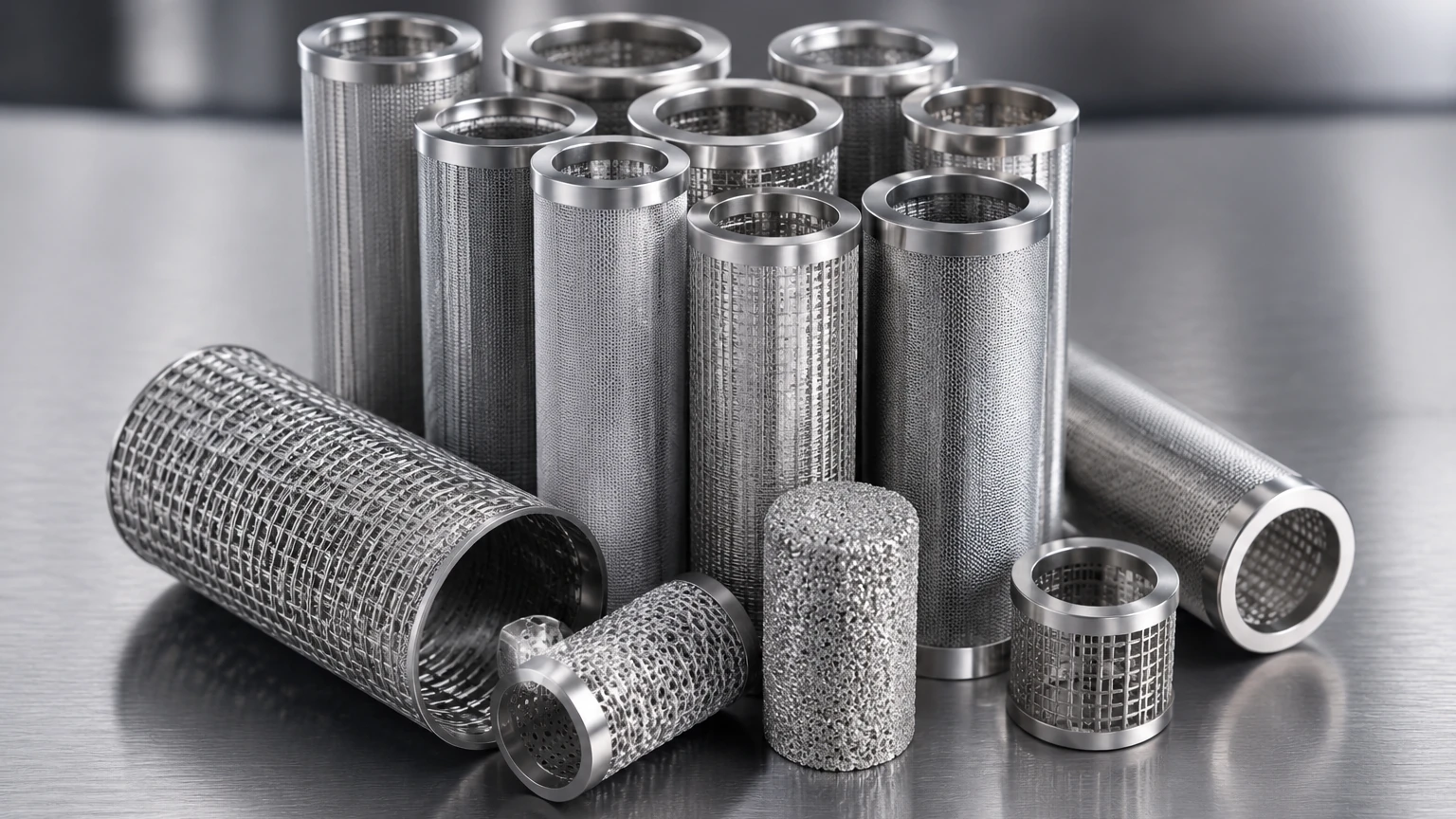
As the fluid exits the top of the reactor, it often carries fine particles—either the catalyst itself or the reaction product—out of the bed. To prevent the loss of expensive catalysts and to protect downstream equipment from abrasion and contamination, high-efficiency filtration is required. Sintered metal filter cartridges are the industry standard for this application. They are designed to capture sub-micron particles while maintaining a low pressure drop, ensuring that the fludized bed reactor remains pressurized within its design limits.
For those looking to explore specific filtration components, the Main Page of a specialized manufacturer like Kaifil provides a comprehensive overview of the technical options available for these demanding environments.
Engineering Considerations for Distributor Plates and Exhaust Filters
When specifying filtration components for a fludized bed reactor, engineers must look beyond simple pore size. Several critical factors influence the selection process:
Pressure Drop (ΔP)
The pressure drop across a filter or distributor plate is a vital metric. In a fluidized system, the distributor must provide enough resistance to ensure uniform flow distribution, but not so much that it requires excessive pumping or compression power. Conversely, exhaust filters must maintain the lowest possible pressure drop to avoid back-pressuring the reactor, which could disrupt the fluidization state. Sintered wire mesh is often preferred because its structured layers allow for high flow rates with minimal resistance.
Mechanical Integrity and Erosion Resistance
The environment inside a fludized bed reactor is inherently abrasive. Solid particles are constantly colliding with the internal surfaces and the filter media. Over time, this can lead to erosion. Stainless steel filters, particularly those made from sintered multi-layer wire mesh, offer the structural rigidity needed to withstand this mechanical stress without shedding metallic particles into the process stream.
Thermal Stability
Many fluidized bed reactions, such as catalytic cracking or gasification, occur at extremely high temperatures. Standard polymer-based filters would fail instantly. Stainless steel and other high-performance alloys can operate continuously at temperatures exceeding 500°C (and much higher with specialized alloys), maintaining their pore geometry and structural strength.
Material Selection for Corrosive and High-Temperature Environments
The choice of material for a fludized bed reactor filter is dictated by the chemical composition of the process fluid and the operating temperature.
* 304/304L Stainless Steel: Suitable for general applications where corrosion is not a primary concern but high mechanical strength is required.
* 316L Stainless Steel: The standard for most chemical and pharmaceutical applications. The addition of molybdenum provides superior resistance to chlorides and organic acids.
* 904L and Hastelloy: In highly aggressive environments involving strong acids or high-temperature oxidation, these exotic alloys are used to prevent premature filter failure.
At Kaifil, the focus is on providing customized industrial filtration solutions that match these specific material requirements. By utilizing advanced manufacturing techniques, it is possible to create filter cartridges and mesh components that are tailored to the exact chemical and thermal profile of a client's fludized bed reactor.
Operational Maintenance: Cleaning and Longevity of Metal Filters
One of the most significant advantages of using metal filtration in a fludized bed reactor is the ability to clean and reuse the components. Unlike disposable filters, sintered metal filters can be integrated into an automated cleaning cycle, such as "backpulsing" or "backwashing."
Backpulsing Techniques
In many gas-phase reactors, a high-pressure pulse of gas is sent in the reverse direction through the filter. This dislodges the "filter cake" that has built up on the surface, allowing it to fall back into the reactor bed. This process is critical for maintaining a steady-state pressure drop and ensuring continuous operation without the need for frequent shutdowns.
Ultrasonic and Chemical Cleaning
During scheduled maintenance, filters can be removed and subjected to ultrasonic cleaning or chemical baths to remove deeply embedded contaminants. This restores the original permeability of the media. When evaluating the total cost of ownership (TCO) for a fludized bed reactor, the longevity of cleanable stainless steel filters often makes them more cost-effective than cheaper, disposable alternatives that require frequent replacement and cause process downtime.
Customizing Filtration Solutions for Industrial FBR Applications
Every fludized bed reactor is unique. Factors such as the vessel diameter, the density of the solid particles, the viscosity of the fluid, and the desired residence time all influence the design of the filtration system.
Custom Mesh Sintering
For distributor plates, engineers may require a specific number of layers of wire mesh sintered together to achieve a precise thickness and permeability. This customization ensures that the fluidization is uniform across the entire bed, preventing "dead zones" where the catalyst might settle and deactivate.
OEM and Bespoke Filter Cartridges
For exhaust systems, the geometry of the filter housing often dictates the size and shape of the filter cartridges. Custom-designed cartridges with specific end-fittings (such as threaded, flange, or 222/226 connections) allow for seamless integration into existing reactor designs. Manufacturers like Kaifil work closely with global customers to develop these high-performance components, ensuring they meet the specific accuracy and durability requirements of the application.
Conclusion: Optimizing Your Reactor Strategy
The fludized bed reactor remains a vital tool for modern industry, offering unparalleled efficiency in heat and mass transfer. However, the reliability of these systems is inextricably linked to the quality of their filtration and distribution components. By selecting the right materials, engineering for the correct pressure drop, and implementing robust cleaning protocols, companies can significantly improve their process outcomes.
When planning a new installation or upgrading an existing fludized bed reactor, it is crucial to consult with filtration experts who understand the rigors of industrial processing. Confirming details such as filtration accuracy, material compatibility, and mechanical load-bearing capacity before purchase will prevent costly operational failures. For more information on high-performance stainless steel filtration components, visiting the Main Page is a recommended first step for engineers and purchasing teams seeking reliable, customized solutions.
