


Sintered Steel Filter
In industrial filtration, the requirement for components that can withstand extreme temperatures, high pressures, and corrosive environments has led to the widespread adoption of the sintered steel filter. Unlike traditional fabric or polymer-based media, sintered metal filters are engineered through a thermal bonding process that creates a rigid, porous structure capable of precise particulate separation. For engineers and procurement teams, understanding the nuances of sintered steel technology is essential for optimizing system performance and reducing long-term operational costs.
As a specialized manufacturer, Kaifil provides a range of custom stainless steel filtration solutions designed to meet the rigorous demands of chemical processing, pharmaceuticals, and heavy industry. Navigating the selection of these components requires a deep dive into material science, fluid dynamics, and mechanical engineering principles.
Understanding Sintered Steel Filter Technology
The term "sintering" refers to a metallurgical process where metal powders or layers of wire mesh are heated in a controlled-atmosphere furnace to a temperature just below their melting point. This causes the contact points of the metal particles or wires to bond through a process of molecular diffusion. The result is a monolithic structure that retains the porosity of the original material but gains significant mechanical strength and thermal stability.
Sintered Metal Powder vs. Sintered Wire Mesh
There are two primary types of sintered steel filters used in industrial applications, each offering distinct advantages based on the filtration mechanism required:
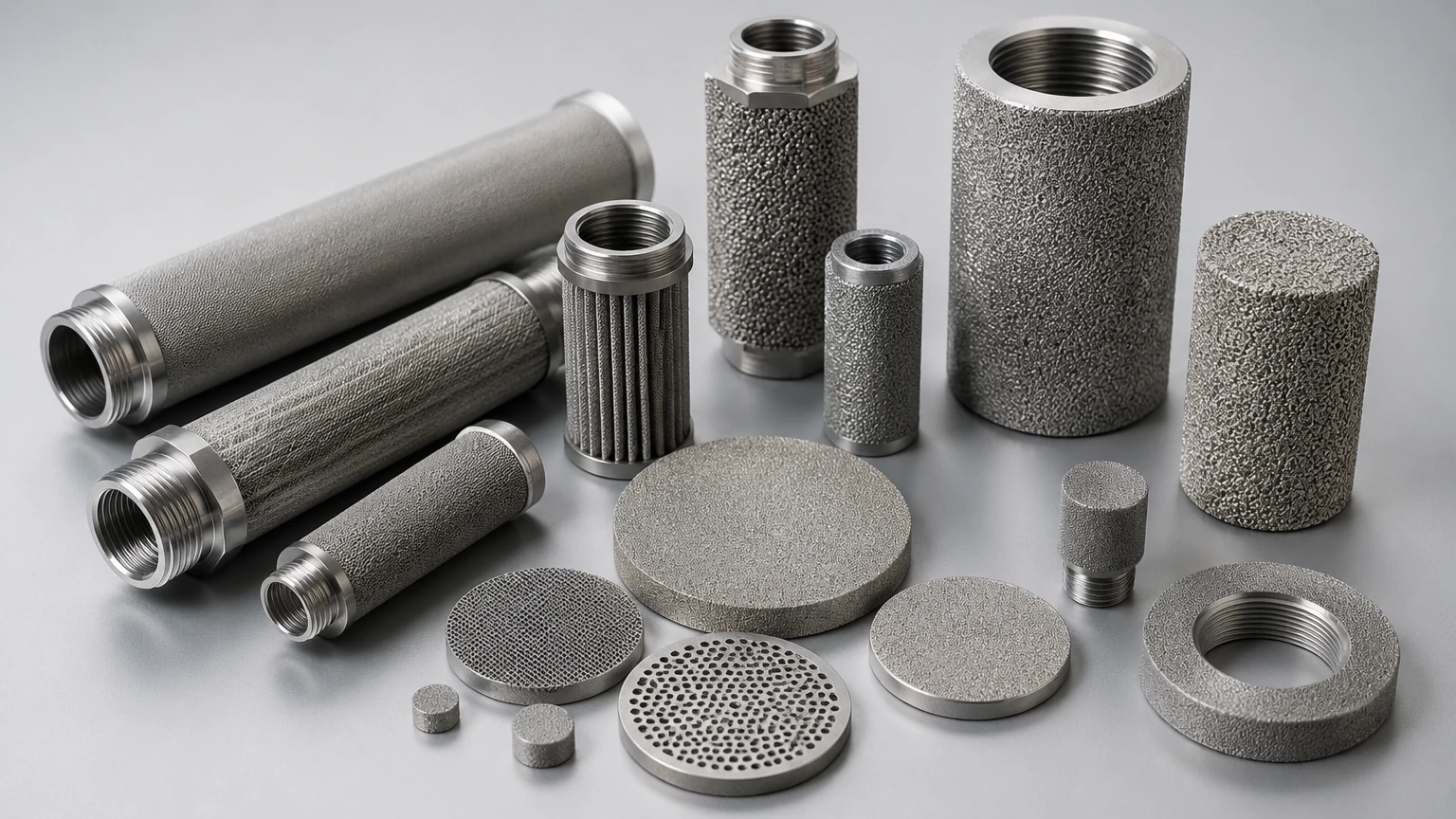
1. Sintered Metal Powder Filters: These are produced by compacting stainless steel powder into a mold and then sintering it. This creates a "depth filtration" media where particles are trapped within the tortuous paths of the porous structure. They are ideal for high-pressure applications and applications requiring very fine micron ratings (down to 0.5 microns).
2. Sintered Wire Mesh Filters: These consist of multiple layers of stainless steel wire cloth (often ranging from 2 to 7 layers) that are laminated and sintered together. This structure provides "surface filtration," where particles are caught on the outermost layer. Sintered mesh offers superior permeability and is easier to clean via backwashing compared to powder-based media.
For technical teams exploring these options, the Main Page of the Kaifil website offers detailed specifications on the structural differences and performance metrics of these two categories.
Key Evaluation Criteria for Engineers
When specifying a sintered steel filter, engineers must look beyond simple dimensions. The performance of the filter within a hydraulic or gas system is dictated by several critical variables.
Micron Rating: Absolute vs. Nominal
One of the most common points of confusion in filter procurement is the distinction between nominal and absolute micron ratings. A nominal rating refers to the ability of the filter to retain a major percentage (usually 60% to 90%) of particles of a specific size. In contrast, an absolute rating indicates the diameter of the largest hard spherical particle that will pass through the filter under specified test conditions. For critical applications, such as catalyst recovery or pharmaceutical sterile venting, an absolute rating is mandatory to ensure process integrity.
Permeability and Pressure Drop (Delta P)
Permeability is a measure of how easily a fluid can pass through the filter media. In a B2B industrial context, the goal is often to maximize flow while minimizing the initial pressure drop. A high initial pressure drop reduces the available service life of the filter, as the system will reach its terminal pressure drop (the point where the filter must be cleaned or replaced) much faster. Sintered steel filters are favored because their rigid structure prevents "pore blinding" or compression under high flow velocities, maintaining consistent permeability throughout the cycle.
Mechanical Strength and Fatigue Resistance
Sintered steel filters are often subjected to cyclic loading, especially in systems with frequent pump starts or backpulsing cycles. The structural integrity of the sinter bonds is paramount. Low-quality sintering can lead to media migration—where small fragments of the filter material break off and contaminate the downstream fluid. High-quality manufacturing ensures that the filter can withstand high differential pressures (often exceeding 200 bar in specialized hydraulic applications) without deformation.
Industrial Applications and Compatibility
The versatility of the sintered steel filter makes it a staple in sectors where failure is not an option. Its material properties—primarily using 304 or 316L stainless steel—provide a broad range of chemical compatibility.
Chemical and Petrochemical Processing
In the chemical industry, filters must handle aggressive solvents, acidic solutions, and high-temperature gases. Sintered 316L stainless steel is the industry standard due to its molybdenum content, which provides enhanced resistance to pitting and crevice corrosion in chloride-rich environments. Common applications include the filtration of polymer melts, catalyst recovery from slurry streams, and gas-solid separation in fluidized beds.
Food, Beverage, and Pharmaceuticals
For these industries, the primary concern is hygiene and cleanability. Sintered steel filters are non-shedding and can be polished to meet stringent sanitary standards. They are frequently used for steam filtration (to ensure "culinary grade" steam), sparging (introducing gases into liquids), and sterile air venting for storage tanks. Because they can be sterilized in place (SIP) or cleaned in place (CIP), they offer a more sustainable alternative to disposable plastic cartridges.
Hydraulic and Power Generation
In high-pressure hydraulic systems, sintered metal components protect sensitive valves and actuators from particulate wear. In power plants, they are used for oil filtration in turbines and for water treatment in boiler feed systems. The ability to operate at temperatures exceeding 450°C (842°F) allows these filters to function in environments where synthetic fibers would melt or degrade.
Customization and Engineering Considerations
Off-the-shelf solutions rarely meet the specific needs of complex industrial systems. Customization is often required to balance filtration efficiency with the physical constraints of the machinery. When working with a manufacturer like Kaifil, engineers should consider the following customization factors:
* Alloy Selection: While 316L is common, extreme environments may require exotic alloys like Hastelloy (for high acid resistance), Monel (for hydrofluoric acid), or Inconel (for extreme high-temperature oxidation resistance).
* End Fittings: Custom filters can be manufactured with specific connectors, such as NPT threads, flange mounts, or specialized O-ring seals (222, 226, or SOE configurations) to ensure a leak-proof fit within existing housings.
* Pleating: To increase the effective filtration area without increasing the overall footprint of the filter, the sintered media can be pleated. This is particularly useful for gas filtration where high flow rates are required.
Operational Longevity and Maintenance
One of the most significant advantages of a sintered steel filter is its reusability. While the initial capital expenditure (CAPEX) is higher than that of disposable filters, the total cost of ownership (TCO) is often lower due to the extended service life and reduced waste.
Cleaning Methods
To restore the permeability of a sintered filter, several professional cleaning methods can be employed:
* Backwashing/Backpulsing: Reversing the flow of fluid through the filter to dislodge surface cake. This is common in automated process systems.
* Ultrasonic Cleaning: Using high-frequency sound waves in a cleaning solvent to remove deeply embedded particles from the porous matrix.
* Chemical Cleaning: Using acids, caustic solutions, or specialized detergents to dissolve organic or inorganic deposits.
* Thermal Burn-off: Heating the filter to high temperatures to oxidize organic contaminants (common in polymer filtration).
Determining Replacement Cycles
Despite their durability, sintered filters are not infinite. Over time, repeated cleaning cycles and mechanical stress can lead to a gradual increase in the "clean" pressure drop. Engineers should monitor the time it takes for the filter to reach its terminal pressure drop after each cleaning. A significant shortening of this cycle indicates that the internal pores are becoming permanently occluded, necessitating a replacement.
Common Risks and Procurement Pitfalls
When sourcing a sintered steel filter, several risks can compromise the safety and efficiency of the operation.
1. Material Grade Verification: Inexpensive imports may claim to be 316L but may lack the necessary nickel or molybdenum content, leading to premature corrosion. Always request material test reports (MTRs).
2. Inconsistent Porosity: Poor manufacturing control can lead to "thin spots" in the filter media, where the pore size is larger than specified, allowing bypass of contaminants.
3. Inadequate Sintering: If the furnace temperature or time is not precisely controlled, the bonds between particles will be weak. This leads to structural failure under pressure or media migration into the process stream.
Conclusion: Technical Confirmation Before Purchase
Before proceeding with a procurement or design phase, technical professionals should confirm the specific operating parameters of their application. This includes the maximum operating temperature, the chemical composition of the fluid, the required absolute micron rating, and the maximum allowable pressure drop.
By partnering with a manufacturer that understands these engineering constraints, companies can ensure they receive a filtration solution that provides reliable performance and long-term durability. For those seeking to review specific product options and application support, the Main Page serves as a technical resource for high-performance stainless steel filtration components.
