


Foam Ac Filter
In industrial HVAC and equipment cooling systems, the selection of filtration media is a critical engineering decision that impacts both air quality and mechanical longevity. A foam ac filter is a common primary or pre-filtration component used to capture large particulate matter, protecting sensitive internal components from dust, lint, and debris. While often perceived as a simple consumable, the technical specifications of foam filtration media—ranging from pore density to chemical compatibility—dictate its performance in demanding industrial environments.
For engineers and procurement teams, understanding the intersection between standard foam media and high-performance alternatives, such as the stainless steel filtration solutions offered on the Main Page, is essential for optimizing system uptime. This guide explores the technical nuances of foam AC filters, their industrial applications, and the criteria for selecting the right filtration media for specific environmental challenges.
Technical Composition: Reticulated Polyurethane Foam
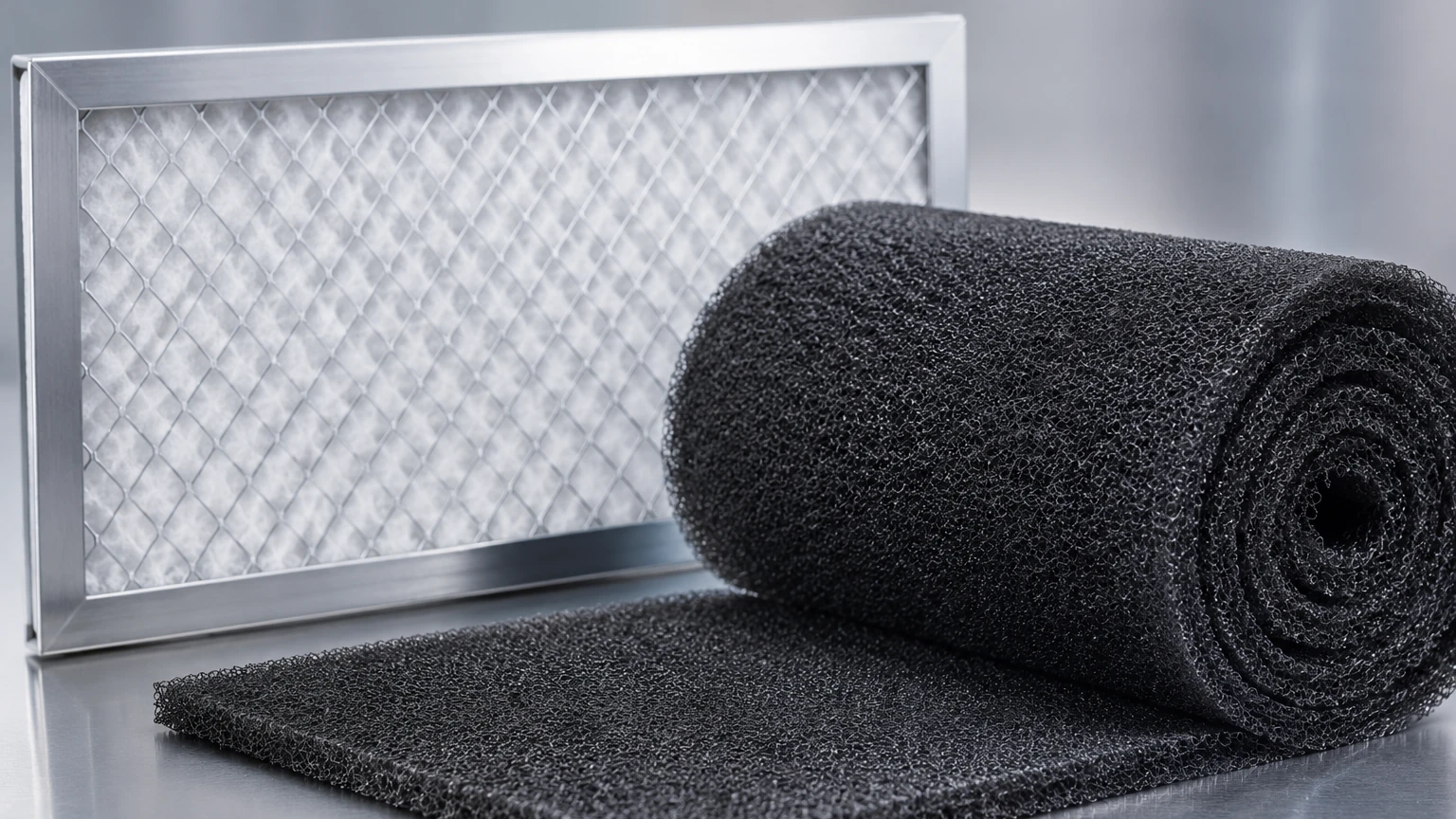
The majority of industrial foam AC filters are constructed from reticulated polyurethane foam. Unlike standard "closed-cell" foam used in packaging, reticulated foam undergoes a manufacturing process—often thermal or chemical—that removes the thin membranes (or "windows") between the cell structures. This leaves behind a three-dimensional skeletal matrix of dodecahedron-shaped cells.
This open-cell structure is vital for air filtration because it allows for high porosity (often up to 97% void volume), which facilitates significant airflow with minimal resistance. In an industrial AC context, this structure provides a deep loading capacity, meaning the filter can trap particles throughout its entire thickness rather than just on the surface. This depth-loading characteristic is what distinguishes a high-quality foam ac filter from flat, surface-loading media like paper or certain non-woven synthetics.
Evaluating PPI: Pores Per Inch and Filtration Efficiency
The primary metric for defining the performance of a foam ac filter is PPI, or Pores Per Inch. This measurement determines the density of the skeletal matrix and, consequently, the size of the particles the filter can effectively intercept.
1. 10 to 20 PPI (Coarse): These filters offer the lowest resistance to airflow and are typically used as pre-filters in heavy-duty industrial machinery. They are effective at capturing large debris, such as wood chips, metal shavings, or large lint particles.
2. 30 to 45 PPI (Standard): This is the most common range for industrial and commercial AC units. It provides a balance between dust-holding capacity and pressure drop, effectively capturing common atmospheric dust.
3. 60 to 100 PPI (Fine): Higher PPI foam is used in applications requiring greater filtration efficiency. However, as PPI increases, the initial pressure drop also rises, requiring more powerful fan systems to maintain the necessary CFM (Cubic Feet per Minute).
Engineers must calculate the Face Velocity of the air moving through the filter to ensure that the chosen PPI does not cause an excessive pressure drop, which could lead to motor strain or reduced cooling efficiency in the HVAC system.
Industrial Environmental Compatibility
While foam is a versatile material, its performance is highly dependent on the environment in which the AC system operates. Industrial facilities often present challenges that standard residential foam filters cannot withstand.
Thermal Stability
Standard polyurethane foam typically has a maximum continuous operating temperature of approximately 90°C to 100°C (194°F to 212°F). In high-heat industrial processes or near heavy machinery exhausts, foam may lose its structural integrity, leading to "shedding" where the foam itself breaks down and enters the airstream. In such cases, transitioning to metal mesh filters or custom stainless steel components is often necessary to ensure system safety.
Chemical and UV Resistance
Foam AC filters are susceptible to degradation when exposed to certain solvents, oils, and UV radiation. In chemical processing plants or outdoor air intake units, the polyurethane matrix can become brittle or "tacky" over time. For applications involving corrosive vapors or constant sunlight, engineers often specify UV-stabilized foam or opt for more durable materials like stainless steel wire mesh, which offers superior resistance to oxidation and chemical attack.
Comparing Foam to Stainless Steel Filtration Media
When evaluating filtration for the long term, purchasing teams often compare the foam ac filter against stainless steel alternatives. While foam is cost-effective for low-stakes applications, stainless steel filtration solutions provide distinct advantages in heavy-duty industrial cycles.
* Durability: Foam filters are prone to tearing and degradation over multiple cleaning cycles. Stainless steel mesh is rigid and can withstand high-pressure washdowns and mechanical stress without losing its filtration profile.
* Fire Safety: In many industrial sectors, fire-retardant materials are mandatory. While some foam filters are treated with flame retardants (meeting UL 94 standards), stainless steel is inherently non-combustible.
* Precision: For applications requiring exact micron ratings, custom-engineered metal filters provide a level of consistency that foam—due to the variability in the reticulation process—cannot always match.
For facilities looking to reduce their replacement frequency and improve the sustainability of their filtration systems, reviewing the customized metal filtration options on the Kaifil Main Page can provide a more robust alternative to standard foam media.
Customization and OEM Engineering Considerations
Industrial equipment manufacturers (OEMs) rarely use "off-the-shelf" filter sizes. A custom foam ac filter must be engineered to fit specific housing dimensions to prevent air bypass—a phenomenon where air flows around the filter rather than through it, rendering the filtration system ineffective.
Frame and Support Structures
Because foam is flexible, it often requires a rigid frame or a support grid to prevent it from collapsing under the force of the airflow. Common configurations include:
* Internal Wire Frames: A galvanized or stainless steel wire is sewn into the perimeter of the foam.
* Aluminum Casing: The foam is housed in a permanent aluminum frame with a mesh backing for added rigidity.
* Pad-Only: In some low-velocity applications, a simple foam pad is held in place by the equipment's existing intake grilles.
When specifying a custom filter, engineers should confirm the exact thickness required (typically ranging from 1/4 inch to 2 inches) and whether the application requires a graduated density—where a coarse foam is bonded to a fine foam to create a multi-stage filter in a single component.
Maintenance, Cleaning, and Total Cost of Ownership
One of the primary selling points of a foam ac filter is that it is often washable and reusable. However, the cleaning process must be handled correctly to maintain the filter's efficiency. Industrial maintenance teams should use low-pressure water or compressed air to remove trapped dust. The use of harsh detergents can break down the polyurethane bonds, leading to premature failure.
Replacement Cycles
Despite being washable, foam filters have a finite lifespan. Over time, the cells can become permanently clogged with fine particulates that cannot be washed away, leading to a permanent increase in pressure drop. In a B2B context, the Total Cost of Ownership (TCO) should be calculated by factoring in the labor costs of cleaning versus the cost of replacement. In many high-labor-cost environments, it is more economical to use high-capacity metal filters that require less frequent intervention or to implement a scheduled replacement program for foam media.
Conclusion: Making an Informed Selection
Selecting the right foam ac filter requires a balance of airflow requirements, filtration efficiency, and environmental durability. For standard air handling units in clean environments, reticulated foam provides an excellent, cost-effective solution. However, for engineers dealing with extreme temperatures, corrosive chemicals, or the need for high-precision filtration, the limitations of foam must be acknowledged.
By understanding the PPI ratings, material constraints, and the benefits of integrated metal support, purchasing teams can ensure their HVAC systems operate at peak efficiency. For those seeking advanced, durable filtration components that go beyond the capabilities of standard foam, exploring professional stainless steel and wire mesh solutions is the next logical step in optimizing industrial filtration performance.
To explore a wider range of high-performance filtration components and custom OEM solutions, Review product options and application support to find the ideal match for your specific industrial requirements.
