


Rotary Vacuum Filtration
Rotary vacuum filtration (RVF) represents one of the most reliable and continuous methods for liquid-solid separation in large-scale industrial processing. Unlike batch filtration systems that require downtime for cake removal, a rotary vacuum filter operates on a continuous cycle, making it indispensable for industries where high-volume throughput and consistent output are critical. For engineers and procurement specialists, understanding the mechanical nuances, material requirements, and performance variables of these systems is essential for optimizing operational efficiency and reducing the total cost of ownership.
In the context of modern industrial filtration, the choice of filter media—the interface where the actual separation occurs—is often the determining factor in the system’s success. While many systems historically utilized synthetic cloths, the shift toward stainless steel wire mesh and precision metal components has gained momentum due to their superior durability and resistance to harsh processing environments. As a manufacturer specializing in these high-performance components, Kaifil emphasizes the technical alignment between the filter media and the specific demands of the rotary vacuum process.
Understanding the Principles of Rotary Vacuum Filtration
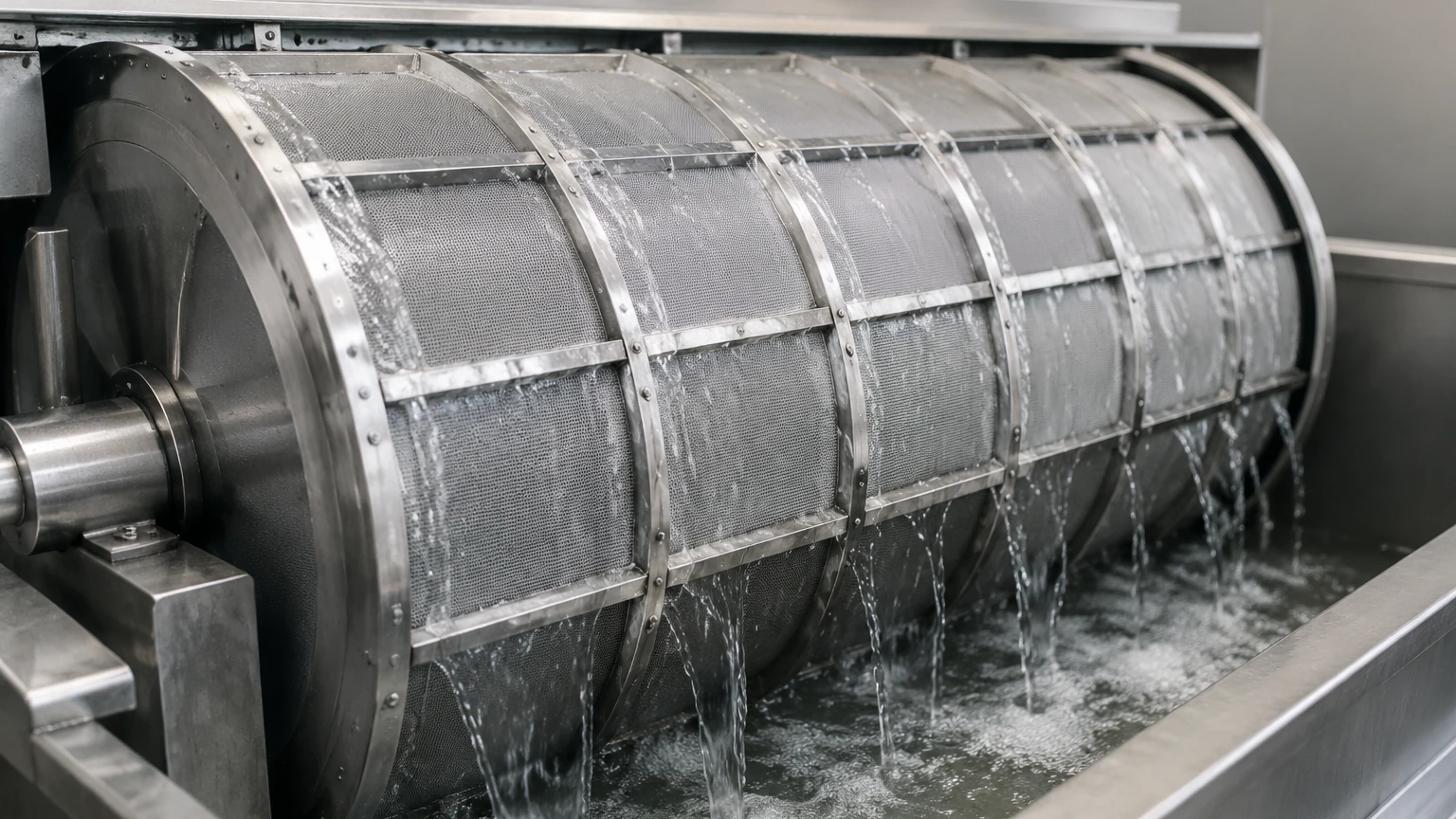
At its core, rotary vacuum filtration relies on a pressure differential created by a vacuum pump to pull liquid through a filter medium while retaining solids on the surface. The equipment typically consists of a large horizontal drum covered with a filter medium. This drum is partially submerged in a vat or trough containing the slurry.
As the drum rotates, it passes through several distinct functional zones:
1. Cake Formation Zone: The submerged portion of the drum is under vacuum. Liquid (filtrate) is drawn through the filter medium into the internal piping of the drum, while solids accumulate on the exterior surface to form a "filter cake."
2. Washing and Drying Zone: As the drum emerges from the slurry, the vacuum continues to pull air or wash liquid through the cake. This removes residual impurities and reduces the moisture content of the solids.
3. Discharge Zone: Once the cake has reached the desired dryness, it is removed from the drum surface. Methods for discharge vary, including scraper blades, roller discharges, or string discharges, depending on the stickiness and thickness of the cake.
4. Media Cleaning Zone: Before the drum re-enters the slurry, the filter medium may be sprayed with water or air to clear any remaining particles, ensuring the pores are open for the next cycle.
This continuous loop allows for steady-state operation, which is vital for chemical plants, pharmaceutical manufacturing, and mining operations where process interruptions are costly.
The Critical Role of Stainless Steel Filter Media
In rotary vacuum filtration, the filter medium is the primary wear component. It must withstand constant vacuum pressure, mechanical scraping during discharge, and often aggressive chemical cleaning cycles. While synthetic fabrics are common, stainless steel wire mesh offers distinct engineering advantages that address the limitations of polymers.
Mechanical Stability and Longevity
One of the primary challenges in RVF is "blinding," where particles become permanently lodged in the pores of the filter media. Stainless steel mesh, particularly when designed with specific weave patterns like plain Dutch weave or twilled Dutch weave, provides a rigid structure that resists deformation under vacuum. This rigidity ensures that the pore sizes remain consistent over time, maintaining predictable filtration accuracy.
Thermal and Chemical Resistance
Many industrial slurries are processed at elevated temperatures or involve corrosive solvents that would degrade synthetic fibers. Stainless steel (typically grades 304, 316L, or 904L) provides the necessary inertness to handle a wide range of pH levels and temperatures. For engineers, this translates to fewer replacements and a lower risk of batch contamination from degrading media fibers.
Cleanability and CIP Integration
In the food, beverage, and pharmaceutical sectors, hygiene is paramount. Stainless steel filter components are compatible with Clean-in-Place (CIP) systems. They can withstand high-pressure steam sterilization and aggressive caustic washes without losing structural integrity. This is a significant factor in reducing downtime associated with manual cleaning or media replacement.
Engineering Considerations for Material Selection
When specifying components for a rotary vacuum filtration system, engineers must evaluate several technical parameters to ensure compatibility with the process fluid and the mechanical design of the filter drum.
Micron Rating and Permeability
The filtration accuracy, or micron rating, must be balanced against the required flow rate. A mesh that is too fine may lead to rapid blinding and a drop in throughput, while a mesh that is too coarse will allow excessive solids to pass into the filtrate. Calculating the required permeability involves assessing the viscosity of the liquid and the particle size distribution of the solids.
Alloy Selection
* 304 Stainless Steel: Suitable for general industrial applications with low corrosive potential.
* 316L Stainless Steel: The industry standard for pharmaceutical and food applications due to its enhanced resistance to chlorides and pitting corrosion.
* Specialty Alloys: In highly acidic environments, such as those found in certain chemical processing stages, alloys like Hastelloy or 904L may be required to prevent premature failure of the filter mesh.
Weave Type and Surface Characteristics
The surface of the filter media affects how easily the cake is discharged. A smooth, precision-woven surface allows scraper blades to remove the cake cleanly without damaging the mesh. Kaifil’s expertise in custom wire mesh allows for the selection of weaves that optimize both particle retention and cake release characteristics.
Optimizing Filtration Performance and Efficiency
Efficiency in rotary vacuum filtration is measured by the clarity of the filtrate, the dryness of the cake, and the total volume processed per hour. Several operational variables can be adjusted to optimize these outcomes:
* Drum Rotation Speed: Increasing the speed results in a thinner cake, which may be easier to dry but could lead to lower total solids capture if the formation time is too short.
* Vacuum Level: Higher vacuum levels generally increase the rate of filtration but can also compress the cake, potentially increasing its resistance to liquid flow.
* Slurry Concentration: The density of the solids in the feed trough affects the rate of cake buildup. Maintaining a consistent slurry concentration is essential for stable operation.
From a component perspective, the internal drainage structure of the drum also plays a role. If the internal piping or the support grids for the mesh are poorly designed, they can create turbulence or uneven vacuum distribution, leading to inconsistent cake thickness across the drum surface.
Maintenance, Durability, and Replacement Cycles
For B2B buyers, the total cost of ownership (TCO) is a more critical metric than the initial purchase price. While stainless steel media may have a higher upfront cost than synthetic options, its extended service life often results in a lower TCO.
Monitoring for Wear
Engineers should establish regular inspection protocols to check for:
* Mechanical Abrasion: Especially in systems using scraper discharges.
* Pore Plugging: Monitoring the pressure differential can indicate when the media is becoming blinded.
* Structural Integrity: Checking for tears or thinning of the mesh near the attachment points on the drum.
Replacement Strategy
Unlike disposable cartridges, the large-scale mesh used in rotary vacuum filters is often a custom-engineered component. Having a reliable OEM partner who can provide exact-specification replacements is vital to minimizing unplanned downtime. To review specific material options and technical support for these components, professionals can visit the Main Page of the manufacturer’s site for detailed product specifications.
Selecting the Right Filtration Solution for Industrial Applications
The transition from a standard filtration setup to a high-performance rotary vacuum filtration system requires a collaborative approach between the plant engineers and the component manufacturer. Before finalizing a design or a replacement order, the following information should be confirmed:
1. Fluid Characteristics: What is the chemical composition, temperature, and viscosity of the slurry?
2. Particle Profile: What are the minimum and maximum particle sizes being targeted for removal?
3. Regulatory Requirements: Does the application require FDA-compliant materials or specific certifications for pharmaceutical use?
4. Operational Constraints: What are the existing drum dimensions, vacuum capacities, and discharge mechanisms?
By addressing these factors, organizations can ensure they select a filtration solution that not only meets their immediate separation needs but also contributes to long-term operational stability. Custom stainless steel filtration components, such as those manufactured by Kaifil, provide the necessary bridge between theoretical filtration requirements and the harsh reality of industrial processing environments.
Whether the application involves dewatering mineral concentrates, recovering expensive catalysts in a chemical plant, or ensuring the purity of a food-grade syrup, the choice of rotary vacuum filtration components remains a cornerstone of efficient industrial design. Investing in high-quality, precision-engineered metal media ensures that the continuous nature of the RVF process is never compromised by premature component failure.
