


Frit Filter
In the landscape of precision industrial filtration, the frit filter stands as a fundamental component for applications requiring high-efficiency particulate removal, fluid distribution, and structural integrity under pressure. Primarily utilized in analytical chemistry, pharmaceutical manufacturing, and specialized chemical processing, these porous elements are engineered to provide a controlled barrier that allows fluids to pass while retaining solids at specific micron levels. For engineers and procurement specialists, understanding the nuances of frit design, material selection, and performance characteristics is essential to ensuring system reliability and process consistency.
At its core, a frit filter is a porous disk or cylinder made from fused particles. While glass frits are common in laboratory glassware, industrial applications overwhelmingly favor sintered metal frits—specifically those made from stainless steel—due to their superior mechanical strength, thermal stability, and chemical resistance. As a manufacturer specialized in custom filtration solutions, Kaifil focuses on providing high-performance sintered metal components that meet the rigorous demands of modern industrial environments. To explore a wider range of filtration options, technical professionals often refer to the Main Page for comprehensive product specifications.
Understanding Sintered Metal Frit Technology
The performance of a frit filter is dictated by its manufacturing process, known as sintering. This involves taking metal powder—typically 316L stainless steel—and heating it in a controlled-atmosphere furnace to a temperature just below its melting point. Under these conditions, the metal particles bond at their contact points through a process of atomic diffusion.
The result is a rigid, porous structure with a highly interconnected network of pores. Unlike woven wire mesh, which provides a two-dimensional filtration surface, a sintered frit offers a "tortuous path" for the fluid. This depth filtration mechanism is highly effective at capturing irregularly shaped particles and providing a stable flow profile. The porosity of the frit can be precisely controlled by selecting specific powder grain sizes and adjusting the compaction pressure before sintering, allowing for micron ratings as fine as 0.2 μm.
Key Performance Characteristics for Industrial Applications
When selecting a frit filter for an industrial system, several physical and chemical properties must be evaluated to ensure the component can withstand the operating environment.
Mechanical Strength and Pressure Resistance
Because the particles are metallurgically bonded, sintered metal frits possess significant structural integrity. They can withstand high differential pressures without deforming or shedding media. This makes them ideal for high-pressure liquid chromatography (HPLC) and hydraulic systems where pressure spikes are common. Unlike polymer-based filters, metal frits do not compress under load, ensuring that the pore size remains constant throughout the filtration cycle.
Thermal Stability
Industrial processes often involve extreme temperatures that would degrade synthetic materials. Sintered stainless steel frits can typically operate in environments ranging from cryogenic levels up to 450°C (842°F) in oxidizing atmospheres, and even higher in reducing environments. This thermal resilience allows for in-situ sterilization (SIP) and high-temperature gas filtration.
Chemical Compatibility
Material selection is paramount in preventing corrosion and product contamination. 316L stainless steel is the standard for most applications due to its excellent resistance to a wide range of organic solvents and mild acids. For more aggressive environments involving high chloride concentrations or strong acids, frits can be manufactured from exotic alloys such as Hastelloy®, Monel®, or Titanium. These materials ensure that the filter does not leach metal ions into the process stream, which is a critical requirement in pharmaceutical and semiconductor manufacturing.
Engineering Selection Criteria: Micron Rating and Flow Dynamics
Choosing the correct frit filter requires a balance between filtration efficiency and flow requirements. Engineers must consider the following technical parameters:
Pore Size and Filtration Rating
The micron rating of a frit indicates the size of particles it is designed to retain. It is important to distinguish between "absolute" and "nominal" ratings. An absolute rating implies that 99.9% of particles at that size will be captured, whereas a nominal rating indicates a lower efficiency. In precision applications like HPLC column protection, a 0.5 μm or 2 μm frit is standard to prevent sub-micron particles from clogging the analytical column.
Permeability and Pressure Drop
Every filter introduces a resistance to flow, known as pressure drop (ΔP). This is influenced by the frit’s thickness, diameter, and porosity (void volume). A thinner frit will have a lower pressure drop but may offer less structural support. Conversely, increasing the porosity improves flow but may reduce the mechanical strength of the component. Engineers must calculate the required flow rate against the maximum allowable pressure drop to determine the optimal frit dimensions.
Void Volume
Void volume refers to the percentage of the frit's total volume that consists of open pores. Higher void volumes (typically between 30% and 50% for sintered metals) allow for higher flow rates and greater dirt-holding capacity, extending the time between maintenance cycles.
Customization and Integration in OEM Systems
In many B2B scenarios, standard off-the-shelf frits do not meet the specific spatial or functional requirements of a proprietary system. Customization is a core service provided by manufacturers like Kaifil to ensure seamless integration.
Geometric Configurations
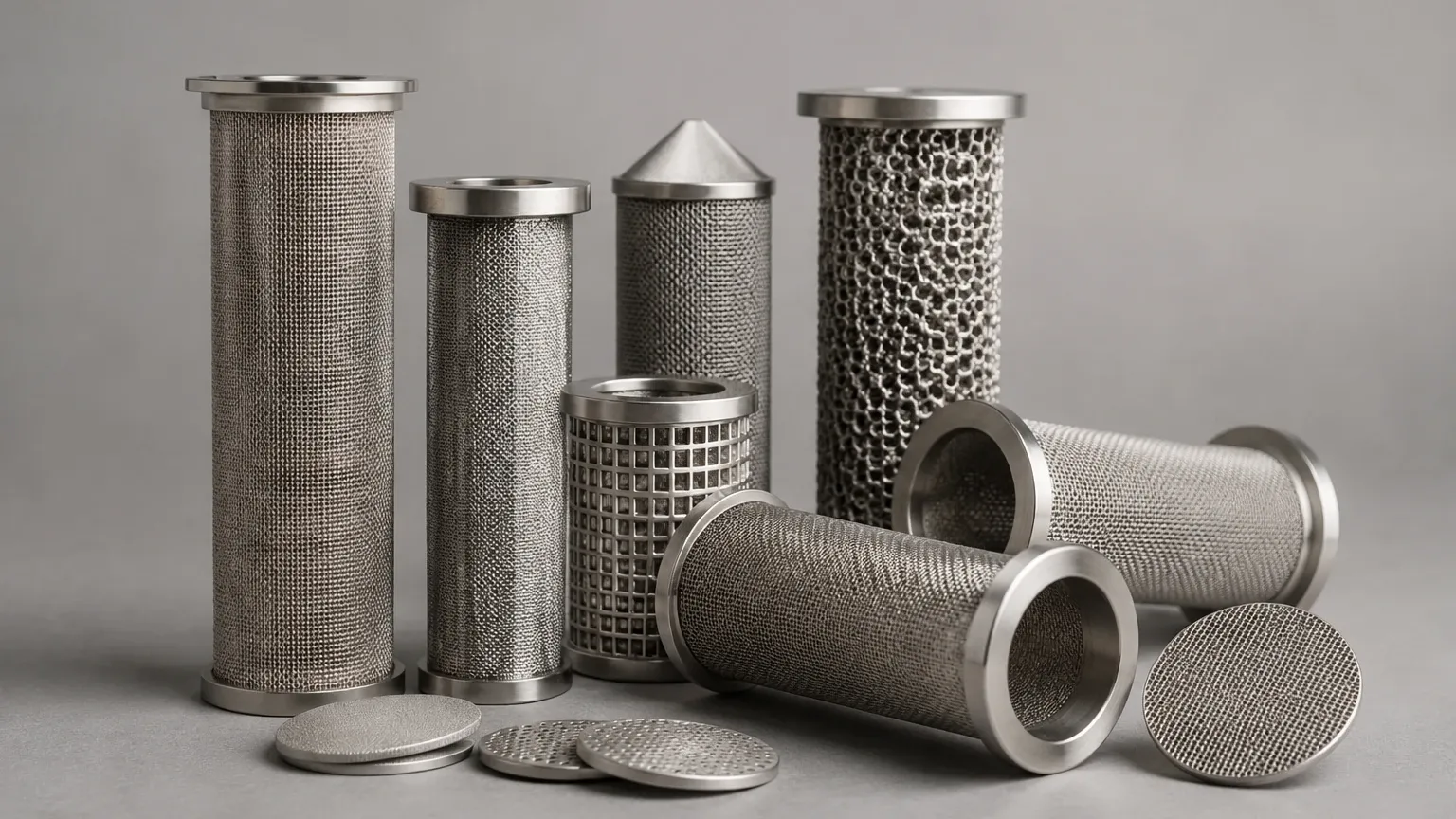
While disks are the most common shape, frit filters can be manufactured as plugs, rings, tubes, or custom-molded geometries. This flexibility allows engineers to integrate filtration directly into valves, sensors, or manifold blocks, saving space and reducing the number of potential leak points in a system.
Housing and Assembly
To simplify installation, frits are often pressed into metal housings or encapsulated in polymer rings (such as PEEK or PTFE). Encapsulation provides a reliable seal and prevents bypass, which is essential in analytical instruments. Manufacturers can provide complete sub-assemblies, including the frit and its associated hardware, ensuring that the filtration component is ready for immediate installation on the production line.
For those seeking specialized designs or high-volume OEM production, visiting the Main Page provides insight into the technical capabilities and manufacturing tolerances available for custom projects.
Common Challenges and Maintenance Protocols
Despite their durability, frit filters are susceptible to certain operational issues that can impact process efficiency. Proactive management of these challenges is necessary for long-term performance.
Clogging and Fouling
The primary cause of filter failure is clogging, which manifests as a gradual increase in differential pressure. In liquid systems, this is often caused by particulate matter or biological growth. In gas systems, it may result from moisture condensation or fine dust. Because frits are depth filters, particles can become deeply embedded in the porous matrix.
Cleaning Methods
One of the significant advantages of sintered metal frit filters is that they are often cleanable and reusable. Common cleaning protocols include:
* Ultrasonic Cleaning: Placing the frit in an ultrasonic bath with a compatible solvent can dislodge deeply embedded particles.
* Backflushing: Reversing the flow of fluid through the frit can push out surface-level contaminants.
* Chemical Cleaning: Using acids, alkalis, or specialized detergents to dissolve organic or inorganic deposits.
* Thermal Burn-off: Heating the frit in a vacuum or controlled atmosphere to carbonize and remove organic residues.
It is important to note that repeated cleaning may eventually alter the pore structure or weaken the bonds between particles. Therefore, a replacement schedule should be established based on the criticality of the application.
Industrial Applications of Sintered Metal Frits
The versatility of the frit filter allows it to serve in a diverse range of industries, each with unique requirements.
Analytical Instrumentation
In HPLC and UHPLC systems, frits are used at the inlet of columns to protect the expensive stationary phase from particulate contamination. They are also used in solvent reservoirs to prevent dust from entering the pump system. The requirement here is for extremely low dead volume and high chemical purity.
Pharmaceutical and Biotech
Frits are used in sparging applications to introduce gases (like oxygen or CO2) into bioreactors. The fine pores of the frit create tiny bubbles, maximizing the surface area for gas-liquid mass transfer. Additionally, they are used in sterile venting and catalyst recovery processes.
Chemical Processing
In large-scale chemical manufacturing, metal frits serve as flame arrestors, gas diffusers, and silencers. Their ability to withstand corrosive chemicals and high temperatures makes them indispensable for protecting sensitive equipment and ensuring operator safety.
Aerospace and Defense
Precision frits are used in fuel systems and hydraulic lines to protect sensitive valves and actuators from contaminants that could lead to catastrophic system failure. The high strength-to-weight ratio of sintered metal is particularly valued in these sectors.
Conclusion: Selecting the Right Partner for Filtration Solutions
The selection of a frit filter is more than a simple procurement task; it is an engineering decision that impacts the efficiency, safety, and longevity of an industrial process. By focusing on material integrity, precise micron ratings, and robust manufacturing standards, organizations can minimize downtime and ensure consistent product quality.
When evaluating a supplier, it is crucial to look for technical expertise and the ability to provide customized solutions that go beyond standard catalogs. Whether the requirement is for a high-pressure HPLC component or a large-scale industrial gas diffuser, working with a specialist ensures that the filtration media is perfectly matched to the application. For further technical resources and to explore the full scope of stainless steel filtration technology, visit the Kaifil Main Page.
