


Define Sparger
In the realm of industrial engineering and chemical processing, a sparger is a specialized component designed to introduce a gas into a liquid. While the concept may seem simple, the technical nuances required to define sparger functionality involve a deep understanding of fluid dynamics, mass transfer, and material science. At its core, a sparger acts as an interface that facilitates the efficient mixing of two phases—typically a gas phase and a liquid phase—by breaking the gas stream into a multitude of small bubbles.
For engineers and procurement professionals, understanding how to define sparger performance is critical for optimizing processes ranging from wastewater treatment to pharmaceutical fermentation. The efficiency of a sparging system is measured by its ability to maximize the gas-liquid contact area, which is directly proportional to the total surface area of the bubbles produced. This article provides a comprehensive technical overview of sparger technology, selection criteria, and the engineering principles that govern their application in industrial environments.
The Fundamental Role of Spargers in Industrial Processes
To accurately define sparger utility, one must consider the primary objective: mass transfer. In many industrial applications, the goal is to dissolve a gas into a liquid (such as oxygenating a bioreactor) or to use a gas to strip unwanted volatile components from a liquid.
When gas is introduced through a simple open pipe, it forms large, buoyant bubbles that rise rapidly to the surface. These large bubbles have a low surface-area-to-volume ratio, resulting in poor mass transfer and significant gas wastage. A sparger, particularly one constructed from porous materials like sintered stainless steel, solves this by creating "micro-bubbles." These smaller bubbles rise more slowly through the liquid column, providing more time for the gas to interact with the liquid and significantly increasing the interfacial area available for diffusion.
Industrial spargers are used for several key functions:
* Aeration: Introducing air or oxygen into biological processes or water treatment systems.
* Carbonation: Dissolving carbon dioxide into beverages.
* Hydrogenation: Injecting hydrogen into chemical reactors for catalytic reactions.
* Agitation: Using gas flow to maintain solids in suspension or to mix liquids without mechanical impellers.
* Steam Injection: Directly heating liquids by injecting steam, which also provides mixing.
Understanding Bubble Dynamics and Mass Transfer Efficiency
The engineering required to define sparger specifications begins with the physics of bubble formation. The size of the bubbles generated by a sparger is influenced by several factors, including the pore size of the sparger media, the surface tension of the liquid, the gas flow rate, and the velocity of the liquid if the system is dynamic.
The Importance of Pore Size
In porous metal spargers, the pore size (measured in microns) is the primary determinant of initial bubble size. Sintered stainless steel media can be manufactured with highly controlled pore distributions, ranging from 0.5 microns to over 100 microns. Smaller pores produce smaller bubbles, which are essential for high-efficiency mass transfer. However, smaller pores also result in a higher pressure drop across the sparger element, requiring more energy to force the gas through the media.
Gas Exit Velocity
The velocity at which gas exits the sparger pores also affects bubble size. If the gas flow rate is too high, bubbles may coalesce (merge) immediately upon formation, creating larger bubbles and reducing efficiency. Engineers must balance the required gas volume with the available surface area of the sparger to maintain an optimal exit velocity.
Liquid Properties
The viscosity and surface tension of the liquid play a significant role. In liquids with high surface tension, bubbles tend to grow larger before detaching from the sparger surface. Conversely, in systems with surfactants or low surface tension, bubbles detach more easily, resulting in a finer dispersion.
Material Selection and Engineering Specifications
When engineers define sparger requirements for a specific project, material compatibility is often the most critical factor. Industrial processes frequently involve corrosive chemicals, high temperatures, or strict hygienic standards.
Stainless Steel and High Alloys
Stainless steel, particularly Grade 316L, is the industry standard for most sparging applications due to its excellent corrosion resistance and mechanical strength. For more aggressive environments, such as those involving high concentrations of chlorides or strong acids, specialty alloys like Hastelloy® C-22 or C-276 are utilized. These materials ensure that the sparger does not degrade or contaminate the process fluid over time.
Sintered Metal vs. Drilled Pipe
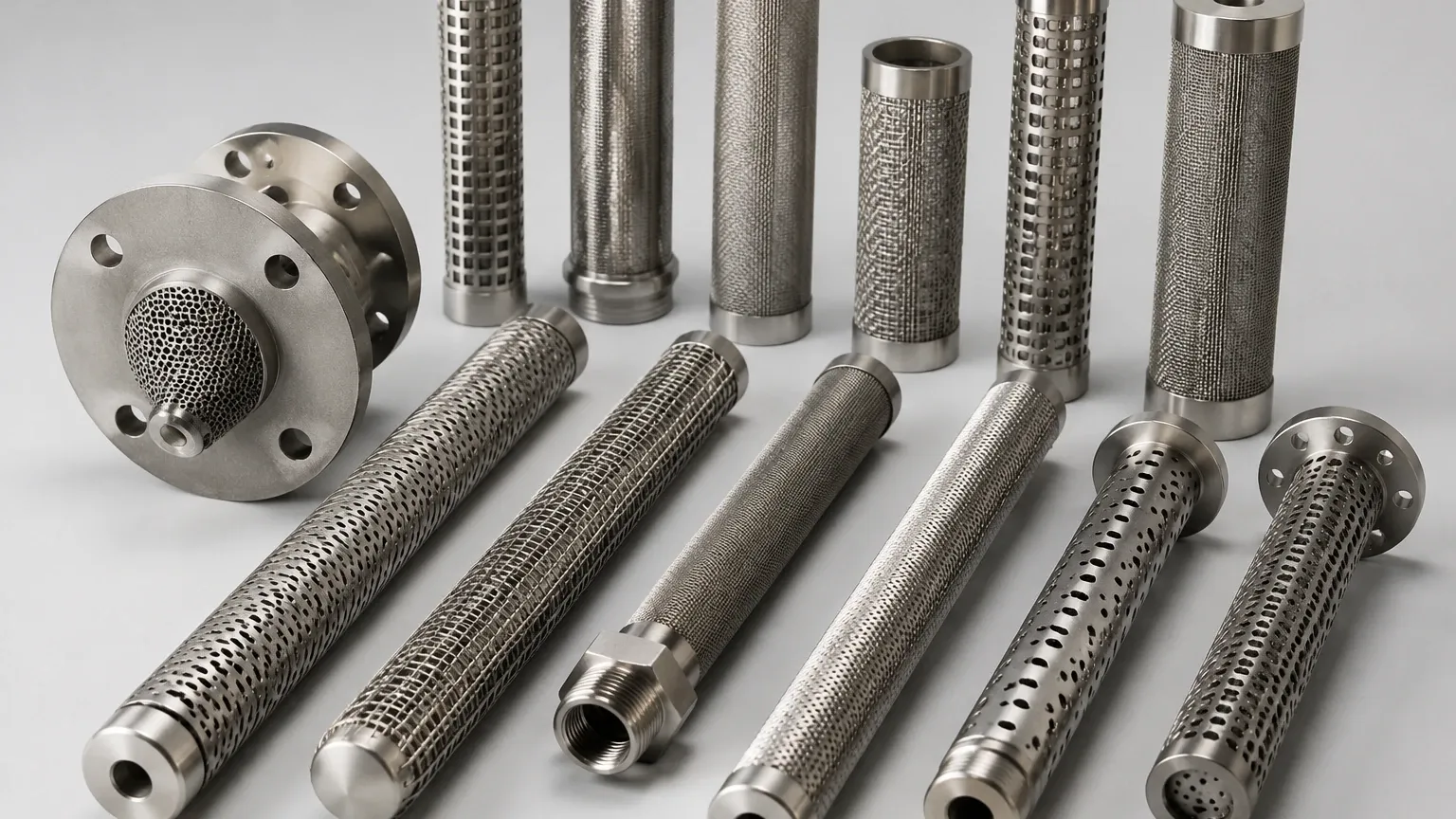
There are two primary structural ways to define sparger designs: sintered (porous) and mechanical (drilled or slotted).
* Sintered Metal Spargers: These are made by pressing and heating metal powder until the particles bond without melting. This creates a rigid, porous structure. They are preferred for high-efficiency mass transfer because they produce the smallest bubbles.
* Drilled Pipe Spargers: These consist of a pipe with holes drilled at specific intervals. While they are more robust and less prone to clogging, they produce much larger bubbles and are generally used for agitation or where high gas volumes are needed with less concern for mass transfer efficiency.
Mechanical Integrity
Spargers must withstand the mechanical stresses of the industrial environment, including pressure fluctuations, thermal expansion, and potential vibration from high-velocity gas flow. Sintered metal components are often welded to solid stainless steel fittings to ensure a leak-proof and structurally sound assembly.
Common Sparger Configurations and Designs
The physical configuration of a sparger is dictated by the vessel geometry and the process requirements. Common designs include:
1. Static Spargers (In-Tank): These are mounted at the bottom of a tank or reactor. They can be shaped as discs, plates, or long cylinders. In large tanks, a "spider" or ring configuration is often used to ensure even gas distribution across the entire cross-section of the vessel.
2. In-Line Spargers (Pipe): These are integrated directly into a process pipeline. As the liquid flows through the pipe, gas is injected through a porous sleeve or an array of sparging elements. This is common in continuous flow processes like water ozonation or beverage carbonation.
3. Intrusive vs. Non-Intrusive: Intrusive spargers extend into the flow or tank, while non-intrusive designs (often used in-line) keep the sparger media flush with the pipe wall to minimize flow restriction and pigging interference.
Industry-Specific Applications and Performance Requirements
Different sectors define sparger success based on unique performance metrics.
Pharmaceutical and Biotechnology
In bioreactors, spargers provide the oxygen necessary for cell growth. Because these environments are sensitive to shear stress, the bubbles must be small enough for mass transfer but not so turbulent that they damage delicate cells. Furthermore, spargers in this industry must be capable of Clean-in-Place (CIP) and Steam-in-Place (SIP) sterilization.
Food and Beverage
Carbonation and nitrogenation are the primary uses here. Spargers must meet FDA and 3-A sanitary standards. The focus is on achieving precise gas concentration levels quickly to maintain production speeds. Sintered stainless steel is preferred here because it can be easily cleaned and does not shed fibers or particles into the product.
Chemical Processing
In chemical reactors, spargers may be used to introduce reactive gases. The primary concern is often chemical compatibility and the ability to operate at high temperatures and pressures. Engineers must also consider the potential for "backflow," where liquid enters the sparger when gas flow stops, potentially leading to clogging or internal corrosion.
Maintenance, Cleaning, and Replacement Cycles
To maintain the performance defined during the engineering phase, spargers require regular maintenance. The most common issue is fouling or clogging of the porous media. Fouling can be internal (from impurities in the gas) or external (from solids or precipitates in the liquid).
Cleaning Methods
* Ultrasonic Cleaning: The most effective method for removing fine particles from the internal pore structure of sintered metal.
* Chemical Cleaning: Using acids, caustics, or solvents to dissolve organic or inorganic deposits. This must be done with care to ensure the cleaning agents are compatible with the sparger material.
* Backpulsing: Reversing the flow of gas or liquid through the sparger to dislodge surface cakes. This is often integrated into the process control system.
Replacement Indicators
A rise in the differential pressure (the pressure required to maintain a constant gas flow) is the primary indicator that a sparger is becoming clogged. If cleaning does not restore the pressure drop to baseline levels, the sparger has reached the end of its service life and must be replaced to prevent process inefficiency or equipment failure.
Custom Engineering and OEM Solutions for Sparging Systems
Because every industrial process has unique requirements, off-the-shelf solutions are often insufficient. Customization allows engineers to define sparger parameters that align perfectly with their vessel size, flow rates, and chemical environments. This includes selecting the specific micron rating, mounting hardware, and overall geometry.
Kaifil specializes in the manufacture of these custom stainless steel filtration and sparging solutions. By leveraging advanced manufacturing techniques in sintered metal and wire mesh, Kaifil provides components that meet the rigorous demands of industrial applications. Whether you require a high-precision sparger for a laboratory bioreactor or a robust aeration system for a large-scale chemical plant, technical expertise is essential in the design phase.
For engineers looking to source high-performance filtration and gas injection components, reviewing the technical capabilities and product ranges available is the next logical step. You can explore a variety of industrial solutions and request technical support by visiting the Main Page.
Conclusion: Defining the Future of Gas-Liquid Interaction
To define sparger technology today is to recognize it as a precision engineering tool rather than a simple hardware component. The transition from basic pipe sparging to advanced sintered metal technology has enabled industries to achieve higher yields, lower gas consumption, and more consistent product quality.
When selecting a sparging solution, engineers must look beyond the initial cost and consider the total cost of ownership, including gas efficiency, maintenance requirements, and the longevity of the material. By focusing on the fundamental principles of bubble dynamics and material science, and by partnering with experienced manufacturers like Kaifil, industrial operations can ensure their gas-liquid processes are as efficient and reliable as possible.
