


Frit in Hplc Column
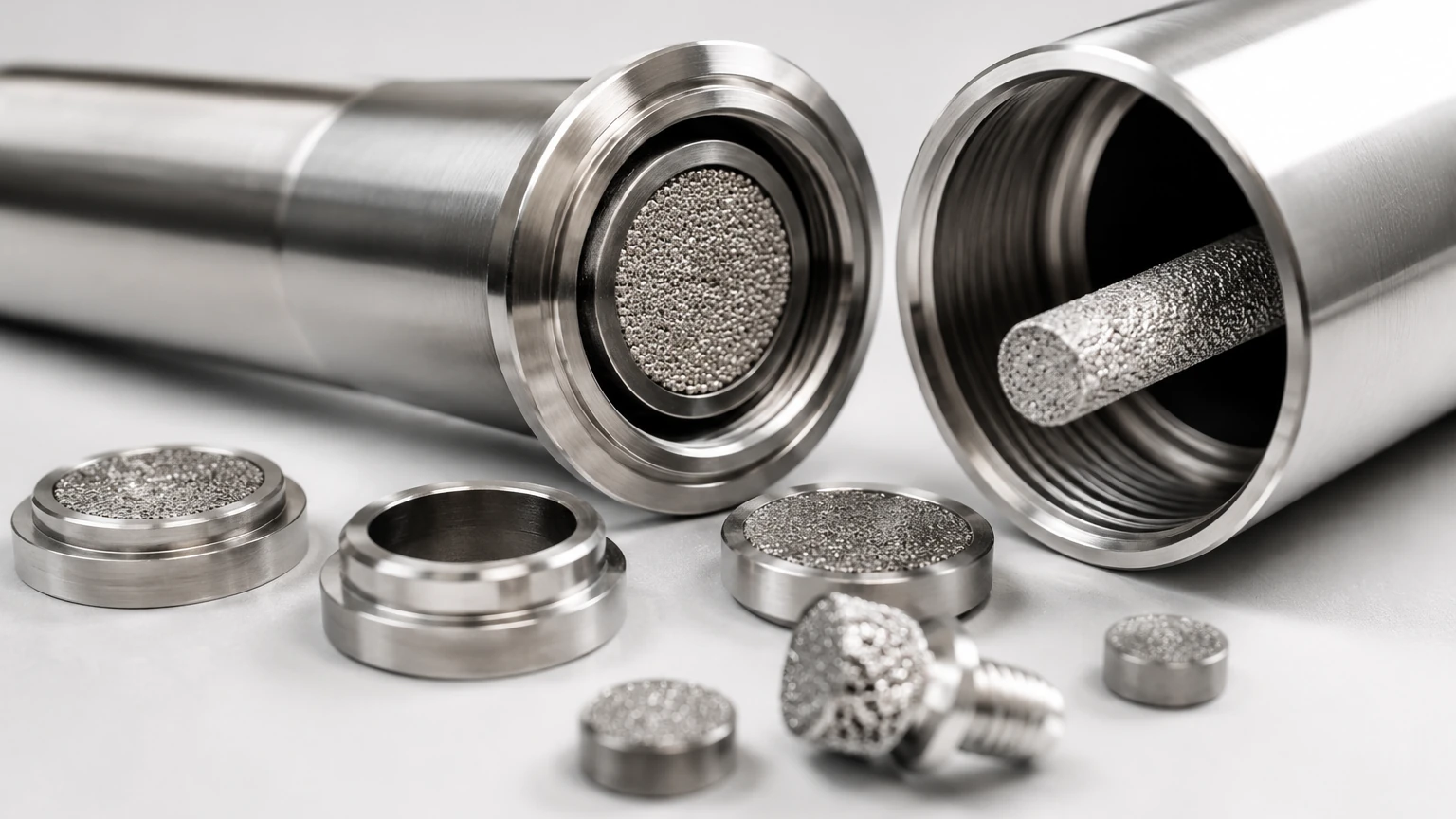
In the field of analytical chemistry, particularly within High-Performance Liquid Chromatography (HPLC), the efficiency and longevity of a column are dictated not only by the stationary phase but also by the precision of its hardware components. Among these, the frit in HPLC column assemblies plays a foundational role. Often overlooked due to its small size, the frit is a porous barrier located at both the inlet and outlet of the column, serving as the primary mechanical interface between the fluidic system and the packed bed.
For engineers and laboratory managers, understanding the technical specifications of these components is essential for maintaining system pressure, ensuring peak symmetry, and preventing costly downtime. As a specialized manufacturer of stainless steel filtration solutions, Kaifil provides the engineering perspective necessary to evaluate how frit selection impacts chromatographic performance.
The Fundamental Functions of a Frit in HPLC Column Systems
The frit in HPLC column hardware serves three primary purposes: containment, protection, and flow distribution. Each of these functions is critical to the integrity of the analytical result.
Stationary Phase Containment
An HPLC column is packed with micro-particulate stationary phase material, often ranging from 1.7 µm to 5 µm in diameter. Without a physical barrier, this expensive packing material would be washed out of the column by the high-pressure mobile phase. The frit acts as a mechanical retainer that keeps the stationary phase bed stable and compressed, which is vital for consistent retention times.
Particulate Filtration
The inlet frit acts as the final line of defense against particulates. These contaminants may originate from the mobile phase, pump seal wear, or the sample itself. If these particles reach the packed bed, they can cause irreversible clogging, leading to a rapid increase in backpressure and potential column failure.
Flow Distribution
As the mobile phase enters the column from a narrow capillary, it must be distributed evenly across the entire cross-section of the column head. A well-engineered frit ensures that the solvent enters the packing material uniformly, preventing "tunneling" or uneven flow paths that result in band broadening and poor peak resolution.
Material Selection and Engineering Standards
Choosing the right material for a frit in HPLC column applications involves balancing chemical compatibility, mechanical strength, and porosity. While several materials exist, stainless steel remains the industry standard for most industrial and analytical applications.
Sintered Stainless Steel (316L)
Most high-pressure HPLC columns utilize frits made from sintered 316L stainless steel. This material is preferred for its exceptional mechanical strength, allowing it to withstand pressures exceeding 6,000 psi (and much higher in UHPLC applications). 316L also offers broad chemical resistance to most organic solvents and neutral pH buffers. In the manufacturing process, stainless steel powder is pressed and heated (sintered) to create a porous structure with a defined micron rating.
Titanium Frits
In applications involving highly corrosive mobile phases or biological samples sensitive to metal ions (biocompatible chromatography), titanium frits are often employed. Titanium offers superior resistance to halides and acidic conditions that might cause pitting in stainless steel.
PEEK (Polyetheretherketone)
For metal-free applications, PEEK frits are utilized. These are typically used in low-pressure or ion chromatography where any metal interaction could interfere with the analytes. However, PEEK frits have lower pressure limits compared to their metal counterparts and may deform under extreme conditions.
Porosity and Micron Ratings: Technical Considerations
The porosity of the frit in HPLC column design must be carefully matched to the particle size of the stationary phase. A general engineering rule of thumb is that the frit’s pore size should be significantly smaller than the average particle size of the packing material to prevent "leakage" or embedding.
* 0.5 µm Frits: Typically used for columns packed with particles smaller than 3 µm. These are common in modern UHPLC systems but are more susceptible to clogging from mobile phase impurities.
* 2.0 µm Frits: The standard for columns packed with 5 µm particles. They offer a balance between effective containment and lower resistance to flow.
Engineers must also consider the "void volume" or "dead volume" introduced by the frit. A frit that is too thick or has an inappropriate internal structure can contribute to extra-column volume, which leads to sample dispersion and reduced plate counts.
Impact on Chromatographic Performance
The quality of the frit in HPLC column assemblies directly influences the quality of the data produced. When a frit is poorly manufactured or incorrectly specified, several technical issues arise.
Backpressure Management
Backpressure is a natural result of forcing liquid through a packed bed and a porous frit. However, an abrupt increase in pressure usually indicates a clogged inlet frit. Because the frit has a much smaller surface area than the packed bed, it is often the first component to fail. Using high-purity sintered components from a reliable manufacturer ensures that the initial pressure drop across the frit is minimized.
Peak Symmetry and Ghost Peaks
If the frit is contaminated or has an uneven pore distribution, it can cause the sample band to distort as it enters the column. This results in tailing peaks or "shoulders" on the chromatogram. Furthermore, if the frit material is not properly passivated, it may adsorb certain analytes, leading to carryover or the appearance of ghost peaks in subsequent runs.
Maintenance, Troubleshooting, and Replacement
In a B2B industrial environment, maximizing the lifespan of analytical hardware is a priority. Understanding when and how to address frit issues can save significant operational costs.
Identifying a Clogged Frit
The most common symptom of a failing frit in HPLC column use is a steady or sudden increase in system pressure. If the pressure remains high even after the column is disconnected from the injector, the clog is likely in the lines. If the pressure drops significantly when the inlet frit is loosened or bypassed, the frit is the culprit.
Cleaning vs. Replacement
While some laboratories attempt to clean frits via sonication in dilute nitric acid or strong solvents, this is often a temporary fix. In industrial QC environments, it is generally more cost-effective to replace the frit or the entire column guard. For OEM applications, ensuring that the frit is easily accessible and replaceable is a key design consideration for column hardware.
The Role of Guard Columns
To protect the primary frit in HPLC column setups, engineers often implement guard columns or pre-column filters. These contain a secondary frit that is designed to be sacrificial, trapping contaminants before they reach the main analytical column. This extends the life of the primary column significantly.
Customization and OEM Solutions for Industrial Filtration
For manufacturers of chromatography equipment, off-the-shelf components may not always meet the rigorous demands of specialized applications. Customization of the frit in HPLC column design allows for optimized performance in niche sectors such as preparative chromatography, where flow rates are significantly higher, or in microfluidic HPLC, where dead volume must be virtually non-existent.
Kaifil specializes in producing precision-engineered stainless steel filtration components that meet these exacting standards. By controlling the sintering process and material purity, we provide OEM partners with frits that offer consistent porosity and high mechanical integrity. Whether you are designing a new analytical instrument or optimizing an existing filtration process, selecting a partner with deep technical expertise in metal filtration is essential.
To explore our full range of stainless steel filter cartridges and custom metal filtration components, visit our Main Page.
Conclusion: Selecting the Right Partner for Filtration Excellence
The frit in HPLC column assemblies is a small component with a massive impact on the success of liquid chromatography. From protecting the stationary phase to ensuring uniform flow distribution, its role is purely functional and highly technical. Engineers must prioritize material quality, correct micron ratings, and chemical compatibility to ensure the reliability of their analytical systems.
When sourcing components for industrial or laboratory filtration, working with a manufacturer that understands the nuances of sintered metal is vital. At Kaifil, we combine advanced manufacturing capabilities with a deep understanding of industrial filtration requirements. We provide the reliable, high-performance stainless steel solutions needed for demanding environments in chemical processing, pharmaceuticals, and beyond. By focusing on precision and durability, we help our clients achieve optimized filtration performance and lower total cost of ownership.
For more information on our customized filtration solutions and technical support, please Review product options and application support to see how our engineering expertise can support your specific application requirements.
