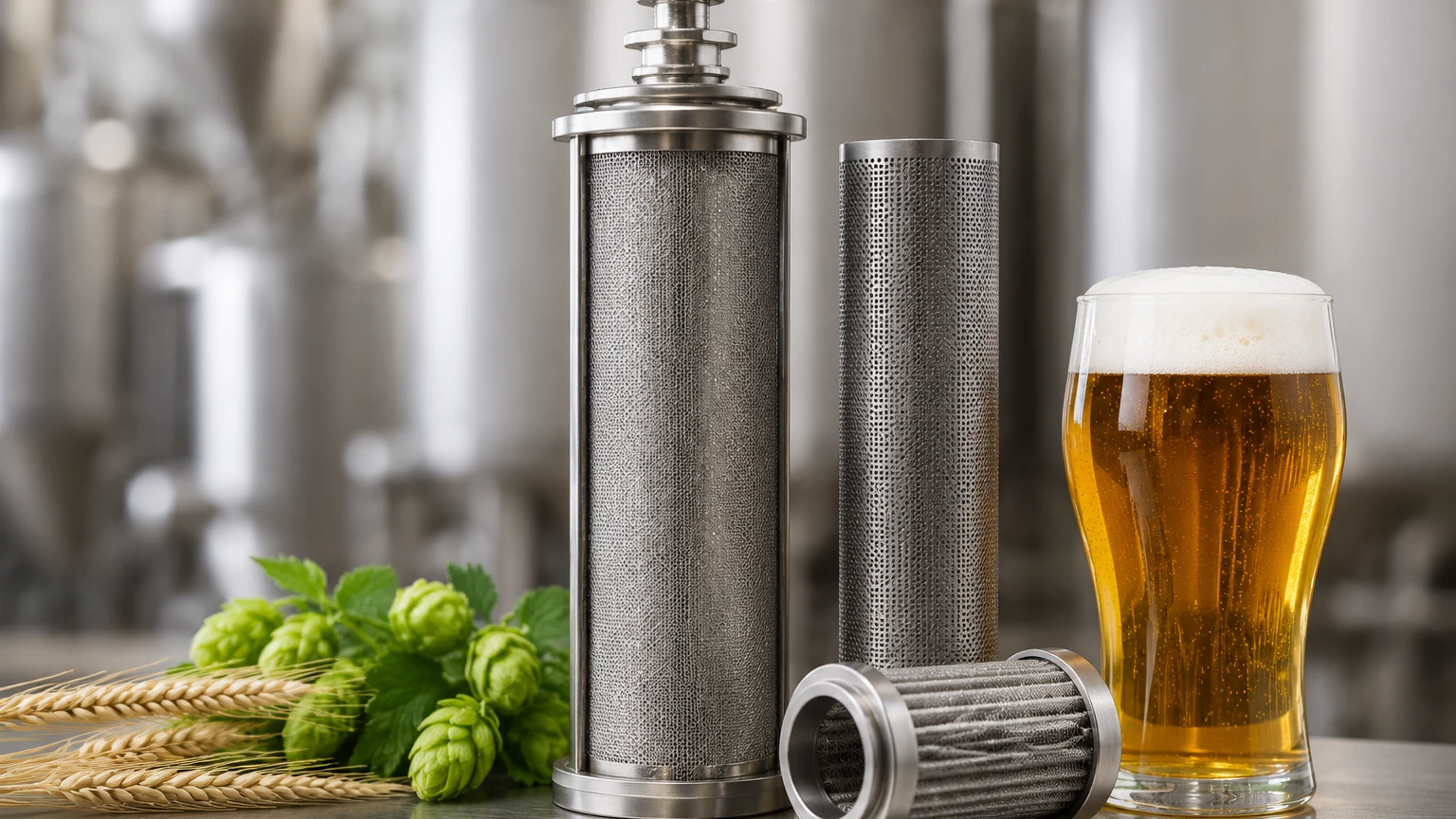
Beer Water Filter
In the industrial brewing sector, water is more than just an ingredient; it is the primary medium for every stage of production. Comprising approximately 90% to 95% of the final product, the quality of the "brewing liquor"—the water used in the mashing and sparging process—directly dictates the chemical efficiency of the brew and the sensory profile of the beer. Implementing a robust beer water filter system is a technical necessity for maintaining consistency, protecting downstream equipment, and ensuring compliance with stringent food safety regulations. For large-scale breweries and microbreweries alike, the selection of filtration components involves a deep understanding of material science, fluid dynamics, and mechanical engineering.
The Critical Role of Water Quality in Brewing Operations
Industrial brewing requires water that is free from physical, chemical, and biological contaminants. While municipal water sources are treated, they often contain residual sediments, micro-plastics, and pipe scale that can interfere with the brewing process. A high-efficiency beer water filter serves as the first line of defense, removing suspended solids that could otherwise clog spray balls, damage pump seals, or foul heat exchangers.
From an engineering perspective, the presence of particulate matter in brewing water can lead to "shadowing" during the sanitization process. Particles can shield microorganisms from chemical sanitizers or heat, leading to potential batch contamination. By utilizing precision stainless steel filtration at the point of entry or before the hot liquor tank, engineers can ensure that the water entering the system meets the required clarity and purity standards. This pre-filtration is also essential for protecting sensitive downstream components such as reverse osmosis (RO) membranes or carbon beds, which are susceptible to premature fouling if large particulates are not removed beforehand.
Technical Advantages of Stainless Steel Filtration Systems
When selecting a beer water filter for industrial applications, material durability and thermal resistance are paramount. Unlike polymer-based cartridges, stainless steel filter elements offer significant advantages in a brewery environment. Stainless steel wire mesh and sintered metal filters are capable of withstanding the high temperatures associated with hot liquor production and Clean-in-Place (CIP) cycles.
One of the primary benefits of stainless steel is its mechanical strength. In high-pressure brewing systems, pressure surges or "water hammer" can cause traditional pleated paper or melt-blown filters to bypass or collapse. Stainless steel mesh filters maintain their structural integrity under high differential pressures, ensuring consistent filtration performance. Furthermore, these metal components are non-leaching, ensuring that no plasticizers or synthetic fibers migrate into the brewing water, which is a critical consideration for maintaining the "clean label" status of the final beverage.
Key Engineering Specifications for Industrial Beer Water Filters
Selecting the appropriate filter requires a detailed analysis of micron ratings and mesh configurations. In the context of a beer water filter, the goal is often to remove particles ranging from 1 micron to 100 microns, depending on the specific stage of the water treatment process.
1. Micron Rating (Absolute vs. Nominal): For critical brewing water applications, an absolute-rated filter is often preferred. This ensures that 99.9% of particles at the specified size are captured. Nominal ratings are more suited for general pre-filtration where a higher degree of variance is acceptable.
2. Mesh Type: Plain weave wire mesh provides a straight-through flow path and is easy to clean, making it ideal for high-flow water intake. For finer filtration tasks, Dutch weave or twilled Dutch weave patterns offer a more complex pore structure, allowing for the capture of smaller particles while maintaining high mechanical strength.
3. Sintered Metal Media: For applications requiring extreme durability, sintered multi-layer wire mesh provides a rigid structure that can be backwashed repeatedly without deforming. This is particularly useful in automated filtration systems where manual filter replacement is to be minimized.
Engineers must also consider the total surface area of the filter. A larger surface area reduces the face velocity of the water, leading to a lower initial pressure drop and a higher dirt-holding capacity. This directly translates to longer service intervals and reduced operational downtime.
Material Integrity and Sanitary Standards in the Beverage Industry
In any food and beverage application, the risk of corrosion and bacterial growth must be mitigated through proper material selection. For a beer water filter, AISI 316L stainless steel is the industry standard. The "L" denotes low carbon content, which improves weldability and resistance to intergranular corrosion, particularly after welding or exposure to high temperatures.
316L stainless steel contains molybdenum, which provides superior resistance to chlorides compared to 304 stainless steel. Since many brewing water sources contain residual chlorine or are treated with chlorinated cleaning agents, 316L ensures the longevity of the filter element. Furthermore, the surface finish of the filter media is critical. Precision-manufactured stainless steel filters from specialized providers like Kaifil are often electropolished to achieve a Ra (Roughness Average) value that prevents yeast and bacteria from adhering to the metal surface, facilitating more effective CIP processes.
Evaluating Flow Dynamics and Pressure Drop
An often-overlooked aspect of beer water filter selection is the impact on the brewery's overall fluid dynamics. Every filter introduces a degree of resistance to the flow, known as the pressure drop ($ΔP$). If the filter is undersized, the resulting pressure drop can starve downstream pumps or reduce the efficiency of heat exchangers.
Engineers should calculate the clean pressure drop based on the maximum anticipated flow rate and the viscosity of the water (which changes with temperature). As the filter captures contaminants, the pressure drop will increase. A well-designed system will include differential pressure gauges to monitor this change. By selecting a filter with a high-porosity wire mesh, breweries can achieve high flow rates with minimal energy consumption from pumps. This efficiency is a key component of the total cost of ownership, as it reduces the electrical load on the facility over time.
Maintenance, Cleaning, and Operational Longevity
One of the most compelling reasons to invest in a high-quality stainless steel beer water filter is its reusability. Disposable filters represent a continuous operational expense and contribute to the facility's waste stream. In contrast, stainless steel filter cartridges can be cleaned and returned to service multiple times.
Cleaning methods for these filters include:
* Backwashing: Reversing the flow of water to dislodge accumulated particles from the surface of the mesh.
* Ultrasonic Cleaning: Using high-frequency sound waves in a cleaning solvent to remove fine particulates trapped deep within the mesh layers.
* Chemical Cleaning: Utilizing caustic or acidic solutions to dissolve organic or mineral scaling, provided the chemicals are compatible with 316L stainless steel.
Because these filters can last for years with proper maintenance, the initial capital expenditure is offset by the elimination of recurring replacement costs. For purchasing teams, this shift from an OPEX-heavy model to a CAPEX-focused model provides better long-term budget predictability.
Customization and OEM Solutions for Brewery Engineering
Every brewery has a unique infrastructure, ranging from compact craft setups to sprawling industrial complexes. Standard off-the-shelf filtration units may not always meet the specific spatial or technical requirements of a given facility. This is where custom OEM filtration solutions become essential. Customization can involve specific end-cap configurations (such as 222, 226, or DOE styles), bespoke lengths, or reinforced internal cores for high-pressure applications.
Working with a manufacturer that understands the nuances of industrial filtration allows engineers to specify the exact parameters needed for their water quality profiles. Whether the requirement is for a coarse strainer to protect a well pump or a fine-mesh cartridge for final liquor polishing, tailored solutions ensure that the filtration system integrates seamlessly with existing piping and control systems. For more technical details on available configurations, you can visit the Main Page to explore professional filtration options.
Conclusion: Making an Informed Selection
Investing in a professional beer water filter is a strategic decision that impacts the quality of the brew, the efficiency of the plant, and the longevity of the equipment. By prioritizing high-grade materials like 316L stainless steel and focusing on technical specifications such as absolute micron ratings and flow dynamics, brewery engineers can optimize their water treatment processes.
When evaluating potential filtration partners, it is vital to confirm their capabilities in precision manufacturing and their adherence to food-grade standards. A reliable filter should not only perform its primary task of particle removal but also withstand the rigorous cleaning and thermal demands of a modern brewing environment. Through careful selection and engineering, the right filtration solution becomes a silent but essential partner in the production of high-quality beer.