


Sinter Metal Filter
In the landscape of industrial filtration, the requirement for durability, precision, and thermal stability often leads engineers to specify the sinter metal filter. Unlike traditional fabric or polymer-based media, sintered metal components are engineered to withstand extreme environments where high pressures, corrosive chemicals, and fluctuating temperatures are the norm. As a professional manufacturer specializing in custom stainless steel filtration solutions, Kaifil provides high-performance sintered media designed to meet the rigorous standards of chemical processing, pharmaceutical manufacturing, and heavy industrial applications.
Understanding the technical nuances of a sinter metal filter is essential for purchasing teams and engineers who must balance filtration efficiency with long-term operational costs. This guide explores the manufacturing processes, material science, and engineering considerations required to select the optimal filtration solution for demanding industrial environments.
The Engineering Behind Sintered Metal Filtration
A sinter metal filter is produced through a process called sintering, which involves the thermal bonding of metal particles or wire mesh layers at temperatures below their melting point. This metallurgical process creates a rigid, porous structure that maintains its shape and integrity under significant mechanical stress.
There are two primary types of sintered metal media used in industrial applications:
1. Sintered Metal Powder: This media is created by compacting stainless steel or alloy powders into a specific shape and then sintering them in a controlled-atmosphere furnace. The resulting structure features a labyrinth of interconnected pores. By controlling the particle size and the sintering parameters, manufacturers can achieve precise micron ratings and high porosity levels.
2. Sintered Wire Mesh: This involves laminating multiple layers of stainless steel wire mesh—ranging from coarse support layers to fine filtration layers—and sintering them together. This creates a filter medium that combines the high flow rates of wire mesh with the structural rigidity of a solid plate. It is particularly effective for surface filtration and is easier to clean than powder-based media.
At Kaifil, we utilize advanced manufacturing techniques to ensure that every sinter metal filter provides uniform pore distribution and mechanical strength, ensuring consistent performance throughout its service life.
Key Performance Advantages of Sinter Metal Filters
When comparing filtration media, the sinter metal filter offers several distinct advantages that make it the preferred choice for critical process streams:
High Mechanical Strength and Pressure Resistance
The rigid structure of sintered metal allows it to handle high differential pressures without deforming. This is critical in hydraulic systems and high-viscosity fluid filtration where pressure spikes are common. Unlike pleated paper or polymer cartridges, sintered metal will not collapse or bypass under stress.
Thermal Stability
Standard stainless steel sintered filters can operate effectively at temperatures exceeding 450°C (842°F). With the use of specialized alloys like Inconel or Hastelloy, these filters can withstand environments up to 800°C. This makes them indispensable for steam filtration, hot gas cleaning, and catalyst recovery in chemical reactors.
Corrosion Resistance
By utilizing 316L stainless steel as a baseline material, sintered filters offer excellent resistance to a wide range of corrosive agents. For highly aggressive environments involving concentrated acids or chlorides, custom alloys can be employed to prevent premature degradation and media migration.
Precision Filtration
Sintered media can be engineered to provide absolute filtration ratings from 0.5 microns up to 200 microns. The stability of the pore structure ensures that the filtration efficiency remains constant, even when subjected to flow fluctuations or back-pulsing cleaning cycles.
Material Selection and Chemical Compatibility
The performance of a sinter metal filter is heavily dependent on the material from which it is fabricated. While 316L stainless steel is the industry standard due to its balance of cost and corrosion resistance, other materials are selected based on specific chemical and thermal requirements:
* 304 Stainless Steel: Suitable for general industrial applications where high-end corrosion resistance is not the primary concern.
* 316L Stainless Steel: The low-carbon version of 316, offering superior resistance to intergranular corrosion and excellent performance in pharmaceutical and food applications.
* Monel (Nickel-Copper Alloy): Often used in marine environments or applications involving hydrofluoric acid.
* Inconel and Hastelloy: High-nickel alloys designed for extreme temperature oxidation resistance and aggressive chemical processing.
Engineers must confirm the chemical composition of the process fluid, including trace contaminants, to ensure the selected alloy will not undergo pitting or stress-corrosion cracking. Kaifil works closely with clients to recommend the most cost-effective material that meets these durability requirements.
Critical Design Parameters for Industrial Applications
Selecting a sinter metal filter involves more than just choosing a micron rating. Several engineering parameters must be evaluated to ensure the filter integrates seamlessly into the existing system:
Permeability and Pressure Drop
Permeability refers to the ability of the filter medium to allow fluid to pass through. A filter with higher porosity will generally have a lower initial pressure drop, which reduces the energy requirements of the pump or compressor. However, porosity must be balanced against the required mechanical strength and filtration efficiency.
Pore Size Distribution
A high-quality sinter metal filter features a narrow pore size distribution. This means the majority of the pores are close to the target micron rating, preventing larger particles from passing through (which occurs with wide distribution) and preventing premature clogging from very fine particles.
Geometry and Fitting Types
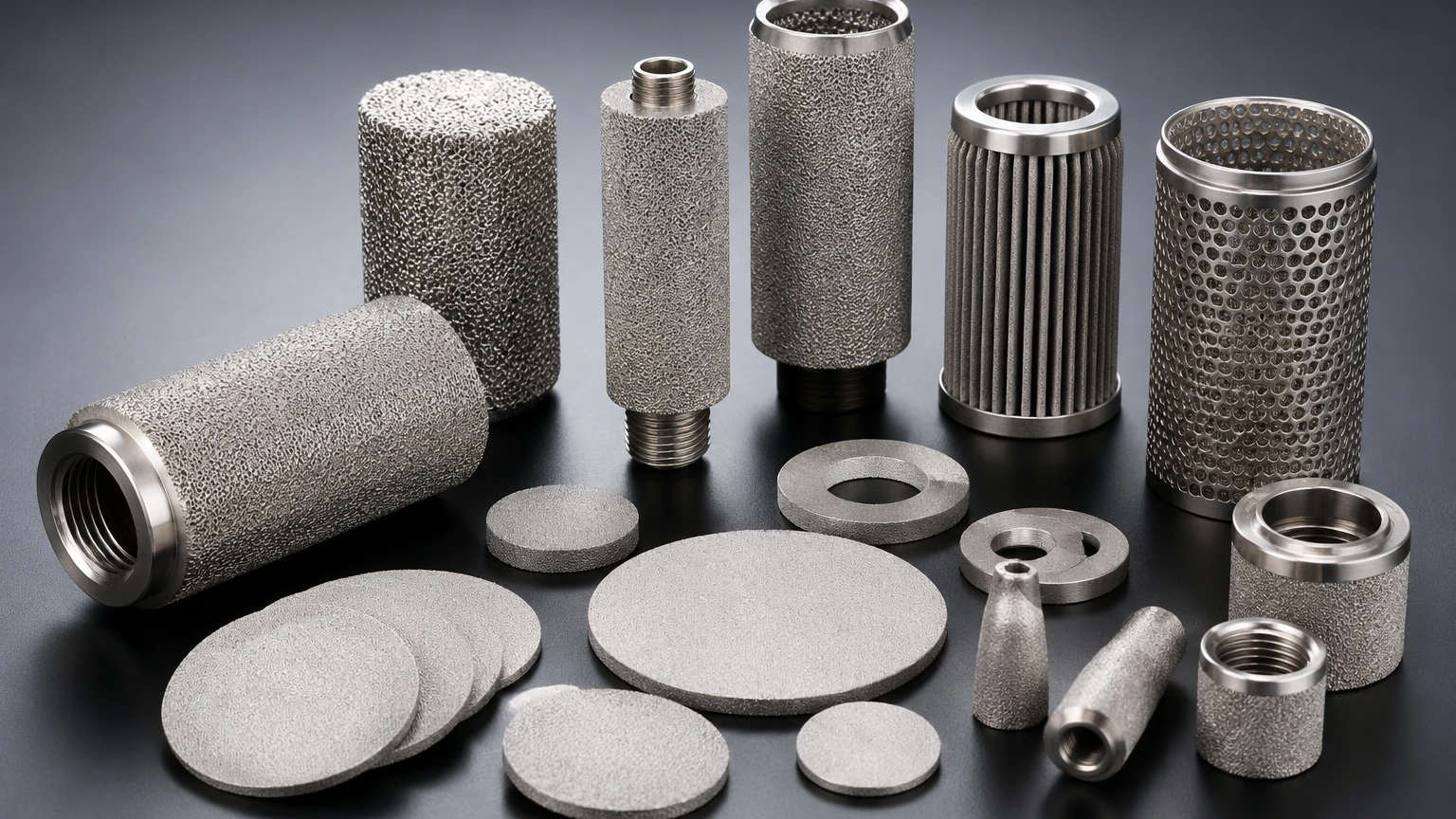
Sintered filters can be manufactured in various geometries, including seamless tubes, flat discs, conical shapes, and pleated cartridges. The choice of fitting—such as NPT threads, flange mounts, or 222/226 O-ring configurations—is vital for ensuring a leak-proof seal within the filter housing.
Maintenance and Cleaning Protocols for Extended Service Life
One of the most significant advantages of a sinter metal filter is that it is a permanent component rather than a disposable one. This significantly reduces the total cost of ownership (TCO) and minimizes industrial waste. However, maintaining performance requires a structured cleaning regimen.
Common cleaning methods include:
* Backwashing/Back-pulsing: Using a reverse flow of clean fluid or gas to dislodge accumulated cake from the surface of the filter. This is often automated for continuous processes.
* Ultrasonic Cleaning: Placing the filter in an ultrasonic bath with specialized cleaning agents. The high-frequency sound waves create cavitation bubbles that remove deep-seated contaminants from the porous structure.
* Chemical Cleaning: Utilizing solvents, acids, or caustic solutions to dissolve organic or inorganic deposits. This must be done with care to ensure the cleaning agent is compatible with the filter material.
* Burn-off (Pyrolysis): For organic contaminants, heating the filter in a vacuum furnace can carbonize and remove the material, restoring the original permeability.
By implementing these cleaning methods, a single sinter metal filter can often last for several years, even in high-fouling applications.
Applications Across Demanding Industrial Sectors
The versatility of sintered metal media allows it to solve complex filtration challenges across a variety of sectors:
Chemical and Petrochemical Processing
In these industries, filters are used for catalyst recovery, where expensive precious metal catalysts must be reclaimed from process streams. The ability of the sinter metal filter to withstand aggressive solvents and high temperatures makes it the only viable option for these applications.
Food and Beverage Production
Sintered stainless steel is widely used for steam filtration (culinary steam) to remove pipe scale and rust before the steam contacts food products. It is also used in the carbonation process, where sintered spargers create micro-bubbles for efficient gas-liquid blending.
Pharmaceutical and Biotechnology
Precision is paramount in pharmaceutical manufacturing. Sintered filters are used for sterile air filtration, solvent purification, and as vent filters for storage tanks. The smooth surface finish and cleanability of 316L stainless steel meet the stringent hygienic standards required by regulatory bodies.
Hydraulic and Aerospace Systems
High-pressure hydraulic systems rely on sintered metal filters to protect sensitive valves and actuators from particulate contamination. Their high collapse strength ensures that the system remains protected even under extreme pressure differentials.
Custom OEM Solutions for Complex Filtration Challenges
At Kaifil, we recognize that standard off-the-shelf filters often fall short of the specific requirements of advanced engineering projects. As a professional manufacturer, we specialize in providing customized filtration solutions tailored to unique operational parameters. From initial material selection and filtration accuracy testing to the final production of complex geometries, our team supports engineers through every stage of the procurement process.
Our manufacturing capabilities include precision welding, specialized sintering cycles, and rigorous quality control measures, such as bubble point testing, to verify the integrity and micron rating of every component we produce. Whether you require a single prototype for a new system or high-volume OEM production, we deliver reliable, high-performance filtration components that optimize your process efficiency.
For more information on our technical capabilities, material options, and to view our full product catalog, please visit our Main Page.
Conclusion
The selection of a sinter metal filter is a critical decision that impacts the reliability, efficiency, and safety of industrial processes. By understanding the underlying material science and engineering principles, technical professionals can choose a solution that provides superior performance while reducing long-term maintenance costs. As industries continue to push the boundaries of temperature and pressure, the role of high-quality sintered metal filtration will only become more vital. Partnering with an experienced manufacturer like Kaifil ensures that your filtration systems are built to withstand the most demanding environments.
