


Fritté
In the field of industrial filtration, the term "fritté"—the French designation for sintered—refers to a sophisticated manufacturing process where metal particles, fibers, or wire mesh layers are fused together through heat and pressure without reaching the melting point of the material. This process, known as sintering, creates a porous yet structurally rigid medium that is essential for high-performance filtration in demanding environments. For engineers and procurement specialists, understanding the technical nuances of fritté components is critical for ensuring system reliability, especially when dealing with high pressures, extreme temperatures, and corrosive fluids.
As a specialized manufacturer, Kaifil utilizes advanced sintering technology to produce stainless steel filtration solutions that bridge the gap between fine filtration accuracy and mechanical durability. This guide examines the engineering principles behind fritté materials, their performance characteristics, and the criteria for selecting them in industrial applications.
The Engineering of Sintered (Fritté) Media
The production of a fritté filter element involves diffusion bonding. When metal components—typically 316L stainless steel—are subjected to temperatures just below their melting point in a controlled atmosphere vacuum furnace, the atoms at the contact points of the particles or wires migrate across the boundaries. This creates molecular-level bonds that transform a loose collection of materials into a singular, integrated structure.
Diffusion Bonding and Structural Integrity
Unlike traditional woven wire mesh or felt filters that may rely on mechanical weaving or chemical binders, fritté media are entirely self-supporting. The elimination of binders is a significant advantage in pharmaceutical and food processing industries, as it prevents media migration and ensures that no contaminants are leached into the process stream. The resulting structure maintains its pore geometry even under significant backpressure or mechanical shock.
Porosity and Permeability
The primary objective of the sintering process is to achieve a specific balance between porosity (the volume of open space) and permeability (the ability of fluids to pass through). By controlling the particle size of the metal powder or the wire diameter and weave pattern of the mesh, manufacturers can calibrate the mean pore size to meet specific micron ratings, ranging from sub-micron levels to several hundred microns.
Types of Fritté Filtration Structures
Depending on the application requirements, different types of fritté structures are utilized. Each offers distinct advantages regarding dirt-holding capacity, flow resistance, and cleanability.
Sintered Wire Mesh
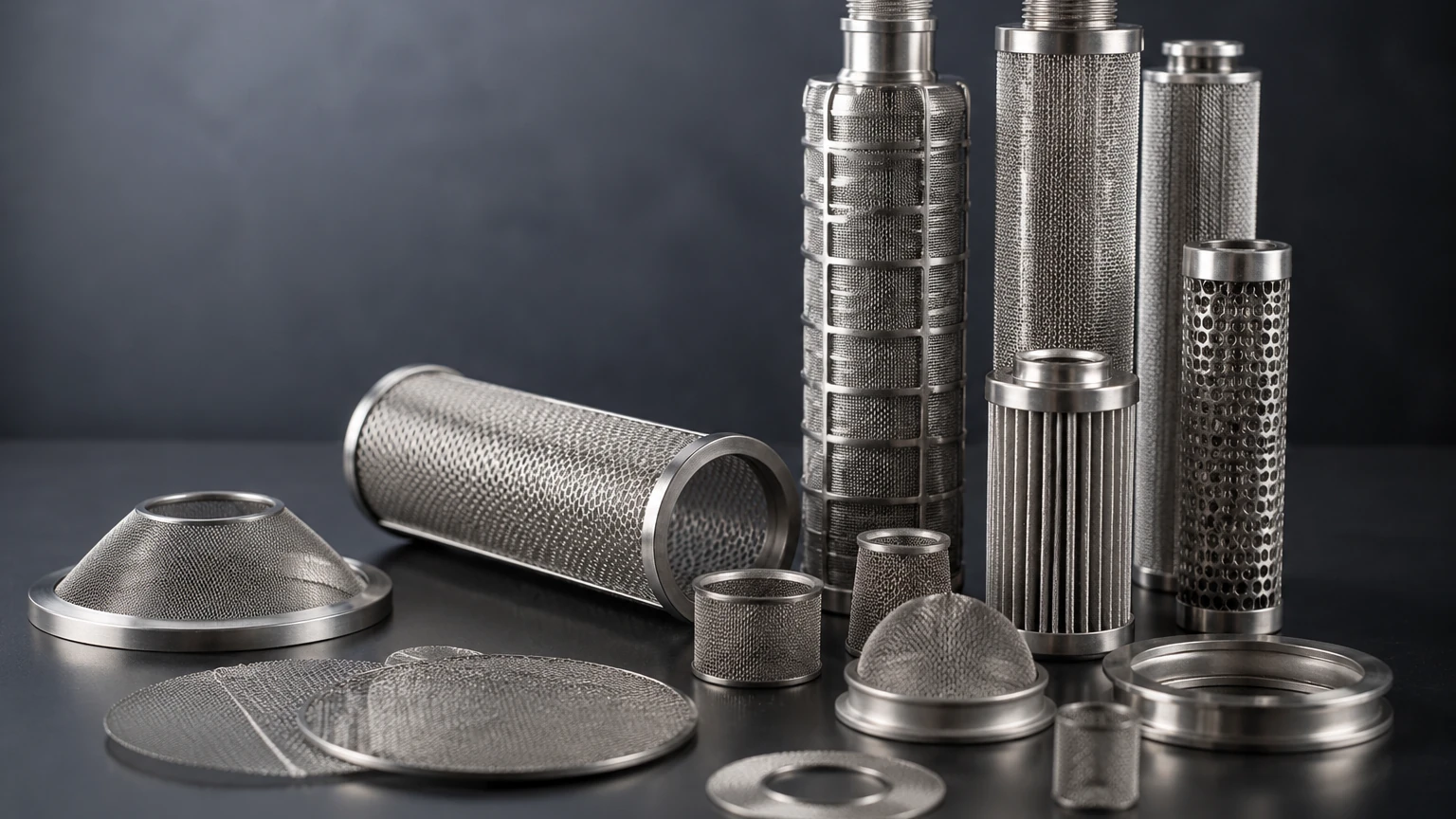
This is often constructed from multiple layers of stainless steel wire mesh (ranging from 2 to 20 layers). The layers typically include a fine filtration layer, a protective layer, and several reinforcement layers. The sintering process fuses these layers into a robust plate or tube. This configuration is preferred for surface filtration where easy cake discharge and backwashing are required.
Sintered Metal Powder
Produced by compacting and sintering spherical or irregular metal powders, this medium creates a tortuous path for the fluid. It is characterized by high depth-filtration capabilities and is exceptionally effective at capturing irregularly shaped particles. Fritté powder elements are often used in gas filtration and high-viscosity liquid applications due to their high compressive strength.
Sintered Metal Fiber Felt
Made from non-woven stainless steel fibers that are sintered into a web, this media offers extremely high porosity (up to 80%). This results in a very low pressure drop and a high dirt-holding capacity compared to powder or mesh, making it ideal for high-flow systems where filter change-out frequency must be minimized.
Key Performance Characteristics
When evaluating fritté components for industrial systems, several technical parameters must be considered to ensure the component meets the operational demands of the site.
1. Thermal Stability: Sintered stainless steel can typically withstand continuous operating temperatures up to 450°C (842°F) in oxidizing environments and even higher in reducing or inert atmospheres. This makes it superior to polymer-based filters in steam filtration and hot gas recovery.
2. Corrosion Resistance: Utilizing 316L stainless steel or specialized alloys like Hastelloy or Inconel allows fritté filters to operate in highly acidic or alkaline environments without losing structural integrity.
3. Mechanical Strength: The diffusion-bonded structure allows these filters to handle high differential pressures. In hydraulic systems or high-pressure chemical reactors, the filter must resist collapsing or bursting under transient pressure spikes.
4. Cleanability: One of the most significant B2B advantages of fritté media is that they are cleanable and reusable. Methods such as ultrasonic cleaning, chemical baths, or high-pressure backflushing can restore the filter's original permeability, significantly reducing the total cost of ownership compared to disposable cartridges.
Selection Criteria for Industrial Applications
Selecting the correct fritté filter requires a detailed analysis of the process fluid and the desired output. Engineers should consult the Kaifil Main Page to review specific product specifications, but the following factors generally dictate the selection process:
Micron Rating: Absolute vs. Nominal
In critical applications, such as pharmaceutical sterile filtration or catalyst recovery, an "absolute" micron rating is required. This means that 99.9% of particles at the specified size will be captured. Fritté mesh is particularly reliable for absolute filtration because the sintering process fixes the pore size, preventing the "unloading" of particles that can occur with flexible media when pressure increases.
Fluid Viscosity and Flow Velocity
The viscosity of the fluid directly impacts the pressure drop across the filter. High-viscosity fluids, such as polymers or heavy oils, require larger surface areas or higher porosity media (like fiber felt) to maintain acceptable flow rates without exceeding the system's pump capacity.
Particle Loading and Distribution
If the process involves a high concentration of solids, a depth-filtration medium (sintered powder) or a pleated sintered mesh design may be necessary to increase the effective filtration area. Understanding the particle size distribution (PSD) helps in choosing a pore size that prevents premature blinding of the filter surface.
Applications Across Key Sectors
Fritté technology is ubiquitous in industries where failure is not an option. Its reliability makes it the standard for several critical processes:
* Chemical Processing: Used for the filtration of aggressive solvents, catalysts, and polymers. The ability to withstand chemical cleaning cycles is a primary driver for its use here.
* Food and Beverage: Sintered filters are used for steam filtration (culinary steam), carbonation, and the removal of yeast or bacteria in beverage production. The absence of shedding fibers ensures compliance with food safety standards.
* Pharmaceuticals: In the production of Active Pharmaceutical Ingredients (APIs), fritté elements provide the necessary precision for solvent recovery and sterile venting.
* Hydraulics and Aerospace: High-pressure hydraulic circuits utilize sintered components to protect sensitive valves from particulate wear, ensuring long-term system stability.
Maintenance and Total Cost of Ownership (TCO)
While the initial investment in a fritté stainless steel filter is higher than that of a disposable plastic or paper element, the TCO is often much lower in industrial settings. The durability of the metal structure allows for hundreds of cleaning cycles.
Cleaning Protocols
To maximize the lifespan of a fritté element, a proactive maintenance schedule is recommended. When the differential pressure (ΔP) reaches a predetermined limit, the element should be cleaned. Common industrial methods include:
* Backpulsing: Using a reverse flow of gas or liquid to dislodge surface cakes.
* Ultrasonic Cleaning: Using high-frequency sound waves in a cleaning solution to remove fine particles trapped deep within the pores.
* Chemical Cleaning: Using acids, alkalis, or solvents to dissolve organic or inorganic scaling.
Customization and OEM Solutions
Every industrial system has unique constraints regarding space, flow, and connection types. Kaifil specializes in providing customized fritté solutions that integrate seamlessly into existing hardware. This includes custom end-cap configurations (such as DOE, 222, or 226 fittings), specialized diameters, and pleated designs for increased surface area.
Before finalizing a purchase, engineers should confirm the compatibility of the gasket materials (such as EPDM, Viton, or PTFE) with the process fluid, as the filter housing seal is as critical as the fritté medium itself. Furthermore, confirming the maximum allowable differential pressure for the specific housing design ensures that the filter will operate within safe engineering boundaries.
For technical professionals seeking to optimize their filtration processes, the transition to sintered metal media represents a move toward higher efficiency and reduced waste. By focusing on the material science of fritté structures, companies can achieve more consistent product quality and lower operational risks. Detailed technical support and product options are available through the Kaifil Main Page, supporting the development of robust filtration systems for global industrial requirements.
