


Fuel Gas Coalescer
In industrial power generation, chemical processing, and midstream gas operations, the integrity of downstream equipment depends heavily on the purity of the fuel gas supply. A fuel gas coalescer is a specialized filtration component designed to remove liquid aerosols, moisture, and fine particulates from gas streams. Unlike standard particulate filters that only capture solid debris, a coalescer utilizes physical principles to merge sub-micron liquid droplets into larger masses that can be gravimetrically separated from the gas flow.
For engineers and procurement teams, selecting the right fuel gas coalescer involves understanding the nuances of fluid dynamics, material compatibility, and the specific demands of the application. As a manufacturer specializing in custom stainless steel filtration solutions, Kaifil provides high-performance components that ensure the longevity of turbines, compressors, and burners. For a broader overview of our engineering capabilities, you may visit our Main Page.
The Role of Coalescing in Industrial Gas Filtration
Fuel gas, whether sourced from a pipeline or processed on-site, often carries contaminants that are detrimental to high-precision machinery. These contaminants typically include water, liquid hydrocarbons (condensate), lubrication oils from upstream compressors, and solid particulates like pipe scale or rust.
A fuel gas coalescer serves as a critical line of defense. If liquid droplets enter a gas turbine's combustion chamber, they can cause uneven burning, localized overheating, and damage to the fuel nozzles. In reciprocating engines or compressors, liquid slugs can lead to catastrophic mechanical failure due to the incompressibility of liquids.
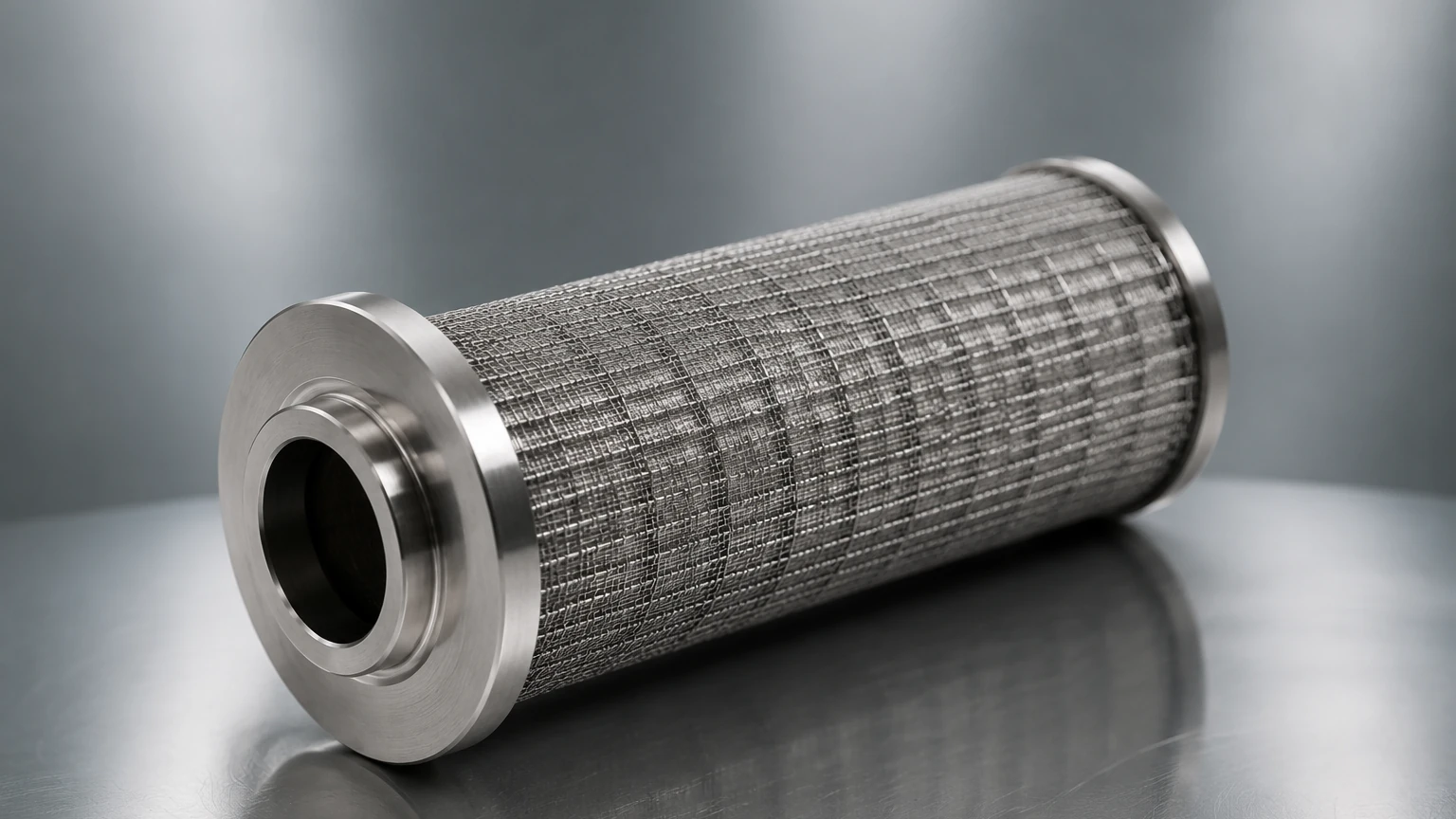
The primary function of the coalescer is to perform "liquid-gas separation." This is achieved through a multi-stage process within the filter element, where the gas passes through a specialized medium—often composed of multi-layered stainless steel wire mesh or sintered metal fibers—that forces the liquid phase to separate from the continuous gas phase.
Principles of Operation: From Aerosols to Droplets
The efficiency of a fuel gas coalescer is governed by three primary physical mechanisms: direct interception, inertial impingement, and Brownian diffusion. Understanding these principles helps engineers determine the appropriate filtration grade for their specific flow conditions.
Direct Interception
Direct interception occurs when a liquid droplet follows a gas streamline but comes within one-half of its diameter of a filter fiber. The droplet touches the fiber and is captured by surface tension. This mechanism is most effective for droplets in the mid-size range (approximately 0.1 to 1.0 microns).
Inertial Impingement
For larger, heavier droplets, the gas flow path may change as it maneuvers through the complex matrix of the filter media, but the momentum of the droplet causes it to continue in a straight line. The droplet strikes a fiber and adheres to it. This is the dominant mechanism for larger droplets and is highly dependent on the velocity of the gas stream.
Brownian Diffusion
Extremely small sub-micron droplets (less than 0.1 microns) do not follow streamlines perfectly. Instead, they move in a random, zig-zag pattern caused by collisions with gas molecules. This erratic movement increases the probability that the droplet will contact a filter fiber and be captured.
Once captured, these tiny droplets move along the fibers and accumulate at the intersections of the mesh. As they merge, they form larger drops—a process known as coalescence. When these drops reach a sufficient size and weight, the force of gravity or the drag of the gas flow moves them to the outer surface of the element, where they eventually fall into a collection sump for drainage.
Material Selection and Engineering for Durability
In demanding industrial environments, the material of construction for a fuel gas coalescer is paramount. While some applications use disposable fiberglass or polymer elements, stainless steel remains the gold standard for high-pressure, high-temperature, and corrosive environments.
Kaifil specializes in the production of stainless steel wire mesh filters and sintered metal components that offer several technical advantages:
1. Corrosion Resistance: Fuel gas often contains trace amounts of hydrogen sulfide (H2S) or carbon dioxide (CO2), which can lead to sour gas corrosion. Using 304 or 316L stainless steel ensures that the filter element remains structurally sound over long service cycles.
2. Mechanical Strength: Fuel gas systems often operate at high pressures. Stainless steel elements can withstand significant differential pressure (DP) without collapsing or shedding media, a common risk with lower-quality synthetic filters.
3. Thermal Stability: In applications like syngas filtration or high-temperature fuel lines, polymer-based filters may degrade. Stainless steel maintains its filtration accuracy and structural integrity at temperatures exceeding 400°C.
4. Cleanability: Unlike disposable depth filters, many stainless steel mesh coalescers can be cleaned and reused, reducing the total cost of ownership and minimizing industrial waste.
Critical Performance Metrics for Fuel Gas Systems
When evaluating a fuel gas coalescer, engineers must look beyond simple micron ratings. A "5-micron filter" does not tell the whole story of liquid separation efficiency. Key metrics include:
* Liquid Removal Efficiency: This is often expressed as the percentage of liquid aerosols removed at a specific droplet size (e.g., 99.9% of droplets 0.3 microns and larger).
* Differential Pressure (Clean vs. Dirty): The pressure drop across the coalescer affects the overall efficiency of the system. A high initial pressure drop can limit gas throughput, while a rapidly increasing pressure drop indicates high solids loading or undersized filtration.
* Saturation Point: A coalescer element operates differently when it is "dry" versus when it is "wet" (saturated with liquid). Engineers must ensure the element can handle the maximum expected liquid loading without "re-entrainment," where the gas flow picks up the coalesced liquids and carries them downstream.
* Flow Velocity: Coalescing is velocity-sensitive. If the gas velocity is too high, droplets may be pushed through the media before they can coalesce. If it is too low, the inertial impingement mechanism is weakened.
Industrial Applications and Equipment Protection
The implementation of a high-quality fuel gas coalescer is standard practice across several critical sectors where Kaifil’s filtration components are utilized.
Gas Turbine Protection
Modern high-efficiency gas turbines have extremely tight tolerances for fuel purity. Liquid contaminants can lead to "slugging," which causes flameouts or turbine trips. Furthermore, dissolved minerals in water droplets can form deposits on turbine blades, leading to imbalance and reduced aerodynamic efficiency. A fuel gas coalescer installed at the turbine's fuel skid is essential for maintaining operational uptime.
Compressor Stations
In gas transmission pipelines, compressors are used to maintain pressure. These compressors often require lubrication, and some of that lubricant can end up in the gas stream as an aerosol. Coalescers are used both upstream (to protect the compressor from pipeline liquids) and downstream (to remove lubrication oil before the gas continues down the line).
Burner and Boiler Systems
In chemical plants and refineries, fuel gas is used to fire large boilers and process heaters. Liquid hydrocarbons in the fuel can cause burner fouling and uneven heat distribution. Using a stainless steel wire mesh coalescer ensures a consistent, clean gas supply, reducing the frequency of burner maintenance.
Maintenance, Service Life, and Total Cost Considerations
While the initial purchase price of a fuel gas coalescer is a factor, the total cost of ownership (TCO) is driven by maintenance intervals and the protection it affords to downstream assets.
Replacement Cycles: In systems with high solid particulate loading, a pre-filter (particulate filter) is often used upstream of the coalescer to extend the coalescer's life. If the coalescer is only handling liquid aerosols, the service life can be quite long. However, if the media becomes fouled with solids or "varnish," the differential pressure will rise, necessitating a cleaning or replacement.
Monitoring: Most industrial coalescer housings are equipped with differential pressure gauges and liquid level switches in the sump. Engineers should establish a baseline DP for a clean element and set alarm points for maintenance.
Customization: Standard off-the-shelf filters may not fit the specific flow rates or spatial constraints of an existing skid. Kaifil’s ability to provide custom-engineered stainless steel filter cartridges allows for optimized performance tailored to the specific gas composition and flow dynamics of the facility.
Selection Criteria: Engineering Checklists for Procurement
Before finalizing a specification for a fuel gas coalescer, the following data points should be confirmed:
* Gas Composition: Is the gas sweet or sour? What is the molecular weight?
* Operating Pressure and Temperature: What are the maximum and minimum design conditions?
* Liquid Loading: What is the estimated volume of liquid (ppmw or mg/m³) in the incoming gas?
* Contaminant Type: Is it water, lubricating oil, or heavy hydrocarbons? Are there solid fines present?
* Target Efficiency: What is the downstream equipment manufacturer’s requirement for gas purity?
* Connection Standards: Does the housing require ASME, DIN, or other regional flange standards?
By addressing these technical requirements, engineering teams can ensure they select a filtration solution that provides reliable protection and maximizes the efficiency of their gas-fired systems. For technical consultation on custom stainless steel filtration components, Kaifil offers the expertise needed to develop high-performance solutions for the most demanding industrial environments.
