


Fuel Gas Filtration
In industrial power generation, chemical processing, and refinery operations, the purity of fuel gas is a critical factor in determining the longevity and efficiency of downstream equipment. Fuel gas filtration is the process of removing solid particulates, liquid droplets, and aerosols from gas streams before they reach sensitive components such as gas turbines, burners, compressors, and engines. Without effective filtration, contaminants can lead to catastrophic equipment failure, increased maintenance costs, and significant operational downtime.
For engineering and procurement teams, selecting the right filtration system requires a deep understanding of the specific contaminants present in the gas stream, the operating environment, and the technical requirements of the equipment being protected. This guide explores the technical foundations of fuel gas filtration, focusing on material selection, engineering considerations, and the performance metrics essential for industrial applications.
Understanding the Critical Role of Fuel Gas Filtration
Fuel gas, whether it is natural gas, syngas, or process-derived gas, is rarely pure when it reaches the point of use. During transport through pipelines or through the stages of industrial processing, the gas picks up various impurities. The primary objective of fuel gas filtration is to protect high-value assets from these impurities.
Gas turbines, for example, are highly susceptible to erosion and corrosion. Fine solid particles can erode turbine blades, while liquid contaminants can lead to uneven combustion or "hot spots" that damage the combustion chamber. In chemical processing, contaminated fuel gas can foul catalysts or clog precision injection nozzles. By implementing robust filtration solutions, facilities ensure that the gas entering these systems meets the stringent cleanliness specifications required by Original Equipment Manufacturers (OEMs).
Primary Contaminants in Industrial Fuel Gas Streams
To design or select an effective filter, one must first identify the types of contaminants that need to be managed. These generally fall into three categories:
1. Solid Particulates
Solid contaminants often include pipeline scale, rust, sand, and dust. In older infrastructure, "black powder"—a mixture of iron sulfides and oxides—is a common and highly abrasive particulate. These solids can cause mechanical wear on moving parts and block small orifices in burners and fuel injectors.
2. Liquid Droplets and Slugs
Liquids in fuel gas may consist of water, hydrocarbons (condensate), or chemical additives like glycols and amines used in gas dehydration. If these liquids reach a gas turbine, they can cause sudden temperature fluctuations and flame instability. In reciprocating engines, liquid slugs can lead to hydraulic lock, resulting in severe engine damage.
3. Aerosols and Mists
Aerosols are extremely fine liquid droplets, often less than 1 micron in size, that remain suspended in the gas stream. These are frequently the result of compressor oil carryover. Standard particulate filters are often insufficient for removing aerosols, requiring specialized coalescing filtration technology.
Material Selection and Engineering Specifications
In fuel gas filtration, the choice of material for the filter element is paramount. While disposable fiberglass or polymer-based filters are common in some applications, demanding industrial environments often require the durability and chemical resistance of stainless steel.
The Advantages of Stainless Steel
Stainless steel, particularly grades 304 and 316L, is the preferred material for high-performance fuel gas filtration. Its benefits include:
* Corrosion Resistance: Essential for handling sour gas (containing H2S) or gas streams with high moisture content.
* Temperature Stability: Stainless steel maintains its structural integrity at high temperatures where synthetic materials would fail or off-gas.
* Mechanical Strength: Metal filter elements can withstand high differential pressures and are resistant to the physical stresses of high-velocity gas flows.
* Cleanability: Unlike disposable media, stainless steel wire mesh and sintered metal elements can often be cleaned and reused, reducing the total cost of ownership and environmental impact.
Filter Media Structures
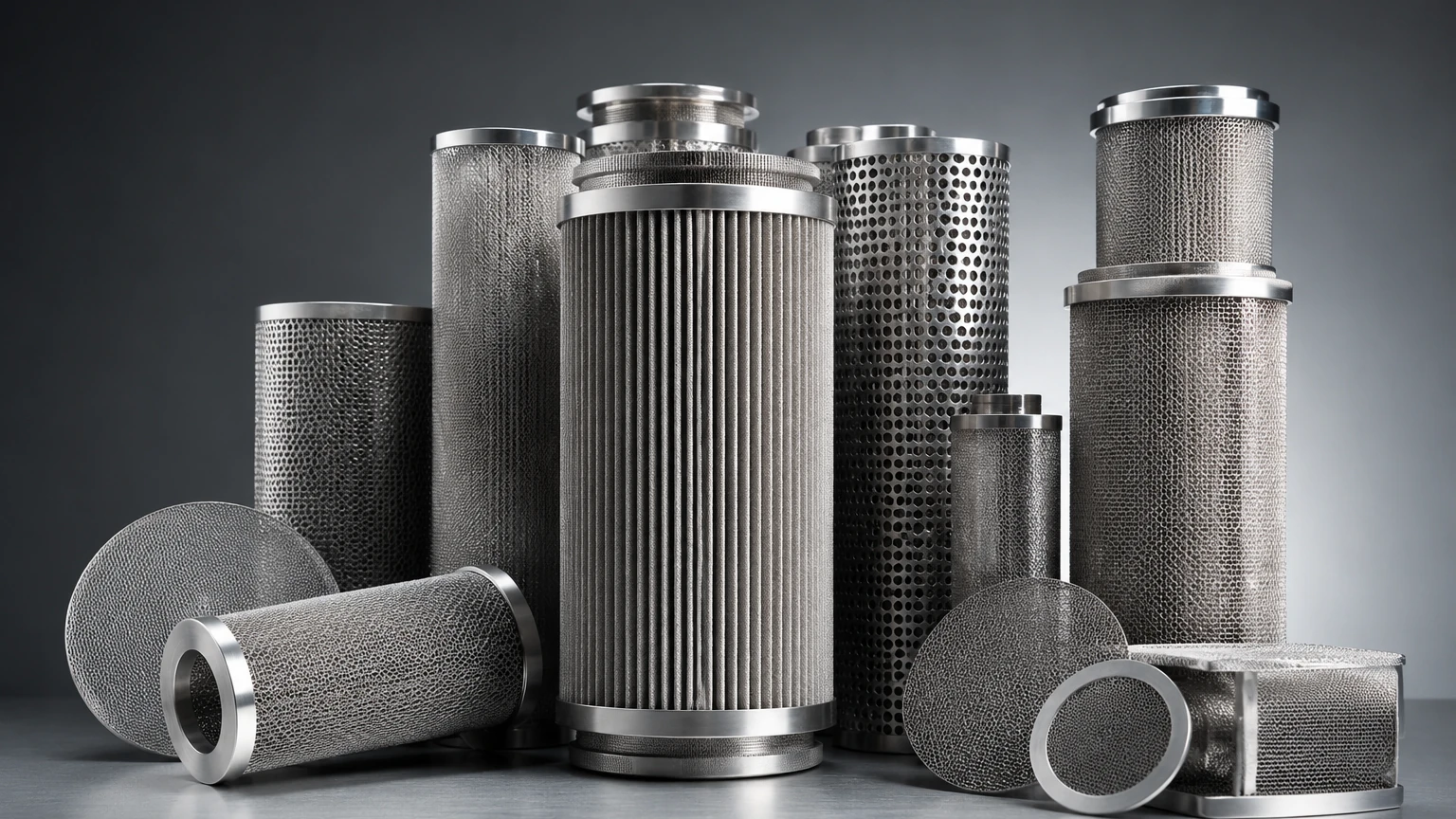
Engineers can choose from several metal media structures depending on the application requirements. Woven wire mesh provides precise surface filtration and is easy to clean. Sintered metal felt offers a high-porosity, depth-filtration medium that is excellent for high-efficiency particulate removal. For even greater structural rigidity, sintered wire cloth laminates multiple layers of mesh together, providing a robust medium capable of handling extreme pressure spikes.
Performance Metrics: Micron Ratings and Pressure Drop
When evaluating fuel gas filtration components, two metrics are of primary importance: the micron rating and the pressure drop.
Micron Rating and Efficiency
The micron rating indicates the size of particles the filter can capture. However, engineers must distinguish between "nominal" and "absolute" ratings. A nominal rating is an average, whereas an absolute rating (often defined by a Beta ratio) indicates the size at which a specific percentage of particles (e.g., 99.9%) are retained. For gas turbine protection, absolute filtration in the 1 to 5-micron range is frequently required.
Pressure Drop (ΔP)
Pressure drop is the difference in pressure between the inlet and outlet of the filter. Every filter introduces some resistance to flow. A high initial pressure drop reduces the overall efficiency of the fuel system and may require higher upstream pressure. Engineers must balance the need for high filtration efficiency (which typically increases resistance) with the need to maintain a low pressure drop. Monitoring the "dirty" pressure drop is the standard method for determining when a filter element requires cleaning or replacement.
Coalescing vs. Particulate Filtration in Gas Streams
Effective fuel gas filtration often involves a two-stage approach: particulate removal and coalescing.
Particulate filters are designed to trap solid contaminants. In a gas stream, these are usually the first line of defense. However, if the gas contains liquid aerosols, a particulate filter may become saturated with liquid, leading to a phenomenon known as "channeling" or simply failing to prevent liquid carryover.
Coalescing filters are engineered to remove liquids. As the gas passes through the coalescing medium (typically from the inside to the outside of the element), tiny droplets collide and merge into larger drops. These larger drops then migrate to the bottom of the filter housing due to gravity, where they can be drained. In many fuel gas skids, a particulate filter is placed upstream of a coalescer to protect the more sensitive coalescing media from being fouled by solids.
Maintenance, Cleaning, and Lifecycle Management
One of the most significant advantages of using stainless steel components in fuel gas filtration is the ability to manage the lifecycle of the filter element more effectively. While synthetic filters are replaced and discarded, stainless steel elements offer a different operational path.
Cleaning Protocols
Depending on the nature of the contaminants, stainless steel filter elements can be cleaned using ultrasonic baths, chemical solvents, or back-flushing. This is particularly valuable in remote locations where stocking large quantities of disposable filters is logistically challenging. It is vital to follow manufacturer guidelines for cleaning to ensure the pore structure of the mesh or sintered metal is not damaged.
Monitoring for Replacement
Even cleanable filters have a finite lifespan. Repeated cleaning cycles can eventually lead to work hardening of the metal or subtle changes in the pore geometry. Engineers should establish a maximum number of cleaning cycles or use bubble-point testing to verify the integrity of the filter media after cleaning.
Selecting a Custom Filtration Partner
Standard off-the-shelf filtration solutions do not always meet the unique constraints of a specific industrial site. Factors such as unusual flow rates, limited installation space, or highly corrosive gas compositions may necessitate a customized approach.
When sourcing components for fuel gas filtration, it is beneficial to work with a manufacturer that understands the nuances of metal filtration. A partner capable of providing custom-engineered wire mesh filters and sintered metal cartridges can help optimize the balance between filtration efficiency, pressure drop, and service life.
For technical teams looking to explore specific product configurations or seeking engineering support for their filtration challenges, visiting the Main Page of a specialized manufacturer like Kaifil provides a starting point for developing reliable, high-performance solutions. Access to detailed material specifications and customization options ensures that the filtration system is tailored to the exact needs of the application.
Conclusion: Ensuring Operational Reliability
Fuel gas filtration is not merely a utility process; it is a fundamental safeguard for industrial infrastructure. By selecting high-quality stainless steel filtration components and adhering to rigorous engineering standards, operators can prevent costly equipment damage and ensure the continuous, efficient operation of their facilities. Whether the goal is to protect a multi-million dollar gas turbine or to ensure the purity of a chemical feedstock, the investment in precision filtration pays dividends in the form of reduced maintenance and enhanced system reliability.
As industrial processes become more complex and equipment tolerances become tighter, the role of specialized filtration will only continue to grow. Understanding the technical variables—from contaminant types to material science—empowers engineers to make informed decisions that protect both their equipment and their bottom line.
