


Metal Sintered Filter
In the landscape of industrial filtration, the metal sintered filter represents a pinnacle of engineering for high-pressure, high-temperature, and corrosive environments. Unlike traditional polymer-based or disposable paper filters, sintered metal components are engineered through a thermal bonding process that creates a robust, porous structure capable of maintaining its integrity under extreme mechanical stress. For engineers and procurement specialists in sectors such as chemical processing, pharmaceuticals, and hydraulic systems, understanding the technical nuances of these filters is essential for optimizing system performance and reducing long-term operational costs.
At Kaifil, we specialize in the manufacturing of custom stainless steel filtration solutions, leveraging advanced sintering techniques to provide reliable OEM components. This guide explores the engineering principles, material considerations, and selection criteria necessary for implementing a metal sintered filter in demanding industrial applications.
Engineering Principles of Sintered Metal Filtration
The production of a metal sintered filter involves a process called diffusion bonding. This metallurgical process takes metal powders, fibers, or multi-layer wire meshes and subjects them to high temperatures below their melting point in a controlled atmosphere furnace. The heat causes the contact points of the metal particles or wires to fuse, creating a rigid structure with a highly controlled network of pores.
The Sintering Process
1. Material Preparation: Depending on the required filtration accuracy, either spherical metal powders, non-woven metal fibers, or layers of woven wire mesh are selected.
2. Compaction/Layering: The material is shaped into the desired form, such as a flat sheet, a cylindrical tube, or a complex pleated geometry.
3. Thermal Bonding: The green (un-sintered) component is heated. At the atomic level, atoms migrate across the boundaries of the particles, fusing them into a single, monolithic piece.
4. Post-Processing: The sintered media may undergo further shaping, welding of end fittings, or surface treatments to meet specific application requirements.
This process results in a filter medium that possesses the inherent strength of the base metal while providing precise permeability. Because the pores are fixed in place by the metallurgical bonds, the filter does not suffer from media migration or pore size changes under fluctuating pressures.
Material Specifications and Chemical Compatibility
The selection of the base alloy is the most critical factor in determining the service life of a metal sintered filter. Industrial environments often present a combination of corrosive chemicals and high temperatures that would degrade standard filtration materials.
Stainless Steel 316L
316L is the industry standard for most sintered filters. The "L" denotes low carbon content, which is vital for preventing carbide precipitation during the welding and sintering processes. This alloy offers excellent resistance to pitting and crevice corrosion in chloride environments and remains stable at temperatures up to 600°C (1112°F) in oxidizing atmospheres.
Advanced Alloys
For environments where 316L is insufficient, other alloys may be utilized:
* Inconel®: Ideal for extreme high-temperature applications and resistance to oxidation and carburization.
* Monel®: Frequently used in marine engineering and hydrofluoric acid processing due to its resistance to seawater and acidic environments.
* Hastelloy®: Specifically engineered for high resistance to aggressive chemical reducers and oxidizers.
When selecting a material, engineers must consider the pH levels, the presence of halides, and the maximum operating temperature to ensure the filter does not undergo premature failure due to stress corrosion cracking or general thinning.
Types of Sintered Filter Media
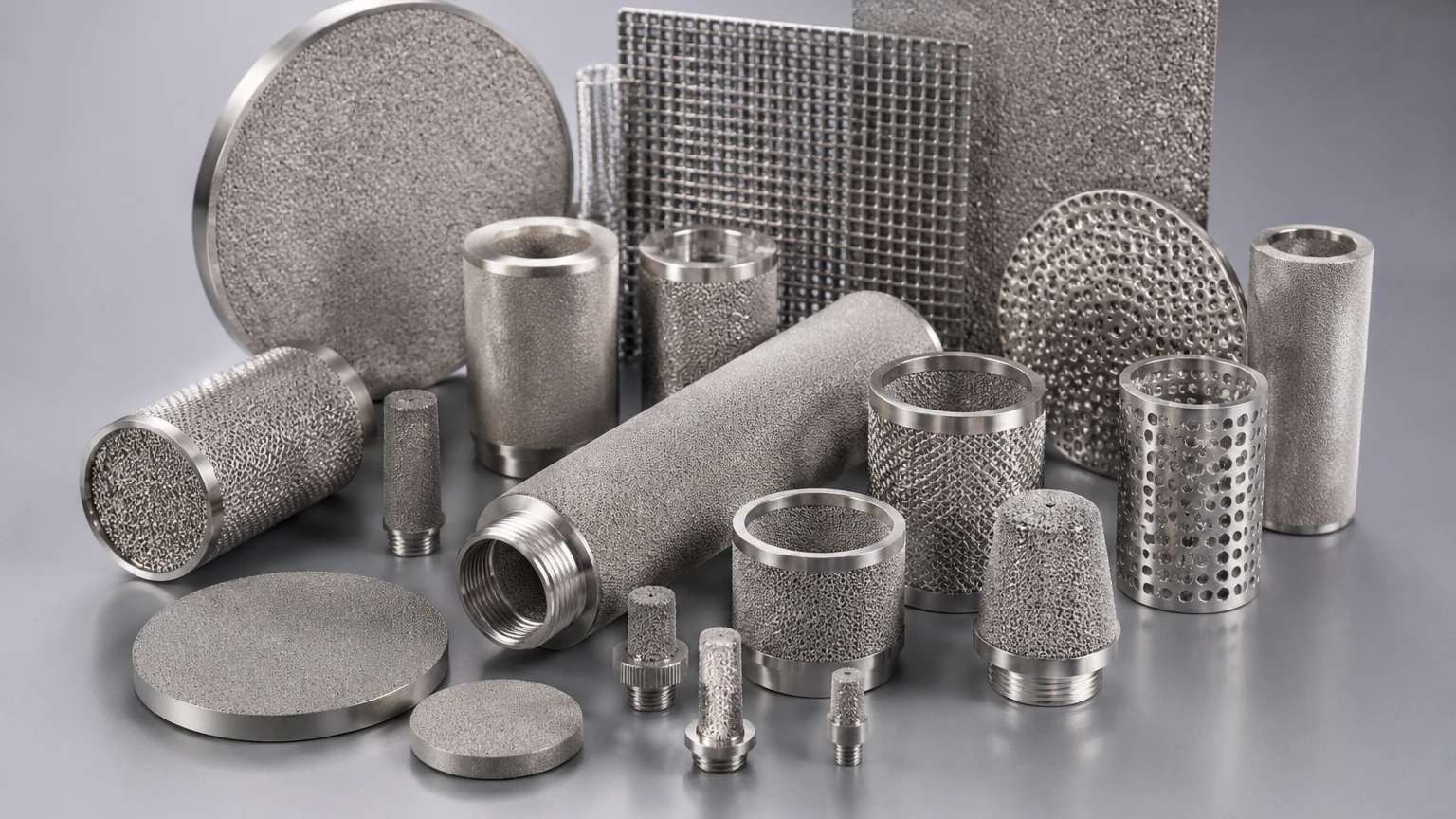
Not all sintered filters are constructed the same way. The internal structure determines the flow characteristics, dirt-holding capacity, and cleaning efficiency.
Sintered Metal Powder
Constructed from spherical or irregular metal powders, these filters provide excellent depth filtration. They are characterized by a tortuous path for the fluid, which effectively traps particles throughout the thickness of the media. They are commonly used for gas sparging, flame arrestors, and fine liquid filtration where high precision is required.
Sintered Metal Fiber Felt
This medium is composed of non-woven stainless steel fibers that are sintered together. The primary advantage of fiber felt is its high porosity (up to 80%). This high void volume allows for exceptionally low pressure drops and high dirt-holding capacity, making it ideal for high-viscosity fluids like polymer melts or hydraulic oils.
Sintered Wire Mesh
By sintering multiple layers of woven wire mesh together, manufacturers can combine the strengths of different mesh counts. For example, a fine inner mesh provides the filtration rating, while coarser outer meshes provide mechanical support and protection. This structure is highly resistant to mechanical fatigue and is the easiest to clean via backwashing.
Key Performance Metrics for Industrial Selection
When evaluating a metal sintered filter for a new or existing system, technical professionals must confirm several performance parameters to ensure compatibility.
Filtration Accuracy (Micron Rating)
It is important to distinguish between nominal and absolute micron ratings. A metal sintered filter typically provides an absolute rating, meaning it is guaranteed to intercept 99.9% of particles at the specified size. For critical applications like pharmaceutical steam filtration or catalyst recovery, absolute ratings are mandatory to prevent downstream contamination.
Permeability and Pressure Drop (ΔP)
Permeability refers to the ability of the filter to allow fluid to pass through at a given pressure. A filter with high permeability will have a lower initial pressure drop, which reduces the energy requirements of the pump or compressor. Engineers should calculate the clean pressure drop based on the fluid's viscosity, flow rate, and the filter's surface area.
Mechanical Strength and Differential Pressure
Sintered filters are often required to withstand high differential pressures (the difference in pressure between the upstream and downstream sides). Unlike polymer filters that may collapse or bypass, a well-designed metal sintered filter can often withstand differential pressures exceeding 200 bar, depending on the wall thickness and reinforcement.
Industrial Applications and Case Use
The versatility of sintered metal makes it a preferred choice across several high-stakes industries:
* Chemical and Petrochemical: Used for the filtration of aggressive solvents, acids, and catalysts. The ability to operate at high temperatures allows for the filtration of hot gases and liquids directly from reactors.
* Pharmaceutical and Biotechnology: Sintered filters are used for sterile air filtration, nitrogen blanketing, and steam filtration. Their ability to withstand repeated SIP (Sterilization-in-Place) and CIP (Cleaning-in-Place) cycles is a significant advantage.
* Food and Beverage: In the production of carbonated beverages and dairy products, these filters assist in gas carbonation and the removal of particulates from processing water and steam.
* Hydraulic and Lubrication Systems: High-pressure hydraulic systems in aerospace and heavy machinery utilize sintered filters to protect sensitive valves and actuators from wear-inducing particles.
Maintenance, Cleaning, and Service Life
One of the primary B2B value propositions of a metal sintered filter is its cleanability. While the initial investment is higher than disposable filters, the total cost of ownership is often lower due to the extended service life.
Cleaning Methods
* Backpulsing/Backwashing: Reversing the flow of the fluid to dislodge particles from the surface of the filter. This is common in automated liquid and gas systems.
* Ultrasonic Cleaning: Using high-frequency sound waves in a cleaning solution to remove fine particles trapped deep within the pores of powder or fiber media.
* Chemical Cleaning: Utilizing acids, alkalis, or solvents to dissolve organic or inorganic deposits that cannot be removed mechanically.
* Thermal Cleaning (Burn-off): In applications involving polymers or heavy oils, the filter can be heated in a controlled furnace to carbonize and remove organic contaminants.
Determining the replacement cycle depends on the "terminal pressure drop"—the point at which the filter can no longer be cleaned effectively to its original permeability. Monitoring ΔP trends over time is the best way to predict maintenance intervals.
Customization and Procurement Considerations
For engineers looking to integrate a metal sintered filter into their system, several customization options must be specified during the design phase. At Kaifil, we work closely with technical teams to ensure every component meets the exact demands of the application.
Checklist for Customization:
1. Geometry: Do you require a standard cartridge, a pleated element for increased surface area, or a custom-machined disc?
2. End Fittings: Common options include Double Open End (DOE), 222 or 226 O-ring configurations, NPT/BSP threaded connections, or flange mounts.
3. Sealing Materials: Ensure that O-rings or gaskets (Viton, EPDM, PTFE, or Kalrez) are compatible with the process fluid and temperature.
4. Operating Conditions: Specify the normal and maximum operating pressure, temperature, and flow rate.
By addressing these factors early, procurement teams can avoid the risks of bypass, premature clogging, or material failure. For more information on our specific manufacturing capabilities and to view our full range of stainless steel filtration products, please visit our Main Page.
Conclusion
The metal sintered filter is more than just a consumable; it is a critical piece of industrial equipment designed for durability and precision. By selecting the appropriate material, media type, and micron rating, engineers can ensure their processes remain efficient and their downstream equipment remains protected. As a dedicated manufacturer, Kaifil provides the technical expertise and manufacturing flexibility required to deliver high-performance filtration solutions that stand up to the most challenging industrial environments. Whether you are designing a new system or looking to optimize an existing one, choosing the right sintered metal solution is a strategic investment in operational reliability.
