


Full Flow Oil Filter
In industrial lubrication and hydraulic systems, the full flow oil filter serves as the primary line of defense against particulate contamination. Unlike bypass systems that only divert a portion of the fluid for cleaning, a full flow oil filter is designed to process the entire volume of oil delivered by the pump before it reaches critical engine or machine components. This ensures that every drop of lubricant is screened for debris, protecting high-precision surfaces from abrasive wear and premature failure.
For engineers and procurement professionals, selecting the appropriate filtration hardware requires a deep understanding of fluid dynamics, material science, and mechanical design. In demanding environments such as chemical processing, power generation, and heavy hydraulic applications, the choice of filter media—specifically the transition from disposable cellulose to high-performance stainless steel wire mesh—can significantly impact system reliability and long-term operational costs.
Understanding Full Flow Filtration Principles
The fundamental characteristic of a full flow oil filter is its position within the primary circuit. Because it handles the total output of the oil pump, the filter must balance two competing requirements: high filtration efficiency and low flow resistance. If a filter is too restrictive, it creates a significant pressure drop (ΔP), which can lead to oil starvation at the lubrication points.
The Role of the Bypass Valve
Most industrial full flow filters incorporate an internal bypass valve (also known as a relief valve). This safety mechanism is engineered to open when the pressure differential across the filter element exceeds a predetermined threshold. This typically occurs under two conditions:
1. Cold Starts: When the oil is highly viscous and cannot pass through the media quickly enough.
2. Filter Clogging: When the accumulated contaminants have restricted the flow paths through the mesh or media.
While the bypass valve prevents catastrophic oil starvation, it allows unfiltered oil to circulate through the system. This highlights the importance of selecting a filter with high dirt-holding capacity and maintaining a strict replacement or cleaning schedule to ensure the system remains in "full flow" mode as much as possible.
Material Engineering for High-Performance Oil Filters
In industrial B2B applications, the material of the filter element is a critical specification. While automotive applications often rely on paper or synthetic fibers, industrial systems frequently demand the durability of stainless steel.
Stainless Steel Wire Mesh
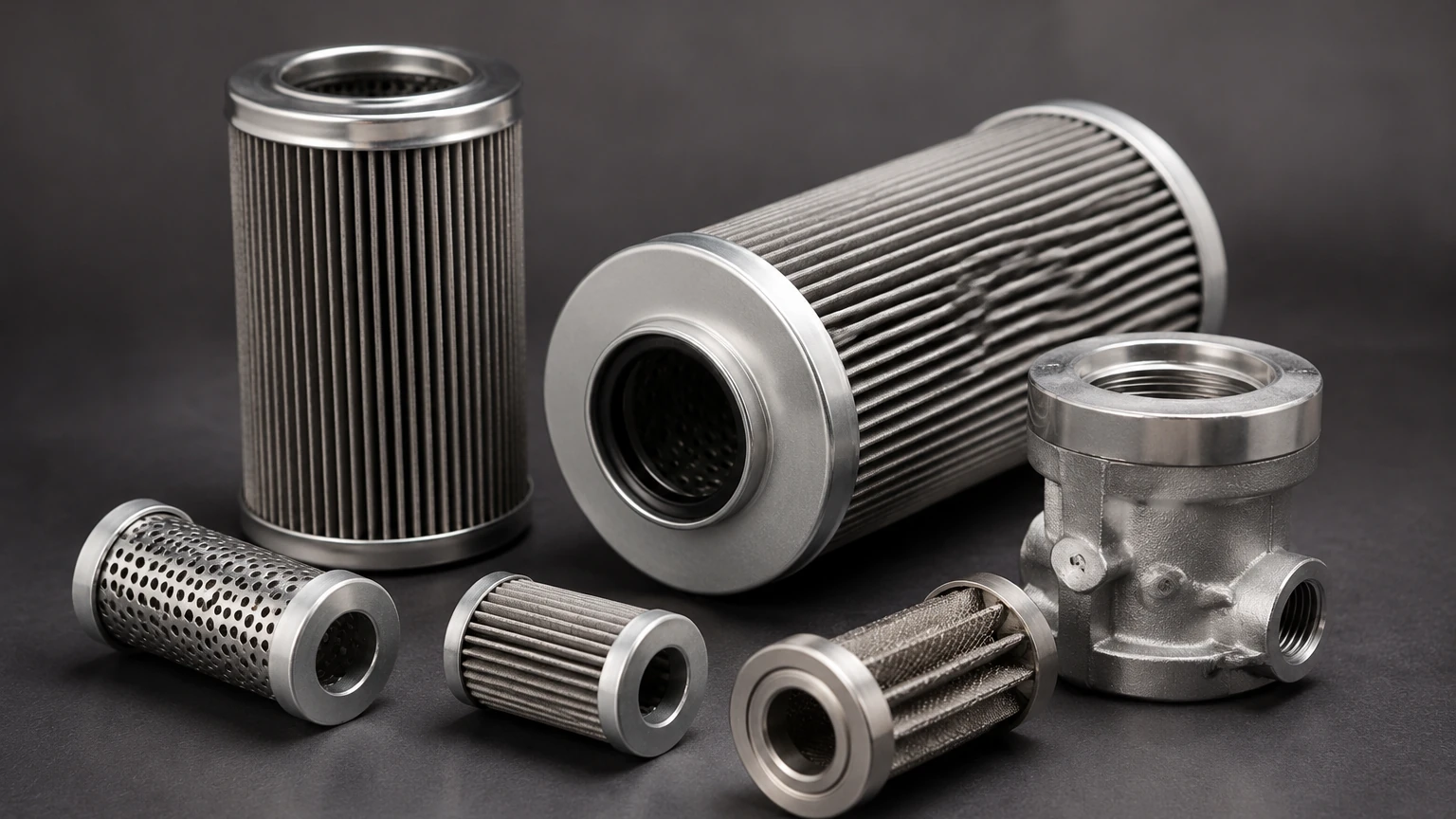
Stainless steel wire mesh, often utilized in Kaifil’s filtration solutions, offers several engineering advantages over traditional media. It is typically manufactured from 304 or 316L stainless steel, providing exceptional resistance to corrosion and high temperatures. In chemical processing or high-heat hydraulic systems, where synthetic fibers might degrade or leach chemicals, stainless steel remains inert and structurally sound.
Sintered Metal Media
For applications requiring even higher pressure ratings or finer filtration, sintered metal fiber or multi-layer sintered mesh is employed. Sintering bonds the wire contact points through a thermal process, creating a rigid structure that does not migrate or deform under extreme pressure pulses. This structural integrity is vital for a full flow oil filter subjected to the constant cycling of industrial pumps.
Technical Specifications and Performance Metrics
When evaluating a full flow oil filter, engineers must look beyond simple dimensions. The performance of the filter is defined by several key metrics that dictate its suitability for a specific machine.
Micron Rating: Absolute vs. Nominal
A common point of confusion in filtration procurement is the distinction between nominal and absolute micron ratings.
- Nominal Rating: An indicated filtration level based on the weight percentage of particles retained (e.g., 95% of 10-micron particles). This is often insufficient for precision hydraulic systems.
- Absolute Rating: The diameter of the largest hard spherical particle that will pass through the filter under specified test conditions. For critical industrial components, an absolute-rated stainless steel mesh ensures that no particle larger than the clearance of the bearing or valve can pass through.
Beta Ratio (β)
The Beta Ratio is a more sophisticated measure of filtration efficiency, derived from the ISO 16889 multi-pass test. It compares the number of particles of a given size upstream of the filter to the number downstream. A high Beta ratio (e.g., βx = 1000) indicates that the filter is highly efficient at removing particles of that specific size (x).
Pressure Drop (ΔP)
The "clean pressure drop" is the resistance the filter offers when it is new and the oil is at operating temperature. Engineers must ensure the pump capacity can overcome this resistance while still delivering the required pressure to the downstream components. Stainless steel filters often provide a more predictable and lower ΔP compared to depth-loading paper filters due to their precise surface-loading characteristics.
Customization and OEM Integration for Industrial Systems
Standard off-the-shelf filters rarely meet the unique requirements of specialized industrial machinery. Customization is often necessary to integrate the full flow oil filter into existing footprints or to handle specific fluid chemistries.
Structural Customization
Industrial filters can be customized in terms of end-cap design (threaded, flanged, or bayonet), overall length, and diameter. For OEM manufacturers, integrating a custom-designed filter housing can optimize the space within a machine's chassis while ensuring that only proprietary or high-quality replacement elements can be used, thereby protecting the machine’s warranty and performance.
Pleating Technology
To increase the surface area within a fixed volume, the metal mesh is often pleated. The geometry of these pleats—their depth, frequency, and the use of support layers—is a matter of precise engineering. More surface area results in a lower face velocity of the fluid, which reduces the pressure drop and significantly extends the service life (dirt-holding capacity) of the element.
Operational Maintenance and Total Cost of Ownership
In a B2B context, the initial purchase price of a full flow oil filter is only one component of the Total Cost of Ownership (TCO). High-quality stainless steel filters offer a unique value proposition: cleanability.
Cleanable vs. Disposable
Unlike cellulose filters that must be discarded and replaced, stainless steel wire mesh filters can often be cleaned and reused. Through ultrasonic cleaning, backflushing, or chemical solvent baths, the accumulated contaminants can be removed, restoring the filter to near-original pressure drop levels. This reduces the waste stream and the recurring cost of purchasing new elements, which is particularly beneficial in large-scale industrial operations.
Monitoring and Sensors
Modern industrial filtration systems often include differential pressure sensors. These sensors monitor the ΔP across the full flow oil filter in real-time. When the pressure reaches a critical point, the system can trigger an alarm or even shut down the machinery to prevent the bypass valve from opening and allowing contaminated oil to circulate. This proactive approach to maintenance is essential for high-value assets like turbines or large-scale compressors.
Selecting the Right Filtration Solution for Demanding Environments
Choosing the right filter involves a systematic review of the application's environmental and mechanical variables. Engineers should confirm the following data points before finalizing a specification:
1. Fluid Compatibility: Does the oil contain additives that might react with certain metals? Is the fluid water-based, petroleum-based, or a synthetic phosphate ester?
2. Flow Rate: What is the maximum output of the pump? The filter must be sized for the maximum flow, not the average flow.
3. Operating Pressure: What are the steady-state and peak pressures? The filter housing and element must withstand these without fatigue.
4. Temperature Range: Will the system operate in extreme cold (increasing viscosity) or extreme heat (potentially affecting seals and media integrity)?
5. Contamination Environment: Is the machine operating in a relatively clean factory or a high-debris environment like a mining site or a cement plant?
By addressing these factors, procurement teams can move beyond commodity-based purchasing and invest in filtration components that truly enhance machine longevity. For those seeking specialized assistance in designing or sourcing high-performance filtration components, visiting the Main Page provides access to technical resources and customized manufacturing capabilities tailored to industrial needs.
Conclusion
The full flow oil filter is more than a simple screen; it is a precision-engineered component that determines the health of the entire industrial system. By prioritizing high-quality materials like stainless steel and focusing on absolute filtration ratings, engineers can significantly reduce the risk of mechanical failure. Whether for a new OEM project or the optimization of an existing industrial process, understanding the technical nuances of full flow filtration is the key to achieving reliable, cost-effective, and high-performance lubrication management. For further technical specifications and product ranges, professionals are encouraged to explore the comprehensive offerings on the Kaifil Main Page.
