


Air Mufflers
In industrial pneumatic systems, the rapid exhaust of compressed air creates significant acoustic energy, often exceeding safe decibel levels for workplace environments. Air mufflers, also known as pneumatic silencers, are critical components designed to dissipate this energy, protecting personnel from noise-induced hearing loss and ensuring compliance with occupational safety regulations. Beyond noise reduction, these components play a vital role in protecting pneumatic circuits from particulate ingress and managing the flow dynamics of exhaust air.
For engineers and procurement specialists, selecting the appropriate air muffler requires a technical understanding of fluid dynamics, material compatibility, and the specific trade-offs between sound attenuation and back pressure. As a manufacturer specializing in stainless steel filtration solutions, Kaifil provides precision-engineered components that address these industrial requirements through advanced porous metal technologies.
Fundamentals of Pneumatic Noise Reduction
Pneumatic noise is primarily generated by the turbulence created when high-velocity compressed air is released into the atmosphere. This turbulence produces high-frequency sound waves that can reach levels between 90 and 120 decibels (dB), far exceeding the 85 dB threshold typically established by safety organizations like OSHA.
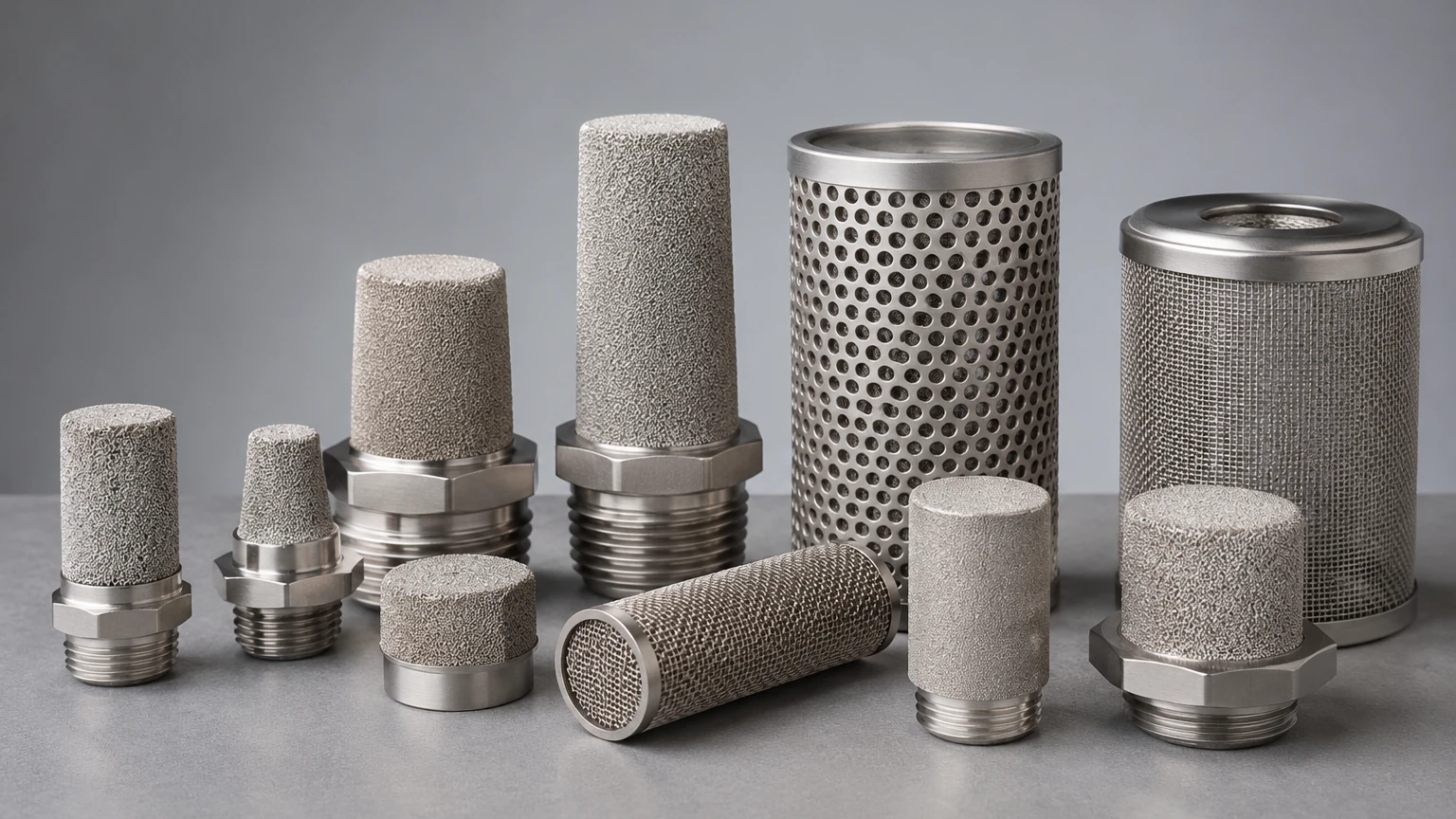
Air mufflers function by increasing the surface area through which the air exhausts. By passing the air through a porous medium—such as sintered stainless steel or multi-layered wire mesh—the high-velocity stream is diffused into many smaller, lower-velocity streams. This process, known as diffusion, breaks up the sound waves and reduces the overall kinetic energy of the air.
The effectiveness of an air muffler is measured by its sound attenuation capability, usually expressed in decibels. However, the design must also account for the "insertion loss," which is the reduction in noise level resulting from the installation of the muffler. Engineering teams must balance this loss against the potential for back pressure, which can impede the performance of the pneumatic actuator or valve.
Engineering Considerations for Material Selection
The choice of material for an air muffler is dictated by the operating environment, the purity requirements of the process, and the expected service life. While plastic and brass mufflers are common in light-duty applications, industrial environments often demand the superior properties of stainless steel.
Stainless Steel (304, 316, 316L)
Stainless steel is the preferred material for demanding applications in chemical processing, pharmaceuticals, and food and beverage production. Its primary advantages include:
* Corrosion Resistance: Stainless steel resists oxidation and chemical attack from aggressive cleaning agents or corrosive process gases.
* Thermal Stability: These mufflers can operate in high-temperature environments where plastic components would soften or fail.
* Structural Integrity: Sintered stainless steel provides high mechanical strength, allowing the muffler to withstand high-pressure pulses without deforming or shedding media.
* Cleanability: In hygienic industries, stainless steel components can be cleaned and sterilized, supporting long-term reuse and maintaining system purity.
Porous Plastic and Sintered Bronze
In less aggressive environments, porous polyethylene or sintered bronze may be used. Bronze offers good mechanical strength but is susceptible to corrosion in the presence of moisture or certain chemicals. Plastic mufflers are cost-effective and lightweight but lack the durability and temperature resistance required for heavy industrial cycles.
Evaluating Performance Metrics: Noise vs. Back Pressure
A common challenge in pneumatic system design is the management of back pressure. Every air muffler creates some level of restriction to the airflow. If the resistance is too high, the exhaust air cannot escape quickly enough, creating a pressure buildup that slows down the stroke of pneumatic cylinders or reduces the cycle speed of the entire machine.
When evaluating air mufflers, engineers should analyze the following technical data:
1. Flow Coefficient (Cv): This value represents the muffler's capacity for flow. A higher Cv indicates less restriction and lower back pressure.
2. Micron Rating: In mufflers utilizing sintered media, the pore size (measured in microns) determines both the filtration efficiency and the flow resistance. A finer pore size provides better noise reduction and particle filtration but increases back pressure.
3. Decibel Reduction: Manufacturers typically provide a dB reduction rating at specific operating pressures (e.g., 100 PSI). It is essential to verify that the rated reduction brings the system within the required safety limits for the specific application.
To optimize performance, it is often necessary to select a muffler with a larger surface area. This allows for a higher volume of air to pass through the porous medium at a lower velocity, achieving significant noise reduction without compromising the cycle time of the pneumatic equipment.
Integration and Customization in Industrial Systems
Industrial pneumatic systems are rarely standardized, often requiring customized filtration and silencing solutions to fit specific spatial or functional constraints. For OEM applications, the ability to customize the muffler’s geometry and connection type is essential.
Threading and Connections
Air mufflers must integrate seamlessly with valve exhaust ports. Standard thread types include NPT (National Pipe Thread), BSPP (British Standard Parallel Pipe), and BSPT (British Standard Taper Pipe). Precision machining of these threads ensures a leak-free connection and prevents vibration-induced loosening over time.
Form Factor and Space Constraints
In compact machinery, standard cylindrical mufflers may not fit. Custom designs, such as flat-profile silencers or integrated breather vents, allow engineers to incorporate noise reduction into tight envelopes. Kaifil’s manufacturing capabilities allow for the production of custom-shaped sintered components that function as both structural elements and exhaust silencers.
Filtration Functionality
In many applications, the air muffler also serves as a breather vent. When a pneumatic cylinder retracts, it may draw ambient air back into the system. A high-quality stainless steel muffler acts as a filter, preventing dust, metal shavings, and other contaminants from entering the valve and damaging internal seals. Professionals should confirm the filtration efficiency (micron rating) if the muffler is expected to perform this dual role.
Maintenance and Replacement Cycles
Air mufflers are often overlooked in maintenance schedules, yet they are susceptible to clogging. In lubricated pneumatic systems, oil mist can combine with ambient dust to form a sludge that restricts the pores of the muffler media.
Signs that an air muffler requires maintenance or replacement include:
* Slowed Cylinder Operation: A noticeable increase in cycle time often indicates excessive back pressure from a clogged muffler.
* Increased Noise Levels: If the porous media is damaged or bypassed, noise levels will rise.
* Visible Contamination: Oil saturation or heavy dust accumulation on the exterior of the muffler.
Stainless steel mufflers offer a distinct advantage in maintenance. Unlike disposable plastic units, sintered stainless steel components can often be cleaned using ultrasonic baths or chemical solvents, restoring their original flow characteristics. This capability reduces the total cost of ownership and minimizes industrial waste.
Selection Criteria for Demanding Environments
When specifying air mufflers for specialized sectors, engineers must look beyond basic noise reduction.
* Chemical Processing: Mufflers must withstand exposure to volatile organic compounds (VOCs) or acidic vapors. 316L stainless steel is often specified for its superior resistance to pitting and crevice corrosion.
* Food and Beverage: Components must be made from FDA-compliant materials and be capable of withstanding high-pressure washdowns with caustic cleaning agents.
* Hydraulic Systems: While primarily used in pneumatics, similar porous metal components are used as breather caps in hydraulic reservoirs to equalize pressure while preventing moisture and dirt from entering the oil.
By focusing on the technical requirements of the specific application, purchasing teams can ensure they select a component that provides reliable performance over a long service life. For a comprehensive overview of available specifications and engineering support, technical teams can visit the Main Page to review product options and application support.
Conclusion
Air mufflers are essential for maintaining a safe and efficient industrial environment. While their primary function is noise attenuation, their impact on system back pressure, contamination control, and overall equipment reliability cannot be understated. By selecting high-quality materials like stainless steel and considering the specific flow requirements of the pneumatic circuit, engineers can optimize both safety and performance. Kaifil’s expertise in custom stainless steel filtration ensures that even the most demanding industrial exhaust challenges are met with precision-engineered solutions.
